Editor's Choice
After Five Years, Revisiting the Bond Film That Broke a Series Taboo
No Time to Die made history by killing off 007 for the first time in an Eon-produced Bond film, concluding Daniel Craig’s tenure.

Balle Balle Radio™ Entertainment Desk
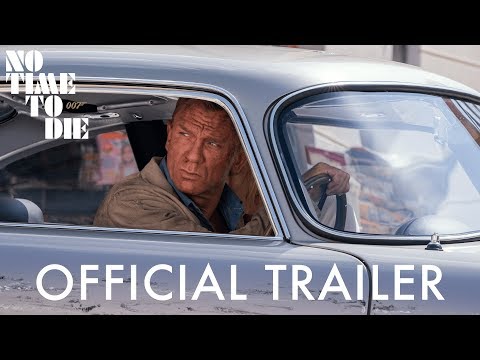
Five years ago, on 28 September 2021, No Time to Die opened in theaters, marking the conclusion of Craig’s tenure with a precedent-breaking death scene—the first time an Eon-produced Bond film has killed off 007.
That ending traces back further than the finished movie. According to published film records, Craig first floated the idea of killing off Bond in 2006, right after the premiere of Casino Royale, and Barbara Broccoli agreed to it then. It took fifteen years and a change of director to get there. Danny Boyle was originally attached to direct, with a screenplay by John Hodge, but both departed in August 2018 over creative differences. Cary Joji Fukunaga took over the following month, becoming the first American to direct an Eon Bond film and the first Bond director ever credited as a writer on the screenplay. Phoebe Waller-Bridge provided a script revision in April 2019, becoming just the second female screenwriter credited on a Bond film, while Paul Haggis and Scott Z. Burns worked on uncredited rewrites during the preceding months.
Production had its share of drama off camera too. Daniel Craig injured his ankle while filming in Jamaica in May 2019 and needed minor surgery to keep going. A month later, a controlled explosion at Pinewood Studios damaged the legendary 007 Stage and injured a crew member. The shoot itself stretched from April to October 1919 across Italy, Jamaica, Norway, the Faroe Islands and London, using 65mm IMAX cameras for the first time in series history.
The score underwent an unusual mid-production shift: Dan Romer, hired in July 2019, departed in November due to creative differences, and Hans Zimmer replaced him by January 2020—a first for Bond franchise composition changes Billie Eilish, 18 at the time, became the youngest artist to record a Bond theme song, and the track went on to win the Grammy for Best Song Written for Visual Media in March 2021, then the Academy Award for Best Original Song the following year, the film’s only win from three nominations.
The film earned over $774 million globally, becoming 2021’s fourth-highest-grossing theatrical release. It also closed a chapter in Bond ownership: the film was the last one released by MGM before Amazon acquired the studio in 2022, and it remains the last Bond picture produced under the oversight of Albert R. Broccoli, Michael G. Wilson, and Barbara Broccoli.
Studio CarryOnHarry Perspective
We tend to think of franchise films as industrial products rolled out on schedule, but No Time to Die’s production history reads more like a high-stakes drama where the ending nearly didn’t happen at all. The behind-the-scenes chaos—a director swap, a star’s injury requiring surgery, a stage explosion, a composer departure—raises a simple question: how much did the film survive by luck versus vision?
In practice, this matters because production instability often shows up on screen as tonal unevenness or half-realized ideas. A viewer watching No Time to Die might notice stylistic shifts between sequences or wonder if certain character moments land with intention or accident. The director change alone typically reshapes a film’s DNA; adding injury delays, crew emergencies, and mid-stream composer changes creates a document assembled under duress rather than design. That’s worth noticing when assessing what the final film actually is.
" The film’s commercial success and cultural resonance suggest that whatever held it together—through injury, explosion, and personnel changes—held. That’s a different story than chaos.
Read more People’s Choice stories on Studio CarryOnHarry. Reporting via Live News Vault.
Press Releases at Studio CarryOnHarry