Editor's Choice
A Decade Later: How Split Became Shyamalan’s Unlikely Commercial Triumph
M. Night Shyamalan’s Split became a surprise $278.5 million hit on a $9 million budget, with James McAvoy’s performance in the psychological thriller…

Balle Balle Radio™ Entertainment Desk
Split’s premiere at Fantastic Fest occurred on 26 September 2016, a full decade ago, marking the arrival of a film that would become one of the more surprising hits of its era. The psychological thriller, helmed by director and writer M. Night Shyamalan, featured performances from James McAvoy, Anya Taylor-Joy, and Betty Buckley, and would not reach wide theatrical release in the United States until January 20, 2017.
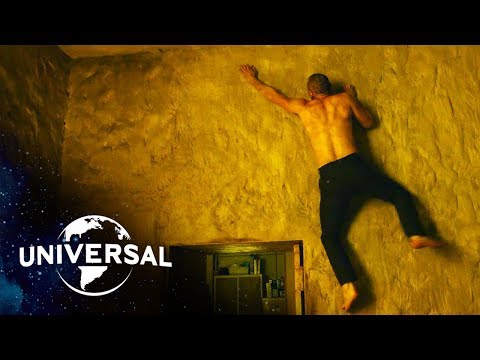
At its core, the film presented McAvoy portraying a character with dissociative identity disorder who imprisoned three teenage girls in an underground location, cycling through distinct personalities over the course of the story. Critics responded strongly to that performance, and reviews of the film were largely positive on the strength of it, alongside praise for Shyamalan’s direction. The reception wasn’t without pushback, though: mental health advocates criticized the film’s portrayal of dissociative identity disorder as stigmatizing.
What audiences didn’t fully know going in was that Split functioned as a stealth sequel to Shyamalan’s Unbreakable, released back in 2000, quietly connecting the two films as the second chapter in what became a trilogy. That link paid off commercially in a way few could have predicted for a film made on a $9 million budget. The film earned $278.5 million globally, holding the record as Blumhouse’s top-grossing film until 2023, when Five Nights at Freddy’s surpassed it.
The production itself began with principal photography starting November 11, 2015, in Philadelphia, where the story is also set. Universal Pictures handled distribution, a change from Unbreakable’s original distributor Touchstone Pictures, which had gone defunct by 2016. The trilogy that Split quietly kicked into motion reached its conclusion in 2019 with Glass, which brought the casts of both earlier films together.
Studio CarryOnHarry finds the stealth-sequel gambit the most enduring part of this story: a decade on, it’s still one of the more effective bait-and-switches a studio thriller has pulled on an unsuspecting audience.
Studio CarryOnHarry Perspective
McAvoy’s performance is the film’s real draw because audiences came for a thriller about containment and stayed for a masterclass in controlled transformation. The actor’s ability to shift not just dialogue and mannerism but apparent physical presence between personalities gave viewers something they rarely see: a genuinely virtuosic turn in a genre film, where such work typically gets overlooked in favor of plot mechanics.
In practice, this matters most in how viewers defend the film in conversation. Ask someone why Split worked for them, and they’re likely to describe a specific moment—the way a personality emerges in McAvoy’s posture, the tonal shift mid-sentence—rather than the plot itself. It’s the reason the film remains watchable even after its twist is known; the performance becomes the actual story.
Yet the critical praise also somewhat obscured a real question: how much of the acclaim reflected McAvoy’s skill versus how much reflected relief that Shyamalan had made something technically competent again? The two are hard to separate in retrospect, and it’s worth acknowledging that the performance benefited from being embedded in a film that worked, rather than existing entirely on its own terms.
The lasting lesson may be that genre filmmaking’s most valuable currency isn’t surprise or scale, but the presence of an actor fully committed to the material in front of them. McAvoy gave audiences permission to take the premise seriously, which turned a low-budget thriller into something that felt substantial.
Read more People’s Choice stories on Studio CarryOnHarry. Reporting via Live News Vault.
Press Releases at Studio CarryOnHarry