Studio Mind
5 Podcasting Mistakes That Kill Listener
5 Podcasting Mistakes That Kill Listener Growth

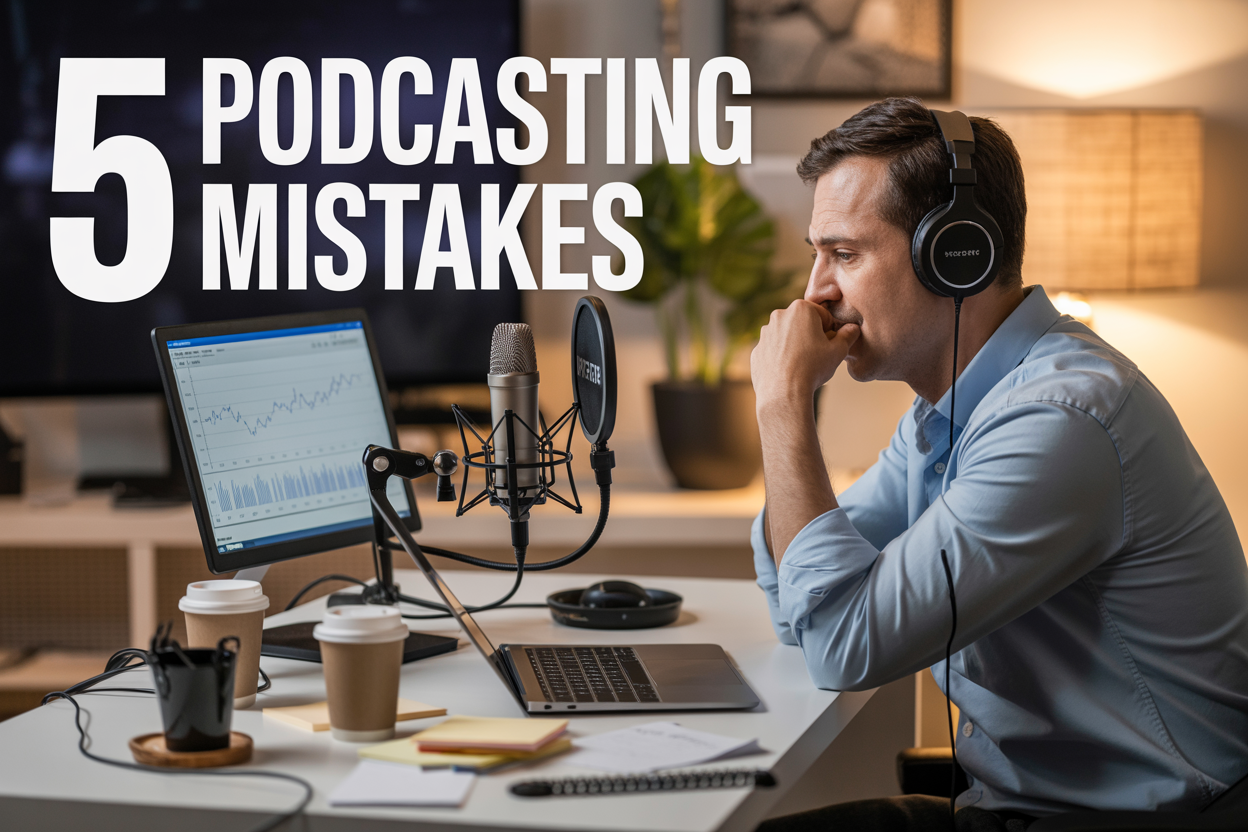
New podcasters often wonder why their shows aren’t gaining traction despite putting in hours of work. The truth is, even small podcasting mistakes can seriously damage your listener growth and keep your audience numbers stuck.
This guide is for podcasters who want to increase podcast listeners but feel frustrated by slow growth. Whether you launched last month or last year, these insights will help you identify what’s holding your show back.
We’ll break down the five biggest podcast growth killers, starting with how poor audio quality destroys first impressions before listeners even hear your message. You’ll also learn why inconsistent publishing schedules break audience trust and how weak episode structure loses listener attention within the first few minutes. Finally, we’ll cover the podcast marketing strategies most creators overlook – from podcast SEO optimization to engaging your existing audience for sustainable growth.
Poor Audio Quality Destroys First Impressions


Invest in quality microphone equipment for crystal clear sound
Audio quality makes or breaks a podcast within the first 30 seconds. Listeners have become accustomed to professional-sounding content, and any podcast that sounds like it was recorded through a tin can will lose audience members faster than you can say “subscribe.” The microphone you choose becomes the foundation of your entire podcasting setup.
Dynamic microphones like the Shure SM7B or Audio-Technica ATR2100x-USB offer excellent value for podcasters who record in less-than-perfect environments. These mics reject background noise naturally and handle loud voices without distortion. For those working in quieter spaces, condenser microphones such as the Blue Yeti or Rode PodMic provide exceptional clarity and detail.
Budget-conscious creators can still achieve professional results. The Audio-Technica ATR2005-USB delivers impressive performance at under $80, while the Samson Q2U gives you both USB and XLR connectivity for future upgrades. Remember that your microphone investment directly impacts listener retention – people forgive poor video quality much more readily than poor audio.
| Microphone Type | Best For | Price Range | Key Benefits |
|---|---|---|---|
| Dynamic | Noisy environments | $50-$400 | Noise rejection, durability |
| Condenser | Quiet studios | $100-$500 | High sensitivity, crisp detail |
| USB | Beginners | $50-$200 | Plug-and-play simplicity |
Eliminate background noise and echo through proper recording setup
Your recording environment shapes your sound just as much as your microphone. Even the most expensive equipment can’t save audio recorded in a bathroom or kitchen. Hard surfaces create echo and reverberation that makes your voice sound distant and unprofessional.
Transform any room into a recording space by adding soft materials. Hang thick blankets on walls, record in a walk-in closet surrounded by clothes, or create a blanket fort around your recording area. These simple solutions absorb sound reflections and eliminate that hollow, echoey quality that screams “amateur.”
Position yourself 6-8 inches from your microphone and speak directly into it. Many new podcasters make the mistake of sitting too far away, forcing them to increase gain levels that amplify background noise. Close proximity gives you a rich, intimate sound that draws listeners in.
Consider your surroundings during recording. Turn off air conditioning, close windows to block traffic noise, and silence phones and computers. Even the gentle hum of a refrigerator can become distracting over a 30-minute episode. Recording late at night or early in the morning often provides the quietest environment.
Master basic audio editing to remove distracting elements
Raw audio rarely sounds polished enough for publication. Learning basic editing skills transforms mediocre recordings into professional-quality content. Start with free software like Audacity or GarageBand before investing in premium options like Adobe Audition or Hindenburg Pro.
Remove obvious mistakes first: long pauses, “ums,” coughs, and mouth sounds. These distractions pull listeners out of your content and make your podcast feel unfinished. Don’t obsess over removing every single “um” – natural speech patterns keep your content conversational and authentic.
Normalize your audio levels so listeners don’t have to constantly adjust their volume. Aim for peak levels around -6dB to -12dB, leaving headroom for mastering. Apply gentle compression to even out volume differences between quiet and loud moments, making your voice sound consistent throughout the episode.
Learn noise reduction techniques to clean up persistent background sounds. Most editing software includes noise reduction filters that can eliminate steady sounds like computer fans or air conditioning. Apply these effects subtly – aggressive noise reduction creates an artificial, underwater sound that’s worse than the original noise.
Test your setup before each recording session
Equipment fails at the worst possible moments. That amazing interview with your dream guest becomes unusable when you discover your microphone wasn’t plugged in properly. Develop a pre-recording checklist that prevents these heart-breaking mistakes.
Record a 30-second test clip before every session. Speak at your normal volume, check your levels, and listen back through headphones. This simple practice catches 90% of technical issues before they ruin your content. Pay attention to your input levels – recording too quietly forces you to boost gain in post-production, amplifying noise along with your voice.
Check all connections: microphone to interface, interface to computer, headphones to monitoring source. Wireless equipment needs battery checks, and backup batteries should be within reach. Have a secondary recording method ready – even smartphone voice memos can save critical interviews when primary equipment fails.
Create a standardized setup routine. Position your microphone the same way each time, adjust your chair to the same height, and maintain consistent distance from the mic. This consistency ensures your voice sounds the same across episodes, building listener familiarity and trust.
Inconsistent Publishing Schedule Breaks Audience Trust

Establish a realistic release frequency you can maintain long-term
Nothing destroys podcast growth faster than making promises you can’t keep. When you launch your show with daily episodes but burn out after three weeks, your audience feels abandoned. They subscribed expecting consistent content, and when it disappears, they move on to podcasts that show up reliably.
Start by honestly evaluating your available time and resources. If you’re juggling a full-time job, family commitments, and other responsibilities, promising weekly episodes might be setting yourself up for failure. A bi-weekly schedule you can maintain beats a weekly schedule you’ll abandon after a month.
Consider these factors when choosing your frequency:
-
Recording time: How long does it take to record one episode?
-
Editing requirements: Are you doing complex post-production or simple cuts?
-
Research and prep: Do your episodes require extensive preparation?
-
Life circumstances: Will you have consistent time blocks available?
Your publishing schedule becomes part of your brand promise. Listeners develop habits around your content. They might listen to your Monday morning motivation podcast with their coffee or catch your Thursday interview show during their commute. Breaking this routine damages the relationship you’ve built.
Many successful podcasters start with monthly episodes and gradually increase frequency as they streamline their process. This approach lets you under-promise and over-deliver, which builds trust rather than breaking it.
Batch record episodes to stay ahead of your schedule
Smart podcasters never live episode-to-episode. Batch recording creates a content buffer that protects your publishing schedule from life’s inevitable interruptions. This approach is one of the most effective podcast growth tips professionals swear by.
Set aside dedicated recording blocks where you can capture multiple episodes in one session. This method offers several advantages:
Consistency in quality: Your energy, voice tone, and technical setup remain consistent across episodes when recorded in the same session. Listeners notice when audio quality jumps around between episodes.
Efficiency gains: You eliminate the setup and breakdown time for each recording session. Your microphone settings, room acoustics, and mental preparation carry over from episode to episode.
Stress reduction: Having episodes ready weeks in advance removes the panic of scrambling for content. You can focus on quality instead of racing against deadlines.
Flexibility for promotion: With episodes completed early, you have time to create compelling show notes, social media content, and promotional materials that support podcast audience growth.
Start with recording three to four episodes per session. Choose topics that work well together or conduct multiple interviews in one day if your format allows. Keep detailed notes about each episode’s content to avoid confusion later.
Professional podcasters often maintain a 4-6 episode buffer. This cushion handles unexpected illness, technical problems, or busy periods without missing publication dates.
Communicate delays transparently when they occur
Even with careful planning, delays happen. Equipment fails, life emergencies arise, or creative blocks strike at the worst moments. How you handle these situations determines whether your audience sticks around or looks elsewhere for consistent content.
Transparency builds stronger relationships than perfect execution. When delays are inevitable, communicate proactively rather than letting episodes simply disappear. Your listeners invested time in your show and deserve honest updates.
Here’s how to handle delays effectively:
Give advance notice: As soon as you know there’s a problem, tell your audience. Post updates on social media, send an email to subscribers, or record a brief message explaining the situation.
Provide specific timelines: Instead of saying “episodes will return soon,” give concrete dates: “Regular episodes resume next Tuesday” or “expecting to publish the next episode by Friday.”
Offer alternatives: Share behind-the-scenes content, previous episode highlights, or bonus material to maintain engagement during gaps.
Take responsibility: Own the delay without lengthy excuses. “Technical issues delayed this week’s episode” works better than a detailed explanation of your computer problems.
Consider creating a simple delay protocol:
| Delay Length | Communication Method | Content Alternative |
|---|---|---|
| 1-2 days | Social media post | Share relevant article |
| 1 week | Email + social media | Release bonus clip |
| 2+ weeks | Detailed explanation | Behind-scenes content |
Remember that occasional delays won’t kill your podcast growth if you handle them professionally. Audiences forgive honest mistakes but abandon shows that go silent without explanation. Your communication during difficult times often strengthens listener loyalty more than perfect consistency ever could.
The key to podcast listener retention lies in treating your audience with respect. They’ve chosen to spend their valuable time with your content, and that trust deserves protection through reliable scheduling and honest communication.
Weak Episode Structure Loses Listener Attention

Create Compelling Hooks in the First 30 Seconds
Your opening moments determine whether listeners stick around or hit the skip button. Most people decide within 15-20 seconds if they’ll continue listening to an episode. That’s barely enough time to introduce yourself, let alone deliver value.
Start with a bold statement, surprising statistic, or thought-provoking question that directly relates to your main topic. Skip the lengthy introductions and get straight to the meat of your content. Instead of “Welcome to my show, I’m your host, and today we’re going to talk about…” try something like “What if I told you that 73% of successful entrepreneurs failed at least three times before making it big?”
Share a brief teaser of what listeners will learn or gain by the end of the episode. This creates anticipation and gives people a reason to invest their time. Your hook should promise a specific outcome or answer to a burning question your audience has.
Develop a Consistent Format That Listeners Can Anticipate
Consistency builds trust and makes your podcast audience growth more predictable. When listeners know what to expect, they’re more likely to return for future episodes. Your format acts as a roadmap that guides both you and your audience through each episode.
Create a template that includes specific segments in the same order every time. This might include an opening hook, main content divided into 2-3 key points, a guest interview segment, and a closing call-to-action. Some successful podcasters use formats like:
| Format Element | Duration | Purpose |
|---|---|---|
| Hook/Teaser | 0-30 seconds | Grab attention immediately |
| Main Content | 15-25 minutes | Deliver core value |
| Audience Interaction | 2-3 minutes | Read comments/questions |
| Call-to-Action | 1-2 minutes | Drive engagement |
This predictable structure helps with podcast listener retention because people develop listening habits around your format. They know exactly when their favorite segments will appear and can even skip to parts that interest them most.
Use Clear Transitions Between Segments
Smooth transitions keep your content flowing naturally and prevent listener confusion. Jarring jumps between topics are one of the most common podcasting mistakes that cause people to tune out.
Use verbal cues to signal when you’re moving from one segment to another. Phrases like “Now that we’ve covered X, let’s dive into Y” or “Speaking of that topic, this reminds me of…” create logical connections between different parts of your episode.
Musical transitions or sound effects can also help, but don’t overdo them. A simple audio cue lasting 2-3 seconds works better than a 15-second musical interlude that breaks the flow. The goal is to guide listeners smoothly through your content without losing their attention.
End With Strong Calls-to-Action That Encourage Engagement
Your episode ending determines whether listeners become passive consumers or active community members. Many podcasters make the mistake of simply saying “thanks for listening” and calling it done. This wastes valuable opportunity to increase podcast listeners through engagement.
Give your audience specific, actionable next steps. Ask them to leave a review, share the episode with someone who needs to hear it, or join your email list for exclusive content. Make your requests clear and easy to follow.
Rotate different calls-to-action to avoid repetition. One episode might ask for social media shares, another might promote your newsletter, and the next could request listener questions for future episodes. This variety keeps your endings fresh while consistently driving engagement.
Keep Episodes Focused on One Main Topic Per Show
Topic drift kills listener attention faster than almost any other podcasting mistake. When you try to cover multiple subjects in one episode, you end up giving each topic shallow treatment while confusing your audience about your main message.
Choose one core theme per episode and build everything around that central idea. If you have multiple topics you want to discuss, create separate episodes for each one. This approach allows you to dive deeper into subjects and provide more value to listeners interested in specific areas.
Your episode title should clearly reflect this single focus, helping with podcast SEO optimization and setting proper expectations for listeners. When people know exactly what they’re getting, they’re more likely to listen all the way through and recommend your show to others with similar interests.
Neglecting SEO and Discoverability Limits Reach

Research and incorporate relevant keywords in titles and descriptions
Most podcasters treat episode titles like an afterthought, but this approach sabotages their podcast growth before they even hit publish. Your episode titles and descriptions work as your podcast’s first impression in search results and podcast directories. Think of them as mini-advertisements that need to grab attention while telling search engines exactly what your content covers.
Start by identifying what your target audience actually searches for. Use tools like Google Keyword Planner, Answer the Public, or even browse Reddit communities where your ideal listeners hang out. Pay attention to the specific language they use when asking questions about your topic. If you host a fitness podcast, people might search for “beginner workout tips” rather than “exercise fundamentals for novices.”
Your episode titles should naturally include these search terms while remaining compelling enough to earn clicks. Instead of “Episode 47: Chat with Sarah,” try “How Sarah Lost 30 Pounds Without Giving Up Carbs (Realistic Weight Loss Tips).” The second version includes searchable keywords while promising specific value to potential listeners.
Descriptions deserve equal attention. Many podcasters write one-sentence summaries, missing opportunities to capture long-tail keywords that drive organic discovery. Craft descriptions that preview your episode’s key takeaways, mention guest credentials, and naturally incorporate relevant terms your audience searches for.
Write detailed show notes that search engines can index
Show notes transform your audio content into searchable, indexable text that search engines can understand and rank. While your audience hears “weight loss tips,” Google sees nothing unless you provide written context. Detailed show notes bridge this gap and create multiple pathways for new listeners to discover your content.
Create show notes that function as standalone resources. Include episode highlights, key quotes from guests, actionable takeaways, and links to resources mentioned during the episode. This approach serves double duty: it helps current listeners revisit important points while providing search engines with rich content to index.
Structure your show notes for both humans and algorithms. Use clear headings, bullet points, and timestamps that make information easy to scan. Include relevant keywords naturally throughout the text, but avoid keyword stuffing that makes content feel robotic. Search engines prioritize helpful, well-organized content that genuinely serves user intent.
Don’t forget about internal linking. Connect related episodes through your show notes, creating a web of content that keeps visitors exploring your website longer. This signals to search engines that your site provides comprehensive coverage of your topic area.
Submit to all major podcast directories and platforms
Podcast directories function as your distribution network, determining where potential listeners can discover and access your show. Limiting yourself to just Apple Podcasts or Spotify means missing audiences who prefer other platforms. Each directory has its own user base and discovery algorithms, multiplying your chances of reaching new listeners.
Start with the major players: Apple Podcasts, Spotify, Google Podcasts, and Amazon Music. These platforms represent the largest listener bases, but don’t stop there. Submit to Stitcher, iHeartRadio, TuneIn, and platform-specific directories like Pocket Casts. Each submission creates another potential discovery point for your content.
Different platforms cater to different listening habits. Some users browse Apple Podcasts during commutes, while others discover shows through Spotify’s algorithmic recommendations. By maintaining presence across multiple directories, you tap into these varied discovery patterns.
Keep your information consistent across all platforms. Use the same show description, categories, and cover art to maintain brand recognition. Monitor each platform’s specific requirements and optimize accordingly – some directories prioritize different metadata elements in their search algorithms.
Create eye-catching cover art that stands out in feeds
Your podcast cover art competes with hundreds of other shows in directory feeds and search results. Most listeners make split-second decisions about whether to investigate a podcast based purely on visual appeal. Cover art that blends into the background means missed opportunities, regardless of how excellent your content might be.
Design with mobile viewing in mind. Most people discover podcasts on their phones, where your cover art appears as a tiny thumbnail. Text needs to remain readable at small sizes, and visual elements should be bold enough to catch attention in crowded feeds. Avoid cluttered designs with multiple fonts or busy backgrounds that become illegible when scaled down.
Your cover art should instantly communicate your podcast’s topic and tone. A business podcast needs different visual treatment than a comedy show or true crime series. Use colors and imagery that align with your target audience’s expectations while finding ways to stand out from similar shows in your category.
Test different versions to see what resonates with your audience. Some podcasters create multiple cover art variations and track which versions generate more clicks or follows. Pay attention to successful shows in your category – what visual elements do they share? How can you differentiate while still signaling that you belong in the same space?
Failing to Engage Your Existing Audience Stunts Growth


Podcasting Mistakes
Respond to listener comments and messages personally
Personal connection drives podcast growth more than any algorithm. When listeners take time to comment on your episodes or send messages, they’re giving you pure gold – direct feedback from the people who matter most. Ignoring these interactions is like throwing money away.
Quick responses show you care about your audience beyond download numbers. When someone leaves a comment about how your episode helped them solve a problem, respond within 24-48 hours. Thank them specifically for what they shared. If they ask a question, answer it thoroughly. This simple practice turns casual listeners into advocates who recommend your show to friends.
Many podcasters make the mistake of only responding to positive feedback. Don’t skip the constructive criticism. Address concerns professionally and use negative feedback as content ideas for future episodes. Your audience will notice this transparency and respect you for it.
Set up notifications for all your platforms – Apple Podcasts, Spotify, your website, and social media. Dedicate 15-20 minutes daily to responding to comments. This small investment creates exponential returns through word-of-mouth marketing.
Ask for reviews and ratings at strategic moments
Timing your review requests makes all the difference. Most podcasters either never ask or bombard listeners with constant requests. Neither approach works.
The sweet spot comes when you’ve delivered exceptional value. After sharing a powerful story, revealing a major insight, or helping listeners solve a specific problem, that’s when you ask. Your audience feels grateful and motivated to help you back.
Script your review requests naturally into your content. Instead of awkwardly interrupting your flow, weave the ask into your conclusion: “If this strategy saves you time like it did for Sarah who emailed me last week, would you mind leaving a quick review? It helps other busy professionals find these tips.”
Create different review requests for different episodes. Variety prevents your ask from becoming white noise. Sometimes focus on how reviews help other listeners discover the show. Other times, mention how ratings help you create better content.
Track which episodes generate the most reviews and analyze what made those requests effective. Was it the content quality, the timing, or the way you phrased the ask? Use this data to refine your approach.
Create interactive content that encourages participation
Interactive elements transform passive listeners into active community members. This engagement creates stickiness that keeps people coming back and spreads your reach organically.
Start Q&A episodes where you answer listener questions. Promote upcoming Q&A shows in advance, giving your audience time to submit questions through email or social media. This creates anticipation and gives listeners ownership in your content.
Run polls on social media tied to upcoming episodes. Ask your audience to vote on topics, share opinions, or predict outcomes. Reference poll results in your episodes, making participants feel heard and valued.
Challenge your listeners with actionable tasks between episodes. Create 7-day challenges, photo contests, or homework assignments related to your content. Feature participant results in future episodes, creating a feedback loop that motivates continued engagement.
Host live recording sessions or virtual events where listeners can join in real-time. Even if only a few people attend, the exclusivity makes them feel special. Record these sessions as bonus episodes for your wider audience.
Build an email list to nurture your most dedicated fans
Email remains the most effective way to maintain direct contact with your audience. Unlike social media platforms that control your reach, email gives you unfiltered access to people who chose to hear from you.
Create compelling lead magnets that relate directly to your podcast content. Offer episode transcripts, bonus audio content, resource lists, or exclusive interviews. Make sure your lead magnet solves a specific problem your ideal listener faces.
Send weekly emails that go beyond episode announcements. Share behind-the-scenes stories, additional resources, or personal insights that didn’t make it into your episodes. This exclusive content makes subscribers feel like VIP members of your community.
Segment your email list based on listener behavior and interests. Someone who downloads every episode might appreciate early access to new content, while occasional listeners might prefer monthly roundups of your best episodes.
Use email to conduct listener surveys and gather feedback about future content directions. Your most engaged subscribers will gladly share their thoughts, giving you valuable insights for show improvement and growth strategies.

These five podcasting mistakes can make or break your show’s success. Poor audio quality sends listeners running before they even hear your content, while inconsistent publishing leaves your audience wondering if you’ve given up. When your episodes lack structure, people lose interest quickly, and ignoring SEO means potential fans will never find you in the first place. Most importantly, if you’re not engaging with the listeners you already have, you’re missing out on your biggest opportunity for organic growth.
Fix these issues one at a time, starting with your audio setup and publishing consistency. Your current listeners are your best marketing tool – respond to their comments, ask for their feedback, and give them reasons to share your show with friends. Remember, growing a podcast takes time, but avoiding these common pitfalls will set you on the right path to building a loyal audience that keeps coming back for more.