Editor's Choice
Jana Nayagan Pre-Sales Cross Rs 14.94 Crore Before Release


Vijay’s Political Swan Song Sets Box Office Ablaze With Massive Pre-Sales
Thalapathy Vijay is heading into his final cinematic chapter with a bang. His much-anticipated action drama *Jana Nayagan* has stormed advance booking charts, pulling in close to Rs 14.94 crore in pre-sales nationwide ahead of its theatrical debut.
Tamil Nadu is spearheading the ticketing frenzy, with Chennai emerging as a particularly dominant force in occupancy numbers, according to insiders. The response signals an enormous appetite among fans eager to witness the superstar’s farewell performance on the big screen.
Entertainment circles suggest the film carries considerable thematic weight, with its director steering the narrative toward ideals of unity and democratic values rather than conventional mass-entertainer fare. Sources reveal the creative team has been deliberate in crafting a story that resonates beyond pure spectacle.
The stakes surrounding *Jana Nayagan* extend well beyond typical box office competition. Industry insiders confirm this project is widely understood to be Vijay’s final film before he steps away from cinema altogether to pursue a full-time political career — a transition that has captivated both fans and observers across South India.
Critics note that the combination of a star-driven farewell, strong pre-release buzz, and a socially charged storyline creates a rare cinematic event that transcends the usual release cycle. Whether the film meets its towering expectations at the box office remains to be seen, but the advance numbers suggest audiences are already voting with their wallets.
– Entertainment Desk, Studio Carry On Harry
Harry’s Take
The tension here is real: Vijay’s farewell leverage is greatest right now, at peak sentimental value, yet Vinoth is spending that leverage on a civics lesson rather than a crowd-pleasing spectacle. That’s either a genuinely bold artistic bet or a miscalculation — because audiences voting with pre-sale wallets are buying the star’s exit, not necessarily the ideology attached to it. Whether the film can hold that theatrical momentum past opening weekend will be the real verdict on whether the thematic ambition helped or hurt.
Editor’s Verdict
The Rs 14.94 crore advance is impressive, but the more interesting story here is what it actually represents — a superstar essentially using his final film as a public manifesto before entering politics. That is an almost unprecedented convergence of cinema and political ambition in modern Indian entertainment, and it changes how audiences experience the film before they’ve even seen a single frame. The thematic pivot toward unity and democratic values isn’t incidental — it reads like a calculated statement of intent, a trailer for the politician as much as the actor. Whether the film sustains that weight across its full runtime, or whether the mass-entertainer instincts eventually override the message, will determine whether this farewell is remembered as cinema or simply as campaign material. Beyond the headlines, when a superstar’s last scene doubles as his political opening act, the audience isn’t just buying a ticket — they’re casting an early vote.
Studio Ki Raye
Vijay ka yeh farewell film sirf ek superstar ka last release nahi hai — yeh ek carefully orchestrated political launchpad hai. Rs 14.94 crore ka pre-sales number impressive zaroor hai, lekin asli baat yeh hai ki “unity aur democratic values” wali theming coincidence nahi lagti jab aap jaante hain ki yeh aadmi seedha politics mein jaane wala hai. Yeh film basically unka manifesto hai — cinematic packaging mein. Fans ticket khareed rahe hain farewell ke liye, lekin director aur Vijay dono ek future voter base nurture kar rahe hain. South Indian politics mein yeh playbook naya nahi hai — MGR ne bhi yahi kiya tha — lekin jis scale par yeh narrative build ho rahi hai, woh batata hai ki Vijay ka political team cinema ko apna sabse bada campaign tool maanta hai.
Related Posts

How The Odyssey Pushed Nolan Into Cinema’s Billion-Dollar Elite
How The Odyssey Pushed Nolan Into Cinema's Billion-Dollar Elite Studio CarryOnHarry Entertainment Desk | 13 October 2026 The Odyssey Rewrites…
Bollywood Loses a Titan: Patekar Dies, State Funeral Confirmed
Director Anees Bazmee breaks silence on Nana Patekar's death, calling it unbearable. Read the full story on India's cinema legend's…
Bollywood’s Most Famous Couch Gets a Final Curtain Call
One of Hindi cinema's most iconic small-screen institutions is preparing to take its final bow. Karan Johar has officially confirmed…
Bollywood’s ‘What If’ Moment: Pop Queen Recalls Nearly Landing a Legendary Film Role
One of India's most celebrated pop voices has opened up about a surprising chapter in her early career — a…
John Abraham’s Force Turns 15: A Tribute to the Director He Still Misses
John Abraham's Force Turns 15: A Tribute to the Director He Still Misses Studio CarryOnHarry Entertainment Desk | 30 September…

Week 7 and Still Counting: How Hanuman Ansh Broke the Mould
Week 7 and Still Counting: How Hanuman Ansh Broke the Mould Studio CarryOnHarry Entertainment Desk | 22 September 2026 A…

Editor's Choice
Audiences Are Rating ‘Spider-Man: Brand New Day’ and ‘Resident Evil’ Among 2026’s Hottest Films

Balle Balle Radio™ Entertainment Desk
Two 2026 releases, "Resident Evil" and "Spider-Man: Brand New Day," are tied at the top of Rotten Tomatoes’ running Verified Hot list, each pulling in more than 5,000 Verified ratings from ticket-buying audiences, according to the site’s latest update.
Just as Certified Fresh represents critics’ consensus via the Tomatometer, Verified Hot is its audience equivalent, requiring a minimum 90% score on the Popcornmeter using ratings exclusively from Fandango ticket buyers, according to the guide. Rotten Tomatoes introduced the badge to give paying audiences their own equivalent stamp of approval, separate from critical consensus.
Behind the two leaders in the largest-sample tier, "The Odyssey" ranks second with over 5,000 Verified ratings, followed by "Project Hail Mary," "Obsession," "Hoppers" and "The Super Mario Galaxy Movie." Several of these titles also turn up on other year-end and mid-year lists tracking 2026’s most-discussed films, including "The Odyssey," "Project Hail Mary" and "Obsession" among the movies cited as generating the most audience conversation this year.
In the next tier, covering films with 1,000 to 5,000 Verified ratings, "Avengers: Endgame," "Heart of the Beast," "Forgotten Island" and "Practical Magic 2" share the top spot, with "Coyote vs. Acme," "The Invite," a musical performance film featuring Stray Kids and others filling out the rest of the ranking. Rotten Tomatoes notes a third, smaller tier of 250 to 999 ratings exists for titles still building an audience track record, which it describes as newer and more niche releases.
New films earning a 90% Popcornmeter score are added weekly, with placement within each tier based on cumulative Verified rating volume.
Studio CarryOnHarry will be watching whether films lower in the 1,000-to-5,000 tier gain enough ratings to crack the top bracket as the list updates through the rest of 2026.
Read more People’s Choice stories on Studio CarryOnHarry. Reporting via Live News Vault.
Press Releases at Studio CarryOnHarry
Related Posts
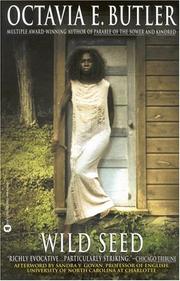
Revisiting Octavia Butler’s “Wild Seed,” the 1980 novel that opens her Patternist series
Balle Balle Radio™ Entertainment Desk Octavia E. Butler's "Wild Seed," released in 1980, remains one of the author's most widely…
How The Odyssey Pushed Nolan Into Cinema’s Billion-Dollar Elite
How The Odyssey Pushed Nolan Into Cinema's Billion-Dollar Elite Studio CarryOnHarry Entertainment Desk | 13 October 2026 The Odyssey Rewrites…

Hema Malini Turns 78: The Actress Who Played Twins and Won Only Once for It
Balle Balle Radio™ Entertainment Desk Hema Malini turns 78 on 16 October 2026, having been born on the same date…
Bollywood Loses a Titan: Patekar Dies, State Funeral Confirmed
Director Anees Bazmee breaks silence on Nana Patekar's death, calling it unbearable. Read the full story on India's cinema legend's…

CSIFF26 Showcases Diverse Caribbean Voices Through Six Nominated Films This October
Conch Shell International Film Festival returns to Queens October 9-11 with six Best Film nominees exploring Caribbean and diaspora filmmaking.

AFI Movie Club Celebrates Tod Browning’s ‘Dracula’ as a Landmark of Horror Cinema
AFI Movie Club spotlights Tod Browning's 1931 'Dracula' starring Bela Lugosi, the film that launched Universal's Monster franchise and defined…
Editor's Choice
Revisiting Octavia Butler’s “Wild Seed,” the 1980 novel that opens her Patternist series
Balle Balle Radio™ Entertainment Desk
Octavia E. Butler’s "Wild Seed," released in 1980, remains one of the author’s most widely read novels decades after its release. It opens Butler’s five-book Patternist cycle, a five-book speculative fiction cycle, and continues to draw new readers and critical attention.
Butler, who died in 2006, is widely regarded as one of the first Black women to gain major recognition in American science fiction, a genre that offered her few peers when she began publishing in the 1970s. Her work is frequently cited within Afrofuturism, the broader cultural movement that uses speculative fiction, technology, and alternate histories to explore the experiences of the African diaspora and to imagine Black futures beyond the constraints of the present.
"Wild Seed" is addresses themes of gender, healing roles, and the experiences of Black women, reflecting the novel’s focus on characters navigating power, transformation, and survival across generations. Readers and reviewers have consistently described it as a character-driven work rather than a plot-heavy one, with its two central figures carrying the novel through sustained psychological and emotional depth. The book is the first in the five-volume Patternist series and has drawn an active readership on platforms like Goodreads, where it holds a strong average rating from tens of thousands of readers.
The novel has also found renewed life in reading groups and community discussions in recent years, often paired with other Afrofuturist or speculative work, a sign of Butler’s lasting pull on readers well outside the genre’s traditional audience.
Studio CarryOnHarry sees "Wild Seed" as a useful entry point for readers curious about Butler’s influence on contemporary speculative fiction, and worth a look for anyone building out an Afrofuturism reading list.
About the Author: An American science fiction writer, one of the best-known among the few African-American women in the field.
[Comment by Tricia Sullivan, on The Guardian][1]:
Octavia E Butler (1947–2006)
> I was teaching in New York when I came across Octavia E Butler’s Kindred in a secondary-school catalogue of novels recommended to support diversity. It caught my attention because Butler was described as a science-fiction writer. I thought I was familiar with science fiction, but I’d never heard of her – nor have a great many other readers, I suspect. For many years, Butler was the sole African-Ameri
Read more People’s Choice stories on Studio CarryOnHarry. Reporting via Live News Vault.
Are you an author with a new release? We’re always looking for books to cover and authors to interview — tell us about yours here.
Press Releases at Studio CarryOnHarry
Harry Johal — Entertainment Editor
Harry Johal is the Entertainment Editor at Studio CarryOnHarry, overseeing the newsroom's day-to-day coverage.
Related Posts

Audiences Are Rating ‘Spider-Man: Brand New Day’ and ‘Resident Evil’ Among 2026’s Hottest Films
Balle Balle Radio™ Entertainment Desk Two 2026 releases, "Resident Evil" and "Spider-Man: Brand New Day," are tied at the top…
How The Odyssey Pushed Nolan Into Cinema’s Billion-Dollar Elite
How The Odyssey Pushed Nolan Into Cinema's Billion-Dollar Elite Studio CarryOnHarry Entertainment Desk | 13 October 2026 The Odyssey Rewrites…
Hema Malini Turns 78: The Actress Who Played Twins and Won Only Once for It
Balle Balle Radio™ Entertainment Desk Hema Malini turns 78 on 16 October 2026, having been born on the same date…
Bollywood Loses a Titan: Patekar Dies, State Funeral Confirmed
Director Anees Bazmee breaks silence on Nana Patekar's death, calling it unbearable. Read the full story on India's cinema legend's…
CSIFF26 Showcases Diverse Caribbean Voices Through Six Nominated Films This October
Conch Shell International Film Festival returns to Queens October 9-11 with six Best Film nominees exploring Caribbean and diaspora filmmaking.
AFI Movie Club Celebrates Tod Browning’s ‘Dracula’ as a Landmark of Horror Cinema
AFI Movie Club spotlights Tod Browning's 1931 'Dracula' starring Bela Lugosi, the film that launched Universal's Monster franchise and defined…
-

 Books3 days ago
Former Wildlife Officer Rick Larnerd Blends Gasparilla Legend with Modern Florida Thriller in New Novel
-

 Books3 days ago
Barry R. Willis’s New Book Traces the Pony Express and Its Costs on the Frontier
-

 Books3 days ago
Former Wildlife Officer Rick Larnerd Blends Gasparilla Legend with Modern Florida Crime Fiction in New Novel
-

 Books3 days ago
Former Game Warden Turns Three Decades of Conservation Work into Florida Crime Novel
-
 Books4 days ago
Katt Taylor’s New Novel Follows a Woman’s Fractured Spirit from Darkness to Awakening
-

 Books5 days ago
Fulton Books Author Abagail Lynn Releases Fantasy Adventure “The Rebel”