
Art & Entertainment
Netflix’s October 2026 Slate: ‘East of Eden’ Adaptation, Ben Affleck Thriller, ‘Diplomat’ Season 4


Balle Balle Radio™ Entertainment Desk
Netflix’s October 2026 lineup centers on a handful of high-profile originals: Florence Pugh leads the cast in this new adaptation of the classic Steinbeck novel, Ben Affleck and Gillian Anderson star in this political thriller, and "The Diplomat," an Emmy-nominated drama, returns for season four.
The month’s release calendar, detailed in an industry preview, spans more than twenty titles across scripted drama, documentary, anime, reality and international programming, reflecting Netflix’s now-standard approach of pairing a few marquee originals with a steady stream of licensed catalog titles and global-market series aimed at different audience segments.
The Steinbeck adaptation, a limited series titled "East of Eden," casts Pugh as Cathy Ames and arrives October 1 as one of the platform’s more literary bets of the fall. It lands alongside a wave of licensed films that same day, including "Ad Astra," "The Devil Wears Prada," "The Sixth Sense," "Pearl Harbor" and multiple seasons of "NCIS" — the kind of familiar-title bulk that typically pads a month’s new-content count alongside the originals.
October 9 brings "Animals," a political thriller starring Affleck and Anderson about a mayoral candidate and his wife drawn into dangerous territory after their son’s kidnapping, according to the preview and a trailer that has circulated separately. The same week, October 8, brings "Below," a six-episode supernatural thriller starring Josh Hartnett set in a coastal town terrorized by something in the water — a project Netflix has also been promoting through its own trailer release.
Tyler Perry returns October 2 with "Doing Life," a romantic drama starring Naomi Baker and Jay Reeves. It will be Perry’s eighth feature made for Netflix, following titles including "A Fall from Grace," "A Jazzman’s Blues" and "Mea Culpa," continuing a production relationship between Perry and the platform that dates back several years.
Keri Russell reprises her role in "The Diplomat" season four on October 15, continuing the well-received original series. Also on the documentary side: "Lorne," director Morgan Neville’s look at "Saturday Night Live" creator Lorne Michaels, featuring interviews with Tina Fey, Conan O’Brien, Maya Rudolph and Chris Rock, out October 5, and "Schumacher ’94 — The Birth of a Legend," chronicling Michael Schumacher’s 1994 Formula 1 title run, out October 2.
The rest of the slate leans international and genre-specific: a Korean fantasy-horror series ("Dead-End Job"), a German psychological thriller ("The Trap"), a Filipino horror-mystery ("Balaraw: Blood Island"), a Polish biographical drama about rock musician Jan Borysewicz ("Less of a Stranger"), and returning anime and reality titles including "Blue Box" season two and "Love Village" season three.
Netflix has not published an official release calendar for the month as of this writing; scheduling for later-October titles beyond October 15 was not detailed in the available preview.
Studio CarryOnHarry Perspective
Literary adaptations and prestige limited series represent a deliberate bet by streaming platforms that quality and cultural weight still matter to subscribers—that not everyone optimizes for quantity alone. This taps into a deeper hunger: the desire to feel like a viewing choice was *earned* rather than merely convenient, especially when a book like "East of Eden" carries decades of classroom authority and critical standing.
In practice, this strategy appears most valuable at moments of subscriber churn or price increases. A household genuinely torn between services may stay for a prestige drama they can discuss at work or defend to skeptical family members—"we’re watching the Steinbeck adaptation"—in ways a fourth reality dating show cannot match. Awards nominations amplify this effect: an Emmy or Golden Globe nomination becomes free marketing that whispers "this matters."
The constraint here is that prestige does not automatically translate to viewership at scale. A critically adored limited series may underperform the analytics of a mid-tier reality show, making it harder to justify the cost to shareholders. Netflix’s preview itself suggests these titles anchor a broader, more eclectic slate—they’re not the whole strategy, just the visible crown jewel.
The most useful way to interpret this may be not as Netflix suddenly becoming a literary platform, but as a company recognizing that different subscriber segments value different legitimacy markers. A Florence Pugh adaptation and a Tyler Perry romantic drama coexist because they’re solving different retention problems for different viewers.
From the Editor — Harry Johal
"That is part of the beauty of all literature. You discover that your longings are universal longings." — F. Scott Fitzgerald
I was scrolling through release schedules on my phone this morning—the kind of thing you do while your coffee cools—when I landed on Florence Pugh cast as Cathy Ames. "East of Eden" on Netflix in October. And Fitzgerald’s line came to mind: "You discover that your longings are universal longings."
It stopped me. Because what Netflix is really doing here, underneath all the slate announcements and subscriber retention math, is banking on exactly that discovery. They’re not just releasing a Steinbeck adaptation. They’re releasing permission—permission to sit with a story that millions of readers before you sat with, to feel what they felt, to ask the same questions about ambition and corruption and family that Steinbeck asked seventy years ago.
That’s the real hunger. Not for more content. For confirmation that what moves you isn’t private or small. That your longing to understand cruelty, or redemption, or the weight of a name—these aren’t quirks. They’re human. Universal.
A prestige adaptation doesn’t guarantee viewership. The analytics don’t always justify the cost. But it does something subtler: it reminds people that they’re not alone in what they want to watch, what they want to feel, what they want to *mean* by choosing one story over another. In a world that treats everything as convenience, that reminder matters more than most things Netflix will release that month. Maybe more than Netflix knows.
Read more People’s Choice stories on Studio CarryOnHarry. Reporting via Live News Vault.
Are you an author with a new release? We’re always looking for books to cover and authors to interview — tell us about yours here.
Press Releases at Studio CarryOnHarry
Related Posts

How a Career Box-Office Flop Became One of Prime Video’s Most-Watched Films
"The Mummy," the 2017 Tom Cruise action-horror film widely regarded as among the largest theatrical failures in his filmography, has…

The Gentlemen, Smile 2 Join 107 Other Titles in Netflix’s Heavy September Content Week
Balle Balle Radio™ Entertainment Desk A new-releases roundup shows Netflix added 109 titles to its US library this week—95 movies…

Gandhari and the Netflix Copyright Fight: When a Small Writer Takes On a Streaming Giant
Balle Balle Radio™ Entertainment Desk Taapsee Pannu's new Netflix thriller arrives tangled in an authorship dispute and a familiar subject…
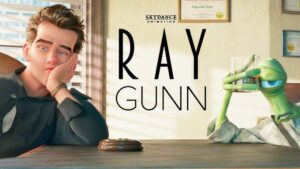
Brad Bird’s New Animated Detective Epic ‘Ray Gunn’ Coming to Netflix After London Film Festival
Netflix has acquired the exclusive streaming rights to Brad Bird's animated feature "Ray Gunn" starting Dec. 18, 2026, following a…

Maryland and DC Independent Filmmaker Arjay Jones Launches Earth Three Pictures
Filmmaker Arjay Jones has established Earth Three Pictures, an independent production company focused on creating opportunities for creatives in the…

Tom Cruise’s Top Gun Maverick Arrives on Netflix With Little Fanfare
Balle Balle Radio™ Entertainment Desk Netflix's September 2026 film lineup mixes five original productions with a licensed catalog title that…

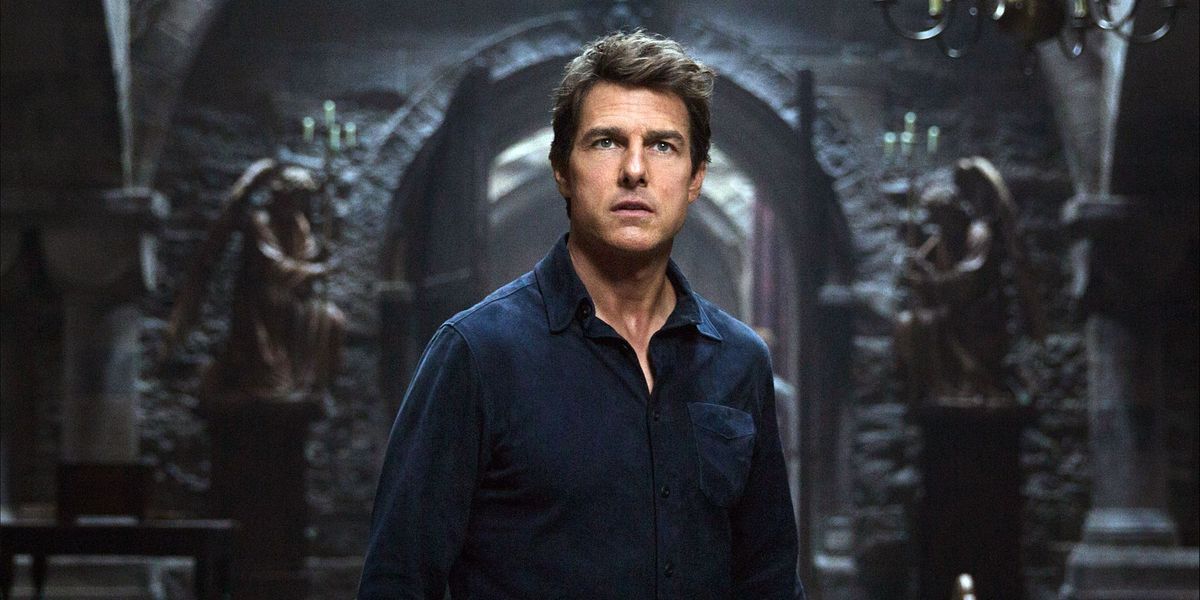
"The Mummy," the 2017 Tom Cruise action-horror film widely regarded as among the largest theatrical failures in his filmography, has emerged as one of Prime Video’s top-performing films, according to reports tracking the platform’s charts. One report placed the film at the 10th spot on Prime Video’s top movies list.
The film was meant to launch Universal’s "Dark Universe," a planned shared cinematic world built around the studio’s classic monster properties. That plan collapsed after "The Mummy" opened to poor reviews and underwhelming domestic box office, and no further Dark Universe films followed.
The streaming resurgence comes as Cruise’s own on-screen monster-movie history draws fresh attention: reports note the film is being rediscovered by viewers nearly a decade after its theatrical run, arriving on Prime Video after what one report described as an underwhelming box office performance at the time. Cruise starred as Nick Morton alongside Russell Crowe, Annabelle Wallis, and Sofia Boutella, who played the title character.
It isn’t clear what’s driving the renewed interest, whether algorithmic promotion, nostalgia, or simple curiosity about a film best remembered for its failed franchise ambitions. Prime Video has not issued a statement explaining the title’s chart position, and no viewership numbers have been made public.
The film’s climb echoes a broader pattern: other theatrical disappointments, including a 2020s Gerard Butler action film, have found similar second lives on streaming platforms long after their box office runs ended.
Related Posts

Netflix’s October 2026 Slate: ‘East of Eden’ Adaptation, Ben Affleck Thriller, ‘Diplomat’ Season 4
Balle Balle Radio™ Entertainment Desk Netflix's October 2026 lineup centers on a handful of high-profile originals: Florence Pugh leads the…
The Gentlemen, Smile 2 Join 107 Other Titles in Netflix’s Heavy September Content Week
Balle Balle Radio™ Entertainment Desk A new-releases roundup shows Netflix added 109 titles to its US library this week—95 movies…
Gandhari and the Netflix Copyright Fight: When a Small Writer Takes On a Streaming Giant
Balle Balle Radio™ Entertainment Desk Taapsee Pannu's new Netflix thriller arrives tangled in an authorship dispute and a familiar subject…
Brad Bird’s New Animated Detective Epic ‘Ray Gunn’ Coming to Netflix After London Film Festival
Netflix has acquired the exclusive streaming rights to Brad Bird's animated feature "Ray Gunn" starting Dec. 18, 2026, following a…
Maryland and DC Independent Filmmaker Arjay Jones Launches Earth Three Pictures
Filmmaker Arjay Jones has established Earth Three Pictures, an independent production company focused on creating opportunities for creatives in the…
Tom Cruise’s Top Gun Maverick Arrives on Netflix With Little Fanfare
Balle Balle Radio™ Entertainment Desk Netflix's September 2026 film lineup mixes five original productions with a licensed catalog title that…
Art & Entertainment
The Gentlemen, Smile 2 Join 107 Other Titles in Netflix’s Heavy September Content Week
Balle Balle Radio™ Entertainment Desk
A new-releases roundup shows Netflix added 109 titles to its US library this week—95 movies and 14 series—with "The Gentlemen" Season 2 and "Smile 2" as the primary highlights.
The large number follows Netflix’s typical rhythm of a major first-of-the-month release window on September 1, supplemented by additional licensed titles throughout the week. The source separately detailed 68 September 1 arrivals, indicating that most of this week’s total comprises licensed back-catalog rather than original content.
Guy Ritchie’s "The Gentlemen" returns with Eddie Horniman (Theo James) deepening his control of the aristocratic weed operation he took over in season one. The show is described in the roundup as continuing the first season’s mix of crime, comedy and rapid-fire dialogue, with a four-star review from the outlet accompanying its return.
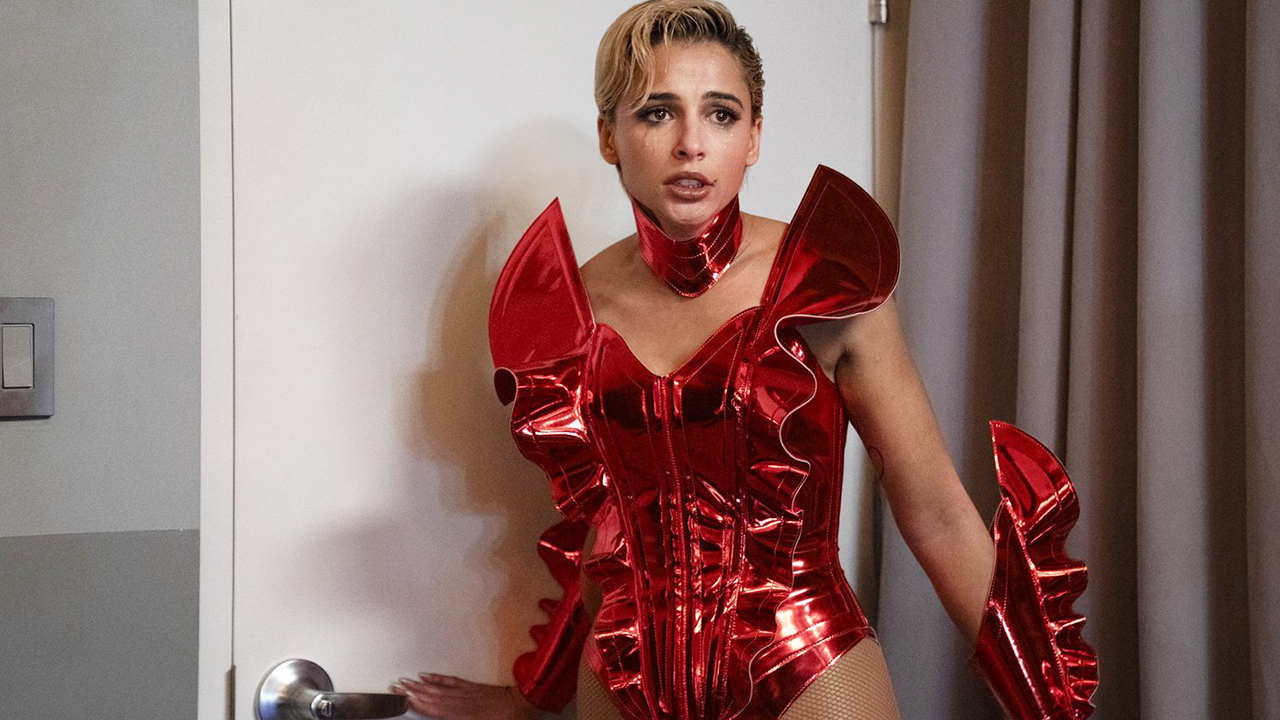
The 2024 Paramount thriller "Smile 2" centers on a global pop sensation (Naomi Scott) who experiences terrifying, unexplained phenomena during her world tour connected to the malevolent force from the original film. It’s one of several recent Paramount titles the roundup says are landing on Netflix this month.
Also new is "Untold: Raygun – Breaking Badly," a documentary entry in Netflix’s "Untold" sports series examining Rachael Gunn, the Australian breakdancer known as Raygun whose performance at the 2024 Paris Olympics became a global viral moment. The film is described as covering both the internet backlash Gunn faced and the competitive mechanics of breaking itself.
The rest of the week’s additions lean heavily on older licensed catalog: the original "Jaws" franchise, all six "Resident Evil" films, a run of 1980s and ’90s comedies including "Big Daddy" and "Liar Liar," and prestige titles like "Phantom Thread" and "The Deer Hunter." Several international originals also arrived, including the Hindi-language film "Gandhari" and the Spanish-language documentary "Fito Páez: El mundo cabe en una canción."
Netflix has not said whether the pace of licensed-catalog acquisitions will continue at this scale into October; the roundup covers only titles added through September 5.
Public Opinion
Critical reception for "The Gentlemen" Season 2 emphasizes Guy Ritchie’s signature style translating effectively to the streamer. Reviewers describe the season as "surprisingly great," highlighting how the drama has "upped the ante" with its sophomore installment. The show’s blend of crime, comedy, and rapid-fire dialogue continues to resonate, with critics noting the characters’ deeper embeddedness in their criminal world and praising the mix of boxing, fixed fights, and non-linear storytelling as quintessentially Ritchie. One assessment captures the tone succinctly: the characters are "irritating, stupid and extremely funny." Overall, the season is positioned as a genuine streaming must-watch that delivers on engagement and entertainment value.
Read more People’s Choice stories on Studio CarryOnHarry. Reporting via Live News Vault.
Press Releases at Studio CarryOnHarry
Related Posts
How a Career Box-Office Flop Became One of Prime Video’s Most-Watched Films
"The Mummy," the 2017 Tom Cruise action-horror film widely regarded as among the largest theatrical failures in his filmography, has…
Netflix’s October 2026 Slate: ‘East of Eden’ Adaptation, Ben Affleck Thriller, ‘Diplomat’ Season 4
Balle Balle Radio™ Entertainment Desk Netflix's October 2026 lineup centers on a handful of high-profile originals: Florence Pugh leads the…
Gandhari and the Netflix Copyright Fight: When a Small Writer Takes On a Streaming Giant
Balle Balle Radio™ Entertainment Desk Taapsee Pannu's new Netflix thriller arrives tangled in an authorship dispute and a familiar subject…
Brad Bird’s New Animated Detective Epic ‘Ray Gunn’ Coming to Netflix After London Film Festival
Netflix has acquired the exclusive streaming rights to Brad Bird's animated feature "Ray Gunn" starting Dec. 18, 2026, following a…
Maryland and DC Independent Filmmaker Arjay Jones Launches Earth Three Pictures
Filmmaker Arjay Jones has established Earth Three Pictures, an independent production company focused on creating opportunities for creatives in the…
Tom Cruise’s Top Gun Maverick Arrives on Netflix With Little Fanfare
Balle Balle Radio™ Entertainment Desk Netflix's September 2026 film lineup mixes five original productions with a licensed catalog title that…
-

 Books5 days ago
Former Wildlife Officer Rick Larnerd Blends Gasparilla Legend with Modern Florida Thriller in New Novel
-

 Books5 days ago
Barry R. Willis’s New Book Traces the Pony Express and Its Costs on the Frontier
-

 Books10 hours ago
Benjamin German’s New Collection, ‘The Pen of Ben,’ Explores Love Through Life’s Small Moments
-

 Books5 days ago
Former Wildlife Officer Rick Larnerd Blends Gasparilla Legend with Modern Florida Crime Fiction in New Novel
-

 Books5 days ago
Former Game Warden Turns Three Decades of Conservation Work into Florida Crime Novel
-

 Books4 days ago
New Children’s Book Follows Three Boys Through County Fair Livestock Week