
Editor's Choice
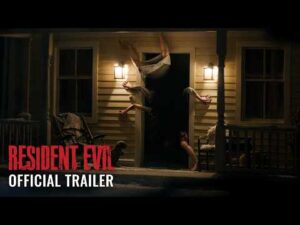
After Seven Duds, ‘Resident Evil’ Finally Captures What Fans Want: The Feel of Playing the Games

Balle Balle Radio™ Entertainment Desk
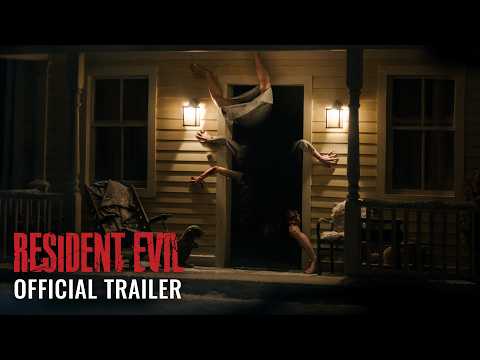
Zach Cregger’s new "Resident Evil" adaptation has cleared a bar the franchise’s live-action films have struggled with for two decades: both critical and audience responses have converged around the film’s merits. The film holds a Certified Fresh 95% among critics and a Verified Hot 91% audience score on Rotten Tomatoes’ Popcornmeter, according to the site’s own audience-review roundup, and it has also broken multiple franchise and opening-weekend box office records.
That combination matters given the history. There have been seven prior live-action "Resident Evil" films, most recently a 2021 reboot that landed with little critical or commercial traction. Cregger, whose credits include "Barbarian" and "Weapons," took over the project as a self-described fan of the video game series, and the approach he settled on was not a direct retelling of any single game’s plot but focused on capturing the sensation of experiencing the games rather than adapting their narratives.
reviewers throughout the compiled responses consistently emphasize this same theme. One reviewer, identified only as Kevin, wrote that Cregger seemed to recognize he couldn’t satisfy every fan by adapting "RE1," "2" and "3" directly, so he built the film around the sensation of being dropped into the games instead. Others compared the tonal mix — jump scares layered with comic relief — to John Carpenter’s "The Thing," and several said the film works for viewers with zero background in the games, while still scattering in enough series nods to reward longtime players.
while mostly positive, some audience members raised reservations. At least one commenter, going by Rob, argued the film’s connection to the source material is thin enough that it plays more like a loosely licensed spin-off than a true franchise entry, and suggested it might have scored better as a standalone horror movie without the "Resident Evil" name attached. Another reviewer flagged pacing choices around humor landing in otherwise tense scenes as a point of friction, and called the ending unresolved. Both critiques came alongside largely positive scores from the same reviewers, which is its own data point about where the film sits with its audience.
For a franchise that has spent most of its life as a critical afterthought regardless of its box office reliability, the more interesting story may be less about this single film’s numbers and more about whether prioritizing directorial vision over source-material fidelity — is the formula that finally works for video game movies built on atmosphere rather than plot.
Public Opinion
Audience response has coalesced around Cregger’s tonal balance and his choice to prioritize the *feeling* of the games over strict narrative fidelity. The film’s 91% Popcornmeter score reflects viewers’ appreciation for that approach—particularly among those with no prior series knowledge, who found the jump-scare-and-humor blend accessible. Multiple review threads across platforms highlight the same tension: while some longtime fans questioned whether the loose connection to source material warranted the "Resident Evil" name at all, suggesting it might have worked better as a standalone, most paired such critiques with positive assessments. Cregger himself acknowledged surprise at the fan response, reassuring both veterans and newcomers that the film would satisfy them despite its departures from game canon. The consensus suggests audiences largely accepted the trade-off—narrative deviation in exchange for directorial vision and atmospheric cohesion.
Read more People’s Choice stories on Studio CarryOnHarry. Reporting via Live News Vault.
Press Releases at Studio CarryOnHarry
Powered by SgAiSolution
Related Posts
Global Ambitions Meet Cultural Tradition: ‘Ramayana’ Gets Two Versions, But at What Cost?
Balle Balle Radio™ Entertainment Desk Nitesh Tiwari's "Ramayana: Part 1" is planned in multiple edits tailored to regional audiences, with…

Salman Khan’s Reinvention Isn’t About Vanity — It’s About Refusing to Apologise
Balle Balle Radio™ Entertainment Desk Between viral paparazzi clips, a Bigg Boss physique reveal, and Maidaan's uncertain path to release,…
Week 7 and Still Counting: How Hanuman Ansh Broke the Mould
Week 7 and Still Counting: How Hanuman Ansh Broke the Mould Studio CarryOnHarry Entertainment Desk | 22 September 2026 A…

Hrithik Roshan Moves Behind the Camera for Prime Video Thriller ‘Storm’
Balle Balle Radio™ Entertainment Desk Hrithik Roshan is producing a series for the first time, backing a Mumbai-based thriller called…
Alia Bhatt Attends Special Screening of Mother’s Film ‘Om Ka Hari,’ Praises It as ‘Gem’
Balle Balle Radio™ Entertainment Desk Alia Bhatt attended a special screening of "Om Ka Hari" in Mumbai this week to…

Gondhal Wins India’s Oscar Slot After Dhurandhar Garners Just 4 Jury Votes
Balle Balle Radio™ Entertainment Desk The Film Federation of India's 14-member jury gave Ranveer Singh's action drama "Dhurandhar" four votes…

Editor's Choice
CSIFF26’s Shortlist: How Six Filmmakers Are Pushing Caribbean Cinema Beyond Borders
Six Best Film nominees at the Conch Shell International Film Festival span the Caribbean and diaspora. The festival takes place October 9–11, 2026.

Balle Balle Radio™ Entertainment Desk
Six Best Film nominees at the Conch Shell International Film Festival span multiple locations across the Caribbean and diaspora—Havana and Los Angeles, Kingston and Brooklyn, Georgetown and London. CSIFF takes place October 9–11, 2026, with screenings at Regal UA Midway in Forest Hills and discussion panels at HB Playwright Theatre in Manhattan, per festival details.
This year’s slate is part of a larger official selection of 47 films from 14 countries and territories, per festival materials, with the six Best Film nominees standing in for the breadth of that lineup. Conch Shell is a program of Conch Shell Productions, Inc., a Queens-based nonprofit built around the idea that Caribbean and diaspora film can serve as a tool for social change.
The slate encompasses both narratives rooted in the Caribbean and stories told from diaspora communities, and the directors’ own accounts of their work point in different directions. Gabriela Paciel, born and raised in Havana and now based in Los Angeles, built "I F*cking Hate You!" out of her relationship with her sister. Paciel reflected that she has long said "I will give her a kidney," emphasizing the depth of familial commitment. "I hope she doesn’t need it ever, but I will give her a kidney. And I know she will do the same."
Hanif James’s "A Shade Of Indigo," set in Jamaica, follows a girl raised on the message that "anything Black not good" — a phrase James describes as common there — and traces it back to his own grandmother’s advice never to marry anyone darker than himself.
Sargeant’s multi-hyphenate effort "Stand Clear ‘The Closing Doors" was inspired by a subway encounter and filmed guerrilla-style over six hours on an operational train. "I made this film for Black women first and foremost," Sargeant said, "to feel seen and also to let us know that we have a right to take up space unapologetically in this world."
Juliette Jeffers, who grew up in the Bronx fascinated by the steel pan drum, turned a one-woman stage show into "Pan Gyul," which she describes as the first professional film to tell a Nevisian story. The film has screened at Cannes and the Pan African Film Festival, where Jeffers says audiences unfamiliar with Nevis left wanting to visit the island themselves.
Noella Letitia Mingo’s "Mummy?," based on her cousin’s story, centers on a tragedy that reshapes a woman’s life and the strength it takes to carry on. "As a Black woman who lives in Britain, who’s of Guyanese heritage, I didn’t feel I was being heard at all," Mingo said. "That’s why I started making films."
And in Karen Martinez’s "Trinidad Remains," a British-born woman named Nikki travels reluctantly to Trinidad to scatter her estranged grandmother’s ashes, joined by her cousin Jade and an unreliable old car — a trip upended by a stranger’s hold-up that ends up changing how Nikki understands both the island and herself.
"What excites me about these six films is that there is no single way they are telling us what it means to be Caribbean," said Magaly Colimon-Christopher, the festival’s founder and director, in the announcement. "These filmmakers are talking about colorism, sisterhood, belonging, Black women taking up space, grief, family, and the complicated relationship we can have with the places we come from."
Full schedule and ticket information are posted at conchshelliff.com.
For Studio CarryOnHarry, what stands out here isn’t the geography so much as the range packed into six films — colorism, subway encounters, steel pan history, inherited grief — proof that a festival built around one region doesn’t have to tell one kind of story.
Read more People’s Choice stories on Studio CarryOnHarry. Reporting via Live News Vault.
Press Releases at Studio CarryOnHarry
Powered by SgAiSolution
Related Posts
After Seven Duds, ‘Resident Evil’ Finally Captures What Fans Want: The Feel of Playing the Games
Balle Balle Radio™ Entertainment Desk Zach Cregger's new "Resident Evil" adaptation has cleared a bar the franchise's live-action films have…
Global Ambitions Meet Cultural Tradition: ‘Ramayana’ Gets Two Versions, But at What Cost?
Balle Balle Radio™ Entertainment Desk Nitesh Tiwari's "Ramayana: Part 1" is planned in multiple edits tailored to regional audiences, with…
Salman Khan’s Reinvention Isn’t About Vanity — It’s About Refusing to Apologise
Balle Balle Radio™ Entertainment Desk Between viral paparazzi clips, a Bigg Boss physique reveal, and Maidaan's uncertain path to release,…
Week 7 and Still Counting: How Hanuman Ansh Broke the Mould
Week 7 and Still Counting: How Hanuman Ansh Broke the Mould Studio CarryOnHarry Entertainment Desk | 22 September 2026 A…
Hrithik Roshan Moves Behind the Camera for Prime Video Thriller ‘Storm’
Balle Balle Radio™ Entertainment Desk Hrithik Roshan is producing a series for the first time, backing a Mumbai-based thriller called…
Alia Bhatt Attends Special Screening of Mother’s Film ‘Om Ka Hari,’ Praises It as ‘Gem’
Balle Balle Radio™ Entertainment Desk Alia Bhatt attended a special screening of "Om Ka Hari" in Mumbai this week to…
Editor's Choice
Global Ambitions Meet Cultural Tradition: ‘Ramayana’ Gets Two Versions, But at What Cost?
Balle Balle Radio™ Entertainment Desk
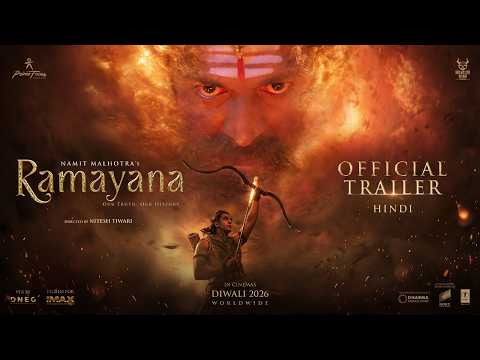
Nitesh Tiwari’s "Ramayana: Part 1" is planned in multiple edits tailored to regional audiences, with reports indicating the international version will be approximately 30 minutes shorter than the one Indian audiences will see. The film is the opening chapter of a two-film series based on Valmiki’s ancient Sanskrit text, following Prince Rama’s journey from Ayodhya.
The editing decision arrives alongside a more pointed claim attributed to the producer: that the film’s success will ultimately be judged by how it performs in Western markets. If it fails to make an impact there, the producer has reportedly said, it will be considered a failure regardless of how it does elsewhere.
That’s a striking bar to set for a story this specific to Indian religious and cultural tradition. Unlike generic fantasy epics that use mythology decoratively, the Ramayana stands as a core spiritual and literary work with deep roots in centuries of devotional practice and diverse regional interpretations, watched by Indian audiences with a familiarity no marketing campaign manufactures. Measuring that film’s worth primarily by Western box office receipts inverts the usual logic of how culturally specific epics have traveled internationally in the past, where domestic and diaspora success typically came first and crossover interest followed, if it came at all.
The production has scale to back its ambitions. The production features producers Namit Malhotra and Yash, with Tiwari and Shridhar Raghavan handling screenplay duties, and a cast roster spanning Ranbir Kapoor, Sai Pallavi, Sunny Deol, Anupam Kher, Kajal Aggarwal, Rakul Preet Singh, Vivek Oberoi, Kunal Kapoor, Arun Govil, and Lara Dutta. Reports have also pointed to a planned marketing push tied to the 2026 FIFA World Cup, with short promotional spots airing during matches — a strategy aimed squarely at the international audience the producer has singled out as the real test.
The reported budget circulating in coverage has been described in the hundreds of millions of dollars, a figure that would require substantial global returns to justify on financial grounds alone, separate from any argument about cultural reach.
Studio CarryOnHarry will be watching whether "Ramayana: Part 1" ends up judged on the terms its own producer has set, or whether that framing quietly falls away if the film’s real strength turns out to be at home.
Read more People’s Choice stories on Studio CarryOnHarry. Reporting via Live News Vault.
Press Releases at Studio CarryOnHarry
Powered by SgAiSolution
Related Posts
Salman Khan’s Reinvention Isn’t About Vanity — It’s About Refusing to Apologise
Balle Balle Radio™ Entertainment Desk Between viral paparazzi clips, a Bigg Boss physique reveal, and Maidaan's uncertain path to release,…
Week 7 and Still Counting: How Hanuman Ansh Broke the Mould
Week 7 and Still Counting: How Hanuman Ansh Broke the Mould Studio CarryOnHarry Entertainment Desk | 22 September 2026 A…
Hrithik Roshan Moves Behind the Camera for Prime Video Thriller ‘Storm’
Balle Balle Radio™ Entertainment Desk Hrithik Roshan is producing a series for the first time, backing a Mumbai-based thriller called…
Alia Bhatt Attends Special Screening of Mother’s Film ‘Om Ka Hari,’ Praises It as ‘Gem’
Balle Balle Radio™ Entertainment Desk Alia Bhatt attended a special screening of "Om Ka Hari" in Mumbai this week to…
Gondhal Wins India’s Oscar Slot After Dhurandhar Garners Just 4 Jury Votes
Balle Balle Radio™ Entertainment Desk The Film Federation of India's 14-member jury gave Ranveer Singh's action drama "Dhurandhar" four votes…

If it was good then why did Priyadarshan remake it, and if i
Balle Balle Radio™ Entertainment Desk“If it was good then why did Priyadarshan remake it, and if it was good then…
-
 Editor's Choice5 days ago
Prime Video India’s August-September slate: a cop drama, a reality reboot and a Carnatic music saga
-

 Books6 days ago
Rockingham Author Lucy Allen Releases Third Devotional, “In Jars of Clay”
-

 TV & MOVIES4 days ago
Three Major Bollywood Stars Being Courted for Reimagined Race Franchise
-

 Editor's Choice5 days ago
If it was good then why did Priyadarshan remake it, and if i
-

 Books6 days ago
Katie Willis’s New Poetry Collection “Hidden Hallelujahs” Finds Faith in Ordinary Moments
-

 Books6 days ago
J.N. Banta, Former Biotech Researcher, Debuts Fiction With Murder-Mystery Novel “All That Was Once Hidden”