
Editor's Choice
Salman Khan’s Reinvention Isn’t About Vanity — It’s About Refusing to Apologise


Balle Balle Radio™ Entertainment Desk
Between viral paparazzi clips, a Bigg Boss physique reveal, and Maidaan’s uncertain path to release, Salman Khan’s evolution from a reserved star to an unapologetic public figure says as much about India’s celebrity culture as it does about the actor himself.
Salman Khan has never needed a film release to make headlines. In recent weeks, viral clips from a Dubai trip — where he was seen in a cap, prompting online chatter about his appearance — spread across social media and were picked up by entertainment outlets almost instantly. What followed wasn’t a scandal. It was something closer to a referendum on how India’s biggest star has chosen to age, and how publicly he’s decided to push back against those commenting on it.
The reaction itself is worth examining, separate from the man at its centre. A viral cap photo becoming national entertainment news says less about Salman Khan and more about how thin the line has become between celebrity observation and celebrity surveillance.
A Different Salman
Those who worked alongside Khan during the Maine Pyar Kiya era describe a notably different public personality — quieter, more reserved, even somewhat influenced by a Hollywood-inflected coolness in his early screen presence. That version of Salman Khan was, by most accounts, shy rather than combative, subtle rather than loud.
The shift is widely traced to Wanted (2009), the film credited with reintroducing Khan through a harder physique, a more theatrical dialogue delivery, and an on-screen persona built on unapologetic swagger. Bonny Kapoor recently marked the film’s 17th anniversary, and the moment invited reflection on how significant that stylistic pivot actually was — not just for Khan’s career, but for single-screen cinema, which found in Wanted a certain big-screen, dialogue-driven energy that had been missing.
What’s happened since, particularly visible during his recent Bigg Boss appearance, looks like an extension of that same trajectory rather than a new one. The physical transformation — visibly the product of rigorous gym work rather than any cosmetic shortcut — has been paired with a willingness to directly confront trolls, paparazzi, and unflattering camera angles on camera, in real time.
The Paparazzi Problem
Khan’s on-air remarks about photographers taking deliberately unflattering or inappropriate-angle shots of actresses — and his blunt suggestion that such behaviour deserves confrontation — is where the conversation gets more complicated. It’s a real grievance dressed in a phrasing that will likely divide opinion: some will hear a star defending his colleagues; others will hear an aggressive, almost vigilante tone that sits uneasily with public discourse.
Both readings can be true at once. The underlying issue — a paparazzi culture that has, by many accounts, grown more invasive since social media turned every unflattering photograph into potential viral content — is real and well documented globally, not unique to Bollywood. The pressure to generate the next viral image, the next breaking-news graphic, has created incentives for photographers to chase precisely the moments celebrities least want captured. Jaya Bachchan has spoken publicly about this dynamic for years.
What’s less certain is whether Khan’s specific proposed remedy — confrontation, even physical threat — is the right response, or whether it simply escalates a culture already prone to controversy-as-content. There’s also a reasonable counterpoint: photographers, however aggressive their methods, are operating within an ecosystem that rewards exactly this kind of image. The audience clicking on the photo is as responsible for the incentive structure as the photographer taking it. A mutual, sustainable understanding between celebrities and media — rather than confrontation on one side — is probably the more durable long-term fix, even if it’s the less viral one.
Maidaan’s Uncertain Road
Away from the personal controversies, Khan’s long-delayed film Matrbhoomi, (referred to in some reports as Matrabhoomi) remains stuck in a holding pattern. As of the most recent update, the film has not been submitted to the Censor Board, and there is no confirmed evidence of any Home Ministry involvement or government approval process, despite chatter suggesting otherwise. That distinction matters: reports of political interference should be treated as unconfirmed unless a formal, sourced statement exists.
What does appear more plausible is a geopolitical sensitivity around content. If the film’s narrative engages with the Galwan Valley clashes between India and China, industry observers reasonably expect that material to face scrutiny or recutting, given the current diplomatic climate and recent high-level engagements between the two nations. A trimmed theatrical cut, or a shift toward an OTT release, are both floated as possible outcomes — though neither is confirmed. The film’s release date has reportedly moved from April 17 to a later date, though even that remains provisional.
Studio Perspective
Strip away the noise, and what’s actually being discussed here isn’t really Salman Khan’s biceps or his Bigg Boss soundbites. It’s a much older tension: what happens when a public figure decides he no longer owes politeness to an audience that increasingly treats him as content rather than a person.
That’s a defensible position. It’s also not a neutral one. Encouraging combativeness as the answer to intrusive photography risks normalising exactly the kind of aggressive posturing that makes celebrity culture more volatile, not less. Khan’s frustration is legitimate; his prescribed solution is more debatable.
The more interesting story, arguably, is the one about incentive structures — a media economy that rewards the worst angle, the most viral clip, the most alarming headline, regardless of whether it’s earned. Salman Khan didn’t create paparazzi culture. He’s simply the highest-profile person currently refusing to quietly absorb its costs. Whether that refusal is empowering or simply loud probably depends on which side of the camera you’re standing on.
And Matrbhoomi, caught between censorship uncertainty and geopolitical timing, is a reminder that even a film with a completed production can be held hostage by forces that have nothing to do with its script, its direction, or its box-office potential.
— Studio CarryOnHarry Editorial Desk
Read more People’s Choice stories on Studio CarryOnHarry. Reporting via Live News Vault.
Related Posts

Ramayana Eyes Hong Kong Screens as Worldwide Numbers Keep Climbing
Ramayana Eyes Hong Kong Screens as Worldwide Numbers Keep Climbing Studio CarryOnHarry Entertainment Desk | 8 November 2026 Ranbir Kapoor's…
How a Post-Credit Cameo Became Bollywood’s Boldest Franchise Bet
How a Post-Credit Cameo Became Bollywood's Boldest Franchise Bet Studio CarryOnHarry Entertainment Desk | 8 November 2026 A Post-Credit Moment…
From 230 Films to a Daughter’s Words: Celebrating Kamal Haasan
Kamal Haasan celebrates his 72nd birthday. Daughter Aksharaa calls him an inspiration. Explore his 230+ films, 7 Oscar entries &…
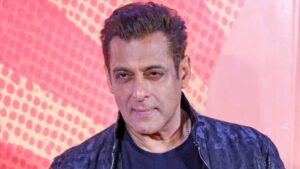
Salman Khan on His Biopic: ‘It Could Sink Reputations’
Salman Khan on His Biopic: 'My Story Could Sink a Lot of Reputations' Studio CarryOnHarry Entertainment Desk | 7 November…

Audiences Are Rating ‘Spider-Man: Brand New Day’ and ‘Resident Evil’ Among 2026’s Hottest Films
Balle Balle Radio™ Entertainment Desk Two 2026 releases, "Resident Evil" and "Spider-Man: Brand New Day," are tied at the top…

Revisiting Octavia Butler’s “Wild Seed,” the 1980 novel that opens her Patternist series
Balle Balle Radio™ Entertainment Desk Octavia E. Butler's "Wild Seed," released in 1980, remains one of the author's most widely…


Ramayana Eyes Hong Kong Screens as Worldwide Numbers Keep Climbing
Studio CarryOnHarry Entertainment Desk | 8 November 2026
Ranbir Kapoor’s Epic Myth Crosses Borders
Nitesh Tiwari’s mythological blockbuster Ramayana: Rise of a Legend is spreading its wings further east, with an official Hong Kong release confirmed for 12 November 2026. The film will screen in its original Hindi language, with Chinese and English subtitles catering to local audiences — a bold multilingual move that underlines the production’s serious international ambitions.
The announcement arrives on the heels of a stunning worldwide opening weekend, with the Ranbir Kapoor-led epic reportedly crossing ₹384 crore globally within just three days of release. Tracking closely to Bollywood’s top stories this week, the film has already emerged as one of the highest-grossing Hindi openings in recent memory.
Star-Studded Cast Driving Global Appeal
The film features Ranbir Kapoor as Lord Ram alongside Yash in a reportedly pivotal role, with Sai Pallavi rounding out the leading cast. Director Nitesh Tiwari, best known for Dangal, has translated one of Hinduism’s most beloved epics into a sweeping cinematic spectacle that has clearly resonated well beyond the Indian subcontinent.
Ticket bookings for the Hong Kong screenings are already underway, signalling strong anticipation from the city’s South Asian diaspora as well as local cinephiles drawn in by the scale of the production.
Worldwide Numbers Tell Their Own Story
A Box Office Juggernaut in the Making
By Day 3, global receipts had already surged past ₹384 crore — a figure that puts Ramayana firmly in the conversation for India’s biggest international openers ever. Industry insiders are now eyeing the ₹500 crore worldwide milestone as a realistic near-term target.
- Day 2 India collection alone crossed ₹100 crore
- Worldwide box office near $40 million (approx.) by end of Day 3
- Hong Kong release date confirmed: 12 November 2026
- Screening format: Hindi audio with Chinese and English subtitles
International Expansion Strategy
Hong Kong joins a growing list of international markets where the film has opened, reflecting a strategic push to position Bollywood epics as genuinely global theatrical events. For broader entertainment industry coverage on how Indian studios are reshaping their overseas distribution playbooks, the momentum around Ramayana provides a compelling case study.
What This Means for Bollywood’s Global Moment
The Hong Kong release, while one market among many, carries symbolic weight. It signals that Bollywood’s mythological storytelling — when backed by scale, star power, and savvy distribution — can command attention in culturally diverse markets well outside the traditional diaspora belt.
With bookings open and buzz building, all eyes now turn to whether Ramayana: Rise of a Legend can sustain its remarkable momentum through the second weekend and beyond.
– Entertainment Desk, Studio Carry On Harry
—
Related Posts
How a Post-Credit Cameo Became Bollywood’s Boldest Franchise Bet
How a Post-Credit Cameo Became Bollywood's Boldest Franchise Bet Studio CarryOnHarry Entertainment Desk | 8 November 2026 A Post-Credit Moment…
From 230 Films to a Daughter’s Words: Celebrating Kamal Haasan
Kamal Haasan celebrates his 72nd birthday. Daughter Aksharaa calls him an inspiration. Explore his 230+ films, 7 Oscar entries &…
Salman Khan on His Biopic: ‘It Could Sink Reputations’
Salman Khan on His Biopic: 'My Story Could Sink a Lot of Reputations' Studio CarryOnHarry Entertainment Desk | 7 November…
How The Odyssey Pushed Nolan Into Cinema’s Billion-Dollar Elite
How The Odyssey Pushed Nolan Into Cinema's Billion-Dollar Elite Studio CarryOnHarry Entertainment Desk | 13 October 2026 The Odyssey Rewrites…
Bollywood Loses a Titan: Patekar Dies, State Funeral Confirmed
Director Anees Bazmee breaks silence on Nana Patekar's death, calling it unbearable. Read the full story on India's cinema legend's…
Bollywood’s Most Famous Couch Gets a Final Curtain Call
One of Hindi cinema's most iconic small-screen institutions is preparing to take its final bow. Karan Johar has officially confirmed…
How a Post-Credit Cameo Became Bollywood’s Boldest Franchise Bet
Studio CarryOnHarry Entertainment Desk | 8 November 2026
A Post-Credit Moment That Stopped the Internet
When the credits began rolling on Ramayana: Rise of a Legend, audiences were not quite done. A post-credit scene revealed a sight few had anticipated — veteran Bollywood powerhouse Sunny Deol stepping into the sacred role of Lord Hanuman. The reveal sent shockwaves across cinema halls and social media alike, instantly becoming one of the most talked-about moments of the year.
Deol, born Ajay Singh Deol and long celebrated for his commanding screen presence, expressed heartfelt admiration for the film. He stated that Ramayana: Rise of a Legend is not merely on par with Hollywood productions — in his view, it surpasses them entirely.
The Film That Redefined Bollywood’s Epic Ambitions
The film brings together a remarkable ensemble, with Ranbir Kapoor portraying Lord Rama, Sai Pallavi embodying Sita, and Yash delivering a formidable performance as the demon king Ravana. The narrative weaves through Ravana’s layered backstory while charting the fateful abduction of Sita, drawing audiences deep into one of mythology’s most enduring tales.
The cast also reportedly includes Arun Govil as Dasharatha and Lara Dutta as Kaikeyi, adding further gravitas to an already stellar lineup. For fans tracking Bollywood’s top stories, this production represents a landmark moment in the industry’s global ambitions.
Box Office Signal: A Strong Opening Weekend
Industry projections pointed to a projected 3-day gross of approximately $7.3 million from international markets alone — a figure that underlines just how much appetite exists for Indian mythological epics on a global scale. The premiere on 5 November set the tone for what could become one of the highest-grossing Indian franchises of the decade.
A Sequel Already on the Horizon
The story does not end here. A sequel is already confirmed, with a release window of 2028 pencilled in. Producers are urging audiences to show up and support the first chapter, as its commercial performance will shape the scale and ambition of what follows.
Broader entertainment industry coverage has noted that the film’s production values, visual effects, and mythological authenticity are drawing comparisons to the very best of international fantasy cinema.
What Sunny Deol’s Words Really Mean
- A veteran star with decades of credibility lending his voice — and his presence — to the project
- The post-credit cameo signals a carefully planned cinematic universe around the Ramayana IP
- Deol’s praise carries weight precisely because he has seen Bollywood evolve across four decades
Whether or not every viewer agrees that Ramayana: Rise of a Legend eclipses Hollywood, one thing is certain — Bollywood has rarely swung this big, or this boldly.
– Entertainment Desk, Studio Carry On Harry
—
Related Posts
From 230 Films to a Daughter’s Words: Celebrating Kamal Haasan
Kamal Haasan celebrates his 72nd birthday. Daughter Aksharaa calls him an inspiration. Explore his 230+ films, 7 Oscar entries &…
Salman Khan on His Biopic: ‘It Could Sink Reputations’
Salman Khan on His Biopic: 'My Story Could Sink a Lot of Reputations' Studio CarryOnHarry Entertainment Desk | 7 November…
How The Odyssey Pushed Nolan Into Cinema’s Billion-Dollar Elite
How The Odyssey Pushed Nolan Into Cinema's Billion-Dollar Elite Studio CarryOnHarry Entertainment Desk | 13 October 2026 The Odyssey Rewrites…
Bollywood Loses a Titan: Patekar Dies, State Funeral Confirmed
Director Anees Bazmee breaks silence on Nana Patekar's death, calling it unbearable. Read the full story on India's cinema legend's…
Bollywood’s Most Famous Couch Gets a Final Curtain Call
One of Hindi cinema's most iconic small-screen institutions is preparing to take its final bow. Karan Johar has officially confirmed…
Bollywood’s ‘What If’ Moment: Pop Queen Recalls Nearly Landing a Legendary Film Role
One of India's most celebrated pop voices has opened up about a surprising chapter in her early career — a…
-

 Books5 days ago
Army Veteran’s New Novel “Sherry Lynn” Follows Soldiers Branded Traitors on a Years-Long Journey Home
-

 Books2 days ago
New Devotional from Cameron Boles Offers Parents a Chronological Bible Guide for Family Discipleship
-

 Books2 days ago
Author Ingo Solace Publishes Children’s Book “Hero Boy” Through Page Publishing
-

 Books4 days ago
Pennsylvania Teacher Writes Debut Book on Recognizing and Recovering from Scams
-

 Books6 days ago
Nurse-Turned-Author Meggan Barrett Draws on 20 Years at the Bedside for New Memoir “Barn Side or Seaside”
-

 Books4 days ago
Retired Ohio Educator Myrna Sanner Publishes Case for Classical Education in New Book