
Editor's Choice
20 Years On, ‘The Departed’ Remains Scorsese’s Only Personal Oscar Win

Balle Balle Radio™ Entertainment Desk
Martin Scorsese’s "The Departed" premiered at the Ziegfeld Theatre in New York on September 26, 2006, and turns 20 this year. The anniversary lands on the same date the film first opened, and it’s the awards run that followed months later which still defines how the film is remembered.
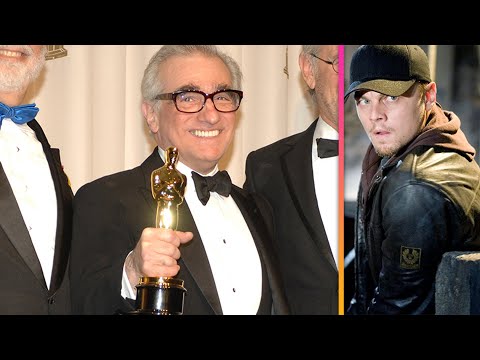
"The Departed" claimed four Academy Awards at the 79th ceremony held on February 25, 2007, including Best Picture, Best Director, Best Film Editing, and Best Adapted Screenplay. This marked Scorsese’s first directorial Oscar after receiving five previous nominations that went unrewarded. He had been nominated for "Raging Bull," "The Last Temptation of Christ," "Goodfellas," "Gangs of New York," and "The Aviator" before "The Departed" finally earned him the statue.
When accepting the award, Scorsese humorously remarked that he had won because "this is the first movie I’ve done with a plot.", according to remarks he’s made about the film. The line has followed the film’s legacy ever since, showing up in retrospectives whenever the anniversary comes around.
The film’s road to that stage started years earlier. In January 2003, Warner Bros. Pictures and producers Brad Grey and Brad Pitt acquired the rights to remake the 2002 Hong Kong film Infernal Affairs from Media Asia Entertainment Group, paying $1.75 million. Screenwriter William Monahan built the Frank Costello character around Whitey Bulger at Jack Nicholson’s request, aiming for something outside the usual gangster-film mold. Shooting began in April 2005 on a $90 million budget, with much of the interior work filmed in New York rather than Boston for tax and logistical reasons, before the film’s premiere roughly a year and a half later.
Two months before the Oscars, the film picked up a Best Director win for Scorsese at the 64th Golden Globe Awards on January 15, 2007, out of six nominations total. Critically, the reception had already been strong: a 91% positive score across 285 Rotten Tomatoes reviews, an 85 out of 100 on Metacritic, and a four-star review from Roger Ebert, who credited Scorsese with distinguishing the remake thematically from its source material.
The film earned $291.5 million globally, with $132.4 million coming from the U.S. and Canadian markets., and opened at $26.9 million domestically — good enough to make it the fourth Scorsese film to debut at number one at the box office.
Studio CarryOnHarry’s take: what stands out isn’t just that Scorsese finally won, but how long the wait had been by then — five nominations across three decades before the Academy recognized a director whose body of work had already been reshaping American film since the 1970s.
Read more People’s Choice stories on Studio CarryOnHarry. Reporting via Live News Vault.
Press Releases at Studio CarryOnHarry
Powered by SgAiSolution
Related Posts

A Decade Later: How Split Became Shyamalan’s Unlikely Commercial Triumph
M. Night Shyamalan's Split became a surprise $278.5 million hit on a $9 million budget, with James McAvoy's performance in…
Jailer 2 Unveils Style-Driven Track Featuring Rajinikanth’s Signature Mass Appeal
Rajinikanth's entry song 'One Sun One Moon' from Jailer 2 showcases his signature swagger, with music composed by Anirudh Ravichander.

BMC Proposes Up to 570% Hike in Entertainment Tax on Mumbai Cinemas, Concerts
Balle Balle Radio™ Entertainment Desk A Brihanmumbai Municipal Corporation proposal to increase entertainment tax on theatres, multiplexes and venues by…
Gurmeet Choudhary and Isha Malviya’s ‘Tum Mere Ho’ Teaser Unveiled Ahead of October 2026 Release
Balle Balle Radio™ Entertainment Desk The teaser for 'Tum Mere Ho' featuring Gurmeet Choudhary and Isha Malviya premiered today, with…
Veteran Actor Mushtaq Khan, Known for Welcome and Hera Pheri, Dies at 56
Balle Balle Radio™ Entertainment Desk Mushtaq Khan, a veteran Bollywood character actor, passed away at 56 after fighting cancer, as…

Alia Bhatt’s Cabaret-Style Look From Sanjay Leela Bhansali’s ‘Love & War’ Unveiled
Balle Balle Radio™ Entertainment Desk A new image of Alia Bhatt has emerged from the forthcoming Bhansali production "Love &…

Editor's Choice
A Decade Later: How Split Became Shyamalan’s Unlikely Commercial Triumph
M. Night Shyamalan’s Split became a surprise $278.5 million hit on a $9 million budget, with James McAvoy’s performance in the psychological thriller…
Balle Balle Radio™ Entertainment Desk
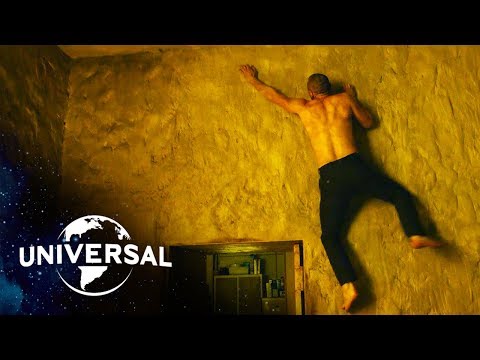
Split’s premiere at Fantastic Fest occurred on 26 September 2016, a full decade ago, marking the arrival of a film that would become one of the more surprising hits of its era. The psychological thriller, helmed by director and writer M. Night Shyamalan, featured performances from James McAvoy, Anya Taylor-Joy, and Betty Buckley, and would not reach wide theatrical release in the United States until January 20, 2017.
At its core, the film presented McAvoy portraying a character with dissociative identity disorder who imprisoned three teenage girls in an underground location, cycling through distinct personalities over the course of the story. Critics responded strongly to that performance, and reviews of the film were largely positive on the strength of it, alongside praise for Shyamalan’s direction. The reception wasn’t without pushback, though: mental health advocates criticized the film’s portrayal of dissociative identity disorder as stigmatizing.
What audiences didn’t fully know going in was that Split functioned as a stealth sequel to Shyamalan’s Unbreakable, released back in 2000, quietly connecting the two films as the second chapter in what became a trilogy. That link paid off commercially in a way few could have predicted for a film made on a $9 million budget. The film earned $278.5 million globally, holding the record as Blumhouse’s top-grossing film until 2023, when Five Nights at Freddy’s surpassed it.
The production itself began with principal photography starting November 11, 2015, in Philadelphia, where the story is also set. Universal Pictures handled distribution, a change from Unbreakable’s original distributor Touchstone Pictures, which had gone defunct by 2016. The trilogy that Split quietly kicked into motion reached its conclusion in 2019 with Glass, which brought the casts of both earlier films together.
Studio CarryOnHarry finds the stealth-sequel gambit the most enduring part of this story: a decade on, it’s still one of the more effective bait-and-switches a studio thriller has pulled on an unsuspecting audience.
Studio CarryOnHarry Perspective
McAvoy’s performance is the film’s real draw because audiences came for a thriller about containment and stayed for a masterclass in controlled transformation. The actor’s ability to shift not just dialogue and mannerism but apparent physical presence between personalities gave viewers something they rarely see: a genuinely virtuosic turn in a genre film, where such work typically gets overlooked in favor of plot mechanics.
In practice, this matters most in how viewers defend the film in conversation. Ask someone why Split worked for them, and they’re likely to describe a specific moment—the way a personality emerges in McAvoy’s posture, the tonal shift mid-sentence—rather than the plot itself. It’s the reason the film remains watchable even after its twist is known; the performance becomes the actual story.
Yet the critical praise also somewhat obscured a real question: how much of the acclaim reflected McAvoy’s skill versus how much reflected relief that Shyamalan had made something technically competent again? The two are hard to separate in retrospect, and it’s worth acknowledging that the performance benefited from being embedded in a film that worked, rather than existing entirely on its own terms.
The lasting lesson may be that genre filmmaking’s most valuable currency isn’t surprise or scale, but the presence of an actor fully committed to the material in front of them. McAvoy gave audiences permission to take the premise seriously, which turned a low-budget thriller into something that felt substantial.
Read more People’s Choice stories on Studio CarryOnHarry. Reporting via Live News Vault.
Press Releases at Studio CarryOnHarry
Powered by SgAiSolution
Related Posts
Jailer 2 Unveils Style-Driven Track Featuring Rajinikanth’s Signature Mass Appeal
Rajinikanth's entry song 'One Sun One Moon' from Jailer 2 showcases his signature swagger, with music composed by Anirudh Ravichander.
BMC Proposes Up to 570% Hike in Entertainment Tax on Mumbai Cinemas, Concerts
Balle Balle Radio™ Entertainment Desk A Brihanmumbai Municipal Corporation proposal to increase entertainment tax on theatres, multiplexes and venues by…
Gurmeet Choudhary and Isha Malviya’s ‘Tum Mere Ho’ Teaser Unveiled Ahead of October 2026 Release
Balle Balle Radio™ Entertainment Desk The teaser for 'Tum Mere Ho' featuring Gurmeet Choudhary and Isha Malviya premiered today, with…
Veteran Actor Mushtaq Khan, Known for Welcome and Hera Pheri, Dies at 56
Balle Balle Radio™ Entertainment Desk Mushtaq Khan, a veteran Bollywood character actor, passed away at 56 after fighting cancer, as…
Alia Bhatt’s Cabaret-Style Look From Sanjay Leela Bhansali’s ‘Love & War’ Unveiled
Balle Balle Radio™ Entertainment Desk A new image of Alia Bhatt has emerged from the forthcoming Bhansali production "Love &…

Singapore Film Festival Celebrates Aamir Khan With Screen Icon Award, Opens With ‘The Assassin(s)’
Balle Balle Radio™ Entertainment Desk At its 37th edition, the Singapore International Film Festival is bestowing its Screen Icon Award…
Editor's Choice
Jailer 2 Unveils Style-Driven Track Featuring Rajinikanth’s Signature Mass Appeal
Rajinikanth’s entry song ‘One Sun One Moon’ from Jailer 2 showcases his signature swagger, with music composed by Anirudh Ravichander.
Balle Balle Radio™ Entertainment Desk
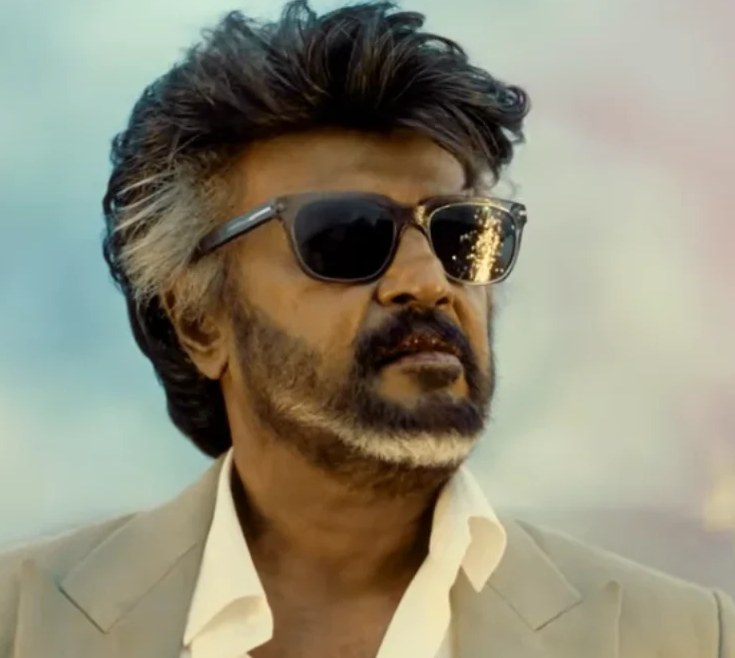
A new track titled "One Sun One Moon" from Jailer 2 has surfaced, centered on an ornate entry scene for Rajinikanth, with music composed by Anirudh Ravichander, according to reports covering the release.
Jailer 2 is the sequel to Nelson Dilipkumar’s 2023 hit Jailer, which paired Rajinikanth’s mass-hero persona with a slower-burn character study and became one of the biggest Tamil releases of that year. Anirudh Ravichander scored the original film as well, and his return for the sequel continues a partnership that has become one of the more closely watched composer-star pairings in current Tamil cinema. Industry chatter has also drawn comparisons between Anirudh’s evolving sound on this project and past work from other Tamil composers, a sign of how closely fans are tracking the film’s music ahead of release.
Reports describe the song as leaning into Rajinikanth’s established screen presence, framing his entry with the kind of stylized swagger that has defined his biggest commercial hits. Coverage of the broader film has also noted that Anirudh’s score is expected to lift the theatrical experience during the film’s action and mass sequences, consistent with his approach on the first Jailer.
Rajinikanth’s involvement in Jailer 2 comes as he also has Coolie, his 171st film, in the pipeline, underscoring an unusually active late-career stretch for the actor.
Studio CarryOnHarry will be watching whether "One Sun One Moon" becomes one of the tentpole tracks fans point to when the film’s full soundtrack lands, given how much weight Anirudh’s music carried in the original Jailer’s box office run.
Read more People’s Choice stories on Studio CarryOnHarry. Reporting via Live News Vault.
Press Releases at Studio CarryOnHarry
Powered by SgAiSolution
Related Posts
A Decade Later: How Split Became Shyamalan’s Unlikely Commercial Triumph
M. Night Shyamalan's Split became a surprise $278.5 million hit on a $9 million budget, with James McAvoy's performance in…
BMC Proposes Up to 570% Hike in Entertainment Tax on Mumbai Cinemas, Concerts
Balle Balle Radio™ Entertainment Desk A Brihanmumbai Municipal Corporation proposal to increase entertainment tax on theatres, multiplexes and venues by…
Gurmeet Choudhary and Isha Malviya’s ‘Tum Mere Ho’ Teaser Unveiled Ahead of October 2026 Release
Balle Balle Radio™ Entertainment Desk The teaser for 'Tum Mere Ho' featuring Gurmeet Choudhary and Isha Malviya premiered today, with…
Veteran Actor Mushtaq Khan, Known for Welcome and Hera Pheri, Dies at 56
Balle Balle Radio™ Entertainment Desk Mushtaq Khan, a veteran Bollywood character actor, passed away at 56 after fighting cancer, as…
Alia Bhatt’s Cabaret-Style Look From Sanjay Leela Bhansali’s ‘Love & War’ Unveiled
Balle Balle Radio™ Entertainment Desk A new image of Alia Bhatt has emerged from the forthcoming Bhansali production "Love &…
Singapore Film Festival Celebrates Aamir Khan With Screen Icon Award, Opens With ‘The Assassin(s)’
Balle Balle Radio™ Entertainment Desk At its 37th edition, the Singapore International Film Festival is bestowing its Screen Icon Award…
-
 Editor's Choice6 days ago
Alia Bhatt Attends Special Screening of Mother’s Film ‘Om Ka Hari,’ Praises It as ‘Gem’
-
 Books4 days ago
New Space Opera ‘Cacophony Of Separation’ Follows Two Broken Souls Through a Galactic Empire Built on Subjugation
-

 Editor's Choice6 days ago
Hrithik Roshan Moves Behind the Camera for Prime Video Thriller ‘Storm’
-

 Editor's Choice3 days ago
CSIFF26’s Shortlist: How Six Filmmakers Are Pushing Caribbean Cinema Beyond Borders
-
 Editor's Choice2 days ago
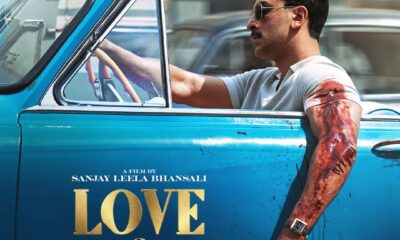
‘Love and War’ First Look Draws Comparisons to Bollywood’s Classic Love-Triangle Tradition
-

 Editor's Choice4 days ago
Week 7 and Still Counting: How Hanuman Ansh Broke the Mould