
People's Choice
Tips for Outlining Your Novel: Techniques for Structuring Your Story from Beginning to End


Outlining your novel is an essential step in the writing process. It allows you to structure your story, develop your characters and plot, and keep your writing on track. Whether you are a seasoned writer or a newbie, outlining can help you to create a compelling story that will keep readers engaged from beginning to end. In this article, we will share tips for outlining your novel, including techniques for structuring your story from start to finish.
Why Outlining Your Novel is Important
Outlining your novel is like creating a roadmap for your story. It helps you to plan your plot, develop your characters, and keep your writing on track. When you have a clear outline, you know where your story is heading and can focus on creating compelling scenes that move the story forward.
Another benefit of outlining is that it allows you to identify any plot holes or inconsistencies in your story. By outlining your story, you can see how all the pieces fit together and make any necessary adjustments before you start writing.
Start with the Basics
Before you begin outlining your novel, start with the basics. This includes identifying your genre, your target audience, and your main characters. Knowing your genre and target audience will help you to determine the tone and style of your story, while identifying your main characters will help you to develop their motivations and goals.
Once you have identified these key elements, you can start to brainstorm your story’s plot. Think about the main conflict or problem your characters will face, and how they will resolve it. This will help you to create a clear beginning, middle, and end for your story.
Choose Your Outlining Method
There are several outlining methods you can use to structure your novel. The most common methods include:
The Snowflake Method
The Snowflake Method is a popular outlining method that involves starting with a single sentence or paragraph and then expanding it into a full-fledged novel. This method involves several steps, including creating a one-sentence summary of your story, expanding it into a paragraph, creating character profiles, and outlining your scenes.
The Three-Act Structure
The Three-Act Structure is a classic outlining method that involves dividing your story into three parts: the setup, confrontation, and resolution. This method is often used in Hollywood movies and is a great way to create a well-structured story that keeps readers engaged from beginning to end.
The Hero’s Journey
The Hero’s Journey is another classic outlining method that involves following the journey of a hero as they embark on a quest to achieve their goal. This method involves several stages, including the call to adventure, the refusal of the call, the mentor, the trials, the abyss, the transformation, and the return.
Develop Your Character Arcs
One of the most important elements of outlining your novel is developing your character arcs. Your characters should have clear motivations, goals, and obstacles to overcome throughout the story. By creating well-rounded characters, you can ensure that your readers will be invested in their journeys and will want to see them succeed.
When developing your character arcs, think about how your characters will change throughout the story. What will they learn? How will they grow? By creating clear character arcs, you can ensure that your story has a satisfying emotional payoff.
Create Scene Outlines
Once you have developed your plot and character arcs, it’s time to create scene outlines. Scene outlines are a more detailed version of your overall novel outline and provide a roadmap for each scene in your story.
When creating scene outlines, it’s important to focus on the purpose of each scene. What is its goal? What information or emotion does it need to convey? By answering these questions, you can ensure that each scene moves the story forward and contributes to the overall plot and character development.
Keep Your Outline Flexible
While outlining is an essential step in the writing process, it’s important to remember that your outline should be flexible. As you write your novel, you may find that your characters or plot take unexpected turns, and your outline may need to be adjusted to reflect these changes.
Don’t be afraid to deviate from your outline if it means creating a better story. Your outline is simply a guide, and it’s important to be open to change and revision as you write.
Conclusion
Outlining your novel is an essential step in the writing process, and there are several techniques you can use to structure your story from beginning to end. By starting with the basics, choosing your outlining method, developing your character arcs, creating scene outlines, and keeping your outline flexible, you can create a compelling story that will keep readers engaged from start to finish.
Remember, outlining is just one part of the writing process, and it’s important to be open to change and revision as you write. With a clear outline and a willingness to adapt, you can create a novel that will captivate readers and leave them wanting more.
Related Posts
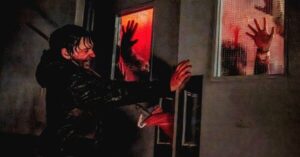
Audiences Are Rating ‘Spider-Man: Brand New Day’ and ‘Resident Evil’ Among 2026’s Hottest Films
Balle Balle Radio™ Entertainment Desk Two 2026 releases, "Resident Evil" and "Spider-Man: Brand New Day," are tied at the top…
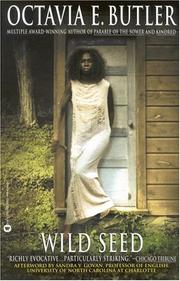
Revisiting Octavia Butler’s “Wild Seed,” the 1980 novel that opens her Patternist series
Balle Balle Radio™ Entertainment Desk Octavia E. Butler's "Wild Seed," released in 1980, remains one of the author's most widely…

How The Odyssey Pushed Nolan Into Cinema’s Billion-Dollar Elite
How The Odyssey Pushed Nolan Into Cinema's Billion-Dollar Elite Studio CarryOnHarry Entertainment Desk | 13 October 2026 The Odyssey Rewrites…

Hema Malini Turns 78: The Actress Who Played Twins and Won Only Once for It
Balle Balle Radio™ Entertainment Desk Hema Malini turns 78 on 16 October 2026, having been born on the same date…
Bollywood Loses a Titan: Patekar Dies, State Funeral Confirmed
Director Anees Bazmee breaks silence on Nana Patekar's death, calling it unbearable. Read the full story on India's cinema legend's…

CSIFF26 Showcases Diverse Caribbean Voices Through Six Nominated Films This October
Conch Shell International Film Festival returns to Queens October 9-11 with six Best Film nominees exploring Caribbean and diaspora filmmaking.

Editor's Choice
Audiences Are Rating ‘Spider-Man: Brand New Day’ and ‘Resident Evil’ Among 2026’s Hottest Films
Balle Balle Radio™ Entertainment Desk
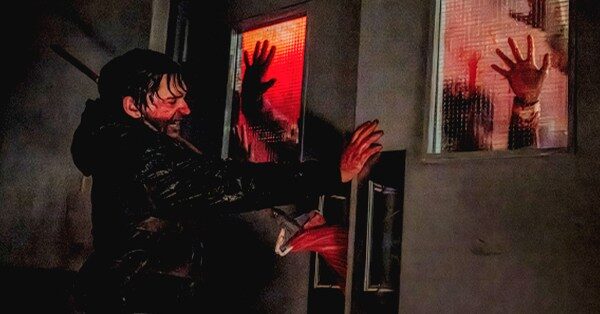
Two 2026 releases, "Resident Evil" and "Spider-Man: Brand New Day," are tied at the top of Rotten Tomatoes’ running Verified Hot list, each pulling in more than 5,000 Verified ratings from ticket-buying audiences, according to the site’s latest update.
Just as Certified Fresh represents critics’ consensus via the Tomatometer, Verified Hot is its audience equivalent, requiring a minimum 90% score on the Popcornmeter using ratings exclusively from Fandango ticket buyers, according to the guide. Rotten Tomatoes introduced the badge to give paying audiences their own equivalent stamp of approval, separate from critical consensus.
Behind the two leaders in the largest-sample tier, "The Odyssey" ranks second with over 5,000 Verified ratings, followed by "Project Hail Mary," "Obsession," "Hoppers" and "The Super Mario Galaxy Movie." Several of these titles also turn up on other year-end and mid-year lists tracking 2026’s most-discussed films, including "The Odyssey," "Project Hail Mary" and "Obsession" among the movies cited as generating the most audience conversation this year.
In the next tier, covering films with 1,000 to 5,000 Verified ratings, "Avengers: Endgame," "Heart of the Beast," "Forgotten Island" and "Practical Magic 2" share the top spot, with "Coyote vs. Acme," "The Invite," a musical performance film featuring Stray Kids and others filling out the rest of the ranking. Rotten Tomatoes notes a third, smaller tier of 250 to 999 ratings exists for titles still building an audience track record, which it describes as newer and more niche releases.
New films earning a 90% Popcornmeter score are added weekly, with placement within each tier based on cumulative Verified rating volume.
Studio CarryOnHarry will be watching whether films lower in the 1,000-to-5,000 tier gain enough ratings to crack the top bracket as the list updates through the rest of 2026.
Read more People’s Choice stories on Studio CarryOnHarry. Reporting via Live News Vault.
Press Releases at Studio CarryOnHarry
Related Posts
Revisiting Octavia Butler’s “Wild Seed,” the 1980 novel that opens her Patternist series
Balle Balle Radio™ Entertainment Desk Octavia E. Butler's "Wild Seed," released in 1980, remains one of the author's most widely…
How The Odyssey Pushed Nolan Into Cinema’s Billion-Dollar Elite
How The Odyssey Pushed Nolan Into Cinema's Billion-Dollar Elite Studio CarryOnHarry Entertainment Desk | 13 October 2026 The Odyssey Rewrites…
Hema Malini Turns 78: The Actress Who Played Twins and Won Only Once for It
Balle Balle Radio™ Entertainment Desk Hema Malini turns 78 on 16 October 2026, having been born on the same date…
Bollywood Loses a Titan: Patekar Dies, State Funeral Confirmed
Director Anees Bazmee breaks silence on Nana Patekar's death, calling it unbearable. Read the full story on India's cinema legend's…
CSIFF26 Showcases Diverse Caribbean Voices Through Six Nominated Films This October
Conch Shell International Film Festival returns to Queens October 9-11 with six Best Film nominees exploring Caribbean and diaspora filmmaking.
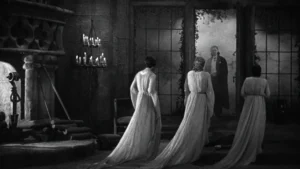
AFI Movie Club Celebrates Tod Browning’s ‘Dracula’ as a Landmark of Horror Cinema
AFI Movie Club spotlights Tod Browning's 1931 'Dracula' starring Bela Lugosi, the film that launched Universal's Monster franchise and defined…
Editor's Choice
Revisiting Octavia Butler’s “Wild Seed,” the 1980 novel that opens her Patternist series
Balle Balle Radio™ Entertainment Desk
Octavia E. Butler’s "Wild Seed," released in 1980, remains one of the author’s most widely read novels decades after its release. It opens Butler’s five-book Patternist cycle, a five-book speculative fiction cycle, and continues to draw new readers and critical attention.
Butler, who died in 2006, is widely regarded as one of the first Black women to gain major recognition in American science fiction, a genre that offered her few peers when she began publishing in the 1970s. Her work is frequently cited within Afrofuturism, the broader cultural movement that uses speculative fiction, technology, and alternate histories to explore the experiences of the African diaspora and to imagine Black futures beyond the constraints of the present.
"Wild Seed" is addresses themes of gender, healing roles, and the experiences of Black women, reflecting the novel’s focus on characters navigating power, transformation, and survival across generations. Readers and reviewers have consistently described it as a character-driven work rather than a plot-heavy one, with its two central figures carrying the novel through sustained psychological and emotional depth. The book is the first in the five-volume Patternist series and has drawn an active readership on platforms like Goodreads, where it holds a strong average rating from tens of thousands of readers.
The novel has also found renewed life in reading groups and community discussions in recent years, often paired with other Afrofuturist or speculative work, a sign of Butler’s lasting pull on readers well outside the genre’s traditional audience.
Studio CarryOnHarry sees "Wild Seed" as a useful entry point for readers curious about Butler’s influence on contemporary speculative fiction, and worth a look for anyone building out an Afrofuturism reading list.
About the Author: An American science fiction writer, one of the best-known among the few African-American women in the field.
[Comment by Tricia Sullivan, on The Guardian][1]:
Octavia E Butler (1947–2006)
> I was teaching in New York when I came across Octavia E Butler’s Kindred in a secondary-school catalogue of novels recommended to support diversity. It caught my attention because Butler was described as a science-fiction writer. I thought I was familiar with science fiction, but I’d never heard of her – nor have a great many other readers, I suspect. For many years, Butler was the sole African-Ameri
Read more People’s Choice stories on Studio CarryOnHarry. Reporting via Live News Vault.
Are you an author with a new release? We’re always looking for books to cover and authors to interview — tell us about yours here.
Press Releases at Studio CarryOnHarry
Harry Johal — Entertainment Editor
Harry Johal is the Entertainment Editor at Studio CarryOnHarry, overseeing the newsroom's day-to-day coverage.
Related Posts
Audiences Are Rating ‘Spider-Man: Brand New Day’ and ‘Resident Evil’ Among 2026’s Hottest Films
Balle Balle Radio™ Entertainment Desk Two 2026 releases, "Resident Evil" and "Spider-Man: Brand New Day," are tied at the top…
How The Odyssey Pushed Nolan Into Cinema’s Billion-Dollar Elite
How The Odyssey Pushed Nolan Into Cinema's Billion-Dollar Elite Studio CarryOnHarry Entertainment Desk | 13 October 2026 The Odyssey Rewrites…
Hema Malini Turns 78: The Actress Who Played Twins and Won Only Once for It
Balle Balle Radio™ Entertainment Desk Hema Malini turns 78 on 16 October 2026, having been born on the same date…
Bollywood Loses a Titan: Patekar Dies, State Funeral Confirmed
Director Anees Bazmee breaks silence on Nana Patekar's death, calling it unbearable. Read the full story on India's cinema legend's…
CSIFF26 Showcases Diverse Caribbean Voices Through Six Nominated Films This October
Conch Shell International Film Festival returns to Queens October 9-11 with six Best Film nominees exploring Caribbean and diaspora filmmaking.
AFI Movie Club Celebrates Tod Browning’s ‘Dracula’ as a Landmark of Horror Cinema
AFI Movie Club spotlights Tod Browning's 1931 'Dracula' starring Bela Lugosi, the film that launched Universal's Monster franchise and defined…
-
 Books3 days ago
Former Wildlife Officer Rick Larnerd Blends Gasparilla Legend with Modern Florida Thriller in New Novel
-
 Books3 days ago
Barry R. Willis’s New Book Traces the Pony Express and Its Costs on the Frontier
-
 Books5 days ago
Anthony V. Pugliese Expands 2020 Horror Collection in New Edition of “All Things Truly Wicked”
-
 Books3 days ago
Former Game Warden Turns Three Decades of Conservation Work into Florida Crime Novel
-
 Books4 days ago
Katt Taylor’s New Novel Follows a Woman’s Fractured Spirit from Darkness to Awakening
-
 Books2 days ago
Former Wildlife Officer Rick Larnerd Blends Gasparilla Legend with Modern Florida Crime Fiction in New Novel