
Editor's Choice
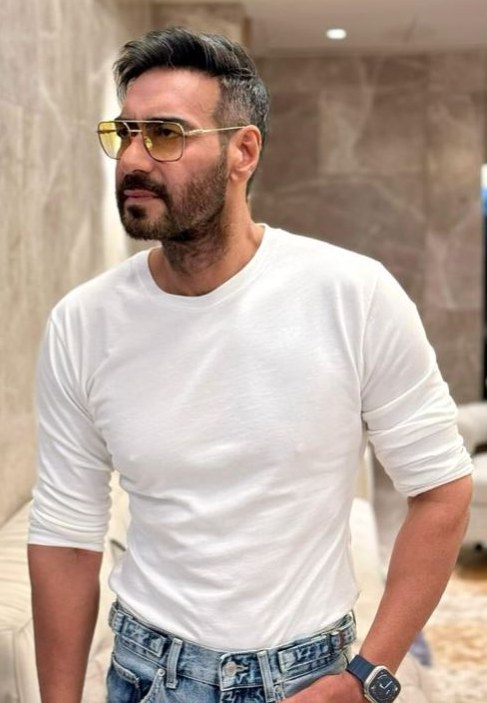
Ajay Devgn’s Crime Patrol Gamble: Star Power on a TV Budget

Balle Balle Radio™ Entertainment Desk
A Bollywood A-lister fronting a long-running true-crime show has split opinion between those who see smart cross-platform economics and those who see a mismatch nobody asked for. Meanwhile, a crowded slate of remakes, mythologicals and comedy sequels raises a quieter question about where Hindi cinema’s creative energy is actually going.
Ajay Devgn hosting a true-crime television show sounds, on paper, like a minor career footnote. In practice, it has become one of the more revealing small controversies in recent Hindi entertainment news — not because of what Devgn said or did, but because of what his presence on the show exposes about how stardom, television economics and audience expectation now collide.
Crime Patrol, the long-running Sony reality crime series, aired its new season with Devgn as host, replacing the format’s more familiar anchors. The reaction was swift and largely unflattering. Viewers who follow the show closely — people who know its rhythms, its previous hosts, its particular tone — reportedly found Devgn’s presence jarring, describing him online as a poor fit for the format. Whether that reaction represents a broad consensus or a vocal subset of the show’s fanbase is hard to verify from social commentary alone, but the sentiment appears to be more than a fringe complaint.
Two explanations are circulating for why Devgn took the job at all. One is promotional: that his real interest lies in keeping Drishyam 3 in the conversation. The other, more plausible explanation, is simpler — the reported fee. Devgn is said to have been paid in the range of 90 crore for roughly 15 episodes, which works out to about 6 crore per episode. If accurate, that is a substantial sum for television work, and it would make the financial logic behind his involvement fairly straightforward, whatever the promotional side-benefits might be.
This is not Devgn’s first move into episodic television. He appeared in Rudra: The Edge of Darkness in 2022, a six-episode series that was reasonably well received. That prior experiment suggests his interest in the format isn’t new or purely mercenary — but Crime Patrol is a different animal. It’s a long-running procedural built around a specific host identity, not a limited prestige drama. Reports have also circulated that the show’s regular episodes weren’t being shot with Devgn directly involved in the way viewers might assume, though this detail remains unconfirmed chatter rather than established fact.
A Question of Fit, Not Talent
Nobody seriously disputes Devgn’s abilities as an actor. The criticism isn’t about talent — it’s about context. A major film star stepping into a format built for a different kind of on-screen presence can create a genuine tonal mismatch, independent of how good that star is in his own lane. That’s a fair critical observation. Whether it justifies the intensity of the online reaction is a separate question. Trolling tends to amplify disproportionately, and one bad-fit casting decision doesn’t necessarily reflect on Devgn’s judgment or career trajectory — it may simply reflect a producer’s decision that didn’t quite land with the show’s existing audience.
There’s also a reasonable reading that positions this as a short-term, transactional move rather than a long-term pivot: a well-paid guest-hosting stint that generates conversation, whether positive or negative, while a bigger film franchise stays in the news cycle alongside it. If that was the calculation, the backlash may be beside the point — the show got attention, the fee got paid, and Devgn moves on to whatever comes next, likely with a returning regular host restoring the format to its usual rhythm.
Same Well, Different Buckets
Zoom out from Devgn’s TV cameo and a larger pattern comes into view. Hindi cinema’s upcoming slate leans heavily on the familiar: sequels, remakes and mythological epics, often announced well before scripts or casts are finalised.
Akshay Kumar’s schedule illustrates the point well. He’s reportedly attached to a Priyadarshan-directed film inspired by Jim Corbett, positioned as a comic thriller and possibly his landmark 99th release before a planned 100th film — though which project claims that milestone remains unsettled. Alongside that sits Anees Bazmee’s next, a Golmaal 5 in development, and a Rohit Shetty film where Kumar is said to be playing a substantial villain role. Notably absent from any recent update is Hera Pheri 3, a project that has generated more announcement noise than actual movement.
The volume of Akshay Kumar productions in the pipeline raises a fair industry question: can output at this scale consistently deliver on story and content, or does quantity eventually work against quality? It’s not an accusation against any single film — it’s a structural concern about an industry that rewards volume and franchise recognition over the slower work of original storytelling.
A similar tension shows up in two upcoming comedies: Kunal Kemmu’s "Waaie" and a Kareena Kapoor–Prithviraj Sukumaran film reportedly heading toward a Part 2. Early teasers for the Kemmu film generated real anticipation — comparisons to his earlier hit Madgaon Express set expectations for sharp, background-driven comic writing. The subsequent trailer, by several accounts, didn’t fully deliver on that promise, landing as more conventional than the black-comedy tone the teaser implied. That’s a meaningful gap between marketing and material, and it’s worth watching whether the finished film closes it.
The Kareena Kapoor–Prithviraj project carries its own layer of confusion: persistent chatter has framed it as a remake, a claim both the director and Prithviraj have reportedly pushed back on, insisting the story is original. Public awareness of the film itself appears limited — a handful of influencers discussing the trailer doesn’t necessarily translate into broad audience registration that the film exists at all, which is its own marketing problem regardless of the story’s originality.
Adding to the release-calendar puzzle, both films are reportedly scheduled around the Ganesh Chaturthi festival period, a timing choice that has drawn skepticism given how competitive and unpredictable festival-season release slots tend to be in the Hindi market.
The Mythological Rush
Elsewhere, the mythological genre continues attracting major names and major money. A new project centered on Krishna, reportedly involving NTR-adjacent casting discussions before settling on other talent, is being backed by a production house better known for lighter, romantic "candy floss" films — a notable departure that will be worth watching for how the tonal shift is handled. Multiple Krishna-themed projects appear to be in parallel development industry-wide, suggesting a genre cycle rather than a single studio bet.
Studio Perspective
What connects Devgn’s Crime Patrol detour to the pile-up of remakes, sequels and mythologicals isn’t really about any one project’s quality. It’s about an industry currently more comfortable trading on recognisable names and formats than building anticipation from scratch. A star’s television cameo, a fifth instalment of a comedy franchise, a mythological epic backed by a studio pivoting from its usual genre — these are all, in their own way, bets placed on familiarity doing the marketing work that fresh storytelling used to do.
That’s not inherently a failure of ambition. Familiar formats can still produce good work, and audience appetite for comfort viewing is real and valid — it shouldn’t be dismissed as lazy taste. But when trailers underdeliver against teasers, when audiences can’t tell if a film is a remake or an original, and when a bankable star’s fee becomes the most concrete piece of information available about a project, it suggests the industry is currently prioritising the transaction over the story. The reaction to Devgn’s Crime Patrol stint may be less about him personally and more about audiences sensing, correctly or not, that a decision was made for reasons that had little to do with what would serve the show itself.
The more interesting question isn’t whether any single casting choice or sequel announcement was a mistake. It’s whether an industry can keep leaning on recognisable faces and familiar intellectual property indefinitely before audiences start asking what happened to the original ideas that built those stars and formats in the first place.
image : INSTAGRAM
— Studio CarryOnHarry Editorial Desk
Read more People’s Choice stories on Studio CarryOnHarry. Reporting via Live News Vault.
Related Posts

Audiences Are Rating ‘Spider-Man: Brand New Day’ and ‘Resident Evil’ Among 2026’s Hottest Films
Balle Balle Radio™ Entertainment Desk Two 2026 releases, "Resident Evil" and "Spider-Man: Brand New Day," are tied at the top…
Revisiting Octavia Butler’s “Wild Seed,” the 1980 novel that opens her Patternist series
Balle Balle Radio™ Entertainment Desk Octavia E. Butler's "Wild Seed," released in 1980, remains one of the author's most widely…

How The Odyssey Pushed Nolan Into Cinema’s Billion-Dollar Elite
How The Odyssey Pushed Nolan Into Cinema's Billion-Dollar Elite Studio CarryOnHarry Entertainment Desk | 13 October 2026 The Odyssey Rewrites…

Hema Malini Turns 78: The Actress Who Played Twins and Won Only Once for It
Balle Balle Radio™ Entertainment Desk Hema Malini turns 78 on 16 October 2026, having been born on the same date…
Bollywood Loses a Titan: Patekar Dies, State Funeral Confirmed
Director Anees Bazmee breaks silence on Nana Patekar's death, calling it unbearable. Read the full story on India's cinema legend's…

CSIFF26 Showcases Diverse Caribbean Voices Through Six Nominated Films This October
Conch Shell International Film Festival returns to Queens October 9-11 with six Best Film nominees exploring Caribbean and diaspora filmmaking.

Editor's Choice
Audiences Are Rating ‘Spider-Man: Brand New Day’ and ‘Resident Evil’ Among 2026’s Hottest Films

Balle Balle Radio™ Entertainment Desk
Two 2026 releases, "Resident Evil" and "Spider-Man: Brand New Day," are tied at the top of Rotten Tomatoes’ running Verified Hot list, each pulling in more than 5,000 Verified ratings from ticket-buying audiences, according to the site’s latest update.
Just as Certified Fresh represents critics’ consensus via the Tomatometer, Verified Hot is its audience equivalent, requiring a minimum 90% score on the Popcornmeter using ratings exclusively from Fandango ticket buyers, according to the guide. Rotten Tomatoes introduced the badge to give paying audiences their own equivalent stamp of approval, separate from critical consensus.
Behind the two leaders in the largest-sample tier, "The Odyssey" ranks second with over 5,000 Verified ratings, followed by "Project Hail Mary," "Obsession," "Hoppers" and "The Super Mario Galaxy Movie." Several of these titles also turn up on other year-end and mid-year lists tracking 2026’s most-discussed films, including "The Odyssey," "Project Hail Mary" and "Obsession" among the movies cited as generating the most audience conversation this year.
In the next tier, covering films with 1,000 to 5,000 Verified ratings, "Avengers: Endgame," "Heart of the Beast," "Forgotten Island" and "Practical Magic 2" share the top spot, with "Coyote vs. Acme," "The Invite," a musical performance film featuring Stray Kids and others filling out the rest of the ranking. Rotten Tomatoes notes a third, smaller tier of 250 to 999 ratings exists for titles still building an audience track record, which it describes as newer and more niche releases.
New films earning a 90% Popcornmeter score are added weekly, with placement within each tier based on cumulative Verified rating volume.
Studio CarryOnHarry will be watching whether films lower in the 1,000-to-5,000 tier gain enough ratings to crack the top bracket as the list updates through the rest of 2026.
Read more People’s Choice stories on Studio CarryOnHarry. Reporting via Live News Vault.
Press Releases at Studio CarryOnHarry
Related Posts
Revisiting Octavia Butler’s “Wild Seed,” the 1980 novel that opens her Patternist series
Balle Balle Radio™ Entertainment Desk Octavia E. Butler's "Wild Seed," released in 1980, remains one of the author's most widely…
How The Odyssey Pushed Nolan Into Cinema’s Billion-Dollar Elite
How The Odyssey Pushed Nolan Into Cinema's Billion-Dollar Elite Studio CarryOnHarry Entertainment Desk | 13 October 2026 The Odyssey Rewrites…
Hema Malini Turns 78: The Actress Who Played Twins and Won Only Once for It
Balle Balle Radio™ Entertainment Desk Hema Malini turns 78 on 16 October 2026, having been born on the same date…
Bollywood Loses a Titan: Patekar Dies, State Funeral Confirmed
Director Anees Bazmee breaks silence on Nana Patekar's death, calling it unbearable. Read the full story on India's cinema legend's…
CSIFF26 Showcases Diverse Caribbean Voices Through Six Nominated Films This October
Conch Shell International Film Festival returns to Queens October 9-11 with six Best Film nominees exploring Caribbean and diaspora filmmaking.
AFI Movie Club Celebrates Tod Browning’s ‘Dracula’ as a Landmark of Horror Cinema
AFI Movie Club spotlights Tod Browning's 1931 'Dracula' starring Bela Lugosi, the film that launched Universal's Monster franchise and defined…
Editor's Choice
Revisiting Octavia Butler’s “Wild Seed,” the 1980 novel that opens her Patternist series
Balle Balle Radio™ Entertainment Desk
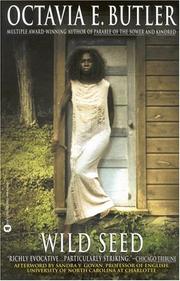
Octavia E. Butler’s "Wild Seed," released in 1980, remains one of the author’s most widely read novels decades after its release. It opens Butler’s five-book Patternist cycle, a five-book speculative fiction cycle, and continues to draw new readers and critical attention.
Butler, who died in 2006, is widely regarded as one of the first Black women to gain major recognition in American science fiction, a genre that offered her few peers when she began publishing in the 1970s. Her work is frequently cited within Afrofuturism, the broader cultural movement that uses speculative fiction, technology, and alternate histories to explore the experiences of the African diaspora and to imagine Black futures beyond the constraints of the present.
"Wild Seed" is addresses themes of gender, healing roles, and the experiences of Black women, reflecting the novel’s focus on characters navigating power, transformation, and survival across generations. Readers and reviewers have consistently described it as a character-driven work rather than a plot-heavy one, with its two central figures carrying the novel through sustained psychological and emotional depth. The book is the first in the five-volume Patternist series and has drawn an active readership on platforms like Goodreads, where it holds a strong average rating from tens of thousands of readers.
The novel has also found renewed life in reading groups and community discussions in recent years, often paired with other Afrofuturist or speculative work, a sign of Butler’s lasting pull on readers well outside the genre’s traditional audience.
Studio CarryOnHarry sees "Wild Seed" as a useful entry point for readers curious about Butler’s influence on contemporary speculative fiction, and worth a look for anyone building out an Afrofuturism reading list.
About the Author: An American science fiction writer, one of the best-known among the few African-American women in the field.
[Comment by Tricia Sullivan, on The Guardian][1]:
Octavia E Butler (1947–2006)
> I was teaching in New York when I came across Octavia E Butler’s Kindred in a secondary-school catalogue of novels recommended to support diversity. It caught my attention because Butler was described as a science-fiction writer. I thought I was familiar with science fiction, but I’d never heard of her – nor have a great many other readers, I suspect. For many years, Butler was the sole African-Ameri
Read more People’s Choice stories on Studio CarryOnHarry. Reporting via Live News Vault.
Are you an author with a new release? We’re always looking for books to cover and authors to interview — tell us about yours here.
Press Releases at Studio CarryOnHarry
Harry Johal — Entertainment Editor
Harry Johal is the Entertainment Editor at Studio CarryOnHarry, overseeing the newsroom's day-to-day coverage.
Related Posts
Audiences Are Rating ‘Spider-Man: Brand New Day’ and ‘Resident Evil’ Among 2026’s Hottest Films
Balle Balle Radio™ Entertainment Desk Two 2026 releases, "Resident Evil" and "Spider-Man: Brand New Day," are tied at the top…
How The Odyssey Pushed Nolan Into Cinema’s Billion-Dollar Elite
How The Odyssey Pushed Nolan Into Cinema's Billion-Dollar Elite Studio CarryOnHarry Entertainment Desk | 13 October 2026 The Odyssey Rewrites…
Hema Malini Turns 78: The Actress Who Played Twins and Won Only Once for It
Balle Balle Radio™ Entertainment Desk Hema Malini turns 78 on 16 October 2026, having been born on the same date…
Bollywood Loses a Titan: Patekar Dies, State Funeral Confirmed
Director Anees Bazmee breaks silence on Nana Patekar's death, calling it unbearable. Read the full story on India's cinema legend's…
CSIFF26 Showcases Diverse Caribbean Voices Through Six Nominated Films This October
Conch Shell International Film Festival returns to Queens October 9-11 with six Best Film nominees exploring Caribbean and diaspora filmmaking.
AFI Movie Club Celebrates Tod Browning’s ‘Dracula’ as a Landmark of Horror Cinema
AFI Movie Club spotlights Tod Browning's 1931 'Dracula' starring Bela Lugosi, the film that launched Universal's Monster franchise and defined…
-
 Books17 hours ago
Benjamin German’s New Collection, ‘The Pen of Ben,’ Explores Love Through Life’s Small Moments
-

 Books6 days ago
Former Wildlife Officer Rick Larnerd Blends Gasparilla Legend with Modern Florida Thriller in New Novel
-

 Books6 days ago
Barry R. Willis’s New Book Traces the Pony Express and Its Costs on the Frontier
-

 Books5 days ago
Former Wildlife Officer Rick Larnerd Blends Gasparilla Legend with Modern Florida Crime Fiction in New Novel
-

 Books6 days ago
Former Game Warden Turns Three Decades of Conservation Work into Florida Crime Novel
-
 Books18 hours ago
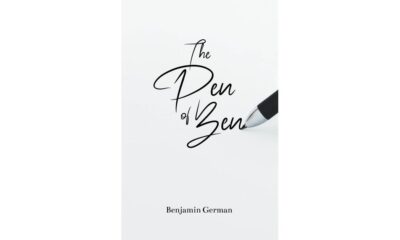
Benjamin German’s New Collection, “The Pen of Ben,” Blends Poetry and Prose on Love and Loss