
TV & MOVIES
Monster: The Lizzie Borden Story Premieres on Netflix—Here’s When in Your Region

Balle Balle Radio™ Entertainment Desk
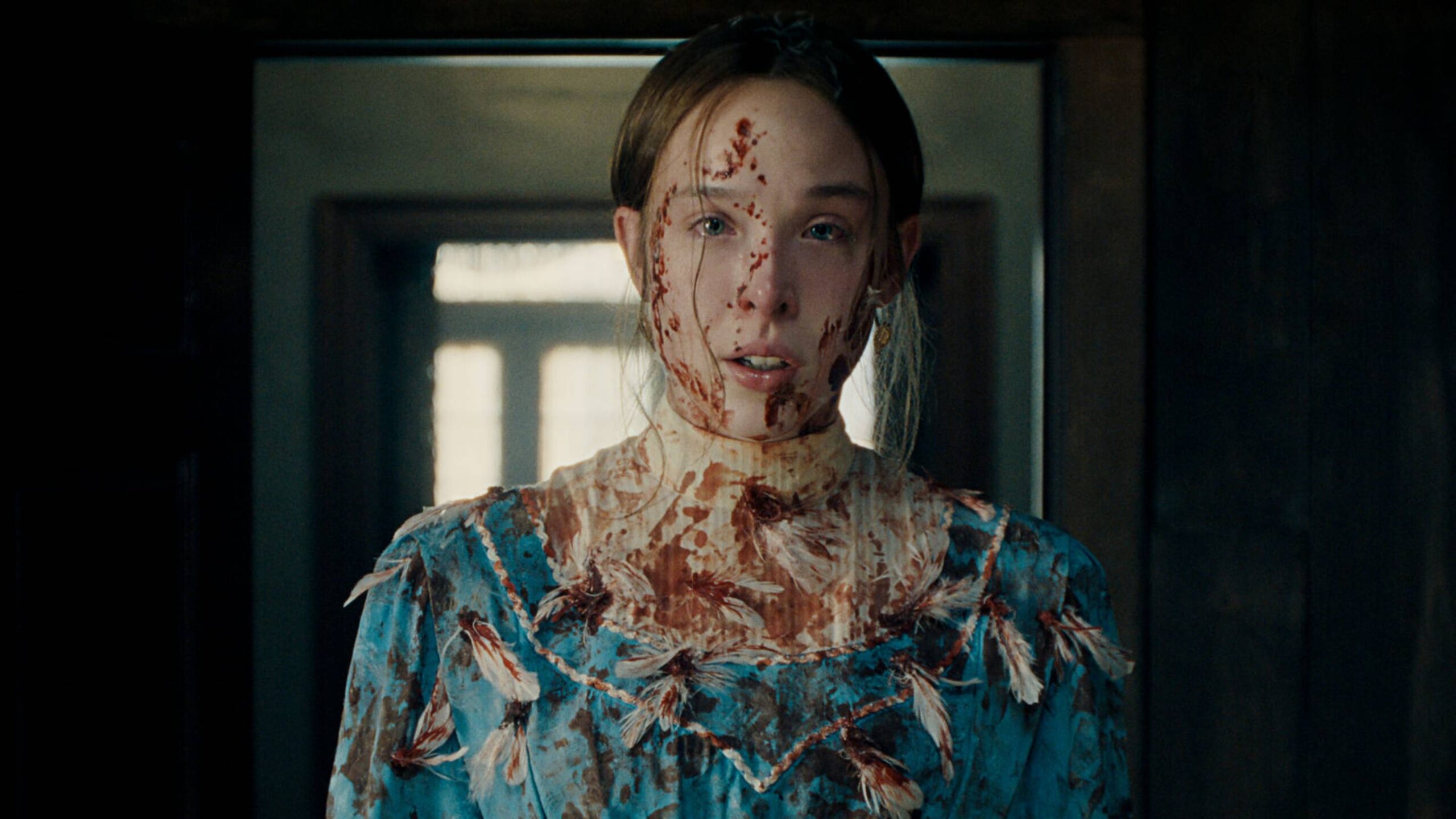
The third installment of Netflix’s "Monster" anthology, "Monster: The Lizzie Borden Story," comes to the platform featuring Ella Beatty as the protagonist as the 19th-century murder suspect.
Like other Netflix original series, the show follows the platform’s standard global release pattern: episodes go live simultaneously worldwide at 12:00 a.m. Pacific Time, which staggers across other time zones. That translates to 3:00 a.m. Eastern, 8:00 a.m. in London, and later that same morning across continental Europe and Asia, per the streamer’s usual rollout schedule.
The series is the latest entry in Ryan Murphy’s "Monster" franchise for Netflix, which previously dramatized the cases of Jeffrey Dahmer and the Menendez brothers under the same anthology banner. Each season has paired a true-crime subject with a fresh cast and creative team while keeping the "Monster" title as the connective thread.
Lizzie Borden was tried and acquitted in 1893 for the ax murders of her father and stepmother in Fall River, Massachusetts, a case that has remained a fixture of American true-crime lore for more than a century despite never being definitively solved. That unresolved quality has made it a recurring subject for dramatizations and documentaries long before this Netflix adaptation.
Studio CarryOnHarry will be watching whether the Borden season can match the audience pull of the Dahmer and Menendez installments, given how much more contested and thinly documented this case is compared to those two.
Studio CarryOnHarry Perspective
Casting decisions in true-crime drama carry weight beyond the role itself—they shape how audiences approach a character, and they signal what a network believes about an actor’s ability to carry a major project. Ella Beatty’s selection to front a Ryan Murphy production suggests Netflix and the creative team see her as capable of holding audience attention through a morally ambiguous, historically contested figure—no small ask.
In practical terms, casting often determines whether a lesser-known historical case gains cultural momentum or fades. Beatty’s profile will influence whether viewers come expecting a sympathetic portrait, a psychological study, or an open verdict. Her previous work and public presence become the lens through which millions first encounter Lizzie Borden, shaping water-cooler conversations and social media debate in ways the source material alone would not.
What remains unexamined here is whether Beatty’s casting reflects genuine creative vision or reflects Netflix’s confidence in the actor herself. A strong performance can elevate a script; it can also paper over uneven writing. The article doesn’t yet tell us which scenario applies, or how reviewers and audiences will actually respond to her interpretation.
The most useful takeaway may be to watch not just the show’s reception, but what this casting says about Netflix’s evolving appetite for true-crime subjects that lack the lurid certainty of Dahmer or Menendez. Sometimes the actor matters as much as the case.
Read more People’s Choice stories on Studio CarryOnHarry. Reporting via Live News Vault.
Press Releases at Studio CarryOnHarry
Powered by SgAiSolution
Related Posts

Three Major Bollywood Stars Being Courted for Reimagined Race Franchise
Balle Balle Radio™ Entertainment Desk Ramesh Taurani's production company is reportedly negotiating with Aamir Khan, Sidharth Malhotra, and Tiger Shroff…

Mirzapur Proves the Screen-to-Cinema Leap Can Work — But the Numbers Tell a More Complicated Story
Balle Balle Radio™ Entertainment Desk The web-to-film adaptation of Mirzapur has opened strongly at the box office, but its real…

Bajpayee Transforms Into Gandhi in Sudhir Mishra’s Next
Bajpayee Transforms Into Gandhi in Sudhir Mishra's Next Studio CarryOnHarry Entertainment Desk | 6 September 2026 A Historic Casting Decision…

Dulquer’s I’m Game Loses Ground on Day 2 as Footfall Fails to Match Screens
Dulquer's I'm Game Loses Ground on Day 2 as Footfall Fails to Match Screens Studio CarryOnHarry Entertainment Desk | 5…
Mirzapur: The Movie Day 1 — Rs. 29.70 Crore Gross Beats Projections, But Weekend Hold Is the Real Verdict
Mirzapur: The Movie Day 1 — Rs. 29.70 Crore Gross Beats Projections, But Weekend Hold Is the Real VerdictMassMasala —…
The OTT Gatekeepers Said No. Then ₹61 Crore Said Otherwise.
The OTT Gatekeepers Said No. Then ₹61 Crore Said Otherwise. Studio CarryOnHarry Entertainment Desk | 5 September 2026 From Boardroom…

Balle Balle Radio™ Entertainment Desk
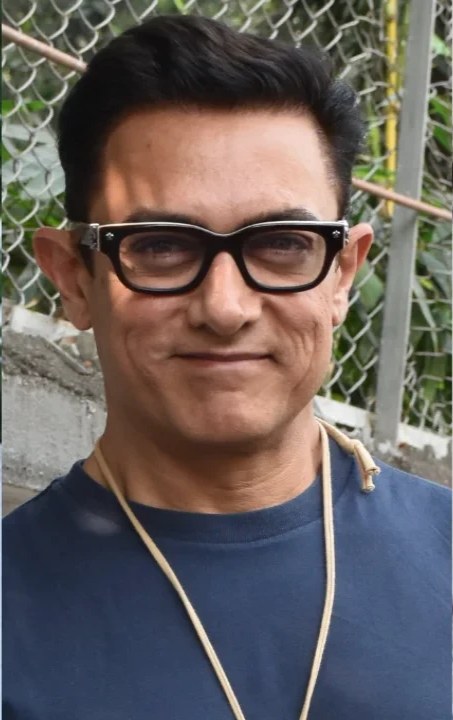
Ramesh Taurani’s production company is reportedly negotiating with Aamir Khan, Sidharth Malhotra, and Tiger Shroff to star in a Race franchise reboot, per multiple entertainment trade outlets.
Tips Films, Taurani’s banner, released the original Race in 2008, followed by Race 2 (2013) and Race 3 (2018) — built around a formula of double-crosses, family betrayal and glossy action set in exotic locations. The franchise has cycled through different lead casts across its three installments, and a reboot with three prominent male stars would mark its most ambitious ensemble yet.
Multiple entertainment outlets have separately reported the same trio of names in connection with the project, though none have detailed a script, director or timeline. Nothing has been finalized publicly, and no studio or release window has been attached to the reboot at this stage.
For Studio CarryOnHarry, the notable thing here isn’t the reboot itself — franchise revivals are a Bollywood staple — but the casting logic. Aamir Khan rarely commits to ensemble action films, and pairing him with Malhotra and Shroff, both known for the genre, would be a significant departure from his recent output if it comes together.
Studio CarryOnHarry Perspective
The Race franchise has never relied on the same lead twice—a deliberate strategy that kept it feeling fresh even as the formula stayed consistent. Each installment swapped out its cast entirely, treating stars as interchangeable vehicles for the same machine of betrayal and exotic globetrotting. A reboot with three A-listers sharing the screen would break that pattern fundamentally, raising the question of whether the franchise can sustain itself through star power alone or whether it’s already exhausted what the formula can deliver.
In practice, this matters because audience fatigue with a concept often masquerades as casting fatigue. Fans don’t typically walk into a Race film expecting character arcs or emotional stakes—they come for the premise. But after three films mining the same well of double-crosses and family schemes, even a star-studded reboot risks feeling like a repetition rather than a reinvention. The casting choice becomes a band-aid solution to a structural problem.
What remains unaddressed is whether Taurani’s team has actually rethought the story DNA of Race itself, or simply upgraded the marquee names. The reports mention negotiations and names but offer no hint of a script refresh, tonal shift, or thematic evolution—which is precisely what a fourth film would need to justify its existence rather than feel like a cash grab.
The most useful way to judge this venture may be not by who’s cast, but by whether the filmmakers are willing to break the very formula that made Race recognizable in the first place. Without that willingness, the announcement of any star is just noise.
Read more People’s Choice stories on Studio CarryOnHarry. Reporting via Live News Vault.
Press Releases at Studio CarryOnHarry
Powered by SgAiSolution
Related Posts

Monster: The Lizzie Borden Story Premieres on Netflix—Here’s When in Your Region
Balle Balle Radio™ Entertainment Desk The third installment of Netflix's "Monster" anthology, "Monster: The Lizzie Borden Story," comes to the…
Mirzapur Proves the Screen-to-Cinema Leap Can Work — But the Numbers Tell a More Complicated Story
Balle Balle Radio™ Entertainment Desk The web-to-film adaptation of Mirzapur has opened strongly at the box office, but its real…
Bajpayee Transforms Into Gandhi in Sudhir Mishra’s Next
Bajpayee Transforms Into Gandhi in Sudhir Mishra's Next Studio CarryOnHarry Entertainment Desk | 6 September 2026 A Historic Casting Decision…
Dulquer’s I’m Game Loses Ground on Day 2 as Footfall Fails to Match Screens
Dulquer's I'm Game Loses Ground on Day 2 as Footfall Fails to Match Screens Studio CarryOnHarry Entertainment Desk | 5…
Mirzapur: The Movie Day 1 — Rs. 29.70 Crore Gross Beats Projections, But Weekend Hold Is the Real Verdict
Mirzapur: The Movie Day 1 — Rs. 29.70 Crore Gross Beats Projections, But Weekend Hold Is the Real VerdictMassMasala —…
The OTT Gatekeepers Said No. Then ₹61 Crore Said Otherwise.
The OTT Gatekeepers Said No. Then ₹61 Crore Said Otherwise. Studio CarryOnHarry Entertainment Desk | 5 September 2026 From Boardroom…
TV & MOVIES
Mirzapur Proves the Screen-to-Cinema Leap Can Work — But the Numbers Tell a More Complicated Story
Balle Balle Radio™ Entertainment Desk
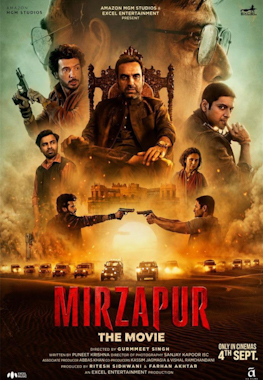
The web-to-film adaptation of Mirzapur has opened strongly at the box office, but its real test lies less in day-one numbers and more in whether a franchise built for episodic viewing can sustain itself as a theatrical event.
Adapting a hit web series into a theatrical film is one of Indian cinema’s more thankless exercises. Audiences already know the characters, already have a version of the story in their heads, and rarely asked for a cinema ticket to revisit something they streamed for free. Mirzapur, the Amazon Prime Video franchise turned feature film, walked into that exact trap — and, going by opening-weekend numbers, appears to have mostly avoided it.
The film reportedly opened to around 27 crore on its first day and crossed 62 crore within two days, figures that would have been difficult to predict for a series adaptation carrying an A certificate. That number matters because it undercuts a specific piece of industry snobbery: the assumption that a story rooted in small-town Uttar Pradesh, filled with regional dialect and rustic texture, will only draw audiences from smaller towns. Lagaan didn’t work that way two decades ago, and Mirzapur, on early evidence, isn’t working that way now. Urban multiplex audiences turning up for a story set in the badlands suggests the old formula — rural setting equals rural audience — deserves retirement.
A Franchise Doing the Heavy Lifting
Mirzapur’s advantage going in was never really about box office marketing. Three seasons and 29 episodes across 2018, 2020 and 2024 had already built something close to cultural shorthand — Guddu Pandit, Bablu, Munna Bhaiya, Kaleen Bhaiya, Beena. These aren’t just characters; for a loyal streaming audience, they’re personalities with established emotional stakes. That familiarity likely did more promotional work than any traditional campaign could have, and the film reportedly leaned into a lighter marketing push as a result, trusting the property itself to pull audiences in.
The casting continuity — Ravi Kishan reprising a role built around his character, Vikrant Massey’s arc carried forward by another actor — appears to have been handled carefully enough that newcomers to the franchise weren’t left disoriented. That’s a genuine achievement in adaptation work: translating a serialized universe into a single sitting without alienating either loyalists or first-timers.
Where the criticism holds more weight is on pacing. A story built for episodic release, with cliffhangers engineered every 40 minutes, doesn’t always compress cleanly into a two-and-a-half-hour theatrical runtime. The suggestion that the first half could have lost 20–25 minutes isn’t an unreasonable one — action-heavy, incident-dense storytelling that works in weekly installments can feel overstuffed when consumed in a single continuous block. That’s a structural tension, not necessarily a failure of execution, and it’s worth separating the two.
The Hanuman Factor
What complicates Mirzapur’s box office story isn’t its own performance — it’s timing. Hanuman Anshakar, still running strong and reportedly closing in on the 100 crore mark nearly a month after release, has continued pulling audiences even as Mirzapur opened. That’s an unusual pattern in Indian exhibition: a film gaining rather than losing steam in its third and fourth weeks, reportedly moving from roughly 40 lakh in one week to 10 crore, then 60 crore, then matching or exceeding that pace again. Whatever the exact figures settle at once verified, the trajectory itself is the story — a family-oriented, spiritually framed film sustaining momentum against a high-profile new release rather than fading in front of it.
The two films are pulling from genuinely different audience instincts. Hanuman Anshakar’s pull is rooted in family viewing and devotional resonance, an audience bringing parents, children and spouses to a shared screening experience. Mirzapur’s audience is drawn by gritty, violent, sexually frank storytelling built for adult streaming consumption. That they’re reportedly posting comparable ticket counts in the same window says less about either film’s individual quality and more about how fractured — and how resilient — Indian theatrical appetite currently is. It can support two entirely opposite viewing experiences simultaneously, provided each delivers what its audience actually came for.
Where Toxic Fits In
The more instructive comparison may actually be Toxic, the Kannada-language film starring Yash, which reportedly opened to a massive start before collapsing sharply in subsequent days. A huge opening number is often read as validation, but it primarily measures anticipation, not satisfaction. When a film with a big first day fails to hold, the story isn’t really about the opening — it’s about what happened between the ticket purchase and the walk out of the theatre. Word of mouth, not marketing spend, decides the second weekend. Mirzapur’s more gradual, franchise-driven climb — built on established trust rather than a single event-sized launch — may prove the more durable model, even if its peak numbers are less dramatic than a first-day spike.
Studio Perspective
The temptation is to read Mirzapur’s opening as a simple verdict: adaptation succeeded, series-to-film leap justified. That’s too tidy. What’s actually being tested here is whether streaming-built fandoms can be converted into one-time theatrical purchases without diluting what made the property valuable in the first place — its slow-burn, episodic tension. The film’s commercial opening suggests brand loyalty travels well across formats. Whether the story itself justified two and a half hours in a cinema, rather than a strong three-episode binge, is a separate and more honest question, and the pacing criticism suggests the answer isn’t a clean yes.
There’s also a quieter industry story sitting underneath the numbers: reported figures suggesting the film’s budget may have been inflated in public discourse relative to its actual scale, and unverified chatter around numerology influencing even the title change from an earlier working name to its current one. Neither claim is confirmed, and both should be treated as industry rumour rather than fact. But the mere existence of that chatter says something about how theatrical marketing works now — where perception of scale, and even superstition around naming, are treated as seriously as the film’s content itself.
The real test for Mirzapur isn’t this weekend. It’s whether Amazon and the filmmakers now treat the theatrical outing as a one-off victory lap for a franchise that’s run its course, or as proof that a fourth season — or a direct sequel building on the film’s cliffhanger ending — deserves greenlighting. A hit opening buys goodwill. It doesn’t yet answer whether the story has anywhere left to go.
— Studio CarryOnHarry Editorial Desk
Read more People’s Choice stories on Studio CarryOnHarry. Reporting via Live News Vault.
Powered by SgAiSolution
Related Posts
Three Major Bollywood Stars Being Courted for Reimagined Race Franchise
Balle Balle Radio™ Entertainment Desk Ramesh Taurani's production company is reportedly negotiating with Aamir Khan, Sidharth Malhotra, and Tiger Shroff…
Monster: The Lizzie Borden Story Premieres on Netflix—Here’s When in Your Region
Balle Balle Radio™ Entertainment Desk The third installment of Netflix's "Monster" anthology, "Monster: The Lizzie Borden Story," comes to the…
Bajpayee Transforms Into Gandhi in Sudhir Mishra’s Next
Bajpayee Transforms Into Gandhi in Sudhir Mishra's Next Studio CarryOnHarry Entertainment Desk | 6 September 2026 A Historic Casting Decision…
Dulquer’s I’m Game Loses Ground on Day 2 as Footfall Fails to Match Screens
Dulquer's I'm Game Loses Ground on Day 2 as Footfall Fails to Match Screens Studio CarryOnHarry Entertainment Desk | 5…
Mirzapur: The Movie Day 1 — Rs. 29.70 Crore Gross Beats Projections, But Weekend Hold Is the Real Verdict
Mirzapur: The Movie Day 1 — Rs. 29.70 Crore Gross Beats Projections, But Weekend Hold Is the Real VerdictMassMasala —…
The OTT Gatekeepers Said No. Then ₹61 Crore Said Otherwise.
The OTT Gatekeepers Said No. Then ₹61 Crore Said Otherwise. Studio CarryOnHarry Entertainment Desk | 5 September 2026 From Boardroom…
-

 Books4 days ago
Christopher Mirabile Sends Police Chief Silas Lopez Back to Cape Cod in “The Holdfast”
-

 Authors and Artists3 days ago
Dr. Zee Publishing Adds Ten Titles to Its Children’s Book Universe, Anchored by a Recurring Cast
-

 Books4 days ago
Former Army Officer Steven Finch Debuts Four-Book Mercenary Thriller Series
-

 Books4 days ago
Final Chapter: Garphil Bowles Completes Crime Trilogy with ‘Tears Of A Goon’
-

 Books3 days ago
New Book Frames Author’s Experience of Schizophrenia as a Spiritual Awakening
-

 Editor's Choice1 day ago
Prime Video India’s August-September slate: a cop drama, a reality reboot and a Carnatic music saga