
Editor's Choice
Salman Khan’s Reinvention Isn’t About Vanity — It’s About Refusing to Apologise


Balle Balle Radio™ Entertainment Desk
Between viral paparazzi clips, a Bigg Boss physique reveal, and Maidaan’s uncertain path to release, Salman Khan’s evolution from a reserved star to an unapologetic public figure says as much about India’s celebrity culture as it does about the actor himself.
Salman Khan has never needed a film release to make headlines. In recent weeks, viral clips from a Dubai trip — where he was seen in a cap, prompting online chatter about his appearance — spread across social media and were picked up by entertainment outlets almost instantly. What followed wasn’t a scandal. It was something closer to a referendum on how India’s biggest star has chosen to age, and how publicly he’s decided to push back against those commenting on it.
The reaction itself is worth examining, separate from the man at its centre. A viral cap photo becoming national entertainment news says less about Salman Khan and more about how thin the line has become between celebrity observation and celebrity surveillance.
A Different Salman
Those who worked alongside Khan during the Maine Pyar Kiya era describe a notably different public personality — quieter, more reserved, even somewhat influenced by a Hollywood-inflected coolness in his early screen presence. That version of Salman Khan was, by most accounts, shy rather than combative, subtle rather than loud.
The shift is widely traced to Wanted (2009), the film credited with reintroducing Khan through a harder physique, a more theatrical dialogue delivery, and an on-screen persona built on unapologetic swagger. Bonny Kapoor recently marked the film’s 17th anniversary, and the moment invited reflection on how significant that stylistic pivot actually was — not just for Khan’s career, but for single-screen cinema, which found in Wanted a certain big-screen, dialogue-driven energy that had been missing.
What’s happened since, particularly visible during his recent Bigg Boss appearance, looks like an extension of that same trajectory rather than a new one. The physical transformation — visibly the product of rigorous gym work rather than any cosmetic shortcut — has been paired with a willingness to directly confront trolls, paparazzi, and unflattering camera angles on camera, in real time.
The Paparazzi Problem
Khan’s on-air remarks about photographers taking deliberately unflattering or inappropriate-angle shots of actresses — and his blunt suggestion that such behaviour deserves confrontation — is where the conversation gets more complicated. It’s a real grievance dressed in a phrasing that will likely divide opinion: some will hear a star defending his colleagues; others will hear an aggressive, almost vigilante tone that sits uneasily with public discourse.
Both readings can be true at once. The underlying issue — a paparazzi culture that has, by many accounts, grown more invasive since social media turned every unflattering photograph into potential viral content — is real and well documented globally, not unique to Bollywood. The pressure to generate the next viral image, the next breaking-news graphic, has created incentives for photographers to chase precisely the moments celebrities least want captured. Jaya Bachchan has spoken publicly about this dynamic for years.
What’s less certain is whether Khan’s specific proposed remedy — confrontation, even physical threat — is the right response, or whether it simply escalates a culture already prone to controversy-as-content. There’s also a reasonable counterpoint: photographers, however aggressive their methods, are operating within an ecosystem that rewards exactly this kind of image. The audience clicking on the photo is as responsible for the incentive structure as the photographer taking it. A mutual, sustainable understanding between celebrities and media — rather than confrontation on one side — is probably the more durable long-term fix, even if it’s the less viral one.
Maidaan’s Uncertain Road
Away from the personal controversies, Khan’s long-delayed film Maidaan (referred to in some reports as Matrabhoomi) remains stuck in a holding pattern. As of the most recent update, the film has not been submitted to the Censor Board, and there is no confirmed evidence of any Home Ministry involvement or government approval process, despite chatter suggesting otherwise. That distinction matters: reports of political interference should be treated as unconfirmed unless a formal, sourced statement exists.
What does appear more plausible is a geopolitical sensitivity around content. If the film’s narrative engages with the Galwan Valley clashes between India and China, industry observers reasonably expect that material to face scrutiny or recutting, given the current diplomatic climate and recent high-level engagements between the two nations. A trimmed theatrical cut, or a shift toward an OTT release, are both floated as possible outcomes — though neither is confirmed. The film’s release date has reportedly moved from April 17 to a later date, though even that remains provisional.
Studio Perspective
Strip away the noise, and what’s actually being discussed here isn’t really Salman Khan’s biceps or his Bigg Boss soundbites. It’s a much older tension: what happens when a public figure decides he no longer owes politeness to an audience that increasingly treats him as content rather than a person.
That’s a defensible position. It’s also not a neutral one. Encouraging combativeness as the answer to intrusive photography risks normalising exactly the kind of aggressive posturing that makes celebrity culture more volatile, not less. Khan’s frustration is legitimate; his prescribed solution is more debatable.
The more interesting story, arguably, is the one about incentive structures — a media economy that rewards the worst angle, the most viral clip, the most alarming headline, regardless of whether it’s earned. Salman Khan didn’t create paparazzi culture. He’s simply the highest-profile person currently refusing to quietly absorb its costs. Whether that refusal is empowering or simply loud probably depends on which side of the camera you’re standing on.
And Maidaan, caught between censorship uncertainty and geopolitical timing, is a reminder that even a film with a completed production can be held hostage by forces that have nothing to do with its script, its direction, or its box-office potential.
— Studio CarryOnHarry Editorial Desk
Read more People’s Choice stories on Studio CarryOnHarry. Reporting via Live News Vault.
Powered by SgAiSolution
Related Posts

Week 7 and Still Counting: How Hanuman Ansh Broke the Mould
Week 7 and Still Counting: How Hanuman Ansh Broke the Mould Studio CarryOnHarry Entertainment Desk | 22 September 2026 A…

Hrithik Roshan Moves Behind the Camera for Prime Video Thriller ‘Storm’
Balle Balle Radio™ Entertainment Desk Hrithik Roshan is producing a series for the first time, backing a Mumbai-based thriller called…

Alia Bhatt Attends Special Screening of Mother’s Film ‘Om Ka Hari,’ Praises It as ‘Gem’
Balle Balle Radio™ Entertainment Desk Alia Bhatt attended a special screening of "Om Ka Hari" in Mumbai this week to…

Gondhal Wins India’s Oscar Slot After Dhurandhar Garners Just 4 Jury Votes
Balle Balle Radio™ Entertainment Desk The Film Federation of India's 14-member jury gave Ranveer Singh's action drama "Dhurandhar" four votes…

If it was good then why did Priyadarshan remake it, and if i
Balle Balle Radio™ Entertainment Desk“If it was good then why did Priyadarshan remake it, and if it was good then…

Prime Video India’s August-September slate: a cop drama, a reality reboot and a Carnatic music saga
Balle Balle Radio™ Entertainment Desk Prime Video India has laid out a run of new titles for late summer into…

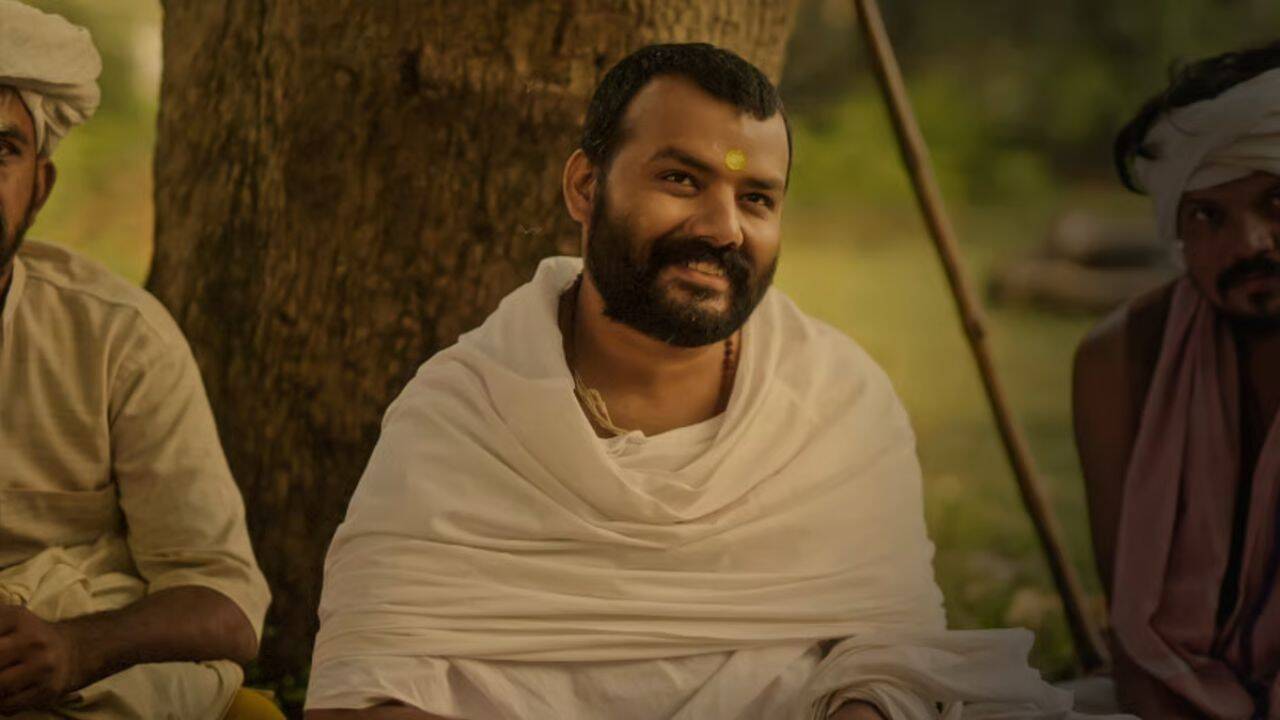
Week 7 and Still Counting: How Hanuman Ansh Broke the Mould
Studio CarryOnHarry Entertainment Desk | 22 September 2026A Slow Burn That Became a Box Office Phenomenon
What started as a quiet, faith-driven release has grown into one of Bollywood’s most remarkable theatrical stories of 2026. Hanuman Ansh, the spiritual biopic centred on the life and legacy of Neem Karoli Baba, has crossed a staggering Rs 366 crore worldwide by its Day 46-47 mark — a feat few industry watchers predicted when the film first opened.
Directed by Vishal Chaturvedi and led by actor Shobhinaw Satyaa, the film has now firmly established itself as a sleeper hit of the year, with its domestic India collection surging past the Rs 276 crore threshold.
From Modest Opening to Extended Theatrical Run
Hanuman Ansh did not arrive with the fanfare of a big-budget franchise blockbuster. Its opening weekend was measured, drawing in a niche audience of devotees, spiritual seekers, and fans of biographical cinema.
The real turning point came in the film’s third week, when word-of-mouth from religious communities and social media appreciation began driving audiences back to cinemas. That momentum has proven near-impossible to halt.
Key Milestones at a Glance
- 🎬 Day 46-47 Worldwide Gross: Rs 366 crore+
- 🇮🇳 India Domestic Collection: Rs 276 crore+
- 📈 Turnaround point: Week 3 of theatrical run
- 🎯 Next target: Rs 280 crore domestic, Rs 370+ crore worldwide
- 🏆 Comparable milestone: On track to surpass Border 2’s worldwide total
Can Hanuman Ansh Cross Rs 280 Crore Domestically?
With its extended run still alive in multiplexes across the country, the Rs 280 crore domestic target appears very much within reach. Trade analysts tracking entertainment industry coverage have noted that spiritual and devotional films rarely sustain this kind of longevity — making Hanuman Ansh a genuinely historic case study.
The film’s unique appeal cuts across demographics. It is drawing not just devoted followers of Neem Karoli Baba — whose ashrams span from Uttarakhand to international centres — but also general audiences captivated by its sincerity and cinematic craft.
What This Means for Indian Spiritual Cinema
Hanuman Ansh joins a short but growing list of faith-based Indian films that have proved the multiplex audience is far more diverse than marketers once assumed. For more stories shaping Indian cinema right now, explore Bollywood’s top stories on our dedicated entertainment hub.
The success also places director Vishal Chaturvedi firmly on the industry map as a filmmaker capable of handling sensitive biographical material with both reverence and commercial instinct.
Studio CarryOnHarry Perspective
Hanuman Ansh is more than a box office number — it is a signal. Indian audiences are hungry for stories rooted in culture, spirituality, and authentic biography. This film proves that you don’t need a Khan or a Kapoor to fill seats; you need truth, craft, and a story worth telling. At Studio CarryOnHarry, we believe this is the kind of cinema that reshapes what Bollywood can be — and we’ll be watching every milestone closely.
– Entertainment Desk, Studio Carry On Harry
—Powered by SgAiSolution
Related Posts

Bajpayee Transforms Into Gandhi in Sudhir Mishra’s Next
Bajpayee Transforms Into Gandhi in Sudhir Mishra's Next Studio CarryOnHarry Entertainment Desk | 6 September 2026 A Historic Casting Decision…

Dulquer’s I’m Game Loses Ground on Day 2 as Footfall Fails to Match Screens
Dulquer's I'm Game Loses Ground on Day 2 as Footfall Fails to Match Screens Studio CarryOnHarry Entertainment Desk | 5…
Mirzapur: The Movie Day 1 — Rs. 29.70 Crore Gross Beats Projections, But Weekend Hold Is the Real Verdict
Mirzapur: The Movie Day 1 — Rs. 29.70 Crore Gross Beats Projections, But Weekend Hold Is the Real VerdictMassMasala —…
The OTT Gatekeepers Said No. Then ₹61 Crore Said Otherwise.
The OTT Gatekeepers Said No. Then ₹61 Crore Said Otherwise. Studio CarryOnHarry Entertainment Desk | 5 September 2026 From Boardroom…
How a ₹128 Crore Bet Built Bollywood’s Most Profitable Thriller Run
How a ₹128 Crore Bet Built Bollywood's Most Profitable Thriller Run Studio CarryOnHarry Entertainment Desk | 31 August 2026 A…

Spider-Man: Brand New Day Dethrones Avatar 2 as 3rd Highest-Grossing Film Ever
Spider-Man: Brand New Day Dethrones Avatar 2 as 3rd Highest-Grossing Film Ever Studio CarryOnHarry Entertainment Desk | 31 August 2026…
Balle Balle Radio™ Entertainment Desk
Hrithik Roshan is producing a series for the first time, backing a Mumbai-based thriller called Storm coming to Prime Video via HRX Films (part of FilmKraft Productions). The streamer announced the project this week, describing it as a high-stakes drama built around an ensemble of women leads.
The series is created and directed by Ajitpal Singh, whose feature Fire in the Mountains drew festival attention in recent years, with the narrative developed by Singh together with Francois Lunel and Swati Das. Roshan is producing alongside his brother Eshaan Roshan, and the announcement was made as part of Prime Video’s broader 2026 slate reveal in Mumbai, where a second HRX Films project, Mess, was also announced, according to independent reports.
The cast includes Parvathy Thiruvothu, Alaya F, Srishti Shrivastava, Rrama Sharma, and Saba Azad. Filming will commence in the near term, with no confirmed timeline or premiere date disclosed.
Gaurav Gandhi, Prime Video’s vice president for APAC and MENA, called the partnership with Roshan and HRX Films a milestone for the platform’s push into what he described as storytelling that resonates with global audiences. Roshan, in his own statement, said the streaming move felt like an instinctive choice given Prime Video’s track record, and pointed to Singh’s script as the draw, calling the world of the story raw and layered.
Over 20 years, Roshan has established himself as a top-tier Hindi film actor and six-time Filmfare Award winner. A producing credit on a streaming series is a new lane for him, and Storm is the test case.
Studio CarryOnHarry will be watching whether Storm signals a real pivot toward series production for Roshan or a one-off experiment tied to this particular script.
Read more People’s Choice stories on Studio CarryOnHarry. Reporting via Live News Vault.
Press Releases at Studio CarryOnHarry
Powered by SgAiSolution
Related Posts
Week 7 and Still Counting: How Hanuman Ansh Broke the Mould
Week 7 and Still Counting: How Hanuman Ansh Broke the Mould Studio CarryOnHarry Entertainment Desk | 22 September 2026 A…
Alia Bhatt Attends Special Screening of Mother’s Film ‘Om Ka Hari,’ Praises It as ‘Gem’
Balle Balle Radio™ Entertainment Desk Alia Bhatt attended a special screening of "Om Ka Hari" in Mumbai this week to…
Gondhal Wins India’s Oscar Slot After Dhurandhar Garners Just 4 Jury Votes
Balle Balle Radio™ Entertainment Desk The Film Federation of India's 14-member jury gave Ranveer Singh's action drama "Dhurandhar" four votes…
If it was good then why did Priyadarshan remake it, and if i
Balle Balle Radio™ Entertainment Desk“If it was good then why did Priyadarshan remake it, and if it was good then…
Prime Video India’s August-September slate: a cop drama, a reality reboot and a Carnatic music saga
Balle Balle Radio™ Entertainment Desk Prime Video India has laid out a run of new titles for late summer into…

The Bronze Medal That Marked India’s Arrival in World Esports
Balle Balle Radio™ Entertainment Desk Fifteen years ago, an Indian esports competitor using the handle HI_ISTLER achieved a podium finish…
-
 Editor's Choice5 days ago
Prime Video India’s August-September slate: a cop drama, a reality reboot and a Carnatic music saga
-

 Books5 days ago
Rockingham Author Lucy Allen Releases Third Devotional, “In Jars of Clay”
-

 TV & MOVIES4 days ago
Three Major Bollywood Stars Being Courted for Reimagined Race Franchise
-

 Books6 days ago
New Book by Robert V. Palmer Makes the Case for God’s Existence Through Legal-Style Argument
-

 Books5 days ago
Katie Willis’s New Poetry Collection “Hidden Hallelujahs” Finds Faith in Ordinary Moments
-

 Editor's Choice5 days ago
If it was good then why did Priyadarshan remake it, and if i