
Editor's Choice
The Mismatch Problem: How Toxic Tried to Serve Too Many Masters at Once

Balle Balle Radio™ Entertainment Desk
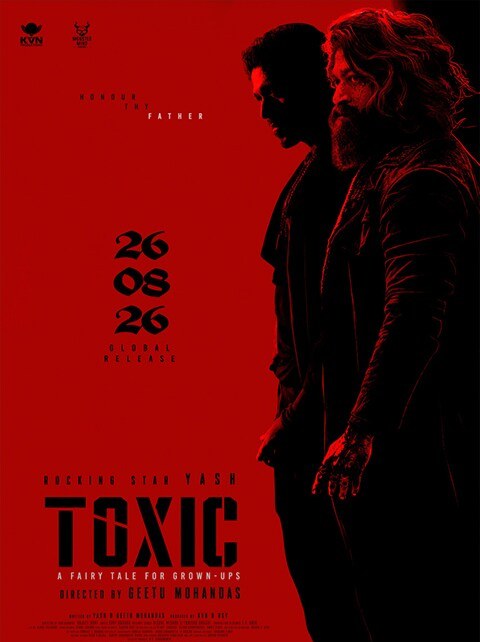
The most telling detail in this discussion isn’t a plot complaint. It’s a process confession. The director, Geetu Mohandas, is quoted describing her own working method: her process fragments across three stages—writing, shooting, editing—each producing a different version of the film. For a boutique indie production, that kind of chaos-as-method can be a virtue. For a pan-India tentpole built around a superstar and a three-hour-plus runtime, it becomes the whole review.
What caught our attention is not that Toxic aimed high. Ambition is not the problem the discussion identifies, and it says so directly: the problem isn’t excess ambition itself, but multiple competing visions crowded into a single film without resolution. A large-scale gangster spectacle in the Prashanth Neel mould. A brooding father-son psychological drama. A love story leaning on the female gaze. A period-adjacent pan-India event film. Each of those is a legitimate film. Stacked on top of each other without a clear spine, according to the conversation, they blend into an incoherent mixture—what the speaker describes as khichdi—that satisfies no single audience.
The more interesting tension here is between marketing promise and narrative delivery. Audiences reportedly went in expecting another towering Yash star vehicle, the kind built on scale and swagger. What they got, per this account, was a film quietly trying to be a darker psychological fairy tale wearing a gangster-movie costume. Neither audience — the one sold on spectacle, nor the one open to something stranger — walks out fully satisfied. That mismatch between what marketing promises and what the film actually is deserves more scrutiny than box-office numbers alone can offer, because it points to a structural decision made long before release, not just a reception problem after it.
The dialogue criticism is worth sitting with too, even allowing for how much is a matter of taste. The examples cited — lines straining for profundity about footsteps that can’t be erased, or a monologue insisting real betrayal is more honest than fake loyalty — are framed as performing depth rather than earning it. **Audiences are quick to detect whether dialogue leans toward genuine lyricism or hollow self-importance.** Whether that’s a fair reading of the actual script or a reaction to a handful of quotable lines taken out of a much longer film is harder to settle from a discussion alone.
Where this analysis is on firmer ground is process. If a director has openly said her writing, shooting and editing stages don’t reconcile with each other, that is a useful piece of context for anyone trying to understand why a film might feel structurally uneven — characters introduced, killed, and discarded without weight, scenes that seem to exist without clearly serving the whole. That is a specific, sourced claim about method, not just a viewer’s impression of confusion.
But here is the necessary caution: one filmmaker’s stated process, however candid, doesn’t automatically explain every editing or pacing complaint in a finished film. Big-budget productions involve producers, studios, and multiple creative hands; attributing every rough edge to a single director’s admitted process is a tempting shorthand, not a proven cause. Nor does citing Alpha’s similarly mixed reception nearby actually establish a pattern about pan-India cinema generally — two films is an observation, not a trend.
The genuinely useful question this raises for the industry sits somewhere else: how much creative unpredictability can a film absorb once it is carrying the commercial weight of a major star and a nationwide release? Indie cinema can survive a director discovering the story in the edit. **A film built on audience anticipation this large may not have that luxury.** That, more than any single scene or dialogue, seems to be the real subject underneath this conversation.
— Studio CarryOnHarry Editorial Desk
Read more People’s Choice stories on Studio CarryOnHarry. Reporting via Live News Vault.
Press Releases at Studio CarryOnHarry
Related Posts

Maatrubhumi Earns CBFC Green Light After Geopolitical Scrutiny
Salman Khan's Maatrubhumi finally clears CBFC with a U/A 16+ certificate after months of hurdles over its India-China conflict content.…
Before Pushpa: The Quiet Crisis That Reshaped Allu Arjun’s Path
Before Pushpa: The Quiet Crisis That Reshaped Allu Arjun's Path Studio CarryOnHarry Entertainment Desk | 18 November 2026 From Zero…
Tracking This Year’s Highest-Rated Films: A Guide to 2026’s Critical Consensus
Balle Balle Radio™ Entertainment Desk A new Resident Evil film is among the 2026 releases drawing critical attention this year,…
Tracking This Year’s Highest-Rated Films: A Guide to 2026’s Critical Consensus
Balle Balle Radio™ Entertainment Desk A new Resident Evil film is among the 2026 releases drawing critical attention this year,…
Ramayana Eyes Hong Kong Screens as Worldwide Numbers Keep Climbing
Ramayana Eyes Hong Kong Screens as Worldwide Numbers Keep Climbing Studio CarryOnHarry Entertainment Desk | 8 November 2026 Ranbir Kapoor's…
How a Post-Credit Cameo Became Bollywood’s Boldest Franchise Bet
How a Post-Credit Cameo Became Bollywood's Boldest Franchise Bet Studio CarryOnHarry Entertainment Desk | 8 November 2026 A Post-Credit Moment…

Editor's Choice
Maatrubhumi Earns CBFC Green Light After Geopolitical Scrutiny
Salman Khan’s Maatrubhumi finally clears CBFC with a U/A 16+ certificate after months of hurdles over its India-China conflict content. Full story here.

Maatrubhumi Earns CBFC Green Light After Geopolitical Scrutiny
Studio CarryOnHarry Entertainment Desk | 18 November 2026
The Long-Awaited Breakthrough for Maatrubhumi
After months of reported hurdles and speculation, Salman Khan’s high-stakes patriotic drama Maatrubhumi has officially received clearance from the Central Board of Film Certification (CBFC), granted a U/A 16+ certificate. The development marks a significant milestone for a project that has repeatedly dominated Bollywood’s top stories throughout the year.
From Battle Of Galwan to Maatrubhumi
The film was originally announced under the title Battle Of Galwan, drawing its premise from the deadly 2020 standoff between Indian and Chinese troops in the Galwan Valley. The title was subsequently changed to Maatrubhumi earlier this year as the production moved forward.
The subject matter reportedly made the certification process a complex one. Sources indicate the film’s content — particularly its depiction of the India-China border conflict and direct references to China — raised questions during the review process, contributing to the delays that preceded this clearance.
What the U/A 16+ Certificate Means
The U/A 16+ rating places Maatrubhumi in a category suited to mature teenage and adult audiences, suggesting the film carries sequences of intensity and conflict that the board deemed appropriate only for viewers aged 16 and above when unaccompanied. The trailer, running at an impressive 4 minutes 43 seconds, is also reported to have cleared CBFC scrutiny.
Release Date Developments
- The film was initially scheduled for release on April 17, 2026.
- That date was subsequently pushed back, with an August 2026 window reportedly under consideration.
- An Independence Day release has been speculated, which would align thematically with the film’s patriotic subject matter.
A Film Carrying Enormous Expectations
Maatrubhumi arrives at a moment when patriotic and military-themed productions have commanded some of the biggest box office numbers in recent Indian cinema history. With Salman Khan fronting a story rooted in real events, audience anticipation has remained high despite — and arguably because of — the certification turbulence the film encountered.
Broader entertainment industry coverage has consistently flagged Maatrubhumi as one of the most politically and commercially consequential releases in Salman Khan’s recent career.
– Entertainment Desk, Studio Carry On Harry
—
Related Posts
Before Pushpa: The Quiet Crisis That Reshaped Allu Arjun’s Path
Before Pushpa: The Quiet Crisis That Reshaped Allu Arjun's Path Studio CarryOnHarry Entertainment Desk | 18 November 2026 From Zero…
Ramayana Eyes Hong Kong Screens as Worldwide Numbers Keep Climbing
Ramayana Eyes Hong Kong Screens as Worldwide Numbers Keep Climbing Studio CarryOnHarry Entertainment Desk | 8 November 2026 Ranbir Kapoor's…
How a Post-Credit Cameo Became Bollywood’s Boldest Franchise Bet
How a Post-Credit Cameo Became Bollywood's Boldest Franchise Bet Studio CarryOnHarry Entertainment Desk | 8 November 2026 A Post-Credit Moment…
From 230 Films to a Daughter’s Words: Celebrating Kamal Haasan
Kamal Haasan celebrates his 72nd birthday. Daughter Aksharaa calls him an inspiration. Explore his 230+ films, 7 Oscar entries &…

Salman Khan on His Biopic: ‘It Could Sink Reputations’
Salman Khan on His Biopic: 'My Story Could Sink a Lot of Reputations' Studio CarryOnHarry Entertainment Desk | 7 November…
How The Odyssey Pushed Nolan Into Cinema’s Billion-Dollar Elite
How The Odyssey Pushed Nolan Into Cinema's Billion-Dollar Elite Studio CarryOnHarry Entertainment Desk | 13 October 2026 The Odyssey Rewrites…
Before Pushpa: The Quiet Crisis That Reshaped Allu Arjun’s Path
Studio CarryOnHarry Entertainment Desk | 18 November 2026
From Zero to Hero: Allu Arjun’s Honest Confession
Allu Arjun is one of Indian cinema’s most celebrated superstars today, but the road to the top was far from smooth. During recent celebrations marking the 20th anniversary of his landmark film Arya, the actor made a candid admission that surprised many fans — his looks once stood between him and steady film offers.
Despite Gangotri performing well at the box office, Arjun revealed he found himself in a difficult position when it came to landing quality projects. ‘I went from 0 to 100 — I was a nobody,’ he reportedly said, reflecting on those uncertain years with striking honesty.
The Sukumar Factor: A Decision That Changed Everything
Facing a wall of indifference from filmmakers, Allu Arjun made a pivotal choice — he aligned himself with visionary director Sukumar. That creative partnership would prove to be one of the most consequential decisions in Telugu cinema’s recent history.
The duo’s collaboration redefined Arjun’s screen image, pushing him toward roles of grit, physicality, and intense character depth. For more on how star-director partnerships have shaped Bollywood’s top stories, our entertainment desk has tracked several such turning points across Indian cinema.
Pushpa 2: The Rule — The Culmination of a Long Journey
The fruits of Allu Arjun and Sukumar’s relentless creative bond were on full display with Pushpa 2: The Rule, released in 2024. The film became a pan-India phenomenon, starring Allu Arjun alongside Rashmika Mandanna and Fahadh Faasil — with Faasil making his Telugu debut in the franchise.
The sequel shattered multiple box-office records and confirmed Arjun’s status as a national-level superstar, transcending regional boundaries in a way few actors have managed.
What This Means for Aspiring Stars
Arjun’s journey is a rare, unfiltered look at the insecurities that even commercially successful actors carry beneath the surface. His willingness to speak openly about rejection adds a deeply human dimension to a career that now appears almost effortlessly triumphant.
As reported across leading entertainment industry coverage platforms, the star’s anniversary reflections have resonated powerfully with young actors navigating their own uncertain beginnings.
- Film: Arya (20th anniversary celebrated in 2024)
- Breakthrough partner: Director Sukumar
- Career peak: Pushpa 2: The Rule (2024)
- Co-stars in Pushpa franchise: Rashmika Mandanna, Fahadh Faasil
Allu Arjun’s story is ultimately one of persistence over perception — proof that early judgments about an actor’s marketability can be spectacularly wrong.
– Entertainment Desk, Studio Carry On Harry
—
Related Posts
Maatrubhumi Earns CBFC Green Light After Geopolitical Scrutiny
Salman Khan's Maatrubhumi finally clears CBFC with a U/A 16+ certificate after months of hurdles over its India-China conflict content.…
Ramayana Eyes Hong Kong Screens as Worldwide Numbers Keep Climbing
Ramayana Eyes Hong Kong Screens as Worldwide Numbers Keep Climbing Studio CarryOnHarry Entertainment Desk | 8 November 2026 Ranbir Kapoor's…
How a Post-Credit Cameo Became Bollywood’s Boldest Franchise Bet
How a Post-Credit Cameo Became Bollywood's Boldest Franchise Bet Studio CarryOnHarry Entertainment Desk | 8 November 2026 A Post-Credit Moment…
From 230 Films to a Daughter’s Words: Celebrating Kamal Haasan
Kamal Haasan celebrates his 72nd birthday. Daughter Aksharaa calls him an inspiration. Explore his 230+ films, 7 Oscar entries &…
Salman Khan on His Biopic: ‘It Could Sink Reputations’
Salman Khan on His Biopic: 'My Story Could Sink a Lot of Reputations' Studio CarryOnHarry Entertainment Desk | 7 November…
How The Odyssey Pushed Nolan Into Cinema’s Billion-Dollar Elite
How The Odyssey Pushed Nolan Into Cinema's Billion-Dollar Elite Studio CarryOnHarry Entertainment Desk | 13 October 2026 The Odyssey Rewrites…
-
 Books4 days ago
New Book Draws on a Grandmother’s Long-Distance Bond with Her Grandchildren
-

 Books6 days ago
Author Ryann Perkins Releases “Who God Says I Am ABCs,” an A-to-Z Children’s Book on Biblical Identity
-

 Books2 days ago
New Book from Marine Veteran Gary Wright Traces a Father’s Path Back to His Family Through Faith
-
 Books2 days ago
Sheila L. Schlueter’s New Novel Pits Retired Special Operators Against a Killer in a Race to Save One Woman
-

 Books4 days ago
New Historical Novel ‘Why We Were There’ Follows a Vietnam Veteran’s Decades-Long Reckoning with Hill 362
-

 Books6 days ago
Author Ryann Perkins Releases ‘Who God Says I Am ABCs,’ an Alphabet-Based Faith Primer for Children