
Editor's Choice
The Odyssey Crosses Rs 100 Crore in India: Nolan Does It Again

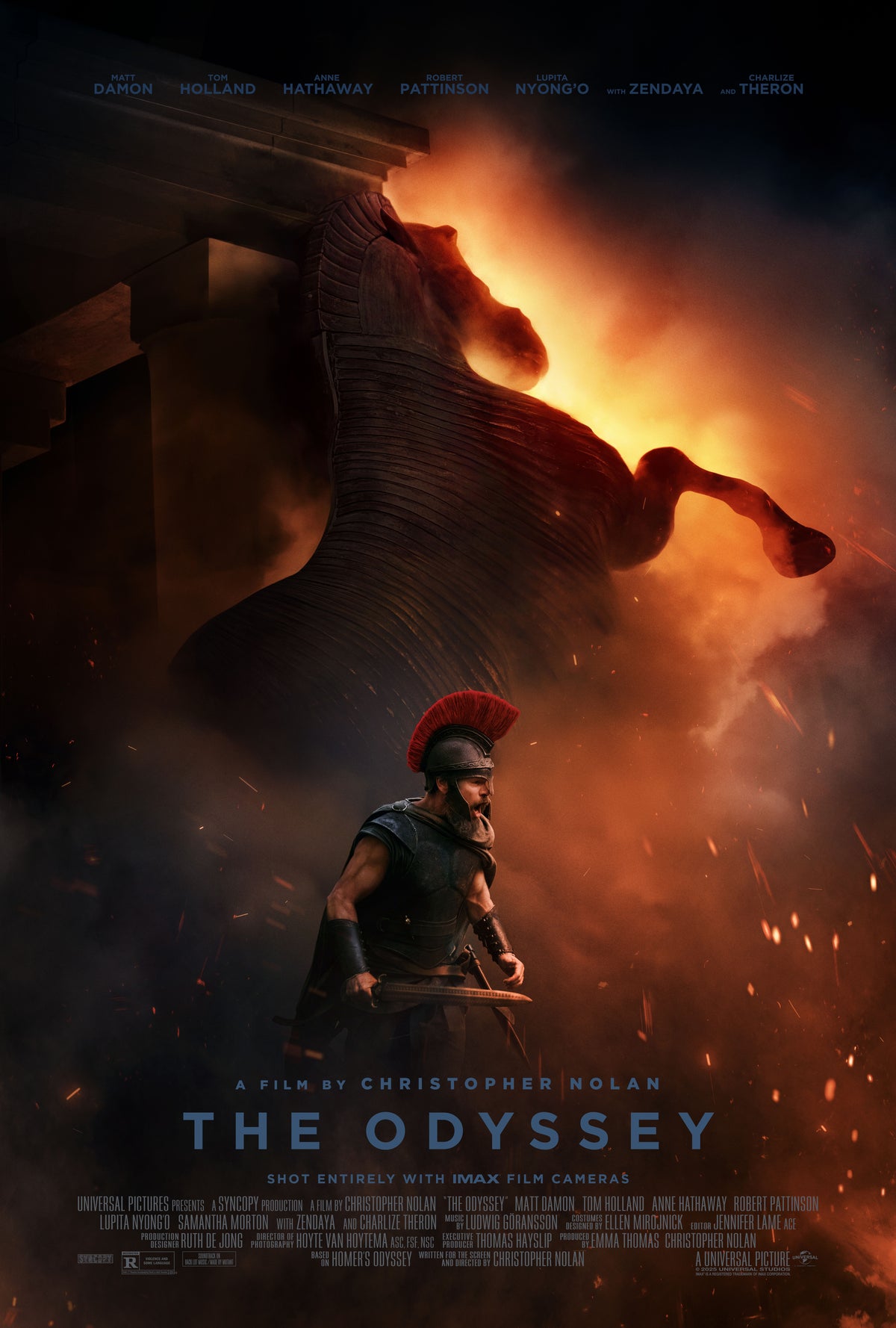
The Odyssey Crosses Rs 100 Crore in India — Christopher Nolan Scores His Second Blockbuster Milestone
Studio CarryOnHarry Entertainment Desk | 23 July 2026
Christopher Nolan has done it again. His sweeping epic The Odyssey has crossed the Rs 100 crore mark at the Indian box office, achieving the milestone within its very first week of release — a feat that firmly establishes Nolan as one of the most bankable directors in the world today.
The Numbers That Matter
According to verified box office reports, The Odyssey collected Rs 84.15 crore net and Rs 100.38 crore gross in India, making it a genuine crossover event film for Indian audiences. The English-language version drove the bulk of these earnings, reflecting a growing appetite among Indian moviegoers for premium Hollywood experiences on the big screen.
The film’s global momentum is equally impressive — it has already grossed over $328 million worldwide, setting multiple records for Nolan, including standout pre-sales figures for premium formats such as IMAX and 4DX that were announced well in advance of the release date.
Nolan’s Second Rs 100 Crore Club Entry in India
This landmark makes The Odyssey only the second Christopher Nolan film to breach the Rs 100 crore threshold in India, following the director’s Oscar-winning blockbuster Oppenheimer (2023). That film famously rode a cultural wave driven in part by the viral ‘Barbenheimer’ phenomenon — and The Odyssey appears to be creating its own moment entirely.
A Star-Studded Cast Driving Curiosity
The film stars Matt Damon as the legendary Greek hero Odysseus, navigating a treacherous journey home following the Trojan War. The ensemble cast also features Tom Holland, Anne Hathaway, and rapper-turned-actor Travis Scott — a lineup that generated significant buzz well before the cameras even rolled.
- Matt Damon — Odysseus
- Tom Holland — Supporting role
- Anne Hathaway — Supporting role
- Travis Scott — Supporting role
What This Means for Hollywood in India
The Odyssey’s performance is a powerful signal that Indian audiences are willing to invest in large-scale Hollywood productions — particularly those with auteur pedigree and IMAX-worthy visuals. For the latest on how global films are reshaping the local entertainment landscape, explore Bollywood’s top stories right here on Studio CarryOnHarry.
Industry analysts tracking entertainment industry coverage have noted that Nolan’s consistent ability to draw Indian audiences to English-language cinema is virtually unmatched among contemporary Western filmmakers.
Studio CarryOnHarry Perspective
For Indian cinema fans, The Odyssey’s Rs 100 crore club entry is more than just a Hollywood headline — it raises the bar for storytelling ambition across the board. When a foreign-language epic about ancient Greek mythology commands this kind of attention in Mumbai multiplexes and single screens alike, it sends a clear message to Bollywood producers: audiences are hungry for scale, vision, and craft. The challenge — and opportunity — for Hindi cinema has never been greater.
– Entertainment Desk, Studio Carry On Harry
Background & Timeline
Christopher Nolan’s The Odyssey is an epic adaptation of Homer’s ancient Greek poem, following warrior Odysseus on his perilous journey home after the Trojan War. Nolan, whose previous India box office milestone was set by Oppenheimer in 2023, assembled a star-studded cast including Matt Damon, Tom Holland, Anne Hathaway, and Travis Scott. The film generated significant pre-release buzz globally, with premium format pre-sales breaking multiple records months before its 2026 theatrical debut.
Studio CarryOnHarry Perspective
At Studio CarryOnHarry, we see The Odyssey’s Rs 100 crore triumph as a direct challenge to Hindi cinema’s comfort zone. When a Hollywood epic rooted in ancient Greek mythology pulls audiences away from their local multiplexes in droves, it underscores one undeniable truth: spectacle and storytelling craft are universal currencies. Bollywood’s finest filmmakers should take note — Indian audiences are not just ready for ambition, they are actively rewarding it at the ticket counter.
What’s Next?
Watch for The Odyssey’s second-week box office figures in India, which will determine whether the film can sustain momentum and challenge all-time Hollywood records on Indian soil. Globally, analysts will be tracking its path toward the $500 million mark — and whether a possible awards season run could further boost late theatrical interest.
Enjoyed this story? Follow Studio CarryOnHarry at carryonharry.com · Sources cross-checked via livenewsvault.com · 👍 Facebook · X · 📢 Share this story
Studio Ki Raye
Nolan ka India mein yeh doosra Rs 100 crore milestone ek cheez clearly prove karta hai — Indian audience ab sirf star power ya masala ke liye ticket nahi kharidta, woh director ke naam par bharosa karta hai. Oppenheimer ek cultural moment tha, Barbenheimer ki wave thi. The Odyssey ke paas woh shortcut nahi tha, phir bhi usne deliver kiya — yeh zyada significant hai. Bollywood ke liye asli lesson yeh nahi ki “badi film banao,” asli lesson yeh hai ki audience ko pata chal gaya hai jab koi filmmaker apne vision se compromise nahi karta. Aur tab woh multiplexes tak khud chalke aata hai.
Editor’s Verdict
Christopher Nolan has now done this twice in India — and that second time matters more than the first. Oppenheimer had the ‘Barbenheimer’ circus working in its favour, a cultural moment that even casual audiences couldn’t ignore. The Odyssey has no such external wind behind it. An English-language adaptation of ancient Greek mythology, with no Bollywood crossover hook, no domestic star cameo, no manufactured controversy — and yet Rs 100 crore in week one. That tells you something real about where a section of the Indian multiplex audience has arrived. They are no longer just tolerating prestige Hollywood; they are actively seeking it out in premium formats, paying top-tier prices to sit inside an IMAX screen for a director’s vision. What this quietly signals to Hindi filmmakers is harder to hear but impossible to dismiss: spectacle alone stopped being enough some time ago. Beyond the headlines, when ancient Greek mythology outsells most domestic productions in Mumbai multiplexes, the conversation about what Indian audiences truly want has moved well past comfortable assumptions.
—
Related Posts

How The Odyssey Pushed Nolan Into Cinema’s Billion-Dollar Elite
How The Odyssey Pushed Nolan Into Cinema's Billion-Dollar Elite Studio CarryOnHarry Entertainment Desk | 13 October 2026 The Odyssey Rewrites…
Bollywood Loses a Titan: Patekar Dies, State Funeral Confirmed
Director Anees Bazmee breaks silence on Nana Patekar's death, calling it unbearable. Read the full story on India's cinema legend's…
Bollywood’s Most Famous Couch Gets a Final Curtain Call
One of Hindi cinema's most iconic small-screen institutions is preparing to take its final bow. Karan Johar has officially confirmed…
Bollywood’s ‘What If’ Moment: Pop Queen Recalls Nearly Landing a Legendary Film Role
One of India's most celebrated pop voices has opened up about a surprising chapter in her early career — a…
John Abraham’s Force Turns 15: A Tribute to the Director He Still Misses
John Abraham's Force Turns 15: A Tribute to the Director He Still Misses Studio CarryOnHarry Entertainment Desk | 30 September…

Week 7 and Still Counting: How Hanuman Ansh Broke the Mould
Week 7 and Still Counting: How Hanuman Ansh Broke the Mould Studio CarryOnHarry Entertainment Desk | 22 September 2026 A…

Editor's Choice
Audiences Are Rating ‘Spider-Man: Brand New Day’ and ‘Resident Evil’ Among 2026’s Hottest Films

Balle Balle Radio™ Entertainment Desk
Two 2026 releases, "Resident Evil" and "Spider-Man: Brand New Day," are tied at the top of Rotten Tomatoes’ running Verified Hot list, each pulling in more than 5,000 Verified ratings from ticket-buying audiences, according to the site’s latest update.
Just as Certified Fresh represents critics’ consensus via the Tomatometer, Verified Hot is its audience equivalent, requiring a minimum 90% score on the Popcornmeter using ratings exclusively from Fandango ticket buyers, according to the guide. Rotten Tomatoes introduced the badge to give paying audiences their own equivalent stamp of approval, separate from critical consensus.
Behind the two leaders in the largest-sample tier, "The Odyssey" ranks second with over 5,000 Verified ratings, followed by "Project Hail Mary," "Obsession," "Hoppers" and "The Super Mario Galaxy Movie." Several of these titles also turn up on other year-end and mid-year lists tracking 2026’s most-discussed films, including "The Odyssey," "Project Hail Mary" and "Obsession" among the movies cited as generating the most audience conversation this year.
In the next tier, covering films with 1,000 to 5,000 Verified ratings, "Avengers: Endgame," "Heart of the Beast," "Forgotten Island" and "Practical Magic 2" share the top spot, with "Coyote vs. Acme," "The Invite," a musical performance film featuring Stray Kids and others filling out the rest of the ranking. Rotten Tomatoes notes a third, smaller tier of 250 to 999 ratings exists for titles still building an audience track record, which it describes as newer and more niche releases.
New films earning a 90% Popcornmeter score are added weekly, with placement within each tier based on cumulative Verified rating volume.
Studio CarryOnHarry will be watching whether films lower in the 1,000-to-5,000 tier gain enough ratings to crack the top bracket as the list updates through the rest of 2026.
Read more People’s Choice stories on Studio CarryOnHarry. Reporting via Live News Vault.
Press Releases at Studio CarryOnHarry
Related Posts
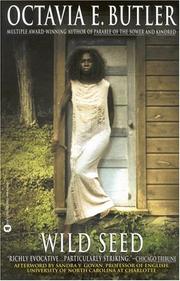
Revisiting Octavia Butler’s “Wild Seed,” the 1980 novel that opens her Patternist series
Balle Balle Radio™ Entertainment Desk Octavia E. Butler's "Wild Seed," released in 1980, remains one of the author's most widely…
How The Odyssey Pushed Nolan Into Cinema’s Billion-Dollar Elite
How The Odyssey Pushed Nolan Into Cinema's Billion-Dollar Elite Studio CarryOnHarry Entertainment Desk | 13 October 2026 The Odyssey Rewrites…

Hema Malini Turns 78: The Actress Who Played Twins and Won Only Once for It
Balle Balle Radio™ Entertainment Desk Hema Malini turns 78 on 16 October 2026, having been born on the same date…
Bollywood Loses a Titan: Patekar Dies, State Funeral Confirmed
Director Anees Bazmee breaks silence on Nana Patekar's death, calling it unbearable. Read the full story on India's cinema legend's…

CSIFF26 Showcases Diverse Caribbean Voices Through Six Nominated Films This October
Conch Shell International Film Festival returns to Queens October 9-11 with six Best Film nominees exploring Caribbean and diaspora filmmaking.
AFI Movie Club Celebrates Tod Browning’s ‘Dracula’ as a Landmark of Horror Cinema
AFI Movie Club spotlights Tod Browning's 1931 'Dracula' starring Bela Lugosi, the film that launched Universal's Monster franchise and defined…
Editor's Choice
Revisiting Octavia Butler’s “Wild Seed,” the 1980 novel that opens her Patternist series
Balle Balle Radio™ Entertainment Desk
Octavia E. Butler’s "Wild Seed," released in 1980, remains one of the author’s most widely read novels decades after its release. It opens Butler’s five-book Patternist cycle, a five-book speculative fiction cycle, and continues to draw new readers and critical attention.
Butler, who died in 2006, is widely regarded as one of the first Black women to gain major recognition in American science fiction, a genre that offered her few peers when she began publishing in the 1970s. Her work is frequently cited within Afrofuturism, the broader cultural movement that uses speculative fiction, technology, and alternate histories to explore the experiences of the African diaspora and to imagine Black futures beyond the constraints of the present.
"Wild Seed" is addresses themes of gender, healing roles, and the experiences of Black women, reflecting the novel’s focus on characters navigating power, transformation, and survival across generations. Readers and reviewers have consistently described it as a character-driven work rather than a plot-heavy one, with its two central figures carrying the novel through sustained psychological and emotional depth. The book is the first in the five-volume Patternist series and has drawn an active readership on platforms like Goodreads, where it holds a strong average rating from tens of thousands of readers.
The novel has also found renewed life in reading groups and community discussions in recent years, often paired with other Afrofuturist or speculative work, a sign of Butler’s lasting pull on readers well outside the genre’s traditional audience.
Studio CarryOnHarry sees "Wild Seed" as a useful entry point for readers curious about Butler’s influence on contemporary speculative fiction, and worth a look for anyone building out an Afrofuturism reading list.
About the Author: An American science fiction writer, one of the best-known among the few African-American women in the field.
[Comment by Tricia Sullivan, on The Guardian][1]:
Octavia E Butler (1947–2006)
> I was teaching in New York when I came across Octavia E Butler’s Kindred in a secondary-school catalogue of novels recommended to support diversity. It caught my attention because Butler was described as a science-fiction writer. I thought I was familiar with science fiction, but I’d never heard of her – nor have a great many other readers, I suspect. For many years, Butler was the sole African-Ameri
Read more People’s Choice stories on Studio CarryOnHarry. Reporting via Live News Vault.
Are you an author with a new release? We’re always looking for books to cover and authors to interview — tell us about yours here.
Press Releases at Studio CarryOnHarry
Harry Johal — Entertainment Editor
Harry Johal is the Entertainment Editor at Studio CarryOnHarry, overseeing the newsroom's day-to-day coverage.
Related Posts

Audiences Are Rating ‘Spider-Man: Brand New Day’ and ‘Resident Evil’ Among 2026’s Hottest Films
Balle Balle Radio™ Entertainment Desk Two 2026 releases, "Resident Evil" and "Spider-Man: Brand New Day," are tied at the top…
How The Odyssey Pushed Nolan Into Cinema’s Billion-Dollar Elite
How The Odyssey Pushed Nolan Into Cinema's Billion-Dollar Elite Studio CarryOnHarry Entertainment Desk | 13 October 2026 The Odyssey Rewrites…
Hema Malini Turns 78: The Actress Who Played Twins and Won Only Once for It
Balle Balle Radio™ Entertainment Desk Hema Malini turns 78 on 16 October 2026, having been born on the same date…
Bollywood Loses a Titan: Patekar Dies, State Funeral Confirmed
Director Anees Bazmee breaks silence on Nana Patekar's death, calling it unbearable. Read the full story on India's cinema legend's…
CSIFF26 Showcases Diverse Caribbean Voices Through Six Nominated Films This October
Conch Shell International Film Festival returns to Queens October 9-11 with six Best Film nominees exploring Caribbean and diaspora filmmaking.
AFI Movie Club Celebrates Tod Browning’s ‘Dracula’ as a Landmark of Horror Cinema
AFI Movie Club spotlights Tod Browning's 1931 'Dracula' starring Bela Lugosi, the film that launched Universal's Monster franchise and defined…
-

 Books3 days ago
Former Wildlife Officer Rick Larnerd Blends Gasparilla Legend with Modern Florida Thriller in New Novel
-

 Books3 days ago
Barry R. Willis’s New Book Traces the Pony Express and Its Costs on the Frontier
-

 Books3 days ago
Former Wildlife Officer Rick Larnerd Blends Gasparilla Legend with Modern Florida Crime Fiction in New Novel
-

 Books3 days ago
Former Game Warden Turns Three Decades of Conservation Work into Florida Crime Novel
-
 Books4 days ago
Katt Taylor’s New Novel Follows a Woman’s Fractured Spirit from Darkness to Awakening
-

 Books5 days ago
Fulton Books Author Abagail Lynn Releases Fantasy Adventure “The Rebel”