
Editor's Choice
Limited Series vs. Open-Ended: How Format Shaped Two HBO Sci-Fi Classics
HBO’s ‘Westworld’ and ‘Watchmen’ both launched as acclaimed sci-fi hits but diverged: ‘Westworld’ lost momentum over four seasons, while ‘Watchmen’…

Balle Balle Radio™ Entertainment Desk
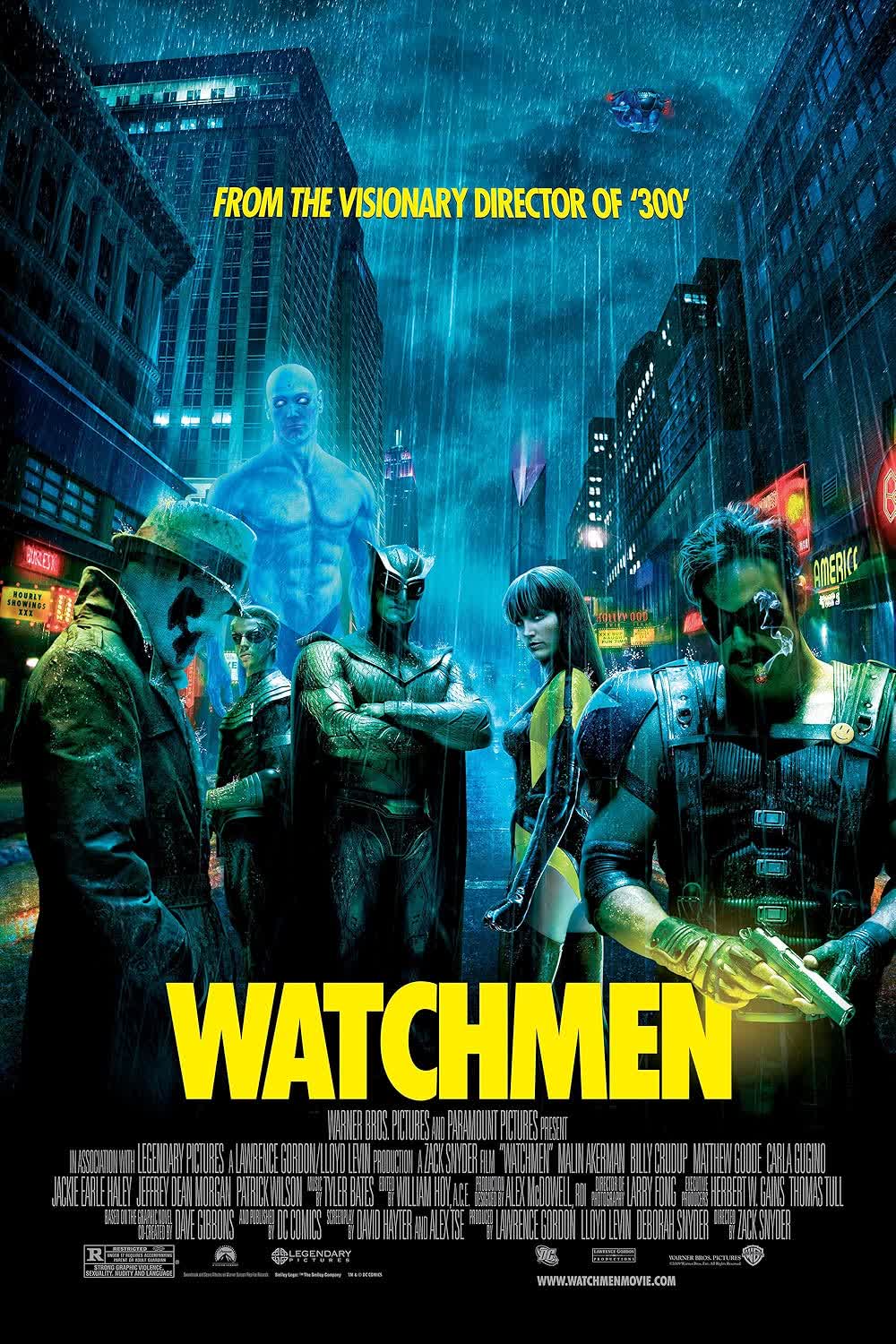
A recent roundup of HBO science-fiction series worth watching from start to finish put "Westworld" and "Watchmen" alongside newer entries like "Peacemaker" and older ones like "The Leftovers." But the two shows make a more interesting pair on their own: both launched as high-profile sci-fi productions that garnered strong initial critical reception, and both spent their later years fielding a very different conversation about whether they’d sustained it.
"Westworld" premiered in 2016 built around a theme park staffed by artificial beings designated as Hosts designed to fulfill the violent and sexual fantasies of wealthy visitors. The first season centered on The android characters Dolores (Evan Rachel Wood) and Maeve (Thandiwe Newton) gradually regain memories of their mistreatment and edging toward consciousness. That premiere season was received as a genuine event, praised for its puzzle-box structure and its performances, and it earned the show a reputation as HBO’s heir to "Game of Thrones"-level ambition.
The show ran for four seasons through 2022. As it moved outside the park and into a wider, more fractured narrative about AI, free will and human extinction, the audience conversation shifted from admiration to something closer to fatigue. The mysteries that had powered the first season’s word-of-mouth became a structural habit the later seasons leaned on repeatedly, and the show was cancelled after its fourth season without resolving several of its central threads.
"Watchmen" took the opposite path across a much shorter run. The 2019 limited series, created as a follow-up to Alan Moore’s graphic novel rather than a direct adaptation, cast Regina King as Angela Abar, a Tulsa detective operating under the masked alias Sister Night in an alternate 2019 where vigilantism is outlawed. The show opened with a dramatization of the 1921 Tulsa race massacre and used that history as its foundation, following Angela into a conspiracy involving white supremacist groups. Because it was conceived as a single season rather than an ongoing series, "Watchmen" never faced the test of a second act — it closed on its own terms, and that finality is a large part of why its reputation held rather than eroded.
Set against each other, the two shows illustrate a split that shows up often in ambitious genre television: a strong premiere is not a guarantee of a strong show, and a show’s format — open-ended series versus closed limited run — has as much to do with how it’s remembered as anything in the writing.
Studio CarryOnHarry’s take: the more useful comparison isn’t which show was better, but which structure served its ideas — and on that score, "Watchmen" arguably made the stronger case for restraint over expansion.
Read more People’s Choice stories on Studio CarryOnHarry. Reporting via Live News Vault.
Are you an author with a new release? We’re always looking for books to cover and authors to interview — tell us about yours here.
Press Releases at Studio CarryOnHarry
Powered by SgAiSolution
Related Posts
After Five Years, Revisiting the Bond Film That Broke a Series Taboo
No Time to Die made history by killing off 007 for the first time in an Eon-produced Bond film, concluding…
20 Years On, ‘The Departed’ Remains Scorsese’s Only Personal Oscar Win
Balle Balle Radio™ Entertainment Desk Martin Scorsese's "The Departed" premiered at the Ziegfeld Theatre in New York on September 26,…
A Decade Later: How Split Became Shyamalan’s Unlikely Commercial Triumph
M. Night Shyamalan's Split became a surprise $278.5 million hit on a $9 million budget, with James McAvoy's performance in…
Jailer 2 Unveils Style-Driven Track Featuring Rajinikanth’s Signature Mass Appeal
Rajinikanth's entry song 'One Sun One Moon' from Jailer 2 showcases his signature swagger, with music composed by Anirudh Ravichander.

BMC Proposes Up to 570% Hike in Entertainment Tax on Mumbai Cinemas, Concerts
Balle Balle Radio™ Entertainment Desk A Brihanmumbai Municipal Corporation proposal to increase entertainment tax on theatres, multiplexes and venues by…
Gurmeet Choudhary and Isha Malviya’s ‘Tum Mere Ho’ Teaser Unveiled Ahead of October 2026 Release
Balle Balle Radio™ Entertainment Desk The teaser for 'Tum Mere Ho' featuring Gurmeet Choudhary and Isha Malviya premiered today, with…

Editor's Choice
After Five Years, Revisiting the Bond Film That Broke a Series Taboo
No Time to Die made history by killing off 007 for the first time in an Eon-produced Bond film, concluding Daniel Craig’s tenure.
Balle Balle Radio™ Entertainment Desk
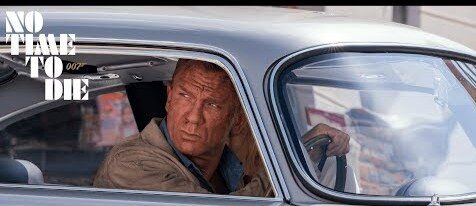
Five years ago, on 28 September 2021, No Time to Die opened in theaters, marking the conclusion of Craig’s tenure with a precedent-breaking death scene—the first time an Eon-produced Bond film has killed off 007.
That ending traces back further than the finished movie. According to published film records, Craig first floated the idea of killing off Bond in 2006, right after the premiere of Casino Royale, and Barbara Broccoli agreed to it then. It took fifteen years and a change of director to get there. Danny Boyle was originally attached to direct, with a screenplay by John Hodge, but both departed in August 2018 over creative differences. Cary Joji Fukunaga took over the following month, becoming the first American to direct an Eon Bond film and the first Bond director ever credited as a writer on the screenplay. Phoebe Waller-Bridge provided a script revision in April 2019, becoming just the second female screenwriter credited on a Bond film, while Paul Haggis and Scott Z. Burns worked on uncredited rewrites during the preceding months.
Production had its share of drama off camera too. Daniel Craig injured his ankle while filming in Jamaica in May 2019 and needed minor surgery to keep going. A month later, a controlled explosion at Pinewood Studios damaged the legendary 007 Stage and injured a crew member. The shoot itself stretched from April to October 1919 across Italy, Jamaica, Norway, the Faroe Islands and London, using 65mm IMAX cameras for the first time in series history.
The score underwent an unusual mid-production shift: Dan Romer, hired in July 2019, departed in November due to creative differences, and Hans Zimmer replaced him by January 2020—a first for Bond franchise composition changes Billie Eilish, 18 at the time, became the youngest artist to record a Bond theme song, and the track went on to win the Grammy for Best Song Written for Visual Media in March 2021, then the Academy Award for Best Original Song the following year, the film’s only win from three nominations.
The film earned over $774 million globally, becoming 2021’s fourth-highest-grossing theatrical release. It also closed a chapter in Bond ownership: the film was the last one released by MGM before Amazon acquired the studio in 2022, and it remains the last Bond picture produced under the oversight of Albert R. Broccoli, Michael G. Wilson, and Barbara Broccoli.
Studio CarryOnHarry Perspective
We tend to think of franchise films as industrial products rolled out on schedule, but No Time to Die’s production history reads more like a high-stakes drama where the ending nearly didn’t happen at all. The behind-the-scenes chaos—a director swap, a star’s injury requiring surgery, a stage explosion, a composer departure—raises a simple question: how much did the film survive by luck versus vision?
In practice, this matters because production instability often shows up on screen as tonal unevenness or half-realized ideas. A viewer watching No Time to Die might notice stylistic shifts between sequences or wonder if certain character moments land with intention or accident. The director change alone typically reshapes a film’s DNA; adding injury delays, crew emergencies, and mid-stream composer changes creates a document assembled under duress rather than design. That’s worth noticing when assessing what the final film actually is.
" The film’s commercial success and cultural resonance suggest that whatever held it together—through injury, explosion, and personnel changes—held. That’s a different story than chaos.
Read more People’s Choice stories on Studio CarryOnHarry. Reporting via Live News Vault.
Press Releases at Studio CarryOnHarry
Powered by SgAiSolution
Related Posts
Limited Series vs. Open-Ended: How Format Shaped Two HBO Sci-Fi Classics
HBO's 'Westworld' and 'Watchmen' both launched as acclaimed sci-fi hits but diverged: 'Westworld' lost momentum over four seasons, while 'Watchmen'...
20 Years On, ‘The Departed’ Remains Scorsese’s Only Personal Oscar Win
Balle Balle Radio™ Entertainment Desk Martin Scorsese's "The Departed" premiered at the Ziegfeld Theatre in New York on September 26,…
A Decade Later: How Split Became Shyamalan’s Unlikely Commercial Triumph
M. Night Shyamalan's Split became a surprise $278.5 million hit on a $9 million budget, with James McAvoy's performance in…
Jailer 2 Unveils Style-Driven Track Featuring Rajinikanth’s Signature Mass Appeal
Rajinikanth's entry song 'One Sun One Moon' from Jailer 2 showcases his signature swagger, with music composed by Anirudh Ravichander.
BMC Proposes Up to 570% Hike in Entertainment Tax on Mumbai Cinemas, Concerts
Balle Balle Radio™ Entertainment Desk A Brihanmumbai Municipal Corporation proposal to increase entertainment tax on theatres, multiplexes and venues by…
Gurmeet Choudhary and Isha Malviya’s ‘Tum Mere Ho’ Teaser Unveiled Ahead of October 2026 Release
Balle Balle Radio™ Entertainment Desk The teaser for 'Tum Mere Ho' featuring Gurmeet Choudhary and Isha Malviya premiered today, with…
Balle Balle Radio™ Entertainment Desk
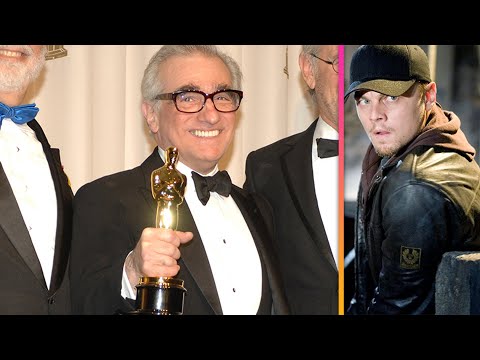
Martin Scorsese’s "The Departed" premiered at the Ziegfeld Theatre in New York on September 26, 2006, and turns 20 this year. The anniversary lands on the same date the film first opened, and it’s the awards run that followed months later which still defines how the film is remembered.
"The Departed" claimed four Academy Awards at the 79th ceremony held on February 25, 2007, including Best Picture, Best Director, Best Film Editing, and Best Adapted Screenplay. This marked Scorsese’s first directorial Oscar after receiving five previous nominations that went unrewarded. He had been nominated for "Raging Bull," "The Last Temptation of Christ," "Goodfellas," "Gangs of New York," and "The Aviator" before "The Departed" finally earned him the statue.
When accepting the award, Scorsese humorously remarked that he had won because "this is the first movie I’ve done with a plot.", according to remarks he’s made about the film. The line has followed the film’s legacy ever since, showing up in retrospectives whenever the anniversary comes around.
The film’s road to that stage started years earlier. In January 2003, Warner Bros. Pictures and producers Brad Grey and Brad Pitt acquired the rights to remake the 2002 Hong Kong film Infernal Affairs from Media Asia Entertainment Group, paying $1.75 million. Screenwriter William Monahan built the Frank Costello character around Whitey Bulger at Jack Nicholson’s request, aiming for something outside the usual gangster-film mold. Shooting began in April 2005 on a $90 million budget, with much of the interior work filmed in New York rather than Boston for tax and logistical reasons, before the film’s premiere roughly a year and a half later.
Two months before the Oscars, the film picked up a Best Director win for Scorsese at the 64th Golden Globe Awards on January 15, 2007, out of six nominations total. Critically, the reception had already been strong: a 91% positive score across 285 Rotten Tomatoes reviews, an 85 out of 100 on Metacritic, and a four-star review from Roger Ebert, who credited Scorsese with distinguishing the remake thematically from its source material.
The film earned $291.5 million globally, with $132.4 million coming from the U.S. and Canadian markets., and opened at $26.9 million domestically — good enough to make it the fourth Scorsese film to debut at number one at the box office.
Studio CarryOnHarry’s take: what stands out isn’t just that Scorsese finally won, but how long the wait had been by then — five nominations across three decades before the Academy recognized a director whose body of work had already been reshaping American film since the 1970s.
Read more People’s Choice stories on Studio CarryOnHarry. Reporting via Live News Vault.
Press Releases at Studio CarryOnHarry
Powered by SgAiSolution
Related Posts
Limited Series vs. Open-Ended: How Format Shaped Two HBO Sci-Fi Classics
HBO's 'Westworld' and 'Watchmen' both launched as acclaimed sci-fi hits but diverged: 'Westworld' lost momentum over four seasons, while 'Watchmen'...
After Five Years, Revisiting the Bond Film That Broke a Series Taboo
No Time to Die made history by killing off 007 for the first time in an Eon-produced Bond film, concluding…
A Decade Later: How Split Became Shyamalan’s Unlikely Commercial Triumph
M. Night Shyamalan's Split became a surprise $278.5 million hit on a $9 million budget, with James McAvoy's performance in…
Jailer 2 Unveils Style-Driven Track Featuring Rajinikanth’s Signature Mass Appeal
Rajinikanth's entry song 'One Sun One Moon' from Jailer 2 showcases his signature swagger, with music composed by Anirudh Ravichander.
BMC Proposes Up to 570% Hike in Entertainment Tax on Mumbai Cinemas, Concerts
Balle Balle Radio™ Entertainment Desk A Brihanmumbai Municipal Corporation proposal to increase entertainment tax on theatres, multiplexes and venues by…
Gurmeet Choudhary and Isha Malviya’s ‘Tum Mere Ho’ Teaser Unveiled Ahead of October 2026 Release
Balle Balle Radio™ Entertainment Desk The teaser for 'Tum Mere Ho' featuring Gurmeet Choudhary and Isha Malviya premiered today, with…
-

 Editor's Choice5 days ago
CSIFF26’s Shortlist: How Six Filmmakers Are Pushing Caribbean Cinema Beyond Borders
-
 Editor's Choice4 days ago
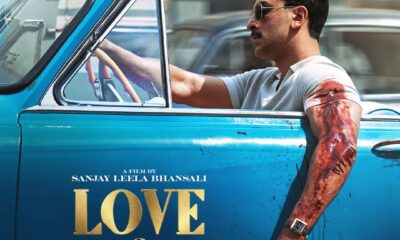
‘Love and War’ First Look Draws Comparisons to Bollywood’s Classic Love-Triangle Tradition
-
 Editor's Choice4 days ago
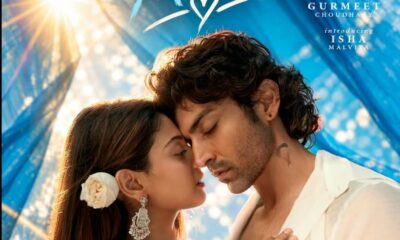
Gurmeet Choudhary and Isha Malviya’s ‘Tum Mere Ho’ Teaser Unveiled Ahead of October 2026 Release
-
 Books5 days ago
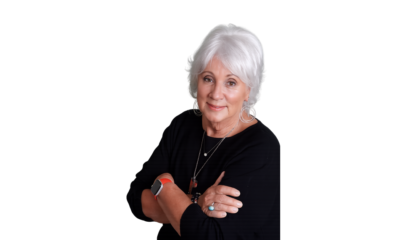
Author Vicki Thomas, 80, Makes the Case Against Retirement as an Ending
-
 Editor's Choice2 days ago
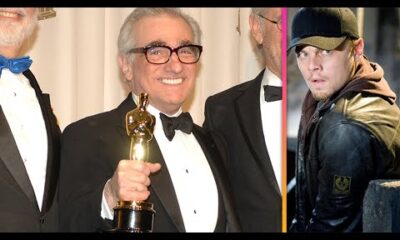
20 Years On, ‘The Departed’ Remains Scorsese’s Only Personal Oscar Win
-

 Books5 days ago
Kathleen Austin’s Third “Beary Best Friends” Book Sends Its Characters to the Dentist