Connect with us

People's Choice

Author Joe Reyes’s New Book ‘Unaltered Time: Book 1, Ascali’ Follows a Courageous Knight Who Fights to Be the New King’s Protector Following the Death of the Former King

Harry Johal

Published

on

Author Joe Reyes’s New Book ‘Unaltered Time: Book 1, Ascali’ Follows a Courageous Knight Who Fights to Be the New King’s Protector Following the Death of the Former King


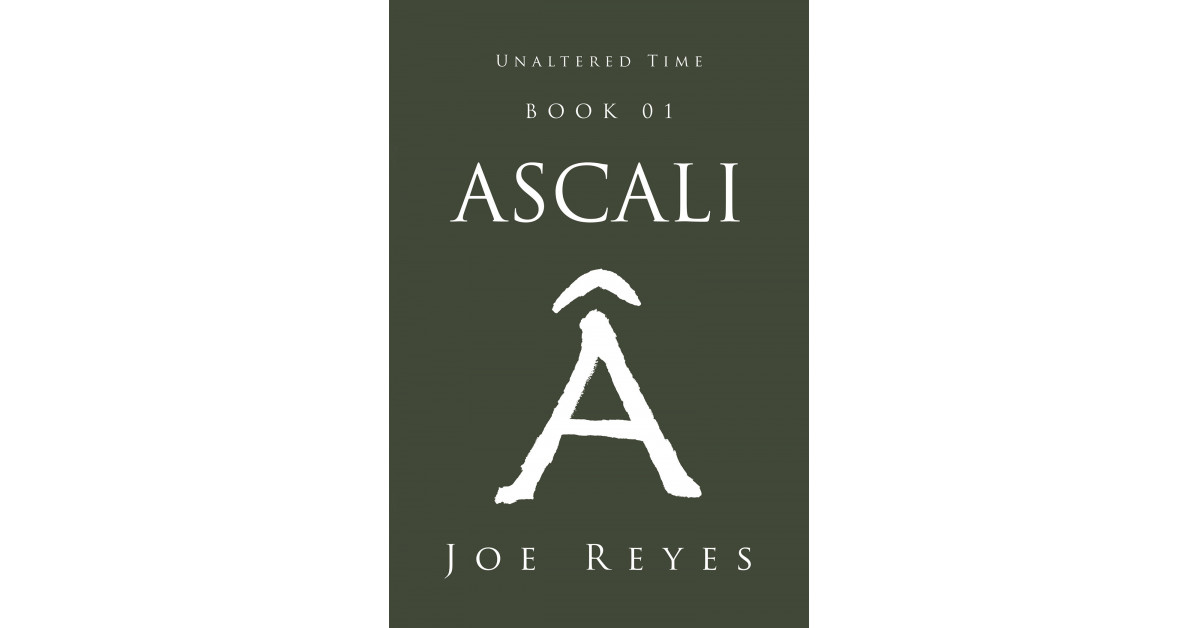
Recent release “Unaltered Time: Book 1, Ascali” from Newman Springs Publishing author Joe Reyes is a thrilling tale set within the capital city of Ascali, where a tournament shall determine who will serve as the protector of the new king of the realm. Stepping up to the plate is the famous White Knight, Sir Jason, who is ready to prove himself worthy of such a high honor, no matter who or what stands in his way.

Press Release


updated: Jan 6, 2023

Joe Reyes has completed his new book “Unaltered Time: Book 01, Ascali”: a stirring fantasy adventure that follows a legendary knight in his quest to win the coveted role of protecting his new king, following the tragic death of the former monarch. 

“For decades in the timeline, the realm has thrived in joyful peace, embracing luxuries and euphoric ways of living which seem will be everlasting to its people,” writes Reyes. “This seemingly endless happiness among the folk may soon come to an end, now that the king has passed, to be burned and buried to rest.

“In the heart of the realm sits the capital city Ascali, where the cold, Golden Throne awaits its new ruler, someone much younger and perhaps more wise, or perhaps maybe not.

“Sir Jason, the famous White Knight of the city, is prepared to battle his way through the upcoming Ascali arena tournament, determined to win the title reward as protector of this new, mysterious king; the next and new king who’ll sit the Golden Throne in the city of Ascali.”

 Joe Reyes’s spellbinding novel is the first entry in the author’s “Unaltered Time” epic and takes readers on an unforgettable journey full of intricate and detailed world-building. Expertly paced and full of suspense, “Ascali” will leave readers on the edge of their seats as Sir Jason fights for the honor of serving the new king, risking it all in the process.

Readers who wish to experience this enthralling work can order “Unaltered Time: Book 01, Ascali” at bookstores everywhere, or online at the Apple iBooks Store, Amazon, or Barnes & Noble.

For additional information or media inquiries, contact Newman Springs Publishing at 732-243-8512.

About Newman Springs Publishing: 

Newman Springs Publishing is a full-service publishing house for serious authors. Each title produced undergoes every step of the professional publishing process, including editing, layout, cover design, circulation, distribution, and publicity. All titles are made available in both eBook and print formats. Newman Springs Publishing distributes to tens of thousands of retail outlets throughout North America and internationally. All manuscripts in any genre are welcome to be submitted for review; If the manuscript meets the necessary criteria and is accepted for publication, Newman Springs Publishing will work closely with the author to bring the book to the retail market for a relatively inexpensive initial investment.

Source: Newman Springs Publishing



Press Update For Studio CarryOnHarry

Find Holiday Deals Flights Attractions and Hotels !


Booking.com

Get Interviewed

Trulli

For Interviews At Studio CarryOnHarry Online Submission Form Click Here

👁 96 Views
Powered by SgAiSolution
Click to comment

Leave a Reply

Your email address will not be published. Required fields are marked *

Editor's Choice

Ajay Devgn’s Crime Patrol Gamble: Star Power on a TV Budget

H Johal

Published

on

By

Ajay Devgn’s Crime Patrol Gamble: Star Power on a TV Budget

Balle Balle Radio™ Entertainment Desk

A Bollywood A-lister fronting a long-running true-crime show has split opinion between those who see smart cross-platform economics and those who see a mismatch nobody asked for. Meanwhile, a crowded slate of remakes, mythologicals and comedy sequels raises a quieter question about where Hindi cinema’s creative energy is actually going.

Ajay Devgn hosting a true-crime television show sounds, on paper, like a minor career footnote. In practice, it has become one of the more revealing small controversies in recent Hindi entertainment news — not because of what Devgn said or did, but because of what his presence on the show exposes about how stardom, television economics and audience expectation now collide.

Crime Patrol, the long-running Sony reality crime series, aired its new season with Devgn as host, replacing the format’s more familiar anchors. The reaction was swift and largely unflattering. Viewers who follow the show closely — people who know its rhythms, its previous hosts, its particular tone — reportedly found Devgn’s presence jarring, describing him online as a poor fit for the format. Whether that reaction represents a broad consensus or a vocal subset of the show’s fanbase is hard to verify from social commentary alone, but the sentiment appears to be more than a fringe complaint.

Two explanations are circulating for why Devgn took the job at all. One is promotional: that his real interest lies in keeping Drishyam 3 in the conversation. The other, more plausible explanation, is simpler — the reported fee. Devgn is said to have been paid in the range of 90 crore for roughly 15 episodes, which works out to about 6 crore per episode. If accurate, that is a substantial sum for television work, and it would make the financial logic behind his involvement fairly straightforward, whatever the promotional side-benefits might be.

This is not Devgn’s first move into episodic television. He appeared in Rudra: The Edge of Darkness in 2022, a six-episode series that was reasonably well received. That prior experiment suggests his interest in the format isn’t new or purely mercenary — but Crime Patrol is a different animal. It’s a long-running procedural built around a specific host identity, not a limited prestige drama. Reports have also circulated that the show’s regular episodes weren’t being shot with Devgn directly involved in the way viewers might assume, though this detail remains unconfirmed chatter rather than established fact.

A Question of Fit, Not Talent

Nobody seriously disputes Devgn’s abilities as an actor. The criticism isn’t about talent — it’s about context. A major film star stepping into a format built for a different kind of on-screen presence can create a genuine tonal mismatch, independent of how good that star is in his own lane. That’s a fair critical observation. Whether it justifies the intensity of the online reaction is a separate question. Trolling tends to amplify disproportionately, and one bad-fit casting decision doesn’t necessarily reflect on Devgn’s judgment or career trajectory — it may simply reflect a producer’s decision that didn’t quite land with the show’s existing audience.

There’s also a reasonable reading that positions this as a short-term, transactional move rather than a long-term pivot: a well-paid guest-hosting stint that generates conversation, whether positive or negative, while a bigger film franchise stays in the news cycle alongside it. If that was the calculation, the backlash may be beside the point — the show got attention, the fee got paid, and Devgn moves on to whatever comes next, likely with a returning regular host restoring the format to its usual rhythm.

Same Well, Different Buckets

Zoom out from Devgn’s TV cameo and a larger pattern comes into view. Hindi cinema’s upcoming slate leans heavily on the familiar: sequels, remakes and mythological epics, often announced well before scripts or casts are finalised.

Akshay Kumar’s schedule illustrates the point well. He’s reportedly attached to a Priyadarshan-directed film inspired by Jim Corbett, positioned as a comic thriller and possibly his landmark 99th release before a planned 100th film — though which project claims that milestone remains unsettled. Alongside that sits Anees Bazmee’s next, a Golmaal 5 in development, and a Rohit Shetty film where Kumar is said to be playing a substantial villain role. Notably absent from any recent update is Hera Pheri 3, a project that has generated more announcement noise than actual movement.

The volume of Akshay Kumar productions in the pipeline raises a fair industry question: can output at this scale consistently deliver on story and content, or does quantity eventually work against quality? It’s not an accusation against any single film — it’s a structural concern about an industry that rewards volume and franchise recognition over the slower work of original storytelling.

A similar tension shows up in two upcoming comedies: Kunal Kemmu’s "Waaie" and a Kareena Kapoor–Prithviraj Sukumaran film reportedly heading toward a Part 2. Early teasers for the Kemmu film generated real anticipation — comparisons to his earlier hit Madgaon Express set expectations for sharp, background-driven comic writing. The subsequent trailer, by several accounts, didn’t fully deliver on that promise, landing as more conventional than the black-comedy tone the teaser implied. That’s a meaningful gap between marketing and material, and it’s worth watching whether the finished film closes it.

The Kareena Kapoor–Prithviraj project carries its own layer of confusion: persistent chatter has framed it as a remake, a claim both the director and Prithviraj have reportedly pushed back on, insisting the story is original. Public awareness of the film itself appears limited — a handful of influencers discussing the trailer doesn’t necessarily translate into broad audience registration that the film exists at all, which is its own marketing problem regardless of the story’s originality.

Adding to the release-calendar puzzle, both films are reportedly scheduled around the Ganesh Chaturthi festival period, a timing choice that has drawn skepticism given how competitive and unpredictable festival-season release slots tend to be in the Hindi market.

The Mythological Rush

Elsewhere, the mythological genre continues attracting major names and major money. A new project centered on Krishna, reportedly involving NTR-adjacent casting discussions before settling on other talent, is being backed by a production house better known for lighter, romantic "candy floss" films — a notable departure that will be worth watching for how the tonal shift is handled. Multiple Krishna-themed projects appear to be in parallel development industry-wide, suggesting a genre cycle rather than a single studio bet.

Studio Perspective

What connects Devgn’s Crime Patrol detour to the pile-up of remakes, sequels and mythologicals isn’t really about any one project’s quality. It’s about an industry currently more comfortable trading on recognisable names and formats than building anticipation from scratch. A star’s television cameo, a fifth instalment of a comedy franchise, a mythological epic backed by a studio pivoting from its usual genre — these are all, in their own way, bets placed on familiarity doing the marketing work that fresh storytelling used to do.

That’s not inherently a failure of ambition. Familiar formats can still produce good work, and audience appetite for comfort viewing is real and valid — it shouldn’t be dismissed as lazy taste. But when trailers underdeliver against teasers, when audiences can’t tell if a film is a remake or an original, and when a bankable star’s fee becomes the most concrete piece of information available about a project, it suggests the industry is currently prioritising the transaction over the story. The reaction to Devgn’s Crime Patrol stint may be less about him personally and more about audiences sensing, correctly or not, that a decision was made for reasons that had little to do with what would serve the show itself.

The more interesting question isn’t whether any single casting choice or sequel announcement was a mistake. It’s whether an industry can keep leaning on recognisable faces and familiar intellectual property indefinitely before audiences start asking what happened to the original ideas that built those stars and formats in the first place.

image : INSTAGRAM

Studio CarryOnHarry Editorial Desk

Read more People’s Choice stories on Studio CarryOnHarry. Reporting via Live News Vault.

👁 20 Views
Powered by SgAiSolution
Continue Reading

People's Choice

Ramayana’s Ravan Problem: When Marketing Outpaces Meaning

H Johal

Published

on

By

Ramayana’s Ravan Problem: When Marketing Outpaces Meaning

Balle Balle Radio™ Entertainment Desk

A poster controversy around India’s most expensive film has exposed a deeper tension between visual spectacle and devotional storytelling — and raised questions about whether scale alone can carry a story audiences have known since childhood.

Somebody, somewhere, approved a poster of Ravan on Janmashtami. Somebody scheduled it to go live on the day India celebrates Krishna’s birth, with a caption declaring his rule over heaven, earth and the underworld. And somebody, presumably several rungs up the chain, spent that same evening scrambling to put out a corrective image of Ranbir Kapoor as Ram, calling him "our hero, our protector."

That sequence of events, more than the poster itself, is the real story behind the controversy now trailing Ramayana, the reported 4,000-crore mythological epic from producer Namit Malhotra and director Nitesh Tiwari, slated for a November release. The backlash to the Ravan poster was reportedly swift and intense enough to force same-day damage control. Fast correction is competent crisis management. But it doesn’t erase the original question: how did that poster get approved in the first place, and on that particular date?

A Familiar Story, A New Risk

The criticism doesn’t stop at one image. There have been complaints that the theatrical trailer itself gives Ravan more visual dominance than Ram — a choice that, whether intentional or not, cuts against how Indian audiences have traditionally related to this narrative. Ravan’s stature in the Ramayana has never been in dispute. He was a scholar, a devotee of Shiva, a figure of genuine power, and the epic is more interesting because its antagonist isn’t a cartoon villain. But there’s a meaningful difference between honoring an antagonist’s complexity and letting marketing flatten the story’s moral hierarchy. Once that line blurs, a reaction like this one becomes almost predictable.

There’s a second, quieter issue in the release plan. Reports suggest international audiences may see the film two days before audiences in India do. For a project built explicitly on Indian devotional identity and marketed heavily on cultural resonance, that sequencing is an odd choice — and it invites a fair question about who the release calendar was actually designed to serve.

All of this arrives at a commercially fragile moment. Some members of the lead cast have had recent box office disappointments. That’s not a comment on their ability as performers, but it does mean the film isn’t launching with a deep reserve of audience goodwill to absorb a controversy of this kind. In an industry where opening-weekend narrative can shape a film’s entire commercial life, that timing matters.

Coordination, Not Cynicism

It would be easy to conclude that the makers simply don’t understand or respect the material. That reading doesn’t hold up particularly well against what’s publicly known. Tiwari has a strong directorial track record, and Malhotra has reportedly spoken with real emotion about how personal this project is to him. Cynicism doesn’t usually look like that.

A more plausible explanation is a coordination gap — a marketing operation chasing dramatic, scroll-stopping visuals without enough sensitivity to devotional context, running parallel to a production that may be leaning on visual scale to solve what is fundamentally a storytelling challenge. Those are two different failures happening on two different tracks, and they’ve collided publicly at the worst possible moment.

That storytelling challenge is the more interesting problem, and the one likely to matter more once the controversy cycle passes. Reports describe the sets, costumes and war sequences as visually striking but emotionally thin. If accurate, that’s a bigger long-term risk than any single poster. Audiences don’t come to the Ramayana looking for narrative surprise. They come for the feeling — Sita’s abduction, Ram’s return, beats they’ve carried since childhood. No amount of computer-generated spectacle substitutes for that emotional familiarity if the film doesn’t earn it scene by scene. It’s worth noting that several smaller-budget mythological projects in recent years have connected with audiences precisely by leaning into sincerity rather than scale, which suggests the audience appetite for restraint hasn’t gone anywhere.

Studio Perspective

The more useful question isn’t whether the Ravan poster was a mistake — it clearly was, given how quickly it was walked back. The more useful question is whether ambition and coordination inside this production have actually lined up yet. Nothing in the available evidence suggests indifference to the source material. What it does suggest is a large, expensive machine where the marketing arm and the storytelling arm may not be talking to each other closely enough.

There’s still time before November to recut, rebalance and correct the Ram-Ravan visual dynamic, both in remaining promotional material and potentially in the edit itself. Whether that happens will say more about this film’s fate than the poster controversy ever will.

Because underneath the headlines, this was never really about one image posted on the wrong day. It’s about whether technology and budget can substitute for the emotional simplicity that has kept this story alive for centuries. Lanka can be rebuilt with computer graphics. The feeling of watching good triumph over evil cannot be manufactured the same way — and that feeling is still what audiences are actually paying to experience.

Studio CarryOnHarry Editorial Desk

Read more People’s Choice stories on Studio CarryOnHarry. Reporting via Live News Vault.

👁 46 Views
Powered by SgAiSolution
Continue Reading

Trending Now

Advertiment

Recent

trending