
Editor's Choice
Center Halts Release of *Lawrence of Punjab* Over Gangster Glorification Concerns


The anticipated release of *Lawrence of Punjab*, a documentary series originally slated for streaming on ZEE5, has been halted by the Indian government citing concerns over its potential to glorify gangster culture. This decision comes amidst rising tensions surrounding criminal activities linked to notorious gang affiliations, particularly that of Lawrence Bishnoi, whose gang has gained infamy for violent incidents in Punjab.
The Punjab and Haryana High Court had previously cleared the series for release, asserting that the documentary does not promote gangsterism or violence. However, public reactions revealed deep-seated concerns in Punjab, where the law-and-order situation continues to deteriorate against a backdrop of increasing gang violence. Critics argue that glamorizing figures like Bishnoi risks undermining efforts to combat crime.
Punjab’s Minister Harpal Singh Cheema expressed his disapproval, stating that the series’ release could further accentuate the problematic culture surrounding gangsters, dragging the state’s name into disrepute. His comments echoed sentiments among various stakeholders who fear the documentary might influence young audiences negatively.
Amidst this controversy, tweets surrounding the documentary highlighted a mix of confusion and skepticism from the audience. Some called for a re-evaluation of the narrative being pushed by filmmakers, while others were curious about its potential storytelling, emphasizing the need for responsible media portrayal of real-life events.
The decision remains contentious, with the media and public split on whether the series represents a serious issue or a form of creative freedom being unjustly stifled. It reflects larger societal debates on crime, representation, and morality in storytelling, making this case one to watch closely.
#StudioCarryOnHarry #BalleBalleRadio #LawrenceOfPunjab #GangsterCulture #PunjabPolitics #Documentary #ZEE5
Related Posts

How The Odyssey Pushed Nolan Into Cinema’s Billion-Dollar Elite
How The Odyssey Pushed Nolan Into Cinema's Billion-Dollar Elite Studio CarryOnHarry Entertainment Desk | 13 October 2026 The Odyssey Rewrites…
Bollywood Loses a Titan: Patekar Dies, State Funeral Confirmed
Director Anees Bazmee breaks silence on Nana Patekar's death, calling it unbearable. Read the full story on India's cinema legend's…
Bollywood’s Most Famous Couch Gets a Final Curtain Call
One of Hindi cinema's most iconic small-screen institutions is preparing to take its final bow. Karan Johar has officially confirmed…
Bollywood’s ‘What If’ Moment: Pop Queen Recalls Nearly Landing a Legendary Film Role
One of India's most celebrated pop voices has opened up about a surprising chapter in her early career — a…
John Abraham’s Force Turns 15: A Tribute to the Director He Still Misses
John Abraham's Force Turns 15: A Tribute to the Director He Still Misses Studio CarryOnHarry Entertainment Desk | 30 September…
Week 7 and Still Counting: How Hanuman Ansh Broke the Mould
Week 7 and Still Counting: How Hanuman Ansh Broke the Mould Studio CarryOnHarry Entertainment Desk | 22 September 2026 A…

Editor's Choice
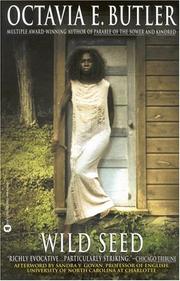
Revisiting Octavia Butler’s “Wild Seed,” the 1980 novel that opens her Patternist series
Balle Balle Radio™ Entertainment Desk
Octavia E. Butler’s "Wild Seed," released in 1980, remains one of the author’s most widely read novels decades after its release. It opens Butler’s five-book Patternist cycle, a five-book speculative fiction cycle, and continues to draw new readers and critical attention.
Butler, who died in 2006, is widely regarded as one of the first Black women to gain major recognition in American science fiction, a genre that offered her few peers when she began publishing in the 1970s. Her work is frequently cited within Afrofuturism, the broader cultural movement that uses speculative fiction, technology, and alternate histories to explore the experiences of the African diaspora and to imagine Black futures beyond the constraints of the present.
"Wild Seed" is addresses themes of gender, healing roles, and the experiences of Black women, reflecting the novel’s focus on characters navigating power, transformation, and survival across generations. Readers and reviewers have consistently described it as a character-driven work rather than a plot-heavy one, with its two central figures carrying the novel through sustained psychological and emotional depth. The book is the first in the five-volume Patternist series and has drawn an active readership on platforms like Goodreads, where it holds a strong average rating from tens of thousands of readers.
The novel has also found renewed life in reading groups and community discussions in recent years, often paired with other Afrofuturist or speculative work, a sign of Butler’s lasting pull on readers well outside the genre’s traditional audience.
Studio CarryOnHarry sees "Wild Seed" as a useful entry point for readers curious about Butler’s influence on contemporary speculative fiction, and worth a look for anyone building out an Afrofuturism reading list.
About the Author: An American science fiction writer, one of the best-known among the few African-American women in the field.
[Comment by Tricia Sullivan, on The Guardian][1]:
Octavia E Butler (1947–2006)
> I was teaching in New York when I came across Octavia E Butler’s Kindred in a secondary-school catalogue of novels recommended to support diversity. It caught my attention because Butler was described as a science-fiction writer. I thought I was familiar with science fiction, but I’d never heard of her – nor have a great many other readers, I suspect. For many years, Butler was the sole African-Ameri
Read more People’s Choice stories on Studio CarryOnHarry. Reporting via Live News Vault.
Are you an author with a new release? We’re always looking for books to cover and authors to interview — tell us about yours here.
Press Releases at Studio CarryOnHarry
Harry Johal — Entertainment Editor
Harry Johal is the Entertainment Editor at Studio CarryOnHarry, overseeing the newsroom's day-to-day coverage.
Related Posts
How The Odyssey Pushed Nolan Into Cinema’s Billion-Dollar Elite
How The Odyssey Pushed Nolan Into Cinema's Billion-Dollar Elite Studio CarryOnHarry Entertainment Desk | 13 October 2026 The Odyssey Rewrites…

Hema Malini Turns 78: The Actress Who Played Twins and Won Only Once for It
Balle Balle Radio™ Entertainment Desk Hema Malini turns 78 on 16 October 2026, having been born on the same date…
Bollywood Loses a Titan: Patekar Dies, State Funeral Confirmed
Director Anees Bazmee breaks silence on Nana Patekar's death, calling it unbearable. Read the full story on India's cinema legend's…

CSIFF26 Showcases Diverse Caribbean Voices Through Six Nominated Films This October
Conch Shell International Film Festival returns to Queens October 9-11 with six Best Film nominees exploring Caribbean and diaspora filmmaking.
AFI Movie Club Celebrates Tod Browning’s ‘Dracula’ as a Landmark of Horror Cinema
AFI Movie Club spotlights Tod Browning's 1931 'Dracula' starring Bela Lugosi, the film that launched Universal's Monster franchise and defined…
From Victim to Courtroom Champion: Aneet Padda Takes Center Stage in “Hunkkaar: The Roar”
Balle Balle Radio™ Entertainment Desk Aneet Padda stars as a teenage abuse survivor fighting for justice in "Hunkkaar: The Roar,"…
How The Odyssey Pushed Nolan Into Cinema’s Billion-Dollar Elite
Studio CarryOnHarry Entertainment Desk | 13 October 2026
The Odyssey Rewrites Box Office History
Christopher Nolan has officially cemented his place among the most commercially powerful filmmakers in cinema history. His latest epic, The Odyssey, has stormed past $1.78 billion at the worldwide box office, making it not only the biggest film of his career but also the highest-grossing R-rated movie ever released globally.
The achievement has propelled Nolan past the $8 billion milestone in cumulative career earnings at the worldwide box office — a staggering figure that places him third on the all-time list of highest-grossing directors, displacing the Russo Brothers from that coveted position.
What Makes The Odyssey a Record-Breaker?
Adapted from Homer’s ancient Greek epic poem, The Odyssey marks Nolan’s first venture into mythological storytelling — and the gamble has paid off spectacularly. The film boasts one of Hollywood’s most impressive ensemble casts, led by Matt Damon, with Tom Holland, Anne Hathaway, Robert Pattinson, Lupita Nyong’o, Zendaya, Samantha Morton, and Charlize Theron rounding out the lineup.
Box Office Breakdown
- Opening Weekend (North America): $123.5 million
- North American Total: $623.1 million
- International Gross: $1.157 billion
- Worldwide Total (to date): $1.78 billion
- Projected Final Worldwide: ~$1.9 billion
Nolan Pushes Russo Brothers Out of the Top 3
Prior to The Odyssey‘s release, Nolan’s global career total sat just below the $8 billion threshold. The film’s extraordinary run has now vaulted him ahead of the Russo Brothers — best known for the Marvel juggernaut films Avengers: Infinity War and Avengers: Endgame — in the all-time director rankings.
For context, Nolan’s previous biggest hit was The Dark Knight Rises, which earned over $1 billion globally. The Odyssey has shattered that benchmark decisively, reportedly tracking toward a $1.9 billion final tally.
Why This Matters for Global Cinema Fans
This milestone is a defining moment for original, auteur-driven blockbuster filmmaking. For fans tracking Bollywood’s top stories and global cinema alike, Nolan’s ascent signals that bold, large-scale storytelling continues to draw audiences worldwide.
For deeper context on how Hollywood’s biggest milestones intersect with the global film landscape, entertainment industry coverage continues to track every record-breaking development in real time.
With The Odyssey still in theatres and its final numbers yet to be tallied, Nolan’s position in cinema history looks more secure than ever.
– Entertainment Desk, Studio Carry On Harry
—
Related Posts
Bollywood Loses a Titan: Patekar Dies, State Funeral Confirmed
Director Anees Bazmee breaks silence on Nana Patekar's death, calling it unbearable. Read the full story on India's cinema legend's…
Bollywood’s Most Famous Couch Gets a Final Curtain Call
One of Hindi cinema's most iconic small-screen institutions is preparing to take its final bow. Karan Johar has officially confirmed…
Bollywood’s ‘What If’ Moment: Pop Queen Recalls Nearly Landing a Legendary Film Role
One of India's most celebrated pop voices has opened up about a surprising chapter in her early career — a…
John Abraham’s Force Turns 15: A Tribute to the Director He Still Misses
John Abraham's Force Turns 15: A Tribute to the Director He Still Misses Studio CarryOnHarry Entertainment Desk | 30 September…
Week 7 and Still Counting: How Hanuman Ansh Broke the Mould
Week 7 and Still Counting: How Hanuman Ansh Broke the Mould Studio CarryOnHarry Entertainment Desk | 22 September 2026 A…
Revisiting Octavia Butler’s “Wild Seed,” the 1980 novel that opens her Patternist series
Balle Balle Radio™ Entertainment Desk Octavia E. Butler's "Wild Seed," released in 1980, remains one of the author's most widely…
-

 Books4 days ago
New Children’s Book Pairs Faith Themes With a Mystery About Fruit Jars and a Vanished Town
-

 Books4 days ago
Christian Faith Publishing Releases Daniel Kelsey’s “Hidden Treasures in Secret Places”
-

 Books6 days ago
Sonoma County Memoir “My Wine Country” Recounts Author Victor Sanchez Jr.’s Path Through Hardship
-

 Books4 days ago
New Children’s Book ‘Sally’s First Day of School’ Frames Bullying Through a Lens of Faith
-
 Books3 days ago
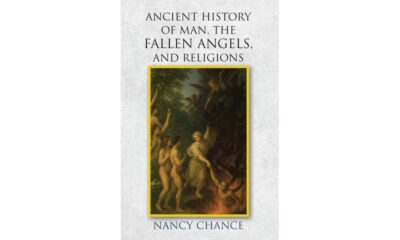
Nancy Chance’s New Book Traces Fallen Angels and Ancient Origins Through Biblical Texts
-
 Books2 days ago
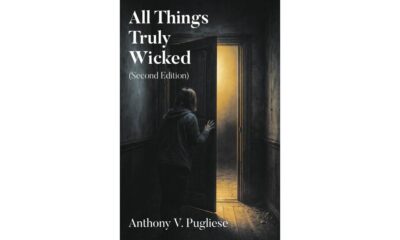
Anthony V. Pugliese Expands 2020 Horror Collection in New Edition of “All Things Truly Wicked”