
People's Choice
Finding Inspiration: Tips for Generating New Ideas and Overcoming Writer’s Block


Finding Inspiration: Tips for Generating New Ideas and Overcoming Writer’s Block
Writing is a creative and rewarding pursuit, but even the most talented writers can sometimes struggle to find inspiration and overcome writer’s block. In this article, we’ll explore some tips and techniques for finding inspiration and generating new ideas, as well as strategies for overcoming writer’s block. We’ll also discuss how to develop dynamic and believable characters, plot and pace your story effectively, and edit and revise your work to create a compelling and engaging story. Whether you’re a seasoned writer or just starting, this guide will provide you with the tools and resources you need to take your writing to the next level. So, let’s dive in and discover how to find inspiration, overcome writer’s block, and create a masterpiece!
Understanding Writer’s Block
As a writer, you may have experienced the dreaded writer’s block, a state where you find yourself unable to produce any new ideas or words on paper. This condition can be frustrating and demotivating, leading to a lack of productivity and creativity. However, before you can overcome writer’s block, it’s essential to understand what causes it.
Writer’s block can stem from various sources, including stress, anxiety, lack of inspiration, and feeling overwhelmed by the task at hand. Additionally, negative self-talk and perfectionism can also contribute to writer’s block, making you feel like you’re not good enough or that your writing will never measure up to your expectations.
To overcome writer’s block, it’s crucial to understand that it’s a normal part of the creative process. Even the most successful writers have experienced it, and it doesn’t mean that you’re not talented or capable of writing. With that said, let’s move on to the next segment to explore some tips for generating new ideas and overcoming writer’s block.
Finding Inspiration in Everyday Life
If you’re struggling to find inspiration for your writing, it can be helpful to look for it in everyday life. Often, the most mundane activities can spark an idea that can lead to a fantastic story. Here are some tips for finding inspiration in your daily routine:
Read Widely: Reading books, articles, and blogs can expose you to new ideas, styles, and perspectives that can inspire you to write something unique.
Take a Walk: Taking a walk in nature or around your neighborhood can help clear your mind, allowing you to be more receptive to new ideas and inspiration.
Try Something New: Trying something new, like taking a class, traveling to a new place, or trying a new hobby, can expose you to new experiences that can spark your creativity.
Listen to Music: Listening to music can evoke emotions and inspire new ideas and creative approaches.
Keep a Journal: Jotting down your thoughts, feelings, and ideas in a journal can help you identify patterns, themes, and ideas that you can develop into a story.
Next, we will explore some techniques for developing dynamic and believable characters.
Developing Dynamic and Believable Characters
Compelling characters are the heart of any great story. As a writer, it’s essential to develop characters that are relatable, interesting, and have unique personalities, motivations, and backstories. Here are some techniques for creating dynamic and believable characters:
Create Character Profiles: Creating detailed character profiles can help you understand your characters better and make them more realistic. Include their name, age, physical appearance, personality traits, hobbies, and backstory.
Make Your Characters Flawed: Flawed characters are more interesting and relatable because they feel more like real people. Give your characters flaws, weaknesses, and challenges to overcome.
Use Dialogue to Reveal Character: Dialogue is an excellent tool for revealing character traits, personalities, and motivations. Use dialogue to show how your characters interact with each other and reveal their thoughts and feelings.
Consider Your Characters’ Motivations: Every character has a motivation or goal that drives their actions. Understanding your character’s motivation can help you create more nuanced and believable characters.
Use Contrasts and Conflicts: Contrasting characters and creating conflicts between them can make your story more compelling and your characters more interesting.
Next, we will discuss techniques for creating a compelling story and keeping readers hooked.
Plotting and Pacing Your Story
A compelling plot is critical to keeping your readers engaged and invested in your story. Plotting involves creating a sequence of events that build tension, suspense, and conflict, leading to a satisfying conclusion. Here are some tips for plotting and pacing your story:
Outline Your Story: Outlining your story can help you organize your ideas and create a clear structure for your plot. Include the main events, conflicts, and turning points of your story.
Introduce Conflict Early: Introducing conflict early in your story can hook your readers and keep them engaged. Consider using a hook, an inciting incident, or a dramatic event to grab your reader’s attention.
Create a Compelling Antagonist: A compelling antagonist can create tension and conflict in your story, making it more engaging. Consider giving your antagonist a backstory, motivations, and a unique personality.
Use Foreshadowing and Plot Twists: Foreshadowing and plot twists can add depth and intrigue to your story, keeping readers on their toes.
Control the Pace: Pacing is critical to keeping your readers engaged. Vary the pace of your story by using short, punchy sentences for action scenes and longer, descriptive sentences for slower moments.
Next, we will explore some tips for editing and revising your work.
Editing and Revising Your Work
Editing and revising your work is an essential part of the writing process. By reviewing and refining your work, you can improve its clarity, coherence, and overall effectiveness. Here are some tips for editing and revising your work:
Take a Break: Taking a break from your work can help you approach it with fresh eyes. Give yourself some time away from your work before returning to it for editing and revising.
Get Feedback: Getting feedback from beta readers, writing groups, or editors can provide valuable insights into your work. Use their feedback to identify areas for improvement and refine your story.
Focus on Clarity: Ensure that your writing is clear and concise, with each sentence contributing to the overall meaning of your work.
Cut Unnecessary Information: Cut any unnecessary information or details that do not contribute to the overall story. This can help streamline your writing and make it more effective.
Read Aloud: Reading your work aloud can help you identify awkward phrasing, unclear sentences, and other issues that may need revision.
Next, we will provide some final tips and considerations for finding inspiration and overcoming writer’s block.
Related Posts

Audiences Are Rating ‘Spider-Man: Brand New Day’ and ‘Resident Evil’ Among 2026’s Hottest Films
Balle Balle Radio™ Entertainment Desk Two 2026 releases, "Resident Evil" and "Spider-Man: Brand New Day," are tied at the top…
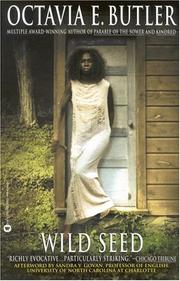
Revisiting Octavia Butler’s “Wild Seed,” the 1980 novel that opens her Patternist series
Balle Balle Radio™ Entertainment Desk Octavia E. Butler's "Wild Seed," released in 1980, remains one of the author's most widely…

How The Odyssey Pushed Nolan Into Cinema’s Billion-Dollar Elite
How The Odyssey Pushed Nolan Into Cinema's Billion-Dollar Elite Studio CarryOnHarry Entertainment Desk | 13 October 2026 The Odyssey Rewrites…

Hema Malini Turns 78: The Actress Who Played Twins and Won Only Once for It
Balle Balle Radio™ Entertainment Desk Hema Malini turns 78 on 16 October 2026, having been born on the same date…
Bollywood Loses a Titan: Patekar Dies, State Funeral Confirmed
Director Anees Bazmee breaks silence on Nana Patekar's death, calling it unbearable. Read the full story on India's cinema legend's…

CSIFF26 Showcases Diverse Caribbean Voices Through Six Nominated Films This October
Conch Shell International Film Festival returns to Queens October 9-11 with six Best Film nominees exploring Caribbean and diaspora filmmaking.

Editor's Choice
Audiences Are Rating ‘Spider-Man: Brand New Day’ and ‘Resident Evil’ Among 2026’s Hottest Films

Balle Balle Radio™ Entertainment Desk
Two 2026 releases, "Resident Evil" and "Spider-Man: Brand New Day," are tied at the top of Rotten Tomatoes’ running Verified Hot list, each pulling in more than 5,000 Verified ratings from ticket-buying audiences, according to the site’s latest update.
Just as Certified Fresh represents critics’ consensus via the Tomatometer, Verified Hot is its audience equivalent, requiring a minimum 90% score on the Popcornmeter using ratings exclusively from Fandango ticket buyers, according to the guide. Rotten Tomatoes introduced the badge to give paying audiences their own equivalent stamp of approval, separate from critical consensus.
Behind the two leaders in the largest-sample tier, "The Odyssey" ranks second with over 5,000 Verified ratings, followed by "Project Hail Mary," "Obsession," "Hoppers" and "The Super Mario Galaxy Movie." Several of these titles also turn up on other year-end and mid-year lists tracking 2026’s most-discussed films, including "The Odyssey," "Project Hail Mary" and "Obsession" among the movies cited as generating the most audience conversation this year.
In the next tier, covering films with 1,000 to 5,000 Verified ratings, "Avengers: Endgame," "Heart of the Beast," "Forgotten Island" and "Practical Magic 2" share the top spot, with "Coyote vs. Acme," "The Invite," a musical performance film featuring Stray Kids and others filling out the rest of the ranking. Rotten Tomatoes notes a third, smaller tier of 250 to 999 ratings exists for titles still building an audience track record, which it describes as newer and more niche releases.
New films earning a 90% Popcornmeter score are added weekly, with placement within each tier based on cumulative Verified rating volume.
Studio CarryOnHarry will be watching whether films lower in the 1,000-to-5,000 tier gain enough ratings to crack the top bracket as the list updates through the rest of 2026.
Read more People’s Choice stories on Studio CarryOnHarry. Reporting via Live News Vault.
Press Releases at Studio CarryOnHarry
Related Posts
Revisiting Octavia Butler’s “Wild Seed,” the 1980 novel that opens her Patternist series
Balle Balle Radio™ Entertainment Desk Octavia E. Butler's "Wild Seed," released in 1980, remains one of the author's most widely…
How The Odyssey Pushed Nolan Into Cinema’s Billion-Dollar Elite
How The Odyssey Pushed Nolan Into Cinema's Billion-Dollar Elite Studio CarryOnHarry Entertainment Desk | 13 October 2026 The Odyssey Rewrites…
Hema Malini Turns 78: The Actress Who Played Twins and Won Only Once for It
Balle Balle Radio™ Entertainment Desk Hema Malini turns 78 on 16 October 2026, having been born on the same date…
Bollywood Loses a Titan: Patekar Dies, State Funeral Confirmed
Director Anees Bazmee breaks silence on Nana Patekar's death, calling it unbearable. Read the full story on India's cinema legend's…
CSIFF26 Showcases Diverse Caribbean Voices Through Six Nominated Films This October
Conch Shell International Film Festival returns to Queens October 9-11 with six Best Film nominees exploring Caribbean and diaspora filmmaking.
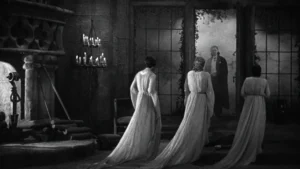
AFI Movie Club Celebrates Tod Browning’s ‘Dracula’ as a Landmark of Horror Cinema
AFI Movie Club spotlights Tod Browning's 1931 'Dracula' starring Bela Lugosi, the film that launched Universal's Monster franchise and defined…
Editor's Choice
Revisiting Octavia Butler’s “Wild Seed,” the 1980 novel that opens her Patternist series
Balle Balle Radio™ Entertainment Desk
Octavia E. Butler’s "Wild Seed," released in 1980, remains one of the author’s most widely read novels decades after its release. It opens Butler’s five-book Patternist cycle, a five-book speculative fiction cycle, and continues to draw new readers and critical attention.
Butler, who died in 2006, is widely regarded as one of the first Black women to gain major recognition in American science fiction, a genre that offered her few peers when she began publishing in the 1970s. Her work is frequently cited within Afrofuturism, the broader cultural movement that uses speculative fiction, technology, and alternate histories to explore the experiences of the African diaspora and to imagine Black futures beyond the constraints of the present.
"Wild Seed" is addresses themes of gender, healing roles, and the experiences of Black women, reflecting the novel’s focus on characters navigating power, transformation, and survival across generations. Readers and reviewers have consistently described it as a character-driven work rather than a plot-heavy one, with its two central figures carrying the novel through sustained psychological and emotional depth. The book is the first in the five-volume Patternist series and has drawn an active readership on platforms like Goodreads, where it holds a strong average rating from tens of thousands of readers.
The novel has also found renewed life in reading groups and community discussions in recent years, often paired with other Afrofuturist or speculative work, a sign of Butler’s lasting pull on readers well outside the genre’s traditional audience.
Studio CarryOnHarry sees "Wild Seed" as a useful entry point for readers curious about Butler’s influence on contemporary speculative fiction, and worth a look for anyone building out an Afrofuturism reading list.
About the Author: An American science fiction writer, one of the best-known among the few African-American women in the field.
[Comment by Tricia Sullivan, on The Guardian][1]:
Octavia E Butler (1947–2006)
> I was teaching in New York when I came across Octavia E Butler’s Kindred in a secondary-school catalogue of novels recommended to support diversity. It caught my attention because Butler was described as a science-fiction writer. I thought I was familiar with science fiction, but I’d never heard of her – nor have a great many other readers, I suspect. For many years, Butler was the sole African-Ameri
Read more People’s Choice stories on Studio CarryOnHarry. Reporting via Live News Vault.
Are you an author with a new release? We’re always looking for books to cover and authors to interview — tell us about yours here.
Press Releases at Studio CarryOnHarry
Harry Johal — Entertainment Editor
Harry Johal is the Entertainment Editor at Studio CarryOnHarry, overseeing the newsroom's day-to-day coverage.
Related Posts
Audiences Are Rating ‘Spider-Man: Brand New Day’ and ‘Resident Evil’ Among 2026’s Hottest Films
Balle Balle Radio™ Entertainment Desk Two 2026 releases, "Resident Evil" and "Spider-Man: Brand New Day," are tied at the top…
How The Odyssey Pushed Nolan Into Cinema’s Billion-Dollar Elite
How The Odyssey Pushed Nolan Into Cinema's Billion-Dollar Elite Studio CarryOnHarry Entertainment Desk | 13 October 2026 The Odyssey Rewrites…
Hema Malini Turns 78: The Actress Who Played Twins and Won Only Once for It
Balle Balle Radio™ Entertainment Desk Hema Malini turns 78 on 16 October 2026, having been born on the same date…
Bollywood Loses a Titan: Patekar Dies, State Funeral Confirmed
Director Anees Bazmee breaks silence on Nana Patekar's death, calling it unbearable. Read the full story on India's cinema legend's…
CSIFF26 Showcases Diverse Caribbean Voices Through Six Nominated Films This October
Conch Shell International Film Festival returns to Queens October 9-11 with six Best Film nominees exploring Caribbean and diaspora filmmaking.
AFI Movie Club Celebrates Tod Browning’s ‘Dracula’ as a Landmark of Horror Cinema
AFI Movie Club spotlights Tod Browning's 1931 'Dracula' starring Bela Lugosi, the film that launched Universal's Monster franchise and defined…
-
 Books1 day ago
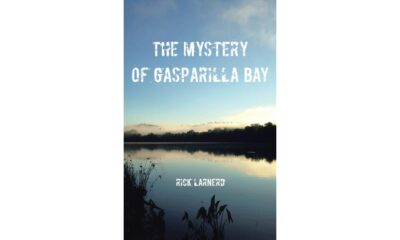
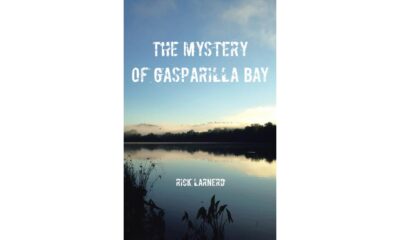
Former Wildlife Officer Rick Larnerd Blends Gasparilla Legend with Modern Florida Thriller in New Novel
-
 Books1 day ago
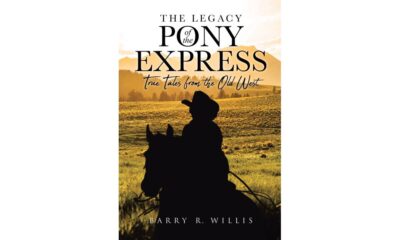
Barry R. Willis’s New Book Traces the Pony Express and Its Costs on the Frontier
-
 Books6 days ago
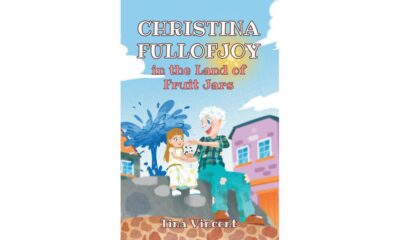
New Children’s Book Pairs Faith Themes With a Mystery About Fruit Jars and a Vanished Town
-

 Books5 days ago
Nancy Chance’s New Book Traces Fallen Angels and Ancient Origins Through Biblical Texts
-
 Books4 days ago
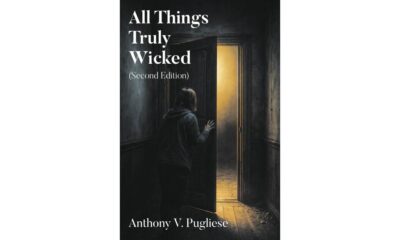
Anthony V. Pugliese Expands 2020 Horror Collection in New Edition of “All Things Truly Wicked”
-
 Books2 days ago
Former Game Warden Turns Three Decades of Conservation Work into Florida Crime Novel