
Books
Quentin Tarantino’s ‘Cinema Speculation’: Autobiography? Encyclopaedia? Critiques?…Keep Speculating!


[ad_1]
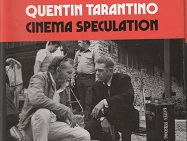
Quentin Tarantino’s ‘Cinema Speculation’: Autobiography? Encyclopaedia? Critiques?…Keep Speculating!
Confined by time (1968-1981) and restricted to select genres, like revenge, gory violence, exploitation and blaxploitation, Quentin Tarantino’s 392-page hard-cover Hachette publication is a voyage of discovery that is not for the feeble-hearted or the purist. In baseball and cricketing terminology, he hits the ball all over the park. Though he was born in 1963, the (restricted entry) films of the 60s and early 70s that feature in his ‘anthology’ were seen either much later or were seen in their first run thanks to ushers who looked the other way when he tagged along with his mother, who was a movie buff.
As a director, he has made nine films, the first being Reservoir Dogs (“The title meant nothing. It just sounded nice)”, Pulp Fiction and Once Upon a Time in Hollywood. He has said time and again that he will probably make one last film, his tenth, and then retire from film-making, concentrating on writing books, once he turns 60. This is his 60th year, and though the much-awaited tenth film did not arrive, a book did, in 2022. Herein, you get to know his opinions on a 100, maybe more, Hollywood movies, their directors, their screenplay writers, their actors (including bit players) in a back-and-forth, flashback-flashforward roller-coaster ride that you are not likely to have experienced before.

Besides his mother, her boy-friend and a man called Floyd Ray Wilson, a black man who was dating his mother’s flat-mate and later came and lived with the family for a while, spurred the urge to discover more at the movies. Quentin later ran a VHS rental service, and that gave him an opportunity to see his chosen films time and again. He short-lists the following films for a before, during and after discussion: Bullitt (1968), Dirty Harry (1971), Deliverance (1972), The Getaway (1972), The Outfit (1973), Sisters (1973). At the end of the Sisters chapter, Tarantino writes about Barry Brown, the lead actor of Daisy Miller, who committed suicide at the age of 27: “Who was Barry Brown? What did it all mean? Am I the only one who remembers Barry Brown? Am I enough?”
Soon afterwards, he takes us on a memorable ride with Taxi Driver (1976). Page 211 to 233 will tell you things about the unit of Taxi Driver that you could not have possibly known. Oh, I should have mentioned earlier that Tarantino takes time and space out to dissect reviews and reviewers, and, as expected, does not go with the favourites, often at complete variance with them. Yes, Pauline Kael features, so do Charles Champlin, Kevin Thomas, and more. He also devotes a few pages to Bela Lugosi, the horror icon, and his untimely death.
There is a lot of speculation in the book. What if? What is X had played the lead instead of Y? What if A had directed the film instead of B? It’s a nice game, and you get sucked into it real fast. The only problem is that in this part of the world (India), most of the films mentioned either did not get a release or were released in a heavily censored version. This was particularly true of the period 60s-80s. Another fact was that Hollywood films would be released in India up to three years after their American release. And a lot of his references are to the ‘heavily censored’ scenes, so Indians will find it impossible to relate to them, unless they watch them now, at home, without the spectre of censorship. Secondly, there are so many American references that you may never get the context of most of them. You will get to know what I mean when you reach the chapter ‘What if Brian De Palma Directed Taxi Driver Instead of Martin Scorcese?’

Next in his list of selected favourites are Rolling Thunder (1977), Paradise Alley (1978), Escape from Alcatraz, Hardcore (1979), The Funhouse (1981) ending with a Floyd Footnote, a tribute to the man who inspired Django Unchained, but who could never get a screenplay sold.
It is easy reading, impressively written, with language hovering between the literary and the ‘f’ word (galore). The print-face and paper is easy on the eye. Some parts do seem repetitive, but they are there to give emphasis. Many of the films he talks about were seen as a double feature, a system that might be alien to Indians. You could see two films, successively, for the price of one or choose which one. Of course this was confined to select cinemas and slightly older movies.
You cannot but marvel at the amount of information Quentin Tarantino packs into the book. For a non-American who is interested in Hollywood, this is an encyclopaedia. It is, at the same time, in small measure, his autobiography. After reading Cinema Speculation, you realise why his screenplays and dialogue are so effective. Tarantino has very good command, over the English (American) language and the medium of cinema. Not to mention an elephantine memory. Of course, seeing each film a number of times helps sharpen that gigabyte edge.
If there is one thing you miss in the book, it is more pictures. Guess the copyright laws in the USA must have come in the way of this added attraction.
Don’t speculate! Get a copy.
[ad_2]
Press Update For Studio CarryOnHarry
Find Holiday Deals Flights Attractions and Hotels !
Get Interviewed

Save on Travel with Trip.com (ENG)
For Interviews At Studio CarryOnHarry Online Submission Form Click Here
Related Posts
Scottsdale Author Joe Reina’s New Novel Follows a Killer Who Gets Away With It
Balle Balle Radio™ Entertainment Desk Joe Reina has published a new novel, "Shadows over Scottsdale: An Unsolved Murder Mystery," built…
Joe Reina’s ‘Lost Masterpieces’ Imagines a Fictional Farewell Among Renaissance Painters
Balle Balle Radio™ Entertainment Desk Joe Reina has published a new novel, "Lost Masterpieces: Three Paintings, 500 Years A Journey…

Katt Taylor’s New Novel Follows a Woman’s Fractured Spirit from Darkness to Awakening
Balle Balle Radio™ Entertainment Desk Katt Taylor has released "The Mental Woman Within," a novel tracing the spiritual unraveling and…

New Children’s Book ‘Mocha, the Ground Fairy’ Follows a Guinea Pig Determined to Fly
Balle Balle Radio™ Entertainment Desk Dr. Leslie Merida-Gonzalez has published a new children's book, "Mocha, the Ground Fairy," through Fulton…
Fulton Books Author Abagail Lynn Releases Fantasy Adventure “The Rebel”
Balle Balle Radio™ Entertainment Desk Abagail Lynn has released a new novel, "The Rebel," a fantasy adventure centered on an…

Retired Sacramento Pulmonologist Pitches Self-Monitoring Alternative to Health-Care Bureaucracy in New Book
Balle Balle Radio™ Entertainment Desk Del Meyer, a Sacramento-based pulmonologist, has authored a book contending that the central challenge in…

Balle Balle Radio™ Entertainment Desk
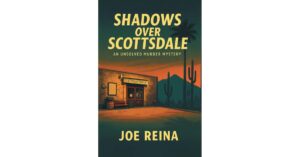
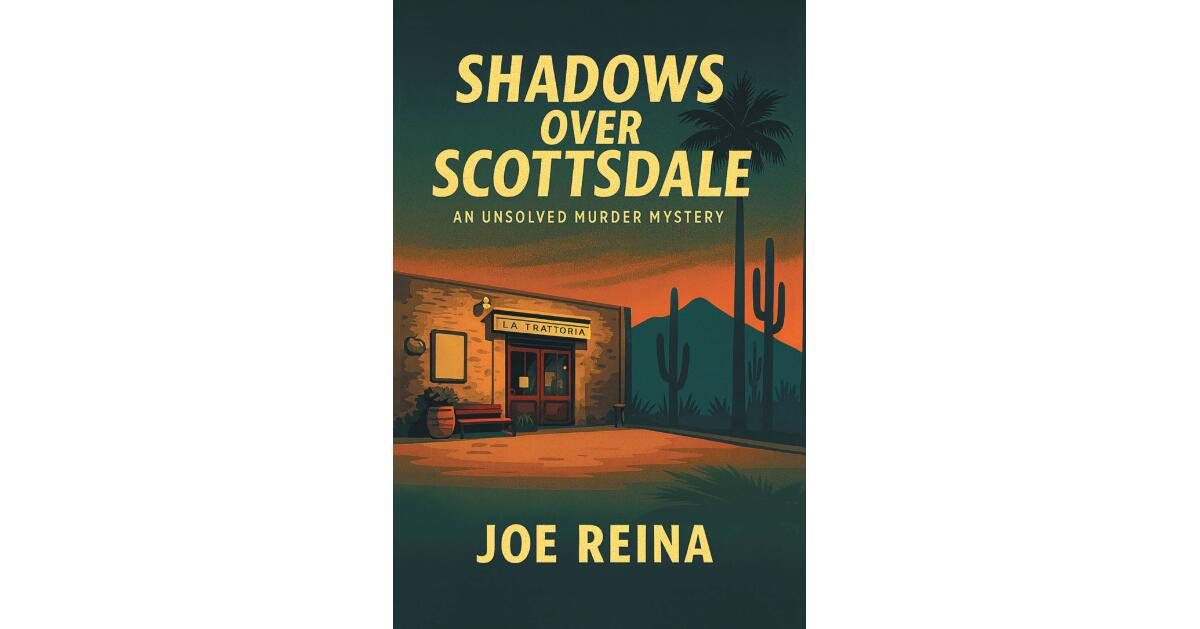
Joe Reina has published a new novel, "Shadows over Scottsdale: An Unsolved Murder Mystery," built around a scenario true-crime statistics make uncomfortably familiar: a man commits a devastating crime and simply disappears, leaving investigators and a grieving community with no resolution.
The book follows a character named Robert, who flees the country using forged documents and a cargo ship after an act of destruction that leaves behind, as the publisher describes it, charred remains and an unanswered investigation. The case goes cold. The novel, according to its publisher, is less concerned with the mechanics of the escape than with what happens afterward, to the people left waiting for answers that never come.
Reina, now retired in Scottsdale, spent decades in international business across apparel, footwear, and real estate, with extensive time in Europe and a particular connection to Italy that shaped two earlier books, "The Goat Sleeps in the Kitchen" and "A Love Affair in Tuscany." "Shadows over Scottsdale" marks a different direction, built instead around the real scale of unsolved homicide in the U.S. The publisher’s materials cite roughly 346,000 unsolved homicides since 1965, with more than a dozen occurring unresolved each day. Separate reporting on the book has cited a figure of about 7,778 murders in 2023 alone, which it similarly frames as more than a dozen a day going unresolved.
"Writing ‘Shadows over Scottsdale’ forced me to confront uncomfortable questions about justice itself," Reina said, according to the announcement. "Too many crimes go unsolved, too many families wait endlessly for answers. I wanted readers to understand that behind every cold case statistic is a real story, real suffering, and real questions that may never be answered."
The publisher positions the novel as an examination of institutional limits as much as a crime story: the toll of a case gone cold on the people who can’t move past it, and what it means for a community when accountability simply never arrives.
"Shadows over Scottsdale" is published by Covenant Books and is available in paperback and hardcover through the publisher’s website and major retailers including Amazon, Barnes & Noble, and Apple Books.
Cold-case statistics tend to get cited and then forgotten. Studio CarryOnHarry is curious whether fiction built directly around that number does more to stick with a reader than the number alone ever does.
Read more People’s Choice stories on Studio CarryOnHarry. Reporting via Live News Vault.
Are you an author with a new release? We’re always looking for books to cover and authors to interview — tell us about yours here.
Press Releases at Studio CarryOnHarry
Related Posts
Joe Reina’s ‘Lost Masterpieces’ Imagines a Fictional Farewell Among Renaissance Painters
Balle Balle Radio™ Entertainment Desk Joe Reina has published a new novel, "Lost Masterpieces: Three Paintings, 500 Years A Journey…
Katt Taylor’s New Novel Follows a Woman’s Fractured Spirit from Darkness to Awakening
Balle Balle Radio™ Entertainment Desk Katt Taylor has released "The Mental Woman Within," a novel tracing the spiritual unraveling and…
New Children’s Book ‘Mocha, the Ground Fairy’ Follows a Guinea Pig Determined to Fly
Balle Balle Radio™ Entertainment Desk Dr. Leslie Merida-Gonzalez has published a new children's book, "Mocha, the Ground Fairy," through Fulton…
Fulton Books Author Abagail Lynn Releases Fantasy Adventure “The Rebel”
Balle Balle Radio™ Entertainment Desk Abagail Lynn has released a new novel, "The Rebel," a fantasy adventure centered on an…
Retired Sacramento Pulmonologist Pitches Self-Monitoring Alternative to Health-Care Bureaucracy in New Book
Balle Balle Radio™ Entertainment Desk Del Meyer, a Sacramento-based pulmonologist, has authored a book contending that the central challenge in…
Anthony V. Pugliese Expands 2020 Horror Collection in New Edition of “All Things Truly Wicked”
Balle Balle Radio™ Entertainment Desk Anthony V. Pugliese has released a second edition of "All Things Truly Wicked," an expanded…
Balle Balle Radio™ Entertainment Desk
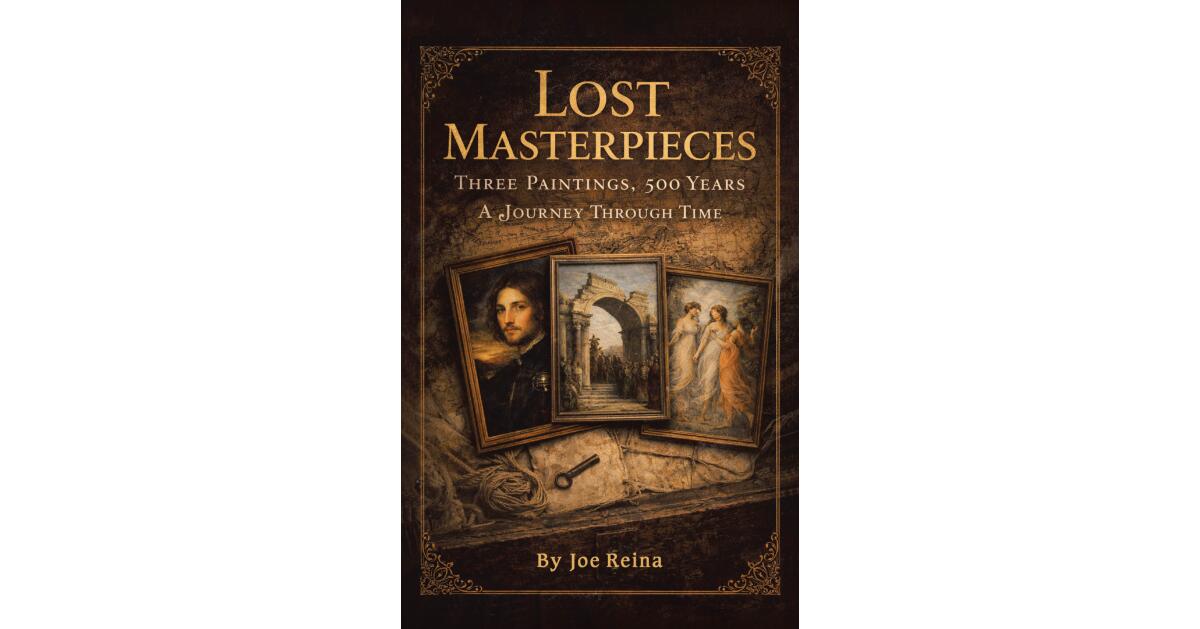
Joe Reina has published a new novel, "Lost Masterpieces: Three Paintings, 500 Years A Journey Through Time," built around an imagined scene from Renaissance history: the night before Leonardo da Vinci leaves for Milan, when three fellow painters each hand him a small work carrying a private message.
According to the announcement, those three gifts come from Sandro Botticelli, Titian, and Andrea Mantegna, each painting standing in for a different kind of counsel. Botticelli’s piece is described as layered with allegory and coded warnings about power and patronage. Titian’s is framed as warm and sensual, suggesting reinvention and a break from convention. Mantegna’s is austere and classically precise, encoding discipline and endurance. According to the announcement, these three paintings form a wordless exchange between masters, transmitting wisdom, mutual regard, and assurance across generations through visual means.
Reina comes to this material from outside the art world. His career was built in apparel, footwear, and real estate development in Chicago, and the publisher’s materials trace his interest in European history, and in Italy specifically, to years of international business travel. He has published several previous books, including "The Goat Sleeps in the Kitchen," "A Love Affair in Tuscany," and "Shadows over Scottsdale," before turning to this account of a fictionalized moment at the hinge of the Renaissance.
"I wanted to capture that extraordinary moment when masters speak to each other across time through their work," Reina said in the announcement. "These paintings represent not just gifts, but a conversation about what it means to pursue greatness while remaining grounded in purpose and principle."
The book is published through Covenant Books and is available in hardcover and paperback, as well as through Apple Books, Amazon, Google Play, and Barnes & Noble.
Studio CarryOnHarry is intrigued by novels that build fiction around real historical figures at a specific, dramatized turning point rather than attempting straight biography — the approach succeeds or fails based on how seamlessly the fictional moment integrates with documented historical fact.
Read more People’s Choice stories on Studio CarryOnHarry. Reporting via Live News Vault.
Are you an author with a new release? We’re always looking for books to cover and authors to interview — tell us about yours here.
Press Releases at Studio CarryOnHarry
Related Posts
Katt Taylor’s New Novel Follows a Woman’s Fractured Spirit from Darkness to Awakening
Balle Balle Radio™ Entertainment Desk Katt Taylor has released "The Mental Woman Within," a novel tracing the spiritual unraveling and…
New Children’s Book ‘Mocha, the Ground Fairy’ Follows a Guinea Pig Determined to Fly
Balle Balle Radio™ Entertainment Desk Dr. Leslie Merida-Gonzalez has published a new children's book, "Mocha, the Ground Fairy," through Fulton…
Fulton Books Author Abagail Lynn Releases Fantasy Adventure “The Rebel”
Balle Balle Radio™ Entertainment Desk Abagail Lynn has released a new novel, "The Rebel," a fantasy adventure centered on an…
Retired Sacramento Pulmonologist Pitches Self-Monitoring Alternative to Health-Care Bureaucracy in New Book
Balle Balle Radio™ Entertainment Desk Del Meyer, a Sacramento-based pulmonologist, has authored a book contending that the central challenge in…
Anthony V. Pugliese Expands 2020 Horror Collection in New Edition of “All Things Truly Wicked”
Balle Balle Radio™ Entertainment Desk Anthony V. Pugliese has released a second edition of "All Things Truly Wicked," an expanded…

STEERus Rolls Out Free Tool and Webinar on How AI Describes Small Businesses to Customers
Balle Balle Radio™ Entertainment Desk STEERus Inc. has launched a free online assessment called the Digital Signal Check, intended to…
-

 Books4 days ago
New Children’s Book Pairs Faith Themes With a Mystery About Fruit Jars and a Vanished Town
-

 Books6 days ago
Sonoma County Memoir “My Wine Country” Recounts Author Victor Sanchez Jr.’s Path Through Hardship
-

 Books4 days ago
Christian Faith Publishing Releases Daniel Kelsey’s “Hidden Treasures in Secret Places”
-
 Books4 days ago
New Children’s Book ‘Sally’s First Day of School’ Frames Bullying Through a Lens of Faith
-
 Books3 days ago
Nancy Chance’s New Book Traces Fallen Angels and Ancient Origins Through Biblical Texts
-
 Books2 days ago
Anthony V. Pugliese Expands 2020 Horror Collection in New Edition of “All Things Truly Wicked”