
Books
Book Talks Steal Like an Artist: Embracing Inspiration and Creativity


In a world that values originality and uniqueness, it can be daunting to try and create something that feels truly new and fresh. This is where “Steal Like an Artist” by Austin Kleon comes in, offering a new perspective on creativity and inspiration. This book challenges the idea that creative work must be completely original and encourages readers to embrace their influences and find inspiration in the work of others. In this article, we will explore the key themes and ideas in “Steal Like an Artist”
Steal Like an Artist” by Austin Kleon is a book that challenges the traditional notions of creativity and encourages readers to look at it in a different light. Rather than believing that creative work is completely original and derived solely from one’s imagination, Kleon argues that all creative work is a remix of what has come before. He encourages readers to “steal” from other artists and find inspiration in their work.
The book is divided into ten chapters, each offering practical tips and advice on how to be more creative and find inspiration in the world around us. Kleon argues that the act of stealing is not about copying someone else’s work, but rather about taking inspiration from it and using it to create something new and original.
One of the key ideas that Kleon stresses throughout the book is that we should embrace our influences. He believes that every artist is influenced by the work of others, and that we should be honest about our influences and use them to inspire our own work. In fact, Kleon argues that the best way to find our own style is to copy the work of others until we develop our own unique voice.
Kleon also encourages readers to stop waiting for permission to be creative and start making things on their own. He believes that creativity is not a magical gift that only some people possess, but rather a process that can be practiced and honed over time. He stresses the importance of being consistent and persistent in our creative endeavors, even when we don’t feel inspired or motivated.
Another important idea in the book is that creativity is a process. Kleon encourages readers to be open to experimentation and to embrace failure as a natural part of the creative process. He believes that the key to being creative is to keep making things, even when they don’t turn out the way we want them to. He also stresses the importance of stepping away from our work and taking breaks, as this can often lead to new insights and ideas.
In addition to these core ideas, Kleon offers practical advice on how to find inspiration in the world around us. He encourages readers to curate their influences, to seek out new experiences, and to pay attention to the details of everyday life. He also stresses the importance of sharing our work with others and being open to feedback and criticism.
Overall, “Steal Like an Artist” is a fun and inspiring read that challenges traditional notions of creativity and encourages readers to embrace their influences and find inspiration in unexpected places. Kleon writes in a conversational and relatable style, making the book accessible to anyone who is interested in living a more creative life.
For example, Kleon writes, “One of the biggest fears people have about creativity is that they’re not original enough. They don’t want to copy anyone else’s work, and they don’t want to be seen as unoriginal. But the truth is, nobody is completely original. Every artist, writer, and musician is influenced by the work of others. The key is to embrace your influences and use them to inspire your own work.”
In another chapter, he writes, “Creativity is not a magical gift that only some people possess. It’s a process that can be practiced and honed over time. The key is to be consistent and persistent in your creative pursuits, even when you don’t feel inspired or motivated.”
Kleon’s writing style is approachable and down-to-earth, making the book an easy and enjoyable read. He uses anecdotes from his own life and the lives of other creatives to illustrate his points, and he peppers the text with playful illustrations and handwritten notes. This makes the book feel less like a traditional self-help book and more like a conversation with a friend.
In conclusion, “Steal Like an Artist” is a book that challenges traditional notions of creativity and offers practical advice on
Related Posts
Scottsdale Author Joe Reina’s New Novel Follows a Killer Who Gets Away With It
Balle Balle Radio™ Entertainment Desk Joe Reina has published a new novel, "Shadows over Scottsdale: An Unsolved Murder Mystery," built…
Joe Reina’s ‘Lost Masterpieces’ Imagines a Fictional Farewell Among Renaissance Painters
Balle Balle Radio™ Entertainment Desk Joe Reina has published a new novel, "Lost Masterpieces: Three Paintings, 500 Years A Journey…

Katt Taylor’s New Novel Follows a Woman’s Fractured Spirit from Darkness to Awakening
Balle Balle Radio™ Entertainment Desk Katt Taylor has released "The Mental Woman Within," a novel tracing the spiritual unraveling and…

New Children’s Book ‘Mocha, the Ground Fairy’ Follows a Guinea Pig Determined to Fly
Balle Balle Radio™ Entertainment Desk Dr. Leslie Merida-Gonzalez has published a new children's book, "Mocha, the Ground Fairy," through Fulton…
Fulton Books Author Abagail Lynn Releases Fantasy Adventure “The Rebel”
Balle Balle Radio™ Entertainment Desk Abagail Lynn has released a new novel, "The Rebel," a fantasy adventure centered on an…

Retired Sacramento Pulmonologist Pitches Self-Monitoring Alternative to Health-Care Bureaucracy in New Book
Balle Balle Radio™ Entertainment Desk Del Meyer, a Sacramento-based pulmonologist, has authored a book contending that the central challenge in…

Balle Balle Radio™ Entertainment Desk
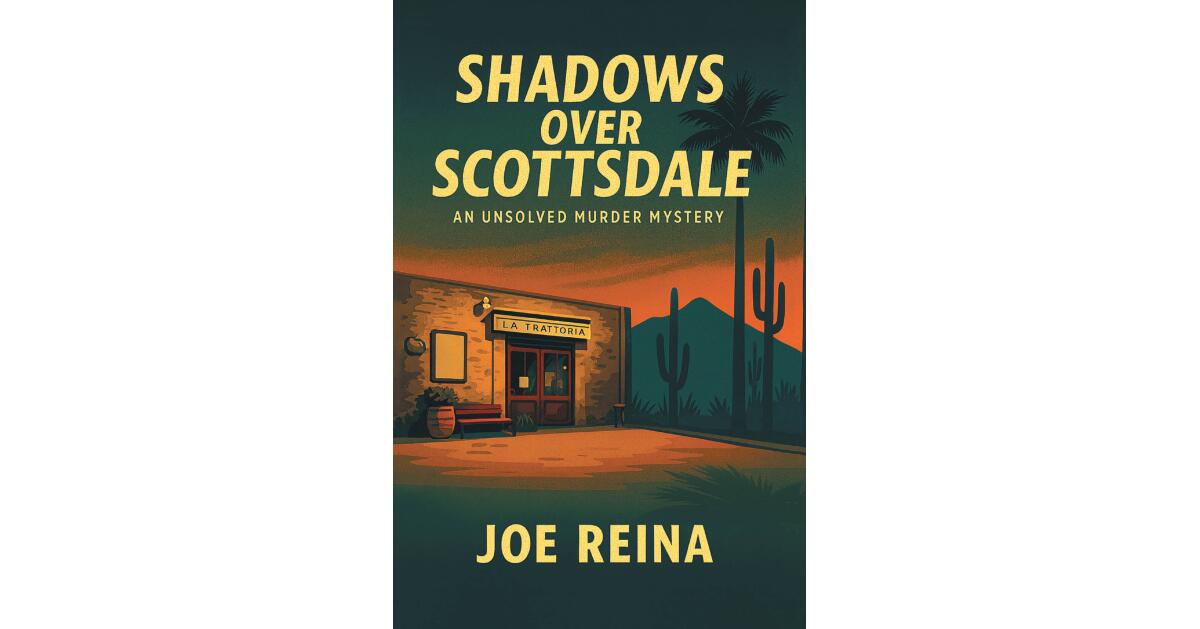
Joe Reina has published a new novel, "Shadows over Scottsdale: An Unsolved Murder Mystery," built around a scenario true-crime statistics make uncomfortably familiar: a man commits a devastating crime and simply disappears, leaving investigators and a grieving community with no resolution.
The book follows a character named Robert, who flees the country using forged documents and a cargo ship after an act of destruction that leaves behind, as the publisher describes it, charred remains and an unanswered investigation. The case goes cold. The novel, according to its publisher, is less concerned with the mechanics of the escape than with what happens afterward, to the people left waiting for answers that never come.
Reina, now retired in Scottsdale, spent decades in international business across apparel, footwear, and real estate, with extensive time in Europe and a particular connection to Italy that shaped two earlier books, "The Goat Sleeps in the Kitchen" and "A Love Affair in Tuscany." "Shadows over Scottsdale" marks a different direction, built instead around the real scale of unsolved homicide in the U.S. The publisher’s materials cite roughly 346,000 unsolved homicides since 1965, with more than a dozen occurring unresolved each day. Separate reporting on the book has cited a figure of about 7,778 murders in 2023 alone, which it similarly frames as more than a dozen a day going unresolved.
"Writing ‘Shadows over Scottsdale’ forced me to confront uncomfortable questions about justice itself," Reina said, according to the announcement. "Too many crimes go unsolved, too many families wait endlessly for answers. I wanted readers to understand that behind every cold case statistic is a real story, real suffering, and real questions that may never be answered."
The publisher positions the novel as an examination of institutional limits as much as a crime story: the toll of a case gone cold on the people who can’t move past it, and what it means for a community when accountability simply never arrives.
"Shadows over Scottsdale" is published by Covenant Books and is available in paperback and hardcover through the publisher’s website and major retailers including Amazon, Barnes & Noble, and Apple Books.
Cold-case statistics tend to get cited and then forgotten. Studio CarryOnHarry is curious whether fiction built directly around that number does more to stick with a reader than the number alone ever does.
Read more People’s Choice stories on Studio CarryOnHarry. Reporting via Live News Vault.
Are you an author with a new release? We’re always looking for books to cover and authors to interview — tell us about yours here.
Press Releases at Studio CarryOnHarry
Related Posts
Joe Reina’s ‘Lost Masterpieces’ Imagines a Fictional Farewell Among Renaissance Painters
Balle Balle Radio™ Entertainment Desk Joe Reina has published a new novel, "Lost Masterpieces: Three Paintings, 500 Years A Journey…
Katt Taylor’s New Novel Follows a Woman’s Fractured Spirit from Darkness to Awakening
Balle Balle Radio™ Entertainment Desk Katt Taylor has released "The Mental Woman Within," a novel tracing the spiritual unraveling and…
New Children’s Book ‘Mocha, the Ground Fairy’ Follows a Guinea Pig Determined to Fly
Balle Balle Radio™ Entertainment Desk Dr. Leslie Merida-Gonzalez has published a new children's book, "Mocha, the Ground Fairy," through Fulton…
Fulton Books Author Abagail Lynn Releases Fantasy Adventure “The Rebel”
Balle Balle Radio™ Entertainment Desk Abagail Lynn has released a new novel, "The Rebel," a fantasy adventure centered on an…
Retired Sacramento Pulmonologist Pitches Self-Monitoring Alternative to Health-Care Bureaucracy in New Book
Balle Balle Radio™ Entertainment Desk Del Meyer, a Sacramento-based pulmonologist, has authored a book contending that the central challenge in…
Anthony V. Pugliese Expands 2020 Horror Collection in New Edition of “All Things Truly Wicked”
Balle Balle Radio™ Entertainment Desk Anthony V. Pugliese has released a second edition of "All Things Truly Wicked," an expanded…
Balle Balle Radio™ Entertainment Desk
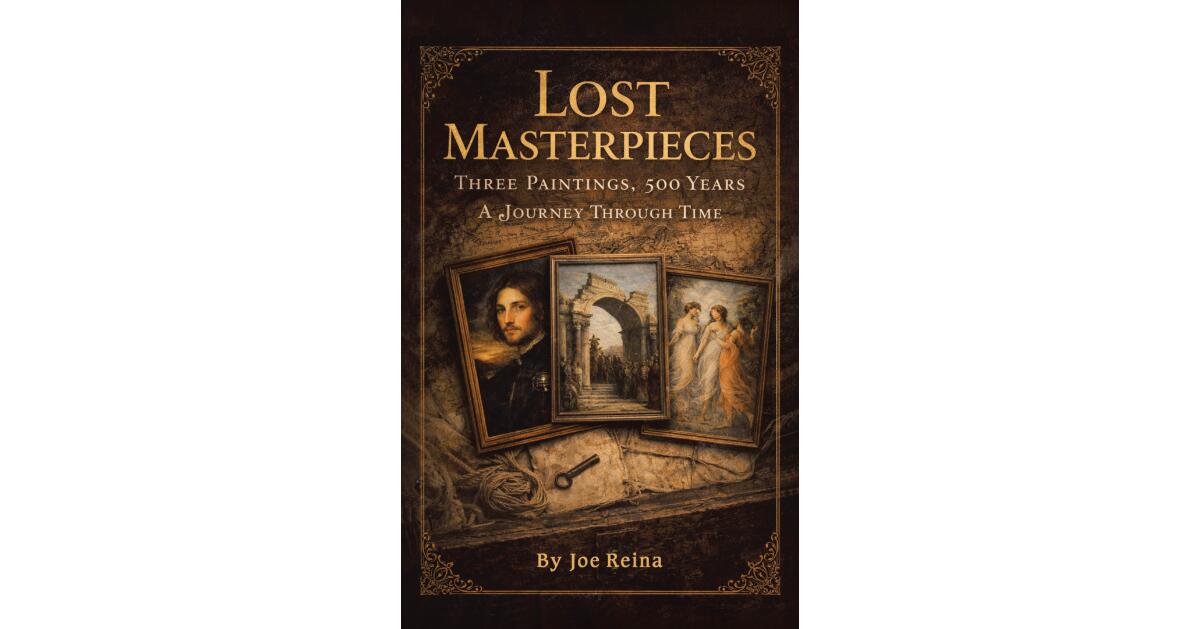
Joe Reina has published a new novel, "Lost Masterpieces: Three Paintings, 500 Years A Journey Through Time," built around an imagined scene from Renaissance history: the night before Leonardo da Vinci leaves for Milan, when three fellow painters each hand him a small work carrying a private message.
According to the announcement, those three gifts come from Sandro Botticelli, Titian, and Andrea Mantegna, each painting standing in for a different kind of counsel. Botticelli’s piece is described as layered with allegory and coded warnings about power and patronage. Titian’s is framed as warm and sensual, suggesting reinvention and a break from convention. Mantegna’s is austere and classically precise, encoding discipline and endurance. According to the announcement, these three paintings form a wordless exchange between masters, transmitting wisdom, mutual regard, and assurance across generations through visual means.
Reina comes to this material from outside the art world. His career was built in apparel, footwear, and real estate development in Chicago, and the publisher’s materials trace his interest in European history, and in Italy specifically, to years of international business travel. He has published several previous books, including "The Goat Sleeps in the Kitchen," "A Love Affair in Tuscany," and "Shadows over Scottsdale," before turning to this account of a fictionalized moment at the hinge of the Renaissance.
"I wanted to capture that extraordinary moment when masters speak to each other across time through their work," Reina said in the announcement. "These paintings represent not just gifts, but a conversation about what it means to pursue greatness while remaining grounded in purpose and principle."
The book is published through Covenant Books and is available in hardcover and paperback, as well as through Apple Books, Amazon, Google Play, and Barnes & Noble.
Studio CarryOnHarry is intrigued by novels that build fiction around real historical figures at a specific, dramatized turning point rather than attempting straight biography — the approach succeeds or fails based on how seamlessly the fictional moment integrates with documented historical fact.
Read more People’s Choice stories on Studio CarryOnHarry. Reporting via Live News Vault.
Are you an author with a new release? We’re always looking for books to cover and authors to interview — tell us about yours here.
Press Releases at Studio CarryOnHarry
Related Posts
Scottsdale Author Joe Reina’s New Novel Follows a Killer Who Gets Away With It
Balle Balle Radio™ Entertainment Desk Joe Reina has published a new novel, "Shadows over Scottsdale: An Unsolved Murder Mystery," built…
Katt Taylor’s New Novel Follows a Woman’s Fractured Spirit from Darkness to Awakening
Balle Balle Radio™ Entertainment Desk Katt Taylor has released "The Mental Woman Within," a novel tracing the spiritual unraveling and…
New Children’s Book ‘Mocha, the Ground Fairy’ Follows a Guinea Pig Determined to Fly
Balle Balle Radio™ Entertainment Desk Dr. Leslie Merida-Gonzalez has published a new children's book, "Mocha, the Ground Fairy," through Fulton…
Fulton Books Author Abagail Lynn Releases Fantasy Adventure “The Rebel”
Balle Balle Radio™ Entertainment Desk Abagail Lynn has released a new novel, "The Rebel," a fantasy adventure centered on an…
Retired Sacramento Pulmonologist Pitches Self-Monitoring Alternative to Health-Care Bureaucracy in New Book
Balle Balle Radio™ Entertainment Desk Del Meyer, a Sacramento-based pulmonologist, has authored a book contending that the central challenge in…
Anthony V. Pugliese Expands 2020 Horror Collection in New Edition of “All Things Truly Wicked”
Balle Balle Radio™ Entertainment Desk Anthony V. Pugliese has released a second edition of "All Things Truly Wicked," an expanded…
-
 Books4 days ago
New Children’s Book Pairs Faith Themes With a Mystery About Fruit Jars and a Vanished Town
-

 Books6 days ago
Sonoma County Memoir “My Wine Country” Recounts Author Victor Sanchez Jr.’s Path Through Hardship
-

 Books5 days ago
Christian Faith Publishing Releases Daniel Kelsey’s “Hidden Treasures in Secret Places”
-
 Books5 days ago
New Children’s Book ‘Sally’s First Day of School’ Frames Bullying Through a Lens of Faith
-

 Books4 days ago
Nancy Chance’s New Book Traces Fallen Angels and Ancient Origins Through Biblical Texts
-
 Books3 days ago
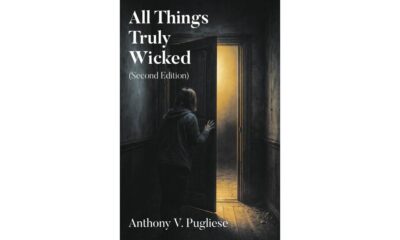
Anthony V. Pugliese Expands 2020 Horror Collection in New Edition of “All Things Truly Wicked”