
People's Choice
Teaching Phonics to Children



Phonics is a necessary part of any good method of teaching children to read. Teaching Children phonics and helping them develop phonemic awareness is the key to mastering words, which is the first key step toward successful reading. Children need to develop a knowledge of the letters, the sounds represented by the letters, and the connection between sounds created by combining the letters where words are formed. This is an essential part of mastering reading, and enabling children to become independent readers. By learning phonics and phonemic awareness, children gain the ability to pronounce new words, develop clear articulation, improve spelling, and develop self confidence.
When it comes to teaching your children to read, it must include three basic principles:
1) Reading for the child, whether it’s a word, sentence, or story, must appeal to your child’s interests.
2) Never pressure or force your child into reading, turning it into a negative “event” in their life. It should be a fun, enjoyable, and rewarding experience. This will take ample amounts of patience on the part of the parents, and some creativity.
3) Teaching your child to read must begin with the mastery of the phonemes – the individual sounds which makeup the words.
The basic process of teaching phonics and phonemic awareness to children includes teaching them the letters and letter sounds; then you teach the child to combine (or blend) various letter sounds together to form words; which is then followed by reading sentences and simple stories. This is a logical progression for children to learn reading, where they develop accuracy in decoding words and pronouncing words. This method of teaching also helps the child to spell correctly. Gradually, the different elements of phonics are combined to produce new words, and leads to the discovery of new words by the child using this process which becomes an “automatic reflex”.
Teaching phonics to children should take 10 to 15 minutes each day, and these “lessons” should take place in several small sessions each day – such as 4 or 5 session lasting 3 to 5 minutes each. For older pre-school children, lessons can be slightly longer; however, several minutes each session is all that’s needed.
One way to start teaching phonics to children with with ear training – by helping them develop the understanding that words are made up of smaller units of sounds, or known as phonemes, and when you combine these sounds, a word is formed. You can start this with very short sessions, as already mentioned. A few minutes a day is all that you need. The key, however, is consistency and patience.
During these short sessions, sound out words slowly and distinctly. You can do this without even making the child aware that you are trying to teach them. Simply take words from your everyday speaking to your child and include oral blending sounds into your sentences. For example, if you wanted to ask your child to drink his milk, you could say: “Joe, d-r-i-n-k your m-ilk.” The words drink and milk are sounded out slowly and distinctly. The level of sound separation can be set by you to increase or lower the difficulty. Thus, if Joe has a tough time figuring out that d-r-i-n-k means drink, you can lower the difficulty by blending the word as dr-ink instead.
Alternatively, you could simply pick different words and play blending sounds games with your child. You simply say the sounds of the word slowly, and ask the child try to guess what you are saying.
This concept of individual sounds forming words may take some time for your child to grasp. Some children will pick it up quickly, while other children may take longer, but one thing that’s certain is that if you keep it up, your child will catch on. Below are some sample words which you can use to play blending sounds activities with your child.
J-u-m-p J-ump
R-u-n R-un
S-i-t S-it
S-t-a-n-d St-and
M-i-l-k M-ilk
S-t-o-p St-op
The first word is more segmented than the second word, and will be more difficult to sound out. Please note that hyphens are used to indicate the letter sounds instead of slashes.
ie: J-u-m-p /J/ /u/ /m/ /p/
This is done to make things easier to read; however, when you read it, you should not read the names of the letters, but instead say the sounds of the letters. This type of ear training for phonics and phonemic awareness should continue throughout the teaching process, even well after your child have grasped this concept. It can be applied to words with increasing difficulty. Again, please always keep in mind that not all children can readily blend the sounds to hear the word, so you must be patient, and drill this for days, weeks, or even months if needed. Consistency and frequency is the key to success here, and not sporadic binge sessions.
If you would like to learn about a simple step-by-step program designed to easily teach your children how to read, please click here.
Related Posts
Audiences Are Rating ‘Spider-Man: Brand New Day’ and ‘Resident Evil’ Among 2026’s Hottest Films
Balle Balle Radio™ Entertainment Desk Two 2026 releases, "Resident Evil" and "Spider-Man: Brand New Day," are tied at the top…
Revisiting Octavia Butler’s “Wild Seed,” the 1980 novel that opens her Patternist series
Balle Balle Radio™ Entertainment Desk Octavia E. Butler's "Wild Seed," released in 1980, remains one of the author's most widely…

How The Odyssey Pushed Nolan Into Cinema’s Billion-Dollar Elite
How The Odyssey Pushed Nolan Into Cinema's Billion-Dollar Elite Studio CarryOnHarry Entertainment Desk | 13 October 2026 The Odyssey Rewrites…

Hema Malini Turns 78: The Actress Who Played Twins and Won Only Once for It
Balle Balle Radio™ Entertainment Desk Hema Malini turns 78 on 16 October 2026, having been born on the same date…
Bollywood Loses a Titan: Patekar Dies, State Funeral Confirmed
Director Anees Bazmee breaks silence on Nana Patekar's death, calling it unbearable. Read the full story on India's cinema legend's…

CSIFF26 Showcases Diverse Caribbean Voices Through Six Nominated Films This October
Conch Shell International Film Festival returns to Queens October 9-11 with six Best Film nominees exploring Caribbean and diaspora filmmaking.

Editor's Choice
Audiences Are Rating ‘Spider-Man: Brand New Day’ and ‘Resident Evil’ Among 2026’s Hottest Films

Balle Balle Radio™ Entertainment Desk
Two 2026 releases, "Resident Evil" and "Spider-Man: Brand New Day," are tied at the top of Rotten Tomatoes’ running Verified Hot list, each pulling in more than 5,000 Verified ratings from ticket-buying audiences, according to the site’s latest update.
Just as Certified Fresh represents critics’ consensus via the Tomatometer, Verified Hot is its audience equivalent, requiring a minimum 90% score on the Popcornmeter using ratings exclusively from Fandango ticket buyers, according to the guide. Rotten Tomatoes introduced the badge to give paying audiences their own equivalent stamp of approval, separate from critical consensus.
Behind the two leaders in the largest-sample tier, "The Odyssey" ranks second with over 5,000 Verified ratings, followed by "Project Hail Mary," "Obsession," "Hoppers" and "The Super Mario Galaxy Movie." Several of these titles also turn up on other year-end and mid-year lists tracking 2026’s most-discussed films, including "The Odyssey," "Project Hail Mary" and "Obsession" among the movies cited as generating the most audience conversation this year.
In the next tier, covering films with 1,000 to 5,000 Verified ratings, "Avengers: Endgame," "Heart of the Beast," "Forgotten Island" and "Practical Magic 2" share the top spot, with "Coyote vs. Acme," "The Invite," a musical performance film featuring Stray Kids and others filling out the rest of the ranking. Rotten Tomatoes notes a third, smaller tier of 250 to 999 ratings exists for titles still building an audience track record, which it describes as newer and more niche releases.
New films earning a 90% Popcornmeter score are added weekly, with placement within each tier based on cumulative Verified rating volume.
Studio CarryOnHarry will be watching whether films lower in the 1,000-to-5,000 tier gain enough ratings to crack the top bracket as the list updates through the rest of 2026.
Read more People’s Choice stories on Studio CarryOnHarry. Reporting via Live News Vault.
Press Releases at Studio CarryOnHarry
Related Posts
Revisiting Octavia Butler’s “Wild Seed,” the 1980 novel that opens her Patternist series
Balle Balle Radio™ Entertainment Desk Octavia E. Butler's "Wild Seed," released in 1980, remains one of the author's most widely…
How The Odyssey Pushed Nolan Into Cinema’s Billion-Dollar Elite
How The Odyssey Pushed Nolan Into Cinema's Billion-Dollar Elite Studio CarryOnHarry Entertainment Desk | 13 October 2026 The Odyssey Rewrites…
Hema Malini Turns 78: The Actress Who Played Twins and Won Only Once for It
Balle Balle Radio™ Entertainment Desk Hema Malini turns 78 on 16 October 2026, having been born on the same date…
Bollywood Loses a Titan: Patekar Dies, State Funeral Confirmed
Director Anees Bazmee breaks silence on Nana Patekar's death, calling it unbearable. Read the full story on India's cinema legend's…
CSIFF26 Showcases Diverse Caribbean Voices Through Six Nominated Films This October
Conch Shell International Film Festival returns to Queens October 9-11 with six Best Film nominees exploring Caribbean and diaspora filmmaking.
AFI Movie Club Celebrates Tod Browning’s ‘Dracula’ as a Landmark of Horror Cinema
AFI Movie Club spotlights Tod Browning's 1931 'Dracula' starring Bela Lugosi, the film that launched Universal's Monster franchise and defined…
Editor's Choice
Revisiting Octavia Butler’s “Wild Seed,” the 1980 novel that opens her Patternist series
Balle Balle Radio™ Entertainment Desk
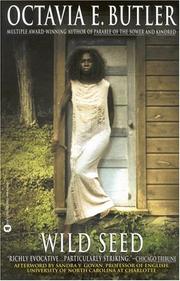
Octavia E. Butler’s "Wild Seed," released in 1980, remains one of the author’s most widely read novels decades after its release. It opens Butler’s five-book Patternist cycle, a five-book speculative fiction cycle, and continues to draw new readers and critical attention.
Butler, who died in 2006, is widely regarded as one of the first Black women to gain major recognition in American science fiction, a genre that offered her few peers when she began publishing in the 1970s. Her work is frequently cited within Afrofuturism, the broader cultural movement that uses speculative fiction, technology, and alternate histories to explore the experiences of the African diaspora and to imagine Black futures beyond the constraints of the present.
"Wild Seed" is addresses themes of gender, healing roles, and the experiences of Black women, reflecting the novel’s focus on characters navigating power, transformation, and survival across generations. Readers and reviewers have consistently described it as a character-driven work rather than a plot-heavy one, with its two central figures carrying the novel through sustained psychological and emotional depth. The book is the first in the five-volume Patternist series and has drawn an active readership on platforms like Goodreads, where it holds a strong average rating from tens of thousands of readers.
The novel has also found renewed life in reading groups and community discussions in recent years, often paired with other Afrofuturist or speculative work, a sign of Butler’s lasting pull on readers well outside the genre’s traditional audience.
Studio CarryOnHarry sees "Wild Seed" as a useful entry point for readers curious about Butler’s influence on contemporary speculative fiction, and worth a look for anyone building out an Afrofuturism reading list.
About the Author: An American science fiction writer, one of the best-known among the few African-American women in the field.
[Comment by Tricia Sullivan, on The Guardian][1]:
Octavia E Butler (1947–2006)
> I was teaching in New York when I came across Octavia E Butler’s Kindred in a secondary-school catalogue of novels recommended to support diversity. It caught my attention because Butler was described as a science-fiction writer. I thought I was familiar with science fiction, but I’d never heard of her – nor have a great many other readers, I suspect. For many years, Butler was the sole African-Ameri
Read more People’s Choice stories on Studio CarryOnHarry. Reporting via Live News Vault.
Are you an author with a new release? We’re always looking for books to cover and authors to interview — tell us about yours here.
Press Releases at Studio CarryOnHarry
Harry Johal — Entertainment Editor
Harry Johal is the Entertainment Editor at Studio CarryOnHarry, overseeing the newsroom's day-to-day coverage.
Related Posts
Audiences Are Rating ‘Spider-Man: Brand New Day’ and ‘Resident Evil’ Among 2026’s Hottest Films
Balle Balle Radio™ Entertainment Desk Two 2026 releases, "Resident Evil" and "Spider-Man: Brand New Day," are tied at the top…
How The Odyssey Pushed Nolan Into Cinema’s Billion-Dollar Elite
How The Odyssey Pushed Nolan Into Cinema's Billion-Dollar Elite Studio CarryOnHarry Entertainment Desk | 13 October 2026 The Odyssey Rewrites…
Hema Malini Turns 78: The Actress Who Played Twins and Won Only Once for It
Balle Balle Radio™ Entertainment Desk Hema Malini turns 78 on 16 October 2026, having been born on the same date…
Bollywood Loses a Titan: Patekar Dies, State Funeral Confirmed
Director Anees Bazmee breaks silence on Nana Patekar's death, calling it unbearable. Read the full story on India's cinema legend's…
CSIFF26 Showcases Diverse Caribbean Voices Through Six Nominated Films This October
Conch Shell International Film Festival returns to Queens October 9-11 with six Best Film nominees exploring Caribbean and diaspora filmmaking.
AFI Movie Club Celebrates Tod Browning’s ‘Dracula’ as a Landmark of Horror Cinema
AFI Movie Club spotlights Tod Browning's 1931 'Dracula' starring Bela Lugosi, the film that launched Universal's Monster franchise and defined…
-
 Books3 days ago
Former Wildlife Officer Rick Larnerd Blends Gasparilla Legend with Modern Florida Thriller in New Novel
-
 Books3 days ago
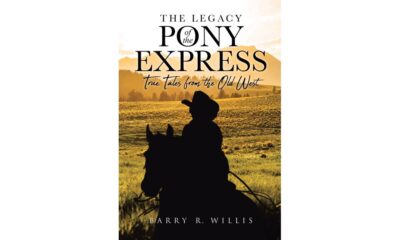
Barry R. Willis’s New Book Traces the Pony Express and Its Costs on the Frontier
-
 Books3 days ago
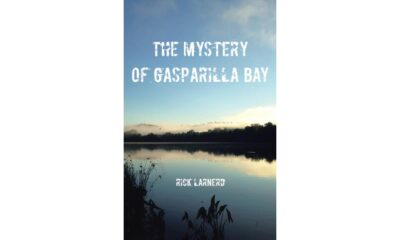
Former Game Warden Turns Three Decades of Conservation Work into Florida Crime Novel
-
 Books3 days ago
Former Wildlife Officer Rick Larnerd Blends Gasparilla Legend with Modern Florida Crime Fiction in New Novel
-
 Books4 days ago
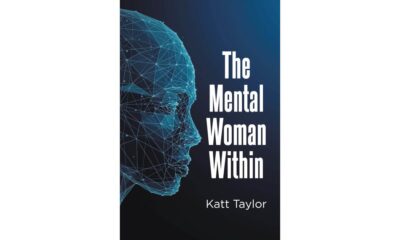
Katt Taylor’s New Novel Follows a Woman’s Fractured Spirit from Darkness to Awakening
-
 Books5 days ago
Fulton Books Author Abagail Lynn Releases Fantasy Adventure “The Rebel”