
Books
Triangle of Sadness: An American Marxist and a Russian Capitalist on a $250 m yacht


[ad_1]

Triangle of Sadness: An American Marxist and a Russian Capitalist on a $250 m yacht
As movies go, there are several advantages of being different. Genre films have been beaten to death and critics, not to mention discerning audiences, are dying to watch something different. There are those who are different by virtue of original ideas, while others are different for the sake of being different. Let’s begin with the title: in the first few minutes of the film, you are told that it is something that is formed with your two eyebrows as the base, going up to the top of your nose, and can be concealed within minutes with botox, so you don’t die wondering. Triangle of Sadness is not about the triangle of sadness, though it is about a lot of other things.
It is an art to have a large cast, get all of them due exposure, change tracks in the narrative ever so often, and yet manage to get a grip on the viewers. You would need to make a long film, and a long film it is: 147 minutes, no less. Since a large part of the film takes place on a luxury yacht, comparison’s will be drawn with Titanic. All the more because class conflict is at the core of almost all the conversations aboard the yacht, and even before we get on to the yacht. But the class divisions in Triangle of Sadness are more in-your-face, bringing in the American government as super-villain. It might also remind you about the Roman Emperor Nero. A queer kettle of fish (there is so much fish in the movie), it might need two viewings to fully decode. However, it was good enough to bag the Palme d’Or at Cannes last year.
The film begins with Carl auditioning for a model casting, with other male models. A TV anchor asks them whether they are auditioning for a grumpy brand or a smiley brand. He has not done much work. On the other hand, his girl-friend Yaya is much more established as a model, and she even opens the fashion show of a new brand, while her boyfriend Carl watches the show from a back-row seat. Afterwards, the couple goes out to dine at a fancy restaurant and has a rather ugly disagreement about who should pay the bill. To Carl, in a man-woman relationship, everything about gender roles should be equal, and he waits for Yaya to pick up the bill, especially since she had promised to do so the previous night. Yaya, however, seems to like the fact that her man would be ready to keep her needs covered, and she is more of a believer in the transactional nature of a relationship. Disgruntled by the dinner and the following taxi ride back to the hotel, the couple initially spends some time away from each other until Yaya finally returns to Carl’s room. The lovers seem to make up, and Carl makes a half-serious promise that he will make Yaya fall in real love with him some-day soon, beyond the transactional phase that they are in at present.

A few days later, Carl and Yaya take an all-expenses-paid luxury cruise trip on a $250 m yacht as part of her modelling/social media influencer job, and the couple makes acquaintances with the rest of the super-rich guests. They include Russians, British and Germans. The yacht’s captain is an eccentric man who refuses to come out of his cabin for days, insisting that he is not sick. But he has to come out to host the Captain’s dinner, which, he insists, must be held on Thursday, because a storm is predicted that day. As the glaring class divide and privileges that come along with it get more apparent, the luxury yacht sails through matters of social hierarchy and empty ideology. The Captain and a Russian guest indulge in a quote for quote game, on socialism, Marxism, capitalism, etc. To the guests’ misfortune, rough weather and a pirate attack follow in quick succession, leading to the yacht crashing in the middle of the sea. First, all of them throw-up by the gallon, and then the pirates target the yacht with a grenade made in the British billionaire guest’s factory. Carl and Yaya are among the lucky few to survive the blast as they wash up on a nearby island. Soon afterwards, the social class structure of the stranded group is toppled over completely. Abigail, a toilet cleaner, takes over as Captain, because she hunts the fish and cooks for every-body.
Written and directed by Ruben Östlund (English feature debut), Triangle of Sadness defies being classified into any genre. We can call it satire or black comedy, but these will be approximations. It also works in the multi-track genre, moving from one plot direction to another, within the same milieu. Savour this: A TV crew is interviewing male modelling hopefuls with the anchor passing judgements on aspects of modelling and male modelling every minute. Move on to the dinner at the restaurant and the follow-up at the hotel. Shift focus on to the yacht. Then introduce the staff and the guests, with each having a story to tell. Bring in a woman who, after an accident, can only speak three words. All this requires some writing. The only part I found really overdone was the community vomitting and overflowing toilets.
Östlund has done a very good piece of casting, so that when his actors are discussing issues or arguing or even making love, they look natural. Just when you start wondering whether Woody Harrelson was worth casting in this role, he comes into his own. It is a lavishly mounted film, with an endless list of producers, from these countries: Sweden, Germany, France, United Kingdom, Mexico, Denmark, Greece, Switzerland, United States and Turkey. He gives you no hint that the main cast is going to land-up on an island and that the film will have and open end. The lift scene easily comes to mind, as a no-decision zone. The lift doors open and close a dozen times. Carl and Yaya are making them open every time they close, but they are arguing and unable to resolve their differences. In the end, he is going to bring the lift into play again, but in a new mode. Very cleverly, he shifts Carl and Yaya aside, almost away from the camera, as the other players take centre-stage on the yacht.
Obviously British actor Harris Dickinson (Maleficent: Mistress of Evil-2019, The King’s Man-2021), as Carl is intense, sharp and uninhibited. Spare a tear for Charlbi Dean (Yaya), who died last August. The South African actress, who had acted in just eight films, had a wow figure and a bright future. Her scenes with Harris were palpable. Dolly Earnshaw de Leon as Abigail, with a giveaway Filipina accent, carries a host of emotions with ease. Vicki Berlin as Paula is perfect as the head of the service team. Woody Harrelson as the Captain gets to mouth probably the boldest indictment of the American government’s role in assassinations, creating unviable states, election rigging and coups. He impresses as the only man on board who remains unmoved in the midst of a storm and sewage overflow.
Cinematography by Fredrik Wenzel is up to the task, and as the yacht sways, it is his camera that does the trick. Carl and Yaya’s two-shots are very well composed. Editing his own work, Ruben Östlund gets a wee bit carried away, though Mikel Cee Karlsson was around to steady the yacht.
Music by Mikkel Maltha and Leslie Ming has a life of its own. I tried to match the notes with the scenes, but got nowhere. But when I heard it on its own, it was very impressive.
Rating: ***
Trailer: https://youtu.be/VDvfFIZQIuQ
[ad_2]
Press Update For Studio CarryOnHarry
Find Holiday Deals Flights Attractions and Hotels !
Get Interviewed

Save on Travel with Trip.com (ENG)
For Interviews At Studio CarryOnHarry Online Submission Form Click Here
Related Posts

Scottsdale Author Joe Reina’s New Novel Follows a Killer Who Gets Away With It
Balle Balle Radio™ Entertainment Desk Joe Reina has published a new novel, "Shadows over Scottsdale: An Unsolved Murder Mystery," built…
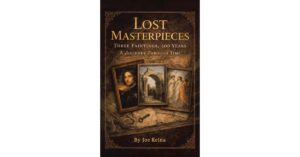
Joe Reina’s ‘Lost Masterpieces’ Imagines a Fictional Farewell Among Renaissance Painters
Balle Balle Radio™ Entertainment Desk Joe Reina has published a new novel, "Lost Masterpieces: Three Paintings, 500 Years A Journey…

Katt Taylor’s New Novel Follows a Woman’s Fractured Spirit from Darkness to Awakening
Balle Balle Radio™ Entertainment Desk Katt Taylor has released "The Mental Woman Within," a novel tracing the spiritual unraveling and…

New Children’s Book ‘Mocha, the Ground Fairy’ Follows a Guinea Pig Determined to Fly
Balle Balle Radio™ Entertainment Desk Dr. Leslie Merida-Gonzalez has published a new children's book, "Mocha, the Ground Fairy," through Fulton…

Fulton Books Author Abagail Lynn Releases Fantasy Adventure “The Rebel”
Balle Balle Radio™ Entertainment Desk Abagail Lynn has released a new novel, "The Rebel," a fantasy adventure centered on an…

Retired Sacramento Pulmonologist Pitches Self-Monitoring Alternative to Health-Care Bureaucracy in New Book
Balle Balle Radio™ Entertainment Desk Del Meyer, a Sacramento-based pulmonologist, has authored a book contending that the central challenge in…

Balle Balle Radio™ Entertainment Desk
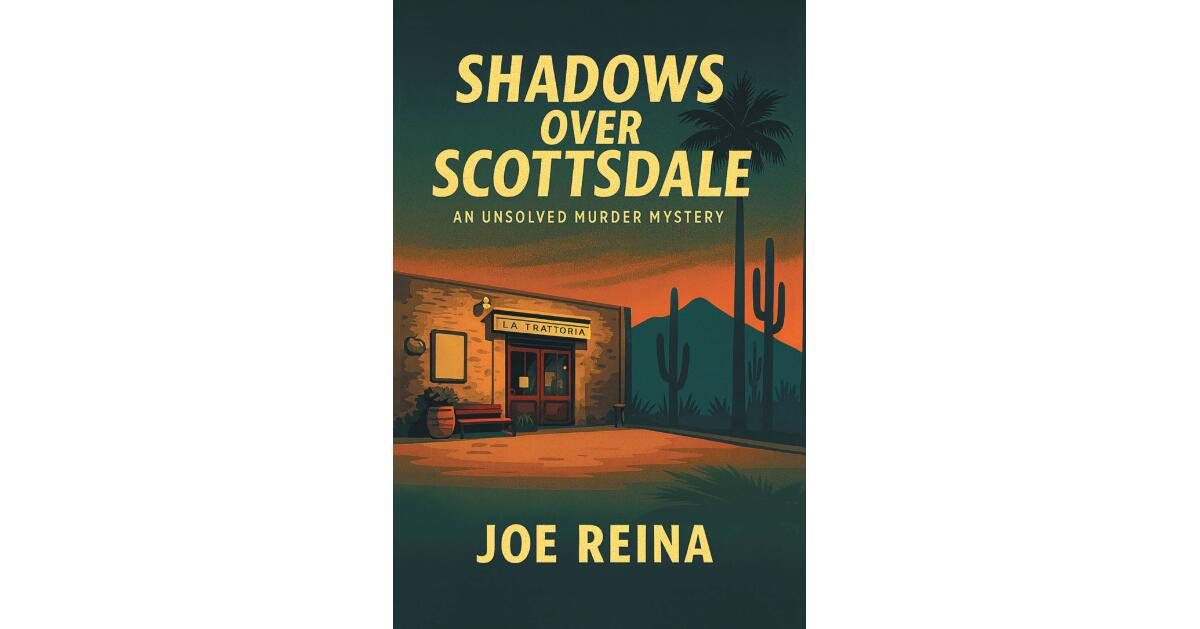
Joe Reina has published a new novel, "Shadows over Scottsdale: An Unsolved Murder Mystery," built around a scenario true-crime statistics make uncomfortably familiar: a man commits a devastating crime and simply disappears, leaving investigators and a grieving community with no resolution.
The book follows a character named Robert, who flees the country using forged documents and a cargo ship after an act of destruction that leaves behind, as the publisher describes it, charred remains and an unanswered investigation. The case goes cold. The novel, according to its publisher, is less concerned with the mechanics of the escape than with what happens afterward, to the people left waiting for answers that never come.
Reina, now retired in Scottsdale, spent decades in international business across apparel, footwear, and real estate, with extensive time in Europe and a particular connection to Italy that shaped two earlier books, "The Goat Sleeps in the Kitchen" and "A Love Affair in Tuscany." "Shadows over Scottsdale" marks a different direction, built instead around the real scale of unsolved homicide in the U.S. The publisher’s materials cite roughly 346,000 unsolved homicides since 1965, with more than a dozen occurring unresolved each day. Separate reporting on the book has cited a figure of about 7,778 murders in 2023 alone, which it similarly frames as more than a dozen a day going unresolved.
"Writing ‘Shadows over Scottsdale’ forced me to confront uncomfortable questions about justice itself," Reina said, according to the announcement. "Too many crimes go unsolved, too many families wait endlessly for answers. I wanted readers to understand that behind every cold case statistic is a real story, real suffering, and real questions that may never be answered."
The publisher positions the novel as an examination of institutional limits as much as a crime story: the toll of a case gone cold on the people who can’t move past it, and what it means for a community when accountability simply never arrives.
"Shadows over Scottsdale" is published by Covenant Books and is available in paperback and hardcover through the publisher’s website and major retailers including Amazon, Barnes & Noble, and Apple Books.
Cold-case statistics tend to get cited and then forgotten. Studio CarryOnHarry is curious whether fiction built directly around that number does more to stick with a reader than the number alone ever does.
Read more People’s Choice stories on Studio CarryOnHarry. Reporting via Live News Vault.
Are you an author with a new release? We’re always looking for books to cover and authors to interview — tell us about yours here.
Press Releases at Studio CarryOnHarry
Related Posts
Joe Reina’s ‘Lost Masterpieces’ Imagines a Fictional Farewell Among Renaissance Painters
Balle Balle Radio™ Entertainment Desk Joe Reina has published a new novel, "Lost Masterpieces: Three Paintings, 500 Years A Journey…
Katt Taylor’s New Novel Follows a Woman’s Fractured Spirit from Darkness to Awakening
Balle Balle Radio™ Entertainment Desk Katt Taylor has released "The Mental Woman Within," a novel tracing the spiritual unraveling and…
New Children’s Book ‘Mocha, the Ground Fairy’ Follows a Guinea Pig Determined to Fly
Balle Balle Radio™ Entertainment Desk Dr. Leslie Merida-Gonzalez has published a new children's book, "Mocha, the Ground Fairy," through Fulton…
Fulton Books Author Abagail Lynn Releases Fantasy Adventure “The Rebel”
Balle Balle Radio™ Entertainment Desk Abagail Lynn has released a new novel, "The Rebel," a fantasy adventure centered on an…
Retired Sacramento Pulmonologist Pitches Self-Monitoring Alternative to Health-Care Bureaucracy in New Book
Balle Balle Radio™ Entertainment Desk Del Meyer, a Sacramento-based pulmonologist, has authored a book contending that the central challenge in…
Anthony V. Pugliese Expands 2020 Horror Collection in New Edition of “All Things Truly Wicked”
Balle Balle Radio™ Entertainment Desk Anthony V. Pugliese has released a second edition of "All Things Truly Wicked," an expanded…

Balle Balle Radio™ Entertainment Desk
Joe Reina has published a new novel, "Lost Masterpieces: Three Paintings, 500 Years A Journey Through Time," built around an imagined scene from Renaissance history: the night before Leonardo da Vinci leaves for Milan, when three fellow painters each hand him a small work carrying a private message.
According to the announcement, those three gifts come from Sandro Botticelli, Titian, and Andrea Mantegna, each painting standing in for a different kind of counsel. Botticelli’s piece is described as layered with allegory and coded warnings about power and patronage. Titian’s is framed as warm and sensual, suggesting reinvention and a break from convention. Mantegna’s is austere and classically precise, encoding discipline and endurance. According to the announcement, these three paintings form a wordless exchange between masters, transmitting wisdom, mutual regard, and assurance across generations through visual means.
Reina comes to this material from outside the art world. His career was built in apparel, footwear, and real estate development in Chicago, and the publisher’s materials trace his interest in European history, and in Italy specifically, to years of international business travel. He has published several previous books, including "The Goat Sleeps in the Kitchen," "A Love Affair in Tuscany," and "Shadows over Scottsdale," before turning to this account of a fictionalized moment at the hinge of the Renaissance.
"I wanted to capture that extraordinary moment when masters speak to each other across time through their work," Reina said in the announcement. "These paintings represent not just gifts, but a conversation about what it means to pursue greatness while remaining grounded in purpose and principle."
The book is published through Covenant Books and is available in hardcover and paperback, as well as through Apple Books, Amazon, Google Play, and Barnes & Noble.
Studio CarryOnHarry is intrigued by novels that build fiction around real historical figures at a specific, dramatized turning point rather than attempting straight biography — the approach succeeds or fails based on how seamlessly the fictional moment integrates with documented historical fact.
Read more People’s Choice stories on Studio CarryOnHarry. Reporting via Live News Vault.
Are you an author with a new release? We’re always looking for books to cover and authors to interview — tell us about yours here.
Press Releases at Studio CarryOnHarry
Related Posts
Katt Taylor’s New Novel Follows a Woman’s Fractured Spirit from Darkness to Awakening
Balle Balle Radio™ Entertainment Desk Katt Taylor has released "The Mental Woman Within," a novel tracing the spiritual unraveling and…
New Children’s Book ‘Mocha, the Ground Fairy’ Follows a Guinea Pig Determined to Fly
Balle Balle Radio™ Entertainment Desk Dr. Leslie Merida-Gonzalez has published a new children's book, "Mocha, the Ground Fairy," through Fulton…
Fulton Books Author Abagail Lynn Releases Fantasy Adventure “The Rebel”
Balle Balle Radio™ Entertainment Desk Abagail Lynn has released a new novel, "The Rebel," a fantasy adventure centered on an…
Retired Sacramento Pulmonologist Pitches Self-Monitoring Alternative to Health-Care Bureaucracy in New Book
Balle Balle Radio™ Entertainment Desk Del Meyer, a Sacramento-based pulmonologist, has authored a book contending that the central challenge in…
Anthony V. Pugliese Expands 2020 Horror Collection in New Edition of “All Things Truly Wicked”
Balle Balle Radio™ Entertainment Desk Anthony V. Pugliese has released a second edition of "All Things Truly Wicked," an expanded…

STEERus Rolls Out Free Tool and Webinar on How AI Describes Small Businesses to Customers
Balle Balle Radio™ Entertainment Desk STEERus Inc. has launched a free online assessment called the Digital Signal Check, intended to…
-
 Books6 days ago
Suzanne Hobbs Follows Up Debut Children’s Book with “The Sleepy Snake,” a Bedtime Sequel to “The Hungry Snake”
-

 Books3 days ago
New Children’s Book Pairs Faith Themes With a Mystery About Fruit Jars and a Vanished Town
-

 Books5 days ago
Sonoma County Memoir “My Wine Country” Recounts Author Victor Sanchez Jr.’s Path Through Hardship
-

 Books4 days ago
Christian Faith Publishing Releases Daniel Kelsey’s “Hidden Treasures in Secret Places”
-

 Books6 days ago
New Book from Fifty-Year Accounting Veteran Charles Zeigler Jr. Aims to Demystify the Profession for Beginners
-

 Books4 days ago
New Children’s Book ‘Sally’s First Day of School’ Frames Bullying Through a Lens of Faith