
People's Choice
Between the Pages : A Review of Atomic Habits by James Clear


Atomic Habits: An Easy & Proven Way to Build Good Habits & Break Bad Ones is a popular book written by James Clear, which provides a comprehensive guide to improve one’s daily habits and achieve long-term success. In today’s fast-paced world, people often struggle to maintain good habits, and this book offers practical strategies to build good habits and break bad ones. At its core, Atomic Habits is about making small, incremental changes to one’s daily routines to achieve significant, long-term improvements. In this review, we will explore the key themes and takeaways from the book, providing insights into how readers can apply the lessons to their own lives. The book is divided into four parts that cover the basic principles of habit formation, the importance of small habits, the impact of environment on behavior, and the power of habits to shape one’s identity. The author uses real-life examples, scientific research, and personal anecdotes to explain how anyone can transform their habits and achieve their goals.
Chapter Summary:
The book is divided into four parts, each consisting of several chapters. Part One explains the basics of habit formation and introduces the concept of the “atomic habit,” which is a small and consistent habit that can have a significant impact on one’s life. Part Two focuses on the importance of small habits and how they can compound over time to create significant changes in behavior. Part Three explores the role of environment in shaping behavior and provides strategies to design an environment that supports good habits. Part Four discusses the power of habits to shape one’s identity and provides guidance on how to cultivate habits that align with one’s values and beliefs.
Key Points of the Book:
One of the key points of the book is the concept of the “habit loop,” which consists of a cue, a routine, and a reward. The author explains that understanding and manipulating this loop is crucial for building good habits and breaking bad ones. Another important point is the emphasis on small habits and the idea that consistent, incremental improvements can lead to significant long-term changes. The book also highlights the importance of designing an environment that supports good habits and creating a system of accountability to stay on track.
Takeaway Lessons for Reader:
The main takeaway from the book is that anyone can change their habits and achieve their goals by focusing on small, consistent improvements over time. The book provides practical strategies and actionable advice for building good habits and breaking bad ones. It also emphasizes the importance of self-awareness, self-reflection, and self-discipline in creating lasting change.
Relevance to Today’s Life:
The book is highly relevant to today’s life, as many people struggle with developing and maintaining good habits. The COVID-19 pandemic has also brought about significant changes in daily routines and has made it more challenging to establish and maintain healthy habits. Atomic Habits provides readers with a framework for creating positive changes in their lives, regardless of the circumstances.
Summary:
Atomic Habits by James Clear is a practical and actionable guide for building good habits and breaking bad ones. The book emphasizes the importance of small, consistent improvements and provides strategies for designing an environment that supports good habits. By understanding the habit loop and using the power of identity to shape behavior, readers can transform their habits and achieve their goals. The book is highly relevant to today’s life and provides valuable insights and strategies for creating lasting change.
Powered by SgAiSolution
Related Posts

Haivaan Isn’t Really an Akshay Kumar Film — And That’s the Problem
Balle Balle Radio™ Entertainment Desk Marketed around its biggest star, Haivaan quietly hands its story to Saif Ali Khan while…

Spirit Is Stuck in Rewrites — And Prabhas Is Running Out of Time to Prove He’s Still a Star
Balle Balle Radio™ Entertainment Desk Sandeep Reddy Vanga's Spirit has reportedly paused shooting over a weak interval scene, pushing the…

Drishyam 3: Can Ajay Devgn’s Franchise Survive Without Its Own Story?
Balle Balle Radio™ Entertainment Desk As Drishyam 3 heads toward its October 2 release with a new cast pairing of…

One Blockbuster, One Miracle, One Flop: What Toxic, Hanuman Anshakar and Mirzapur Reveal About India’s Box Office Logic
Balle Balle Radio™ Entertainment Desk A gritty streaming-style thriller with no mega-star, a two-crore devotional film that quietly crossed fifty,…

Ramayana’s Ravan Problem: When Marketing Outpaces Meaning
Balle Balle Radio™ Entertainment Desk A poster controversy around India's most expensive film has exposed a deeper tension between visual…

Gondhal Wins India’s Oscar Slot After Dhurandhar Garners Just 4 Jury Votes
Balle Balle Radio™ Entertainment Desk The Film Federation of India's 14-member jury gave Ranveer Singh's action drama "Dhurandhar" four votes…


Balle Balle Radio™ Entertainment Desk
The Film Federation of India’s 14-member jury gave Ranveer Singh’s action drama "Dhurandhar" four votes that selects the country’s official entry for the Academy Awards, according to jury member Vivek Vaswani. "Gondhal," a Marathi-language film, was selected over it.
Each year, the Film Federation of India assembles a jury to select one film as India’s official submission for the Best International Feature category at the Oscars. The selection has long drawn debate in the industry, since a jury vote often overrides box office performance or star power in choosing which film gets submitted.
Vaswani said according to reports, the jury determined that "Dhurandhar" failed to sufficiently satisfy the selection criteria for Oscar submissions, according to reports of his comments. The distribution of the remaining ten votes was not disclosed by Vaswani, and the Federation has not issued a separate public statement breaking down the jury’s full deliberations beyond what Vaswani has said.
"Dhurandhar" stars Ranveer Singh and has been one of the more talked-about Hindi releases of the year. "Gondhal" is a Marathi-language film that will now go forward as India’s official Oscar submission.
Studio CarryOnHarry will be watching whether the Federation releases a fuller account of the jury’s reasoning, since a single member’s explanation is not the same as an official breakdown of the vote.
Read more People’s Choice stories on Studio CarryOnHarry. Reporting via Live News Vault.
Press Releases at Studio CarryOnHarry
Powered by SgAiSolution
Related Posts

If it was good then why did Priyadarshan remake it, and if i
Balle Balle Radio™ Entertainment Desk“If it was good then why did Priyadarshan remake it, and if it was good then…
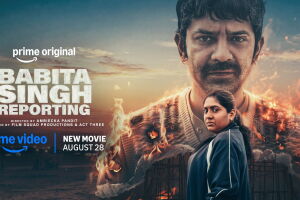
Prime Video India’s August-September slate: a cop drama, a reality reboot and a Carnatic music saga
Balle Balle Radio™ Entertainment Desk Prime Video India has laid out a run of new titles for late summer into…

The Bronze Medal That Marked India’s Arrival in World Esports
Balle Balle Radio™ Entertainment Desk Fifteen years ago, an Indian esports competitor using the handle HI_ISTLER achieved a podium finish…

Netflix UK Debuts Full ‘Twilight’ Franchise and ‘Dune: Part Two’ in Major Content Drop
Balle Balle Radio™ Entertainment Desk This week's Netflix UK refresh includes all five "Twilight" installments alongside Denis Villeneuve's "Dune: Part…

Ajay Devgn’s Crime Patrol Gamble: Star Power on a TV Budget
Balle Balle Radio™ Entertainment Desk A Bollywood A-lister fronting a long-running true-crime show has split opinion between those who see…

Bajpayee Transforms Into Gandhi in Sudhir Mishra’s Next
Bajpayee Transforms Into Gandhi in Sudhir Mishra's Next Studio CarryOnHarry Entertainment Desk | 6 September 2026 A Historic Casting Decision…

Balle Balle Radio™ Entertainment Desk
“If it was good then why did Priyadarshan remake it, and if it was good then why did he make it like this?” — Harry Johal
There’s a real question buried in these reviews that goes beyond bad filmmaking. When you remake your own film shot-for-shot, you’re not just being lazy — you’re saying something about how you view your audience. You’re betting they won’t notice, or won’t care, or won’t have access to the original. That’s contempt dressed up as commerce.
But what’s more interesting to me is what happened to Akshay Kumar’s choice here. Both reviewers agree his performance has moments, but he’s been relegated to a supporting role in his own film. That’s not a creative accident. That’s a structural collapse. You hire two of your biggest stars, you give one of them a blind character with all this potential — the sensory compensation, the daredevil physicality — and then you don’t actually use any of it. You just have him stand there and look intense.
The real failure isn’t that Haivaan is a bad remake. It’s that Priyadarshan didn’t remake anything. He copied. There’s a difference between honoring an original and duplicating it, and somewhere in that gap is where actual filmmaking happens. These reviewers watched a film that forgot to cross that gap.
Editor’s Thought Of The Moment — Harry Johal, Studio CarryOnHarry
Powered by SgAiSolution
Related Posts
Gondhal Wins India’s Oscar Slot After Dhurandhar Garners Just 4 Jury Votes
Balle Balle Radio™ Entertainment Desk The Film Federation of India's 14-member jury gave Ranveer Singh's action drama "Dhurandhar" four votes…
Prime Video India’s August-September slate: a cop drama, a reality reboot and a Carnatic music saga
Balle Balle Radio™ Entertainment Desk Prime Video India has laid out a run of new titles for late summer into…
The Bronze Medal That Marked India’s Arrival in World Esports
Balle Balle Radio™ Entertainment Desk Fifteen years ago, an Indian esports competitor using the handle HI_ISTLER achieved a podium finish…
Netflix UK Debuts Full ‘Twilight’ Franchise and ‘Dune: Part Two’ in Major Content Drop
Balle Balle Radio™ Entertainment Desk This week's Netflix UK refresh includes all five "Twilight" installments alongside Denis Villeneuve's "Dune: Part…
Ajay Devgn’s Crime Patrol Gamble: Star Power on a TV Budget
Balle Balle Radio™ Entertainment Desk A Bollywood A-lister fronting a long-running true-crime show has split opinion between those who see…
Bajpayee Transforms Into Gandhi in Sudhir Mishra’s Next
Bajpayee Transforms Into Gandhi in Sudhir Mishra's Next Studio CarryOnHarry Entertainment Desk | 6 September 2026 A Historic Casting Decision…
-

 Books6 days ago
Christopher Mirabile Sends Police Chief Silas Lopez Back to Cape Cod in “The Holdfast”
-

 Authors and Artists4 days ago
Dr. Zee Publishing Adds Ten Titles to Its Children’s Book Universe, Anchored by a Recurring Cast
-

 Books5 days ago
Former Army Officer Steven Finch Debuts Four-Book Mercenary Thriller Series
-

 Books5 days ago
Final Chapter: Garphil Bowles Completes Crime Trilogy with ‘Tears Of A Goon’
-

 Books5 days ago
New Book Frames Author’s Experience of Schizophrenia as a Spiritual Awakening
-
 Editor's Choice2 days ago
Prime Video India’s August-September slate: a cop drama, a reality reboot and a Carnatic music saga