
Interviews
Book Talks with Author Lewis Crow | New Book Release The Lone Captain


Studio Carry On Harry [ Interviews with Authors ] Book Talks with Author Lewis Crow. Occasion being his New Book Release “The Lone Captain‘” . Today in this interview session he is about to introduce his book to us and shares his experience as an author. He is also going to share his writing process and will share some tips for new authors .
About You and Your background ?
I grew up as an only child who was blessed with a vivid imagination. Television was a large influence on me, and I used to make up stories for my stuffed animals and action figures. For as long as I can remember I have been fascinated with ships. I built scores of ship models and insatiably researched the histories of famous and not-so-famous vessels as well as the wars in which they fought. As the son of a World War II veteran, that conflict held special interest for me.
How much does your life influences your story telling and the characters that you bring to life ?
My life has been fairly ordinary, so it doesn’t offer me much to draw from. It’s the movies, TV shows, and books which have fired my imagination that influence my storytelling far more than the events of life: the pure adventure of Star Wars and Twenty Thousand Leagues Under the Sea; the ensemble characters of the Star Trek franchise; the intricate plots of the Mission: Impossible TV series; the striking visuals and not-so-happy endings of Miami Vice; the compelling plotting and wild stories of Clive Cussler. All these have shaped my plots and characters.
Title Of Your New Release
The Lone Captain
What is the central theme of book ?
Probably something like, living your destiny can come with great rewards—and great costs.
Where did the idea came from ? How much did you tweak it ? Your Initial planning and analysis of final stuff ?
 The Lone Captain, the sequel to The Nautilus Legacy, is Book 2 of The Nemo Chronicles Trilogy. The idea came from my desire to see the story of Jules Verne’s Captain Nemo and his wonderful submarine Nautilus continue. After plotting out a timeline that harmonized with the one in Verne’s two Nemo novels (Twenty Thousand Leagues Under the Sea and Mysterious Island) and was true to the world he made, I created a way for the submarine to be resurrected by Nemo’s son. New voyage and adventure ideas followed as I researched the history of that era and the topography of the oceans. Looking back now, nearly 30 years after writing the first draft, I see that I only had to make minor revisions to the story. The final version turned out to be a stronger version of what I began with, but the basic story remained unchanged.
How much are you playing in the book as one of your characters ? Do you ever hide behind shades of your characters ?
Certainly there are some aspects of my Nemo that are reflective of my own personality—intelligence, imagination, sense of family, and strong belief in his principles. Just as a child contains elements of both parents, this character is a fusion of his parents—Verne’s Nemo and me. I don’t normally hide myself in what I write. I prefer to let characters just naturally take on aspects of my makeup when needed.
what is difficult to write Goodness Of Character / Evil Intentions. What do you enjoy most out of developing them ?
Since most people are a mixture of good and bad, I think evil intentions are the most challenging to write. The reasons they are evil must be believable, and that’s hard to do convincingly. Otherwise, you end up with one-dimensional caricatures. Many actors have stated that it’s more fun to play evil characters, and I do get a certain kick out of putting a real “bad guy” into the story now and then. Perhaps most challenging is when the evil is something inside the “good” protagonist himself. That’s a notion I’m working on in another story I’m in the process of revising.
Do you structure the flow of story in beginning itself or you improvise ? In your idea what is good to have before you hit a road block ?
I definitely try to structure the story in advance while still allowing some room for spur-of-the-moment ideas to come up as I’m writing. A written outline is wonderful to have for reference. The best thing to have before hitting a roadblock? From experience I would say a bank of extra plot ideas or story arcs. It’s always better to write more than you need, as opposed to scrambling to come up with enough ideas to fill the book.
How many books have you written and how different is new book ? Difference is in which specific area ?
The Lone Captain is my second published book. It is a continuation of the first, but whereas the first was largely an “origin story” if you will, this one is a full slate of adventures with the core characters already introduced and fleshed out. It’s where things really hit their stride. I initially toyed with the idea of making them one long book, but as I wrote there seemed to be a natural stopping point between the two.
Which Character do you like most and why . Any real life inspiration ? Do you ever wish to meet this character in real life ?
My favorite character in The Lone Captain is Eileen Meagher. She is alluring and mysterious, and I think I fell in love with her when I wrote the story. I based her appearance on British singer Kate Bush—her mane of dark hair, her big eyes and milky complexion. I would love to have met her at some point in my life, but nowadays my wife would doubtless take a dim view of such an idea!
Why will you recommend this book to readers ?
It has several points of appeal—part adventure, part history lesson, part undersea travelogue, part science education, part Victorian love story. I’d like to think fans of Jules Verne-style stories would welcome it.
How do you deal with Negative Feedbacks ? How do you stay balanced with Positive Feed back ?
 Negative feedback always stings. I’ve never handled criticism well, and I tend to take it personally. I’m trying to remind myself that not every story is for every reader, just as not every type of music is for every music fan. Each thing (hopefully) finds its audience. Someone once said if you don’t believe the bad reviews, you shouldn’t believe the good ones, either. Mainly I just try to be true to my vision for the story and please myself.
Have you already started working on next book ? What is on your mind for it ?
I’m currently working on two things: a light science fiction novella about a writer in an emotional crisis and the third/final volume of The Nemo Chronicles.
Any good tips you would like to share for new aspiring authors apart from saying just start the book ?
Learn how to mercilessly edit your own stuff. The more surgery you can do by yourself, the less it will hurt when someone else does it.
How did you hear about CarryOnHarry ? Any message for Studio ? Any Suggestion that we can make it better ?
I saw a posting in a book promotion Facebook group. I hope this interview meets your requirements. Thank you for the opportunity to participate.
Amazon / Book Purchase Link
Your Official Website
https://lrcrow.wixsite.com/nemo
Facebook Handle
https://www.facebook.com/lewis.crow.792
Related Posts
Long Beach Actor Ray Buffer Plays Villain in Sci-Fi Western Short at New Local Film Festival
Long Beach character actor Ray Buffer takes on a villain role in "The Lord of All Future Space and Time,"…

Tagore Almeida discusses the deeply personal journey behind SALIGIA
SALIGIA: Tagore Almeida on the Seven Deadly Sins, the Virtues Within Us, and the War We Fight Inside In conversation…

Netflix Groups Book Adaptations Under New ‘Watch Your Favorite Books’ Collection
Balle Balle Radio Entertainment Desk Netflix has organized its book-to-screen adaptations into a new curated genre called Watch Your Favorite…

Clean, Plant‑Iron Meals for Energy, Recovery, and Everyday Vitality
Meal: Chickpeas + Red Peppers Why It Works: Chickpeas provide plant‑based iron, protein, and fibre. Red peppers add vitamin C,…

Featured Set — The Knitted Pod Trio
Three forms, one language. Each pod — Cylinder, Gathered, and Rib‑Top — is hand‑knitted in Coventry with pure yarn and…

Knitted in Coventry City Studio, United Kingdom
In my Coventry City studio, each piece is hand‑knitted with a sculptural, tactile language that feels both familiar and unexpected.…

Interviews
Long Beach Actor Ray Buffer Plays Villain in Sci-Fi Western Short at New Local Film Festival
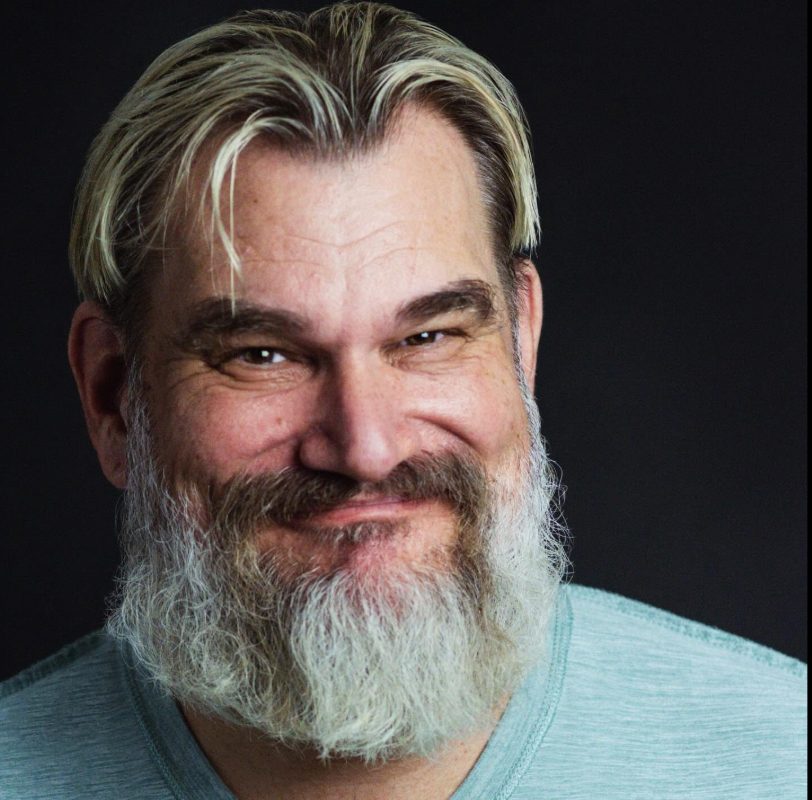
Long Beach character actor Ray Buffer takes on a villain role in "The Lord of All Future Space and Time," a sci-fi western short screening as part of the inaugural Long Beach Film Festival, according to the announcement.
The festival marks the first edition of a new event on the city’s cultural calendar, running August 28 and 29 at the historic Art Theatre in Long Beach’s Retro Row district, according to festival promotion. The short screens Saturday, August 29, at noon, according to the announcement and other festival listings.
Buffer is a Long Beach-based character actor whose work spans decades, with a resume that includes western villains, mobsters and more nuanced parts in historical docudramas, according to background material on his career. He’s described as known for a commanding presence and a deep voice, traits that line up with the villain role he plays in this short. His social media has also referenced involvement in a separate sci-fi animated short tied to the festival’s opening, though it’s not clear from available material whether that refers to the same project or a different one screening the same weekend.
No director, cast list beyond Buffer, or plot synopsis for "The Lord of All Future Space and Time" was included in the announcement. Ticket and program details for the full festival lineup were not specified in the material provided.
Related Posts
Tagore Almeida discusses the deeply personal journey behind SALIGIA
SALIGIA: Tagore Almeida on the Seven Deadly Sins, the Virtues Within Us, and the War We Fight Inside In conversation…
Netflix Groups Book Adaptations Under New ‘Watch Your Favorite Books’ Collection
Balle Balle Radio Entertainment Desk Netflix has organized its book-to-screen adaptations into a new curated genre called Watch Your Favorite…
Clean, Plant‑Iron Meals for Energy, Recovery, and Everyday Vitality
Meal: Chickpeas + Red Peppers Why It Works: Chickpeas provide plant‑based iron, protein, and fibre. Red peppers add vitamin C,…
Featured Set — The Knitted Pod Trio
Three forms, one language. Each pod — Cylinder, Gathered, and Rib‑Top — is hand‑knitted in Coventry with pure yarn and…
Knitted in Coventry City Studio, United Kingdom
In my Coventry City studio, each piece is hand‑knitted with a sculptural, tactile language that feels both familiar and unexpected.…

How Self-Interviews Boost Book Sales and Author Brand
How Self-Interviews Boost Book Sales and Author Brand Most authors struggle to get their books noticed in today's crowded…

SALIGIA: Tagore Almeida on the Seven Deadly Sins, the Virtues Within Us, and the War We Fight Inside
In conversation with Studio CarryOnHarry, author Tagore Almeida discusses the deeply personal journey behind SALIGIA, a mythological fantasy that turns an ancient framework of vice into an exploration of courage, compassion, humility, integrity, forgiveness, reverence and love.
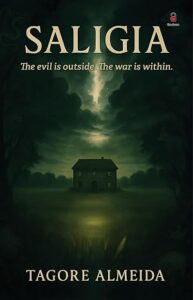 For centuries, the seven deadly sins have provided a vocabulary for examining human weakness. Pride, envy, anger, greed, lust, excess and apathy have appeared across religious teaching, philosophy and culture in different forms.
But what happens when we stop asking only what is wrong with us—and begin asking what already exists within us to confront those weaknesses?
That question sits at the heart of SALIGIA.
Drawing upon an ancient Latin mnemonic traditionally associated with the seven deadly sins, author and filmmaker Tagore Almeida turns the familiar structure on its head. Instead of building his story solely around human failings, he constructs a symbolic world around seven countervailing virtues: courage, compassion, humility, integrity, forgiveness, reverence and love.
For Almeida, the idea is also deeply personal. Born Catholic in Goa before life took him through Britain, the Middle East and Asia, his encounters with different cultures, beliefs and people gradually led him to question whether the behaviours traditionally described as “sins” belong to any one religion at all—or simply to humanity.
In this conversation with Studio CarryOnHarry, Almeida talks about the origins of SALIGIA, why a house became central to its mythology, how the external and internal battles of the story intersect, and why he ultimately came to believe that virtue may be less about becoming someone new than remembering something already within us.
Studio CarryOnHarry: SALIGIA takes its title from a Latin mnemonic traditionally associated with the seven deadly sins, yet your novel uses that framework to explore virtue. What drew you personally to this piece of theological history?
Tagore Almeida: What fascinated me about SALIGIA was never really the religious label attached to it. It was the humanity hiding underneath.
Harry, I was born Catholic in Goa, so the idea of the seven deadly sins was part of the landscape I grew up with. Over time, I became disillusioned with certain aspects of organised religion, but Catholicism remained part of my cultural and emotional foundation. So SALIGIA was familiar territory.
Then life took me elsewhere—Britain, the Middle East, Asia—and I found myself genuinely connecting with people of many different faiths, and with people of no faith at all.
I became curious. Were these so-called “deadly sins” uniquely Christian ideas, or were they simply human behaviours that religions had given different names to?
The more I looked, the more I realised that pride, envy, anger, greed, lust, excess and apathy appear in one form or another almost everywhere—sometimes through religion, sometimes through philosophy, and sometimes simply through culture and family. Apparently, humanity has been remarkably consistent in its weaknesses.
But eventually a more interesting question occurred to me. Instead of continually asking, “What is wrong with us?” I began wondering, “What already exists within us that can confront what is wrong?”
That changed the book completely.
I have always been fascinated by the invisible parts of human beings—compassion, courage, kindness. Whether I am writing fiction, making a film, recording a podcast or attempting poetry, I seem to arrive, rather annoyingly, at the same question:
Who are we when nobody is watching?
SALIGIA gave me an ancient framework within which to explore that. The sins gave me the architecture. The virtues gave me a reason to walk inside.
Studio CarryOnHarry: That architecture becomes quite literal in the book: an ancestral dwelling with rooms representing courage, compassion, humility, integrity, forgiveness, reverence and love. Why did a house become the setting for this inversion?
Tagore Almeida: A house felt natural because a house is never just architecture. It holds memory. It holds the things we proudly display in the sitting room and the things we quietly push into cupboards and hope nobody ever opens.
Human beings are rather like that. We all have rooms we happily invite people into, and other rooms we avoid ourselves.
When I began shaping SALIGIA, I also made a conscious decision not to fill the story with identifiable human characters. The moment you give someone a face, name, nationality or religion, readers naturally begin placing them into categories.
I wanted to remove those distractions as much as possible. I wanted the reader to encounter the ideas before encountering identity. So the house became the character.
Once that happened, the inversion became quite natural. Instead of seven compartments representing human failure, I imagined seven spaces representing what might stand against those failures: courage, compassion, humility, integrity, forgiveness, reverence and love.
The house also allowed me to explore virtue without turning the book into a seventy-five-page sermon. Nobody really wants that. I certainly wouldn’t.
I wanted readers to move through something rather than simply be told something—to open doors, enter rooms and discover what has been forgotten, neglected, protected or perhaps left waiting quietly in the dark.
In many ways, the house became a metaphor for the self.
We spend an extraordinary amount of our lives searching outside ourselves for answers—in success, possessions, religion, status, technology, relationships, recognition and approval.
We keep renovating the outside of the house.
SALIGIA quietly asks a different question: What if some of the rooms we have spent our whole lives searching for were already inside us?
Perhaps courage, compassion, humility and love are not things we need to acquire. Perhaps they are rooms we simply need to reopen.
Studio CarryOnHarry: That leads to one of the book’s central ideas—that these virtues may already exist within us. Why was that important to you?
Tagore Almeida: Because I am simply not convinced that human beings arrive as empty vessels waiting to be filled with goodness. Harry, I think we already arrive with quite a lot of it.
Look at children. Before the world starts handing them labels, they share, care and comfort one another. They are curious about animals, fascinated by nature and capable of affection without first asking what religion, race, nationality or social class somebody belongs to.
That, to me, is humanity in a fairly pure form. Then life begins adding layers.
Religion, race, politics, family, community, fear, ambition, prejudice, success—all of these begin shaping us, sometimes obviously and sometimes so quietly that we barely notice.
Watch a child comfort another child who is crying. There is no philosophy involved. No scripture. No management seminar on empathy. Something instinctive simply responds.
Perhaps life then complicates us. We accumulate ambition, fear, disappointment, comparison, possessions, prejudice, success and, if we are especially fortunate, an impressive job title to put on LinkedIn.
Somewhere along the way, we become very sophisticated at forgetting very simple things.
SALIGIA was never intended to say, “Here are seven virtues you need to acquire.” That sounded suspiciously like homework.
Instead, the book asks something gentler, but perhaps more uncomfortable:
What if you already possess them?
And if courage, compassion, humility, integrity, forgiveness, reverence and love are already somewhere within us, the real question is no longer how we acquire them.
The question becomes why, sometimes, we choose not to use them.
Studio CarryOnHarry: The subtitle draws a distinction between an external evil and an internal war. How do those two journeys intersect for Salem and Medea?
Tagore Almeida: The external journey gives the story movement. The internal journey gives it meaning.
Think of something ordinary. You hear that someone you know has spoken badly about you behind your back. That moment happens outside you. The person may move on with their day, forget about it entirely and go on to lunch.
But the hurt stays with you.
You replay it. You question the relationship. You feel anger, disappointment, perhaps even the temptation to retaliate.
The act happened outside. The battle began within.
That is very much the tension at the heart of SALIGIA.
Salem and Medea move through a world where danger appears to exist around them, so naturally they respond to what they can see. That is how most of us live. We identify the problem as the difficult person, unfair circumstance, hostile environment, institution, stranger or enemy.
Sometimes we are absolutely right. There is real cruelty, injustice and darkness in the world.
But what happens outside us also has a way of revealing what exists inside us.
Fear reveals courage. Cruelty tests compassion. Power tests humility. Betrayal tests forgiveness. Temptation tests integrity.
Once you begin looking at life that way, the outward journey and inward journey start reflecting one another.
That is really where the subtitle came from:
The evil is outside. The war is within.
We cannot control every act of cruelty, betrayal, injustice or temptation that enters our lives. But we do have some responsibility for what those experiences turn us into.
For me, that is a far more interesting battle than simply defeating a villain.
Studio CarryOnHarry: SALIGIA brings mythology, spirituality, philosophy and fantasy together. How did you prevent those elements from competing with one another?
Tagore Almeida: Very slowly.
SALIGIA first began forming in my mind sometime in the early 2010s, so it lived with me for many years before becoming a finished book. Perhaps that helped.
I never wanted to force it into existence simply because writers are apparently expected to finish things on schedule. Life, rather inconsiderately, kept happening.
I made films, went to Cannes, changed countries, built a career, raised a family, wrote other things, recorded conversations and experimented with music—and somewhere in the background, SALIGIA kept waiting.
Moving between different creative forms taught me quite a lot about how to write it.
Film teaches you that sometimes an image should do the talking. Music teaches you that silence is also part of the composition. Podcasting teaches you that people often become most interesting when you stop trying to make them sound interesting.
And writing, I discovered, requires the discipline to know when to explain and when simply to leave the door open.
Whenever the philosophy became too loud, I returned to the story. Whenever the fantasy began feeling merely decorative, I asked myself what that scene was actually saying about being human. And whenever the spiritual dimension sounded too certain, I deliberately returned to questions.
I am far more comfortable with spirituality that invites reflection than spirituality that claims to have completed the examination and obtained all the answers.
I did not want mythology to become a costume for philosophy, and I did not want philosophy to interrupt the adventure.
Ideally, one had to quietly carry the other.
The mythology builds the world. The story takes you through it. And the questions, hopefully, are what remain with you after the final page.
Studio CarryOnHarry: Spending years writing about seven vices and their opposing virtues must inevitably turn some of that examination back on the writer. Did SALIGIA change you?
Tagore Almeida: Absolutely.
Rather inconveniently, the reflection revealed how wonderfully unfinished I still am.
The danger of writing about virtue is that, at some point, the manuscript starts interviewing the author.
You write about humility, and suddenly your own ego clears its throat. You write about forgiveness, and a few names from the past appear uninvited. You write about compassion, and you have to ask whether your compassion really extends to everyone—or only to people who behave in ways you approve of.
That was probably the most personal part of writing SALIGIA. I began with ideas about vice and virtue, but eventually those ideas became mirrors.
Courage changed for me quite significantly.
We often imagine courage as something grand and cinematic—standing against armies, confronting monsters, making enormous sacrifices.
But I have come to think that some of the bravest things we do are much quieter.
Sometimes courage is admitting you were wrong. Sometimes it is apologising first. Sometimes it is asking for help. Sometimes it is refusing to become bitter.
And sometimes it is continuing to be kind when life has given you perfectly reasonable evidence that kindness may not always offer the best return on investment. That last one is particularly challenging.
But I should make one thing very clear: SALIGIA did not leave me believing that I had somehow mastered courage, humility, compassion, forgiveness or any of the virtues in the book.
Quite the opposite.
It made me realise that virtue is not something we achieve, frame and hang on the wall.
It is something we choose. Again and again.
Some days we choose rather well. Other days, spectacularly badly.
Perhaps that is part of being human. We are all works in progress, occasionally pretending to be finished products.
And tomorrow gives us another chance to do a little better.
Studio CarryOnHarry: When readers reach the final page, what do you hope they carry away from SALIGIA?
Tagore Almeida: I hope it feels quiet.
Not triumphant. Not like someone has just handed the reader seven rules for becoming a better human being.
I would much rather they close the final page, sit for a moment, and recognise something familiar inside themselves.
Maybe they remember a time when they were courageous without ever calling it courage.
Perhaps they forgave someone when anger would have been easier. Perhaps they helped a stranger and never told anyone. Perhaps they remained kind after life had given them every reason not to be.
That kind of recognition matters to me because we live in a world constantly telling us that we are incomplete.
We need more success. More money. More followers. More knowledge. More possessions. More certainty.
Apparently, somewhere out there is the final missing piece that will make us whole.
SALIGIA quietly suggests something almost unfashionable:
What if something valuable is already there?
What if, beneath the ambition, disappointment, fear, labels, noise and everything else life has placed around us, there is still a decent human being trying to remember the way home?
I do not want a reader to finish SALIGIA thinking, “Now I understand virtue.”
I would much rather they think:
“I remember that part of myself.”
Perhaps even:
“I still have that within me.”
If one reader reaches that moment, then the book has done what I hoped it would do.
Not teach them how to become good.
Simply remind them that some goodness was there all along.
Closing Note
There is an interesting contradiction at the centre of SALIGIA. Its vocabulary begins with sin, but its destination is not condemnation. It is remembrance.
Across this conversation, Tagore Almeida repeatedly returns to the idea that the most important human qualities may not be trophies to be earned or lessons to be imposed from outside. Courage can appear in an apology. Compassion can exist without doctrine. Forgiveness can happen without an audience. Integrity can be tested in moments nobody else will ever see.
Perhaps that is why the image of the house is so effective.
We spend much of our lives, as Almeida puts it, “renovating the outside”—pursuing achievement, recognition, certainty and approval. SALIGIA turns the reader towards the rooms within.
And its question is ultimately simpler than its mythology:
What if becoming better is sometimes less about finding something new—and more about remembering what we already carry?
— Studio CarryOnHarry
Related Posts
Long Beach Actor Ray Buffer Plays Villain in Sci-Fi Western Short at New Local Film Festival
Long Beach character actor Ray Buffer takes on a villain role in "The Lord of All Future Space and Time,"…
Netflix Groups Book Adaptations Under New ‘Watch Your Favorite Books’ Collection
Balle Balle Radio Entertainment Desk Netflix has organized its book-to-screen adaptations into a new curated genre called Watch Your Favorite…
Clean, Plant‑Iron Meals for Energy, Recovery, and Everyday Vitality
Meal: Chickpeas + Red Peppers Why It Works: Chickpeas provide plant‑based iron, protein, and fibre. Red peppers add vitamin C,…
Featured Set — The Knitted Pod Trio
Three forms, one language. Each pod — Cylinder, Gathered, and Rib‑Top — is hand‑knitted in Coventry with pure yarn and…
Knitted in Coventry City Studio, United Kingdom
In my Coventry City studio, each piece is hand‑knitted with a sculptural, tactile language that feels both familiar and unexpected.…
How Self-Interviews Boost Book Sales and Author Brand
How Self-Interviews Boost Book Sales and Author Brand Most authors struggle to get their books noticed in today's crowded…
-
 Books3 days ago
Former Wildlife Officer Rick Larnerd Blends Gasparilla Legend with Modern Florida Thriller in New Novel
-
 Books3 days ago
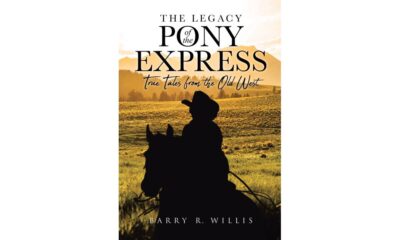
Barry R. Willis’s New Book Traces the Pony Express and Its Costs on the Frontier
-
 Books6 days ago
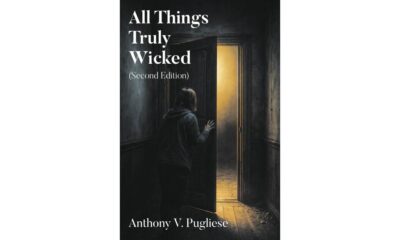
Anthony V. Pugliese Expands 2020 Horror Collection in New Edition of “All Things Truly Wicked”
-
 Books3 days ago
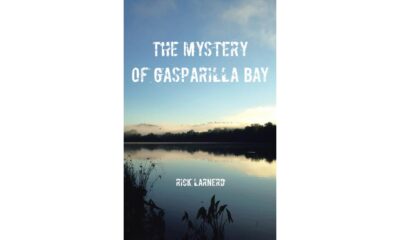
Former Game Warden Turns Three Decades of Conservation Work into Florida Crime Novel
-
 Books4 days ago
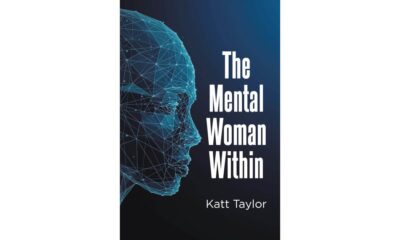
Katt Taylor’s New Novel Follows a Woman’s Fractured Spirit from Darkness to Awakening
-
 Books2 days ago
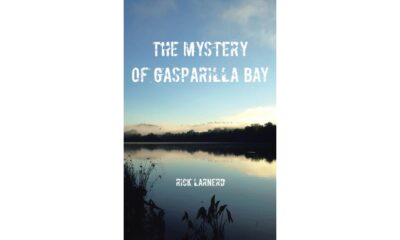
Former Wildlife Officer Rick Larnerd Blends Gasparilla Legend with Modern Florida Crime Fiction in New Novel