Connect with us

People's Choice

Author Fred Litwin’s New Book Claims to Debunk Oliver Stone’s JFK Conspiracy Theories

Harry Johal

Published

on

Author Fred Litwin’s New Book Claims to Debunk Oliver Stone’s JFK Conspiracy Theories


Press Release


Jan 30, 2023

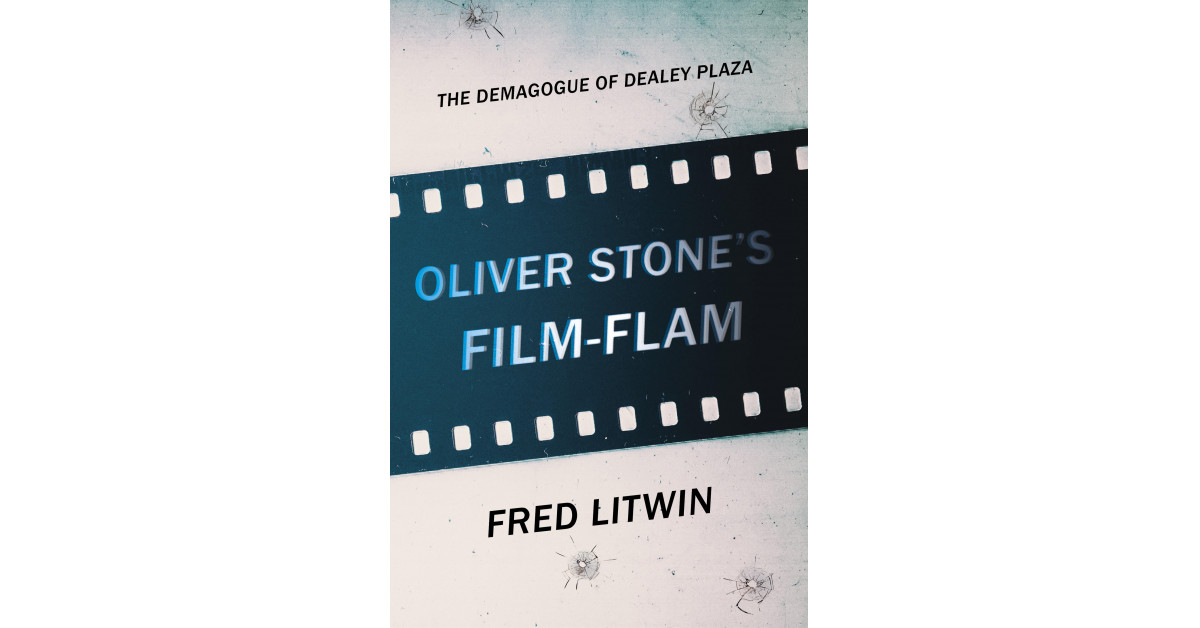
In his timely and powerful new book, Oliver Stone’s Film-Flam: The Demagogue of Dealey Plaza, author Fred Litwin debunks the major allegations in JFK: Destiny Betrayed — Oliver Stone’s 2021 documentary series on the JFK assassination.

Litwin’s book examines: 

  • The formation of the Warren Commission. 
  • The relationship between JFK and the CIA. 
  • Why Jack Ruby killed Oswald.
  • How the medical evidence supports a lone gunman. 
  • The role of imperfect memory in witness testimony. 
  • A refutation of a possible alibi for Lee Harvey Oswald. 
  • The chain of custody of CE 399 – the bullet found at Parkland Hospital.
  • The insidious claim that JFK’s physician, Dr. George Burkley, participated in a cover-up.
  • Spurious allegations about General Curtis LeMay. 
  • Supposed plots against JFK in Chicago and Tampa. 
  • The homophobic persecution of Clay Shaw by Jim Garrison. 

Oliver Stone’s Film-Flam is extensively sourced and contains over 600 links to the internet (in the Kindle version), as well as excerpts from many JFK assassination documents.

“This book shows how Oliver Stone gets it wrong and how the evidence just doesn’t support his allegations,” said Fred Litwin. “A lot of the film’s material is surprisingly easy to debunk. Viewers of this documentary series deserve to know the truth.”

Litwin’s book will interest historians and film critics, fans of President Kennedy, and anyone interested in the debunking of conspiracy theories. It will certainly become a necessary addition to any JFK library.

Oliver Stone’s Film-Flam, ISBN: 978-0-9948630-6-5, 2023, NorthernBlues Books, 496 Pages, Paperback $17.99, eBook $7.99; Available on Amazon, Kindle, iTunes, KOBO and the author’s website: http://www.OnTheTrailofDelusion.com

About Fred Litwin: Fred is the author of four books and has written articles for the National Post, the Ottawa Citizen, and the Toronto Sun, among others. His 2020 book, On the Trail of Delusion – Jim Garrison: The Great Accuser exposed the fraudulent prosecution of Clay Shaw for conspiring to murder JFK.

Source: Fred Litwin, author



Press Update For Studio CarryOnHarry

Find Holiday Deals Flights Attractions and Hotels !


Booking.com

Get Interviewed

Trulli

For Interviews At Studio CarryOnHarry Online Submission Form Click Here

Continue Reading
Click to comment

Leave a Reply

Your email address will not be published. Required fields are marked *

Editor's Choice

Inside Bollywood’s Silence: The Real Reason Dhurandhar Isn’t Being Celebrated

H Johal

Published

on

By

Inside Bollywood’s Silence: The Real Reason Dhurandhar Isn’t Being Celebrated


In a season where Bollywood films are loudly pushed, praised, and plastered across every digital corner, the curious silence surrounding Dhurandhar has raised more questions than answers. Social media has been buzzing with talk of nepotism, PR politics, and manipulated corporate bookings. But industry insiders tell a very different story—one that has less to do with individuals, and everything to do with genre power, studio territory, and the fragile ego structure of Bollywood’s biggest players.


At the heart of the storm lies a simple fact: Dhurandhar is a spy thriller. Not just any thriller—the genre Bollywood unofficially considers the exclusive territory of Yash Raj Films. For over a decade, YRF has aggressively built its “Spy Universe,” treating it like a cinematic fortress. The studio’s identity, revenue expectations, and long-term franchise planning are deeply tied to the success of this genre. So when War 2—their highly anticipated blockbuster—released earlier this year and struggled at the box office, it didn’t just bruise egos; it shook the foundation of the Spy Universe itself.


Against this backdrop, the arrival of Dhurandhar became a complication no one at YRF wanted. Insiders insist the silence around it isn’t about actor rivalries or PR games. It’s far more strategic. Publicly celebrating another studio’s spy thriller—especially one gaining genuine praise—would inevitably weaken the narrative YRF is trying to rebuild with its upcoming film Alpha. Acknowledging Dhurandhar would mean accepting a new, strong competitor in the very space YRF claims as its own.


There’s also the added complexity of personalities. Industry veterans quietly acknowledge the friction between “Gangu” and certain YRF loyalists. Some believe that any hype around Dhurandhar will reflect indirectly on Ranveer Singh, an actor who has been caught in the crosshairs of shifting alliances and subtle jabs from prominent names. Even recent comments by Filmfare’s Jitesh Pillai, insiders say, were not random—they were part of the larger mood within the establishment.


What is particularly telling is that this silence cannot be explained by corporate bookings or inflated footfall numbers. Brahmāstra pioneered and benefitted from such tactics, yet it received full-throated celebration from every camp. The absence of similar support for Dhurandhar points clearly to the genre politics at play.


Behind-the-scenes tea also hints at larger ripples: whispers of Deepika Padukone stepping away from an Ayan Mukerji–Ranbir Kapoor project have surfaced, possibly tied to the tense undercurrents created by this power struggle. Whether these developments are temporary or signal a deeper fissure will become clearer in the coming months.


For now, what remains undeniable is the industry’s discomfort. Dhurandhar is being quietly acknowledged as a good film—good enough to challenge the supremacy of the Spy Universe itself. And in a world where brand territories matter more than merit, silence has become a weapon.


As Bollywood inches toward the release of Alpha, expect the temperature to rise, alliances to shift, and narratives to be aggressively shaped. Because in this battle, it isn’t actors fighting for acclaim—it’s studios fighting for genre dominance.


Continue Reading

Editor's Choice

When the Stars Fade Away: Navigating the Tides of Celebrity, Legacy, and Loss

H Johal

Published

on

By

Studio CarryOnHarry Entertainment Desk

In the whirlwind world of fame, where the lights shine brightest, the departure of a star can leave a profound silence in its wake. It’s a reminder of the fleeting nature of celebrity and the indelible marks some leave on the fabric of our culture. Recently, the entertainment sphere was shaken by the tragic news of Shefali Jariwala’s untimely passing—a talent whose spark dimmed too soon. Amidst the bustling digital landscape where trends come and go, certain stories, like Shefali’s, grip us, urging a search for meaning amidst loss.

Shefali, fondly remembered as the “Kanta Laga Girl,” left a void not just among her close-knit circle but within the broader audience base that adored her. Her untimely demise at the age of 42 not only sparked an outcry of grief but a surge of online searches, seeking to understand the how and why. She had been a vibrant presence on screen, and her sudden departure led to a significant spike in Google searches, overtaking even major events. The cause, reportedly a consequence of a cardiac arrest, raised discussions on the pressures and the unseen struggles behind the glamorous facades of celebrity life.

In another corner of the digital universe, Anupam Kher experienced an unexpected jolt—not of loss, but of digital disappearance. Imagine waking up one day to find a whopping nine lakh followers vanished from your social media profile. In a world where online presence and follower count are often seen as measures of influence and credibility, such an occurrence is disconcerting. Kher’s direct query to Elon Musk brought light to the often invisible cleanup processes on social media platforms, aiming to purge bots and inactive accounts. Yet, it serves as a metaphor for the impermanence in the digital age—what is here today can be gone tomorrow, echoing the transient nature of fame itself.

As we navigate through a torrent of updates, from the surprising revelations post-Samantha Ruth Prabhu’s wedding to the heartwarming support for TV’s Sai Baba, Sudhir Dalvi, by the Shirdi Sansthan, it’s evident how stories of celebrities’ lives, their highs and lows, fascinate and unite us in conversation and speculation.

In the midst of these narratives, a peculiar phenomenon caught my attention—the barometer of public interest as reflected in Google’s most searched movies of 2025. From Bollywood outpacing Southern cinema to unexpected hits that captured the public’s imagination, it’s a fascinating glimpse into collective tastes and the ever-shifting sands of viewer preference.

But perhaps, the most human aspect amidst these tales is the community’s response to Sudhir Dalvi’s plight. Facing health challenges, the actor renowned for his portrayal of Sai Baba found relief not just in medical intervention but in the collective support of a community willing to uphold one of its beloved figures. It’s moments like these that reinforce the ties that bind us, transcending the screen to touch lives in tangible ways.


Continue Reading

Trending