The announcement and subsequent release of the poster for ‘Punjab 95,’ starring Diljit Dosanjh as the human rights activist Jaswant Singh Khalra, has sparked significant interest and anticipation. This film is not just another biopic; it’s a cinematic exploration of a deeply sensitive and historically significant period in Punjab’s history, focusing on Khalra’s relentless pursuit of truth regarding the disappearances during the 1980s and 1990s.
Jaswant Singh Khalra’s story is one of unwavering courage and commitment to justice. As a human rights activist, he dedicated his life to uncovering the truth behind the alleged disappearances of thousands of individuals during the turbulent period of militancy in Punjab. His work involved meticulous documentation and investigation, often putting him at great personal risk. Khalra’s efforts brought international attention to the issue and challenged the official narrative, ultimately leading to his own abduction and subsequent death in 1995. The film, ‘Punjab 95’, aims to shed light on his extraordinary life and the circumstances surrounding his untimely demise.
The casting of Diljit Dosanjh as Jaswant Singh Khalra is particularly noteworthy. Dosanjh, a celebrated actor and singer, has a massive following and is known for his versatility and ability to connect with audiences on an emotional level. His portrayal of Khalra is expected to bring authenticity and depth to the character, capturing the activist’s unwavering spirit and determination. The recently released poster offers a glimpse into Dosanjh’s transformation, depicting him in an intense and contemplative pose, reflecting the gravity of the subject matter. This casting choice is not merely about star power; it’s about leveraging Dosanjh’s influence to amplify Khalra’s story and reach a wider audience.
The film’s title, ‘Punjab 95,’ is a direct reference to the year Khalra was abducted and killed. This contextualizes the narrative within a specific timeframe, highlighting the urgency and intensity of the events unfolding during that period. It serves as a stark reminder of the human rights violations that occurred and the ongoing need for accountability and justice. By focusing on this particular year, the film aims to provide a detailed and nuanced account of the circumstances surrounding Khalra’s death and the broader context of the disappearances in Punjab.
One of the key challenges in making a film like ‘Punjab 95’ is navigating the sensitive political landscape surrounding the events depicted. The issue of disappearances in Punjab remains a contentious topic, with varying perspectives and narratives. The filmmakers will need to strike a delicate balance between historical accuracy, artistic expression, and sensitivity to the concerns of all stakeholders. Any perceived bias or distortion of facts could lead to controversy and undermine the film’s credibility. Therefore, meticulous research, consultation with historians and experts, and a commitment to presenting multiple perspectives are crucial for ensuring the film’s integrity.
Beyond the political sensitivities, the film also faces the challenge of portraying the emotional toll on the families of the disappeared. These families have endured immense suffering and continue to seek justice for their loved ones. ‘Punjab 95’ has an opportunity to humanize these experiences and give voice to the voiceless. By depicting the pain, resilience, and hope of the families, the film can create a powerful and empathetic connection with the audience, fostering a deeper understanding of the human cost of conflict and injustice.
The impact of ‘Punjab 95’ could extend far beyond the realm of entertainment. The film has the potential to spark dialogue, raise awareness, and promote reconciliation. By bringing Jaswant Singh Khalra’s story to a wider audience, it can contribute to a more informed and nuanced understanding of Punjab’s history and the ongoing struggle for human rights. The film could also inspire future generations to stand up for justice and speak out against oppression. Its success will depend not only on its artistic merit but also on its ability to engage with the complexities of the past and present.
The release of ‘Punjab 95’ comes at a time when discussions about human rights and historical accountability are increasingly relevant. The film’s exploration of the disappearances in Punjab resonates with broader concerns about state violence, impunity, and the importance of truth and reconciliation. It serves as a reminder that the pursuit of justice is an ongoing process and that the stories of the victims must be remembered and honored. The film’s success could pave the way for more such narratives to be told, fostering a greater awareness of human rights issues and promoting a culture of accountability.
‘Punjab 95’ is more than just a film; it’s a testament to the courage and resilience of Jaswant Singh Khalra and the families of the disappeared. It’s a cinematic exploration of a dark chapter in Punjab’s history, a reminder of the importance of truth and justice, and a call to action for future generations. The film’s success will depend on its ability to navigate the complexities of the subject matter, engage with diverse perspectives, and create a meaningful and lasting impact on its audience. Diljit Dosanjh’s portrayal of Khalra has the potential to be a defining moment in his career, and the film itself could become a significant contribution to the ongoing dialogue about human rights and historical accountability in Punjab and beyond. Ultimately, the film is a powerful reminder of the importance of upholding human rights and seeking justice for all, even in the face of overwhelming odds.
The anticipation surrounding ‘Punjab 95’ is palpable. The film has the potential to be a watershed moment for Punjabi cinema and a significant contribution to the broader discourse on human rights and historical accountability. As audiences eagerly await its release, it’s clear that ‘Punjab 95’ is not just a film; it’s a story that needs to be told and a message that needs to be heard.
Vivek Sharma Announces Trio of Unique Films Under Filmzone Creation Banner
December 30, 2025
Director Vivek Sharma, known for “Bhoothnath,” is set to produce three films under his Filmzone Creation banner, each exploring unique subjects. Speaking at the press meet, Sharma described the projects as a series of family-friendly films infused with elements of paranormal activity, comedy, and dark humor, showcasing both new and established talent. Notably, Sharma himself will take on lead roles in two of these ventures.
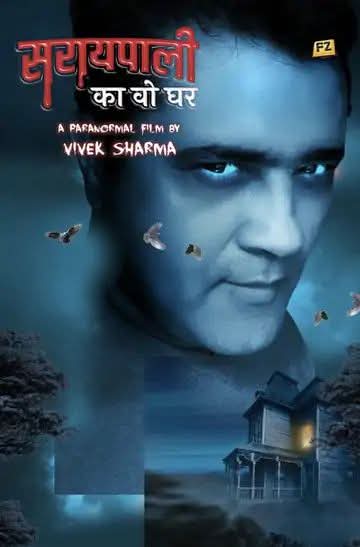
The first film, “Sarayapali Ka Woh Ghar,” delves into paranormal activities, drawing inspiration from real-life events. Sharma emphasized the film’s emotional and dramatic depth and said it is expected to go into production soon.
The second film, titled “Ka Kha Ga Gha Nanga,” offers a comedic take on the Hindi alphabet, portraying the lives of farming families and urban dwellers, reflecting the contrast between traditional hand pump usage and the modern reliance on sanitizers. The film will feature a cast of 15 children alongside prominent actors.
The third film, “Chullu Bhar Pani,” is a black humor comedy centered around a village grappling with a severe water shortage. The narrative follows the villagers’ naive yet humorous attempts to resolve their predicament. Sharma highlighted the intriguing nature of both the title and the storyline.
Sharma, addressing the media, expressed his commitment to providing a platform for emerging talent through Filmzone Creation, aiming to release two quality films annually. He also mentioned that the banner’s upcoming projects will feature a blend of newcomers and established stars.
Prior to this announcement, Vivek Sharma directed films such as “Bhoothnath” (released May 9, 2008), produced by B.R. Chopra’s production company and Ravi Chopra. The film starred Amitabh Bachchan, Shah Rukh Khan, and Juhi Chawla. The film is a family drama, fantasy, and horror mix that tells the heartwarming story of a friendship between a ghost and a child with humor.
‘Kal Kissne Dekha’ released on June 12, 2009, featured Rishi Kapoor, Jackie Bhagnani, and Vaishali Desai in lead roles. Produced by Vashu Bhagnani, this romantic science-fiction film revolves around a boy who can glimpse into the future.
‘A Game Called Relationship,’ released on February 14, 2020, was produced and starred Vivek Sharma. The film explores modern relationships, focusing on the dynamics of live-in partnerships and is intended to be a clean, family-friendly film.
In a remarkable display of cinematic success, ‘Dhurandhar,’ starring Ranveer Singh and Akshaye Khanna, continues its reign at the box office, setting new benchmarks. Veteran actor Rakesh Bedi, who portrays politician Jameel Jamali in the Aditya Dhar-directed spy-action thriller, shared his insights on the film’s overwhelming reception. He recalled a prediction he made prior to the film’s release, stating, “‘Dhurandhar’ is not going to raise the bar, it is going to break the bar.” The film’s performance seems to validate Bedi’s bold statement.
Bedi also recounted an enthusiastic fan reaction on Instagram, illustrating the audience’s deep engagement with ‘Dhurandhar,’ where a fan expressed impatience for the sequel’s release.
In a video shared on Instagram, Bedi expressed his excitement, stating, “Friends, ‘Dhurandhar’ is showing no signs of stopping; it continues to run and run. Before the film’s release, I made a statement that ‘Dhurandhar’ is not going to raise the bar, it is going to break the bar, because people are going to see this film repeatedly, continuously, and that is exactly what is happening.”
He further added, “People are showering so much love, it’s like a tsunami. I would say this film is like my friend’s restaurant in Delhi, Juggernaut.”
Bedi expressed his gratitude for the widespread acclaim the film has received. He highlighted a particular fan’s reaction, recounting, “One lady told me that after watching the film, she was angry about why it ended. And after watching the film, she felt like she should go to sleep and wake up directly on March 19, when its next part will be released. Isn’t that amazing?”
He extended his appreciation to the director and the production team, noting, “This film has become an international rage, which I believe has never happened in Indian cinema history. Such rage, such love, such a big tsunami. I thank JioStudio, the entire team of ‘Dhurandhar,’ and especially the director Aditya Dhar. Hats off to you, Aditya. Love you, brother.”
As per Sacnilk, ‘Dhurandhar’ has amassed ₹517 crore net in its first 16 days. The film further garnered ₹38.5 crore net on a recent Sunday, elevating its domestic total to ₹555.72 crore. ‘Dhurandhar’ has surpassed the lifetime collections of Sunny Deol’s ‘Gadar 2’ (₹525 crore net), Shah Rukh Khan’s ‘Pathaan’ (₹543 crore), and Ranbir Kapoor’s ‘Animal’ (₹553 crore).
According to Comscore, ‘Dhurandhar’ ranked among the top five global releases in its second weekend. With an overseas gross of $18 million, the film has exceeded ₹750 crore worldwide as of Friday and is projected to join the ₹800-crore club imminently.