
Editor's Choice
Interview with Subhrajit Mitra : Devi Chowdhurani…Bandit Queen of Bengal

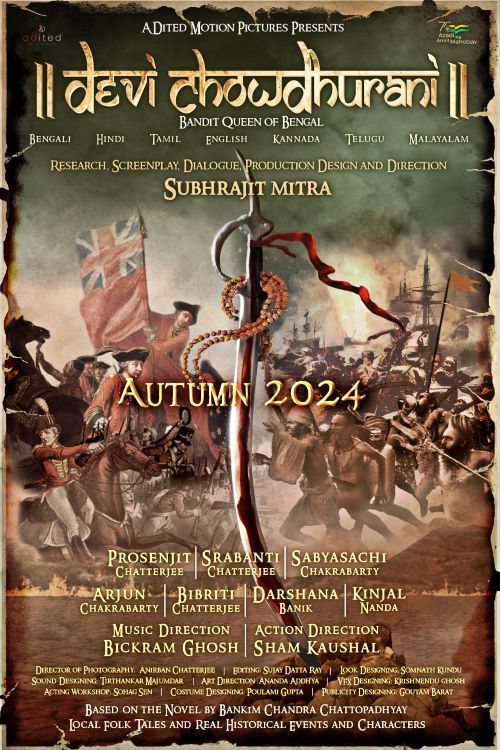
Subhrajit Mitra‘s creative odyssey has been a tapestry woven with passion, learning, and an unwavering commitment to his vision. In this exclusive interview, we delve into the mind of Subhrajit Mitra, unraveling the intricacies of his creative process, the inspiration that fuels his stories, and the upcoming cinematic film that promises to captivate audiences worldwide. Join us as we venture into the heart of cinematic artistry with a director whose narratives resonate beyond the screen.
About You and Your background ? Lets begin days when you were aspiring to be , Days When you became what you are , professional upgrades in your journey?
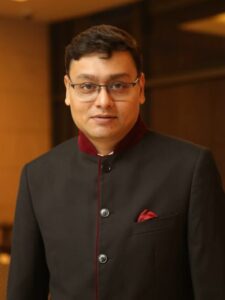 I have completed my bachelors degree in Computer science and Engineering from a premier university of India. After that I have done a certificate course in ancient Classical literature from the Harvard University and got my Honorary Doctorate in Literature from a reputed university of South India. I used to make documentaries for Government of India [ Defence and Home ministry ] and also for National Geographic Channel, Discovery and History Channel. I have learned the process of film making all by myself. Studying extensively in American ,British, German and Russian libraries and watching world classics in theatres and film festivals. I aspired to be a director, when I was 13/14 years old, after watching E.T. by Steven Spielberg in a theatre and pursued my dream ever since.
How do you convince yourself with things that you have to shoot for a film but you actually don’t otherwise believe?
I don’t shoot anything which I don’t believe in. simple, period. I am extremely choosy and strict about this from the very beginning. Absolutely no compromise, whatsoever.
Your Scripting Process ? Your approach to casting ?
I prefer classical literatures with historical background. Making period pieces gives the opportunity to research, to recreate the history which is fascinating. First if any classic literature appeals me, I start researching on the time period , the customs, the political and social scenario, the attires and many more detailed aspects. Then I study other notable literature and biographies of the noted personalities of that same time period for cross referencing and to incorporate that in my screenplay. And then I write the script organically. And I still use fountain pen to write a script rather than a computer as I prefer the human touch more.
Casting is very intuitive and organic process for me from the scripting stage itself.
How much does your life influences your story telling and the characters that you bring to life ?
To some extent, I try to incorporate my philosophical thoughts in the dialogues. I choose only those stories which is appealing to me personally, which I want to tell in the big screen.
How do you work on yourself to become better in your field learning, observing, reading ?
I am voracious reader. And I watch movies a lot. mainly films based on literatures. That’s the way I continuously upgrade myself.
Filmmaking is team work. Tell us about your team and what sort of pre planning gets done before you decide to make a film. Tough things about making films and what keeps you going despite those tough things ?
I choose my team according to the genre and subjects. If that means repeating someone, I don’t mind. But since I am working in the industry for quite sometime and best of the technicians and actors are all my friends, it’s easy to pick and choose for each individual project. They are all available for me as per my requirements. The kind of film I make, I do all the research, I choose the subject and the story, I write the screenplay, I do the production designing and I also Direct. So it takes longer than usual as I spearhead all these departments all by myself [ I have assistants in production design and directorial department only, and it’s by choice . But I enjoy the entire process. I don’t find it tough. Only the budget and finance factors are stressful for me, not the creative aspects.
Title Of Your New Release
Devi Chowdhurani…Bandit Queen of Bengal
What is the central theme of film ?
I was studying and researching on the Battle of Plassey, Battle of Buxar, The Great Bengal Famine of 1770 and the Sanyasi and Fakir Rebellion which spans across this era. Off course this includes the advent and invasion of the British East India Company in India in it’s early years. Co-incidentally “Anandamath” and “Devi Chowdhurani” by Bankim Chandra Chattopadhyay are based on the similar timescale where I find the latter is more appealing in terms of a Film. It narrates a journey of a simple village girl who eventually becomes the first Indian woman freedom fighter, historically, against the colonial rule in India in the later part of the 18th century.
 I felt this story through my cinematic interpretation would be my humble homage to my Motherland in her 75th year of independence. It also tells the story of the Hindu ascetic monks who had no other option but to take up arms against the British colonial rules to save the country and her people. It was the first armed revolution by the Indians , led by Bhavani Charan Pathak, against the British East India Company. I only had to adapt the storyline into the alternative historical interpretation.
The basic plotline remains the same but almost 80% of the film is closer to the actual history, rather than the novel. It is built on the premise of “what might have actually happened”. Even Bankim Chandra Chattopadhyay wrote the novel almost after a 100 year of the original incidents. I had to study extensively from the archives of East India Company in London, several texts and manuscripts from Asiatic society, British Library, Victoria Memorial and Indian Museum.
how many days it took you to shoot ? What locations it has been shot at ?
We have planned for a shoot of close to 60 days. The film will be extensively shoot in various locations across West Bengal named Purulia, Kolkata & Bolpur.
Share your thoughts about production process . Any interesting trivia about its making ?
“Devi Chowdhurani” [ Bandit Queen of Bengal ], gives me the opportunity to get me out of my comfort zone. It is much bigger canvas than my last film, it is actually a part of our lesser known history. After winning my National award for my last film “Avijatrik” [ The Wanderlust of Apu ], I wanted to tell this story, the urge was intense. I wanted to make a very realistic film on this novel and the time period which portrays a plausible historical reconstruction. I am fascinated by the films of similar genre by the master directors such as Akira Kurosawa and Ridley Scott. The seven samurai, Roshomon, Ran, Throne of blood, Gladiator, Robinhood to name a few.
What platforms will the film be released? Date of release?
The film will be released in Autumn 2024 and will be available globally across various leading platform as well as wide theatrical release.
Any other project you are working on ? Some details about the film ?
There are few others but right now my entire concentration is on Devi Chowdhurani. One project at a time.
How do you deal with Negative Feedbacks ? How do you stay balanced with Positive Feedback ?
I am my biggest critic. Despite winning several prestigious international and national awards, including the highest film award from the Government of India, from the President herself, I still consider myself a student. I have achieved only 40% of my full potential. I read and listen to all feedbacks, negative and positive. And then delete all those from my mind. To me film making is a lonesome, organic process.
How did you hear about CarryOnHarry ? Any message for Studio? Any Suggestion that we can make it better?
Heard about it from my friends in Hollywood. You are doing great stuff and pls keep helping independent filmmakers like us to have our voices and creativity heard in mainstream media.
IMDB Link
https://www.imdb.com/name/nm3392438/?ref_=tt_ov_dr
Facebook Handle
https://www.facebook.com/subhrajit.mitra.18
Twitter Handle
Related Posts

Audiences Are Rating ‘Spider-Man: Brand New Day’ and ‘Resident Evil’ Among 2026’s Hottest Films
Balle Balle Radio™ Entertainment Desk Two 2026 releases, "Resident Evil" and "Spider-Man: Brand New Day," are tied at the top…
Revisiting Octavia Butler’s “Wild Seed,” the 1980 novel that opens her Patternist series
Balle Balle Radio™ Entertainment Desk Octavia E. Butler's "Wild Seed," released in 1980, remains one of the author's most widely…

How The Odyssey Pushed Nolan Into Cinema’s Billion-Dollar Elite
How The Odyssey Pushed Nolan Into Cinema's Billion-Dollar Elite Studio CarryOnHarry Entertainment Desk | 13 October 2026 The Odyssey Rewrites…

Hema Malini Turns 78: The Actress Who Played Twins and Won Only Once for It
Balle Balle Radio™ Entertainment Desk Hema Malini turns 78 on 16 October 2026, having been born on the same date…
Bollywood Loses a Titan: Patekar Dies, State Funeral Confirmed
Director Anees Bazmee breaks silence on Nana Patekar's death, calling it unbearable. Read the full story on India's cinema legend's…

CSIFF26 Showcases Diverse Caribbean Voices Through Six Nominated Films This October
Conch Shell International Film Festival returns to Queens October 9-11 with six Best Film nominees exploring Caribbean and diaspora filmmaking.

Editor's Choice
Audiences Are Rating ‘Spider-Man: Brand New Day’ and ‘Resident Evil’ Among 2026’s Hottest Films

Balle Balle Radio™ Entertainment Desk
Two 2026 releases, "Resident Evil" and "Spider-Man: Brand New Day," are tied at the top of Rotten Tomatoes’ running Verified Hot list, each pulling in more than 5,000 Verified ratings from ticket-buying audiences, according to the site’s latest update.
Just as Certified Fresh represents critics’ consensus via the Tomatometer, Verified Hot is its audience equivalent, requiring a minimum 90% score on the Popcornmeter using ratings exclusively from Fandango ticket buyers, according to the guide. Rotten Tomatoes introduced the badge to give paying audiences their own equivalent stamp of approval, separate from critical consensus.
Behind the two leaders in the largest-sample tier, "The Odyssey" ranks second with over 5,000 Verified ratings, followed by "Project Hail Mary," "Obsession," "Hoppers" and "The Super Mario Galaxy Movie." Several of these titles also turn up on other year-end and mid-year lists tracking 2026’s most-discussed films, including "The Odyssey," "Project Hail Mary" and "Obsession" among the movies cited as generating the most audience conversation this year.
In the next tier, covering films with 1,000 to 5,000 Verified ratings, "Avengers: Endgame," "Heart of the Beast," "Forgotten Island" and "Practical Magic 2" share the top spot, with "Coyote vs. Acme," "The Invite," a musical performance film featuring Stray Kids and others filling out the rest of the ranking. Rotten Tomatoes notes a third, smaller tier of 250 to 999 ratings exists for titles still building an audience track record, which it describes as newer and more niche releases.
New films earning a 90% Popcornmeter score are added weekly, with placement within each tier based on cumulative Verified rating volume.
Studio CarryOnHarry will be watching whether films lower in the 1,000-to-5,000 tier gain enough ratings to crack the top bracket as the list updates through the rest of 2026.
Read more People’s Choice stories on Studio CarryOnHarry. Reporting via Live News Vault.
Press Releases at Studio CarryOnHarry
Related Posts
Revisiting Octavia Butler’s “Wild Seed,” the 1980 novel that opens her Patternist series
Balle Balle Radio™ Entertainment Desk Octavia E. Butler's "Wild Seed," released in 1980, remains one of the author's most widely…
How The Odyssey Pushed Nolan Into Cinema’s Billion-Dollar Elite
How The Odyssey Pushed Nolan Into Cinema's Billion-Dollar Elite Studio CarryOnHarry Entertainment Desk | 13 October 2026 The Odyssey Rewrites…
Hema Malini Turns 78: The Actress Who Played Twins and Won Only Once for It
Balle Balle Radio™ Entertainment Desk Hema Malini turns 78 on 16 October 2026, having been born on the same date…
Bollywood Loses a Titan: Patekar Dies, State Funeral Confirmed
Director Anees Bazmee breaks silence on Nana Patekar's death, calling it unbearable. Read the full story on India's cinema legend's…
CSIFF26 Showcases Diverse Caribbean Voices Through Six Nominated Films This October
Conch Shell International Film Festival returns to Queens October 9-11 with six Best Film nominees exploring Caribbean and diaspora filmmaking.
AFI Movie Club Celebrates Tod Browning’s ‘Dracula’ as a Landmark of Horror Cinema
AFI Movie Club spotlights Tod Browning's 1931 'Dracula' starring Bela Lugosi, the film that launched Universal's Monster franchise and defined…
Editor's Choice
Revisiting Octavia Butler’s “Wild Seed,” the 1980 novel that opens her Patternist series
Balle Balle Radio™ Entertainment Desk
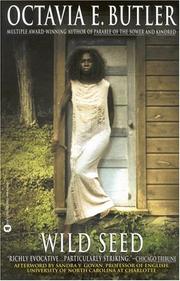
Octavia E. Butler’s "Wild Seed," released in 1980, remains one of the author’s most widely read novels decades after its release. It opens Butler’s five-book Patternist cycle, a five-book speculative fiction cycle, and continues to draw new readers and critical attention.
Butler, who died in 2006, is widely regarded as one of the first Black women to gain major recognition in American science fiction, a genre that offered her few peers when she began publishing in the 1970s. Her work is frequently cited within Afrofuturism, the broader cultural movement that uses speculative fiction, technology, and alternate histories to explore the experiences of the African diaspora and to imagine Black futures beyond the constraints of the present.
"Wild Seed" is addresses themes of gender, healing roles, and the experiences of Black women, reflecting the novel’s focus on characters navigating power, transformation, and survival across generations. Readers and reviewers have consistently described it as a character-driven work rather than a plot-heavy one, with its two central figures carrying the novel through sustained psychological and emotional depth. The book is the first in the five-volume Patternist series and has drawn an active readership on platforms like Goodreads, where it holds a strong average rating from tens of thousands of readers.
The novel has also found renewed life in reading groups and community discussions in recent years, often paired with other Afrofuturist or speculative work, a sign of Butler’s lasting pull on readers well outside the genre’s traditional audience.
Studio CarryOnHarry sees "Wild Seed" as a useful entry point for readers curious about Butler’s influence on contemporary speculative fiction, and worth a look for anyone building out an Afrofuturism reading list.
About the Author: An American science fiction writer, one of the best-known among the few African-American women in the field.
[Comment by Tricia Sullivan, on The Guardian][1]:
Octavia E Butler (1947–2006)
> I was teaching in New York when I came across Octavia E Butler’s Kindred in a secondary-school catalogue of novels recommended to support diversity. It caught my attention because Butler was described as a science-fiction writer. I thought I was familiar with science fiction, but I’d never heard of her – nor have a great many other readers, I suspect. For many years, Butler was the sole African-Ameri
Read more People’s Choice stories on Studio CarryOnHarry. Reporting via Live News Vault.
Are you an author with a new release? We’re always looking for books to cover and authors to interview — tell us about yours here.
Press Releases at Studio CarryOnHarry
Harry Johal — Entertainment Editor
Harry Johal is the Entertainment Editor at Studio CarryOnHarry, overseeing the newsroom's day-to-day coverage.
Related Posts
Audiences Are Rating ‘Spider-Man: Brand New Day’ and ‘Resident Evil’ Among 2026’s Hottest Films
Balle Balle Radio™ Entertainment Desk Two 2026 releases, "Resident Evil" and "Spider-Man: Brand New Day," are tied at the top…
How The Odyssey Pushed Nolan Into Cinema’s Billion-Dollar Elite
How The Odyssey Pushed Nolan Into Cinema's Billion-Dollar Elite Studio CarryOnHarry Entertainment Desk | 13 October 2026 The Odyssey Rewrites…
Hema Malini Turns 78: The Actress Who Played Twins and Won Only Once for It
Balle Balle Radio™ Entertainment Desk Hema Malini turns 78 on 16 October 2026, having been born on the same date…
Bollywood Loses a Titan: Patekar Dies, State Funeral Confirmed
Director Anees Bazmee breaks silence on Nana Patekar's death, calling it unbearable. Read the full story on India's cinema legend's…
CSIFF26 Showcases Diverse Caribbean Voices Through Six Nominated Films This October
Conch Shell International Film Festival returns to Queens October 9-11 with six Best Film nominees exploring Caribbean and diaspora filmmaking.
AFI Movie Club Celebrates Tod Browning’s ‘Dracula’ as a Landmark of Horror Cinema
AFI Movie Club spotlights Tod Browning's 1931 'Dracula' starring Bela Lugosi, the film that launched Universal's Monster franchise and defined…
-
 Books3 days ago
Former Wildlife Officer Rick Larnerd Blends Gasparilla Legend with Modern Florida Thriller in New Novel
-
 Books3 days ago
Barry R. Willis’s New Book Traces the Pony Express and Its Costs on the Frontier
-
 Books4 days ago
Former Game Warden Turns Three Decades of Conservation Work into Florida Crime Novel
-
 Books3 days ago
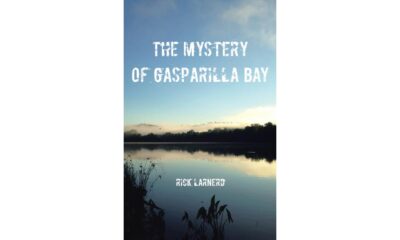
Former Wildlife Officer Rick Larnerd Blends Gasparilla Legend with Modern Florida Crime Fiction in New Novel
-
 Books5 days ago
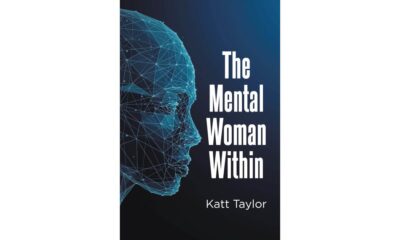
Katt Taylor’s New Novel Follows a Woman’s Fractured Spirit from Darkness to Awakening
-
 Books5 days ago
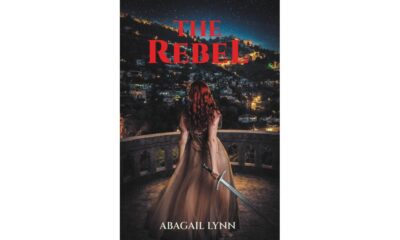
Fulton Books Author Abagail Lynn Releases Fantasy Adventure “The Rebel”