
Editor's Choice
Veteran Director Fires Back at India’s Film Certification Body, Demanding Its Complete Abolition


Veteran Director Fires Back at India’s Film Certification Body, Demanding Its Complete Abolition
One of India’s most outspoken filmmakers has launched a fierce public attack on the country’s film certification authority, calling the institution an embarrassing relic that fails modern audiences and undermines democratic values.
The controversy centres on the regulatory body’s decision to trim content from a Hollywood horror release — despite already restricting it to adult viewers only. Roughly 38 seconds of footage were removed, including scenes of intense violence and a brief sexual sequence, a move that has drawn widespread frustration from audiences who argue that an adults-only classification should be sufficient to manage viewer expectations without further interference.
The veteran director took to social media to make his feelings unmistakably clear. He argued that any citizen deemed responsible enough to cast a vote, run a household, or lead a business enterprise is fully capable of deciding what films they choose to watch — and that a government-appointed panel should have no place making that decision for them.
Sources reveal that the director’s frustration extends well beyond this single case. He highlighted the glaring contradiction in a digital landscape where trimmed footage routinely circulates across streaming platforms, social media feeds, and torrenting sites within hours of a theatrical release — often drawing far greater viewership than the original cinema screening ever would.
Entertainment circles suggest the irony is not lost on industry observers. The very sequence removed from the theatrical cut reportedly found its way across short-form video platforms almost immediately, with insiders noting it attracted significantly more attention online than it ever would have on the big screen.
The director’s proposed solution is straightforward: replace mandatory cuts with transparent content advisories, trusting audiences to make informed choices. He also issued a pointed warning to the film industry itself, suggesting that every time creators accept editorial interference without challenge, they strengthen the hand of those imposing restrictions.
Critics note that this is far from the filmmaker’s first confrontation with censorship authorities. His history of clashes with the certification system stretches back decades, lending weight to what he frames as a systemic failure rather than an isolated grievance.
Whether the broader industry will rally around such a bold call for institutional reform — or continue negotiating quietly behind closed doors — remains the defining question hanging over Indian cinema’s ongoing battle between artistic freedom and regulatory control.
- Entertainment Desk, Studio Carry On Harry
—
Related Posts

How The Odyssey Pushed Nolan Into Cinema’s Billion-Dollar Elite
How The Odyssey Pushed Nolan Into Cinema's Billion-Dollar Elite Studio CarryOnHarry Entertainment Desk | 13 October 2026 The Odyssey Rewrites…
Bollywood Loses a Titan: Patekar Dies, State Funeral Confirmed
Director Anees Bazmee breaks silence on Nana Patekar's death, calling it unbearable. Read the full story on India's cinema legend's…
Bollywood’s Most Famous Couch Gets a Final Curtain Call
One of Hindi cinema's most iconic small-screen institutions is preparing to take its final bow. Karan Johar has officially confirmed…
Bollywood’s ‘What If’ Moment: Pop Queen Recalls Nearly Landing a Legendary Film Role
One of India's most celebrated pop voices has opened up about a surprising chapter in her early career — a…
John Abraham’s Force Turns 15: A Tribute to the Director He Still Misses
John Abraham's Force Turns 15: A Tribute to the Director He Still Misses Studio CarryOnHarry Entertainment Desk | 30 September…

Week 7 and Still Counting: How Hanuman Ansh Broke the Mould
Week 7 and Still Counting: How Hanuman Ansh Broke the Mould Studio CarryOnHarry Entertainment Desk | 22 September 2026 A…

Editor's Choice
Audiences Are Rating ‘Spider-Man: Brand New Day’ and ‘Resident Evil’ Among 2026’s Hottest Films

Balle Balle Radio™ Entertainment Desk
Two 2026 releases, "Resident Evil" and "Spider-Man: Brand New Day," are tied at the top of Rotten Tomatoes’ running Verified Hot list, each pulling in more than 5,000 Verified ratings from ticket-buying audiences, according to the site’s latest update.
Just as Certified Fresh represents critics’ consensus via the Tomatometer, Verified Hot is its audience equivalent, requiring a minimum 90% score on the Popcornmeter using ratings exclusively from Fandango ticket buyers, according to the guide. Rotten Tomatoes introduced the badge to give paying audiences their own equivalent stamp of approval, separate from critical consensus.
Behind the two leaders in the largest-sample tier, "The Odyssey" ranks second with over 5,000 Verified ratings, followed by "Project Hail Mary," "Obsession," "Hoppers" and "The Super Mario Galaxy Movie." Several of these titles also turn up on other year-end and mid-year lists tracking 2026’s most-discussed films, including "The Odyssey," "Project Hail Mary" and "Obsession" among the movies cited as generating the most audience conversation this year.
In the next tier, covering films with 1,000 to 5,000 Verified ratings, "Avengers: Endgame," "Heart of the Beast," "Forgotten Island" and "Practical Magic 2" share the top spot, with "Coyote vs. Acme," "The Invite," a musical performance film featuring Stray Kids and others filling out the rest of the ranking. Rotten Tomatoes notes a third, smaller tier of 250 to 999 ratings exists for titles still building an audience track record, which it describes as newer and more niche releases.
New films earning a 90% Popcornmeter score are added weekly, with placement within each tier based on cumulative Verified rating volume.
Studio CarryOnHarry will be watching whether films lower in the 1,000-to-5,000 tier gain enough ratings to crack the top bracket as the list updates through the rest of 2026.
Read more People’s Choice stories on Studio CarryOnHarry. Reporting via Live News Vault.
Press Releases at Studio CarryOnHarry
Related Posts
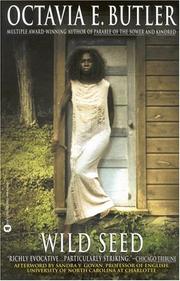
Revisiting Octavia Butler’s “Wild Seed,” the 1980 novel that opens her Patternist series
Balle Balle Radio™ Entertainment Desk Octavia E. Butler's "Wild Seed," released in 1980, remains one of the author's most widely…
How The Odyssey Pushed Nolan Into Cinema’s Billion-Dollar Elite
How The Odyssey Pushed Nolan Into Cinema's Billion-Dollar Elite Studio CarryOnHarry Entertainment Desk | 13 October 2026 The Odyssey Rewrites…

Hema Malini Turns 78: The Actress Who Played Twins and Won Only Once for It
Balle Balle Radio™ Entertainment Desk Hema Malini turns 78 on 16 October 2026, having been born on the same date…
Bollywood Loses a Titan: Patekar Dies, State Funeral Confirmed
Director Anees Bazmee breaks silence on Nana Patekar's death, calling it unbearable. Read the full story on India's cinema legend's…

CSIFF26 Showcases Diverse Caribbean Voices Through Six Nominated Films This October
Conch Shell International Film Festival returns to Queens October 9-11 with six Best Film nominees exploring Caribbean and diaspora filmmaking.
AFI Movie Club Celebrates Tod Browning’s ‘Dracula’ as a Landmark of Horror Cinema
AFI Movie Club spotlights Tod Browning's 1931 'Dracula' starring Bela Lugosi, the film that launched Universal's Monster franchise and defined…
Editor's Choice
Revisiting Octavia Butler’s “Wild Seed,” the 1980 novel that opens her Patternist series
Balle Balle Radio™ Entertainment Desk
Octavia E. Butler’s "Wild Seed," released in 1980, remains one of the author’s most widely read novels decades after its release. It opens Butler’s five-book Patternist cycle, a five-book speculative fiction cycle, and continues to draw new readers and critical attention.
Butler, who died in 2006, is widely regarded as one of the first Black women to gain major recognition in American science fiction, a genre that offered her few peers when she began publishing in the 1970s. Her work is frequently cited within Afrofuturism, the broader cultural movement that uses speculative fiction, technology, and alternate histories to explore the experiences of the African diaspora and to imagine Black futures beyond the constraints of the present.
"Wild Seed" is addresses themes of gender, healing roles, and the experiences of Black women, reflecting the novel’s focus on characters navigating power, transformation, and survival across generations. Readers and reviewers have consistently described it as a character-driven work rather than a plot-heavy one, with its two central figures carrying the novel through sustained psychological and emotional depth. The book is the first in the five-volume Patternist series and has drawn an active readership on platforms like Goodreads, where it holds a strong average rating from tens of thousands of readers.
The novel has also found renewed life in reading groups and community discussions in recent years, often paired with other Afrofuturist or speculative work, a sign of Butler’s lasting pull on readers well outside the genre’s traditional audience.
Studio CarryOnHarry sees "Wild Seed" as a useful entry point for readers curious about Butler’s influence on contemporary speculative fiction, and worth a look for anyone building out an Afrofuturism reading list.
About the Author: An American science fiction writer, one of the best-known among the few African-American women in the field.
[Comment by Tricia Sullivan, on The Guardian][1]:
Octavia E Butler (1947–2006)
> I was teaching in New York when I came across Octavia E Butler’s Kindred in a secondary-school catalogue of novels recommended to support diversity. It caught my attention because Butler was described as a science-fiction writer. I thought I was familiar with science fiction, but I’d never heard of her – nor have a great many other readers, I suspect. For many years, Butler was the sole African-Ameri
Read more People’s Choice stories on Studio CarryOnHarry. Reporting via Live News Vault.
Are you an author with a new release? We’re always looking for books to cover and authors to interview — tell us about yours here.
Press Releases at Studio CarryOnHarry
Harry Johal — Entertainment Editor
Harry Johal is the Entertainment Editor at Studio CarryOnHarry, overseeing the newsroom's day-to-day coverage.
Related Posts
Audiences Are Rating ‘Spider-Man: Brand New Day’ and ‘Resident Evil’ Among 2026’s Hottest Films
Balle Balle Radio™ Entertainment Desk Two 2026 releases, "Resident Evil" and "Spider-Man: Brand New Day," are tied at the top…
How The Odyssey Pushed Nolan Into Cinema’s Billion-Dollar Elite
How The Odyssey Pushed Nolan Into Cinema's Billion-Dollar Elite Studio CarryOnHarry Entertainment Desk | 13 October 2026 The Odyssey Rewrites…
Hema Malini Turns 78: The Actress Who Played Twins and Won Only Once for It
Balle Balle Radio™ Entertainment Desk Hema Malini turns 78 on 16 October 2026, having been born on the same date…
Bollywood Loses a Titan: Patekar Dies, State Funeral Confirmed
Director Anees Bazmee breaks silence on Nana Patekar's death, calling it unbearable. Read the full story on India's cinema legend's…
CSIFF26 Showcases Diverse Caribbean Voices Through Six Nominated Films This October
Conch Shell International Film Festival returns to Queens October 9-11 with six Best Film nominees exploring Caribbean and diaspora filmmaking.
AFI Movie Club Celebrates Tod Browning’s ‘Dracula’ as a Landmark of Horror Cinema
AFI Movie Club spotlights Tod Browning's 1931 'Dracula' starring Bela Lugosi, the film that launched Universal's Monster franchise and defined…
-
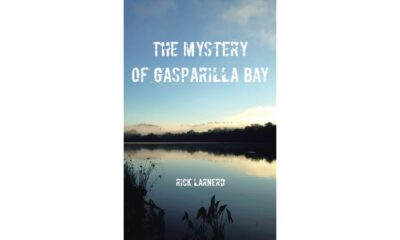
 Books3 days ago
Former Wildlife Officer Rick Larnerd Blends Gasparilla Legend with Modern Florida Thriller in New Novel
-

 Books3 days ago
Barry R. Willis’s New Book Traces the Pony Express and Its Costs on the Frontier
-
 Books3 days ago
Former Wildlife Officer Rick Larnerd Blends Gasparilla Legend with Modern Florida Crime Fiction in New Novel
-
 Books3 days ago
Former Game Warden Turns Three Decades of Conservation Work into Florida Crime Novel
-
 Books4 days ago
Katt Taylor’s New Novel Follows a Woman’s Fractured Spirit from Darkness to Awakening
-

 Books5 days ago
Fulton Books Author Abagail Lynn Releases Fantasy Adventure “The Rebel”