Connect with us

Interviews

The Ultimate Guide to Starting Your Web Talk Show

H Johal

Published

on

The Ultimate Guide to Starting Your Web Talk Show
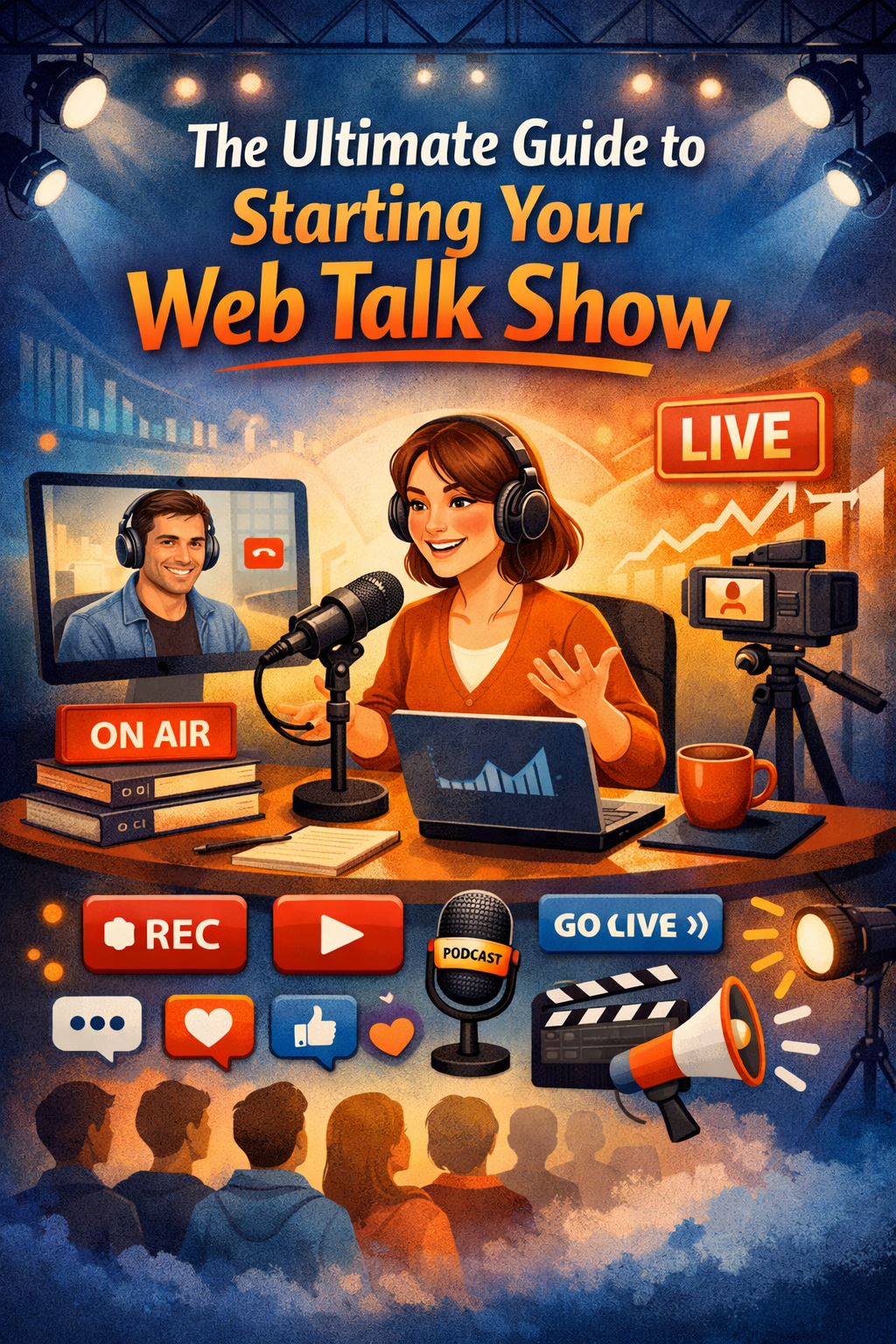
The Ultimate Guide to Starting Your Web Talk ShoV Empire


Ready to transform your passion for conversation into a thriving web talk show empire? This comprehensive guide shows you exactly how to start a podcast and build a successful digital talk show from scratch.

This roadmap is perfect for aspiring hosts, content creators, entrepreneurs, and anyone who wants to share their voice with the world through online broadcasting. You don’t need fancy equipment or broadcasting experience – just enthusiasm and the willingness to learn.

We’ll walk you through the essential steps of online show creation, starting with finding your unique concept and identifying your target audience. You’ll discover the best podcast platform selection strategies and learn proven podcast audience growth techniques that actually work. Finally, we’ll reveal powerful podcast monetization methods to turn your web series production into a profitable business.

By the end of this guide, you’ll have everything you need to launch your own digital empire and connect with listeners worldwide.

Define Your Web Talk Show Concept and Target Audience


Identify Your Unique Voice and Expertise Area

Your web talk show needs to stand out in a crowded digital landscape, and that starts with discovering what makes you uniquely qualified to host. Think about your professional background, personal experiences, and the topics that genuinely excite you. Maybe you’re a marketing executive with insider knowledge about brand building, or perhaps you’re a home cook who’s mastered international cuisines through years of experimentation.

Start by making a list of your skills, knowledge areas, and life experiences that others might find valuable. Don’t overlook seemingly mundane expertise – someone who’s successfully navigated career changes, raised teenagers, or built a side business has stories and insights worth sharing. The key is finding the intersection between what you know well and what people want to learn about.

Your authentic voice emerges when you speak about subjects you’re passionate about. Avoid trying to be someone you’re not or covering topics just because they’re trending. Audiences can sense authenticity, and they’ll connect more deeply with a host who genuinely cares about their content. Consider recording yourself talking about different topics and listen back – which conversations feel most natural and engaging?

Research Your Competition and Find Market Gaps

Before launching your web talk show, spend time analyzing the existing landscape in your chosen niche. Search for shows covering similar topics and study their formats, episode lengths, guest selection, and audience engagement strategies. This research isn’t about copying what’s already out there – it’s about identifying opportunities to do something different or better.

Create a competitive analysis spreadsheet tracking key details about similar shows: their posting schedules, average episode views or downloads, social media following, and the types of guests they feature. Pay attention to comments and reviews to understand what audiences love and what they’re missing from existing content.

Look for gaps in coverage or underserved sub-topics within your area of expertise. Maybe there are dozens of business podcasts for entrepreneurs but few specifically addressing freelancers in creative fields. Perhaps fitness shows focus on workouts but rarely discuss the mental health aspects of staying active. These gaps represent opportunities for your web talk show to fill a genuine need.

Check different platforms beyond just the obvious ones. A topic might be oversaturated on YouTube but underrepresented on LinkedIn or emerging platforms. Understanding where your potential competitors aren’t active can help you choose the right platform for maximum impact.

Create Detailed Audience Personas

Building a successful web talk show requires knowing exactly who you’re speaking to. Generic targeting leads to generic content that fails to resonate with anyone. Instead, develop detailed profiles of your ideal listeners by considering demographics, interests, challenges, and media consumption habits.

Start with basic demographics: age ranges, geographic locations, income levels, and education backgrounds. Then dig deeper into psychographics – what motivates these people? What problems keep them up at night? What are their aspirations and goals? A busy working parent interested in personal finance has different needs than a recent college graduate exploring career options, even if both might be interested in your business-focused show.

Consider creating 3-4 distinct audience personas representing different segments of your potential viewership. Give each persona a name and detailed background story. For example, “Marketing Manager Maria” might be a 32-year-old professional looking to advance her career while balancing family responsibilities. Understanding Maria’s daily schedule helps you decide whether to release episodes on Tuesday mornings for her commute or Thursday evenings when she has time to focus.

Research where your target audience already spends time online. Are they active on LinkedIn, Instagram, Reddit, or specific Facebook groups? Understanding their preferred platforms and content formats helps you tailor your show’s style and distribution strategy. Survey potential audience members directly through social media polls or online communities to validate your assumptions about their interests and preferences.

Develop Your Show’s Mission Statement and Value Proposition

Every successful web talk show needs a clear mission that guides content decisions and helps potential viewers understand what to expect. Your mission statement should answer three fundamental questions: What value do you provide? Who do you serve? How do you deliver that value differently than anyone else?

Craft a concise mission statement that captures your show’s purpose in one or two sentences. For example: “We help mid-career professionals navigate industry changes and advance their careers through honest conversations with leaders who’ve successfully made major transitions.” This statement clearly defines the audience (mid-career professionals), the value (career advancement guidance), and the delivery method (conversations with successful leaders).

Your value proposition goes deeper, explaining the specific benefits viewers will gain from investing their time in your content. Will they learn practical skills, gain industry insights, feel less alone in their challenges, or discover new opportunities? Be specific about the outcomes you promise. Instead of saying “business tips,” explain that you’ll teach viewers “how to negotiate better contracts using proven frameworks from successful freelancers.”

Test your mission statement and value proposition with potential audience members before finalizing them. Share your concept with people who fit your target personas and ask whether the promised value appeals to them. Would they subscribe to a show offering these benefits? Their feedback might reveal gaps in your positioning or opportunities to strengthen your unique angle in the market.

Choose the Right Platform and Technical Setup


Compare Streaming Platforms and Their Monetization Options

Different platforms offer unique advantages for your web talk show journey. YouTube remains the most popular choice for beginners, providing easy discovery through its massive search engine and built-in monetization through ads, memberships, and Super Chat donations. The platform’s algorithm can boost your visibility, but competition is fierce, and you’ll need 1,000 subscribers and 4,000 watch hours to qualify for revenue sharing.

Twitch excels for real-time interaction and gaming-related content, offering multiple revenue streams including subscriptions, bits, and direct donations. The platform’s chat integration creates an engaging community atmosphere, though its audience skews younger and expects consistent streaming schedules.

Facebook Live integrates seamlessly with your existing social network and offers Stars as a monetization option. The platform’s mature audience and robust sharing features help content spread organically, but discovery outside your network can be challenging.

LinkedIn Live targets professional audiences and works exceptionally well for business-focused talk shows. While monetization options are limited, the platform excels at lead generation and brand building for B2B content creators.

Platform Best For Monetization Discovery
YouTube General audience Ads, memberships, donations Excellent
Twitch Gaming, live interaction Subs, bits, donations Good for niche
Facebook Live Social sharing Stars, brand partnerships Network-dependent
LinkedIn Live Professional content Lead generation, consulting B2B focused

Newer platforms like Clubhouse and Twitter Spaces focus on audio-only content, reducing technical barriers while building intimate connections with audiences. These platforms work well for interview-style shows and discussion formats.

Select Essential Recording and Broadcasting Equipment

Your equipment choices directly impact content quality and audience retention. A reliable USB microphone forms the foundation of professional audio. The Audio-Technica ATR2100x-USB offers both USB and XLR connections, providing upgrade flexibility as your show grows. Blue Yeti microphones remain popular for their plug-and-play simplicity, though they pick up background noise more easily.

Camera selection depends on your content style and budget. DSLR cameras like the Canon EOS M50 deliver exceptional image quality with interchangeable lenses, perfect for interview setups. Webcams like the Logitech C920 Pro provide adequate quality for solo shows while keeping costs manageable.

Capture cards become essential when streaming gameplay or switching between multiple video sources. The Elgato Stream Deck simplifies live switching between scenes, managing audio levels, and controlling overlays with customizable buttons.

Your computer serves as the command center, requiring sufficient processing power for real-time encoding. A modern processor with at least 8GB RAM handles most streaming scenarios, though 4K content or complex graphics demand more resources.

Essential Equipment Checklist:

  • USB microphone with pop filter

  • HD camera or webcam

  • Tripod or camera mount

  • Reliable internet connection (minimum 5 Mbps upload)

  • Computer with adequate processing power

  • Backup storage for recordings

Set Up Professional Lighting and Audio Systems

Proper lighting transforms amateur content into professional productions. The three-point lighting setup remains the gold standard: a key light illuminates your face, a fill light reduces shadows, and a background light separates you from the backdrop.

Ring lights offer convenient all-in-one solutions for solo hosts, providing even facial lighting that’s particularly flattering for close-up shots. Position the ring light directly behind your camera to minimize shadows and achieve that professional “catch light” in your eyes.

Softbox lights create more natural-looking illumination by diffusing harsh LED or fluorescent bulbs. A two-softbox setup with adjustable stands gives you flexibility to adapt lighting for different guests or content styles.

Color temperature matters significantly for maintaining consistent visual quality. Daylight-balanced lights (5600K) match natural sunlight, while tungsten lights (3200K) create warmer tones. Mixing color temperatures creates unflattering skin tones, so stick with one type throughout your setup.

Audio treatment often gets overlooked but dramatically impacts listener retention. Hard surfaces create echo and reverb that screams “amateur.” Acoustic panels, heavy curtains, or even thick blankets strategically placed around your recording space absorb unwanted reflections.

Professional Audio Setup Tips:

  • Record in your smallest available room

  • Add soft furnishings to reduce echo

  • Position microphone 6-8 inches from your mouth

  • Use a windscreen or pop filter

  • Monitor audio levels during recording

  • Keep backup audio recordings

Consider your room’s natural acoustics when choosing locations. Bedrooms typically offer better sound than kitchens or bathrooms due to carpet, bedding, and clothing that naturally absorb sound reflections. Closets filled with clothes create surprisingly effective recording booths for voice-overs or phone interviews.

Background noise management requires attention to air conditioning, computer fans, and external sounds. Recording during quieter hours and using noise gates in your streaming software helps maintain professional audio quality throughout longer sessions.

Design Your Show Format and Content Strategy


Structure Your Episode Format for Maximum Engagement

Your web talk show format acts as the backbone that keeps viewers coming back for more. Think of it as your show’s DNA – consistent enough that people know what to expect, but flexible enough to stay fresh and exciting.

Start with a signature opening that becomes instantly recognizable to your audience. This could be a unique intro music, a catchphrase, or a visual element that screams “you.” Popular web talk shows often use a 30-60 second cold open featuring the episode’s most compelling moment, followed by their branded intro sequence.

Create time blocks for different segments within your show. A typical 30-45 minute episode might break down like this: 5-minute opening and episode preview, 15-20 minutes of main content or interview, 5 minutes for audience interaction or Q&A, 10 minutes for a signature segment, and 3-5 minutes for wrap-up and next episode teaser.

Build in natural break points where you can insert sponsor messages or calls-to-action without disrupting the flow. These pauses also give viewers mental breathing room and help maintain attention throughout longer episodes.

Consider implementing a consistent closing ritual that encourages audience engagement. This might include asking a thought-provoking question, sharing a personal reflection, or giving viewers a specific challenge to complete before the next episode.

Plan Your Content Calendar and Episode Themes

Smart content planning separates successful web talk shows from those that fizzle out after a few episodes. Your content calendar becomes your roadmap, keeping you organized while ensuring you never run out of compelling topics.

Map out quarterly themes that align with your niche and audience interests. If you’re running a business-focused talk show, you might dedicate Q1 to “New Year, New Strategies,” Q2 to “Growth and Scaling,” Q3 to “Innovation and Technology,” and Q4 to “Year-End Reflections and Planning.”

Within each quarter, plan monthly focus areas. Break these down into weekly episodes with specific topics. This hierarchical approach prevents you from scrambling for content ideas while maintaining thematic coherence that builds audience anticipation.

Track trending topics in your industry using tools like Google Trends, social media listening platforms, or industry publications. Schedule flexible slots in your calendar where you can pivot to cover breaking news or viral topics relevant to your audience.

Create a content bucket system with evergreen topics you can always fall back on. These might include “Behind the Scenes,” “Audience Questions,” “Industry Predictions,” or “Personal Stories.” Having 10-15 evergreen topics ready prevents panic when scheduled guests cancel or current events don’t provide enough material.

Build seasonal content around holidays, industry conferences, or annual events. This creates natural promotional opportunities and helps your show feel timely and relevant to your audience’s calendar.

Create Interview Guidelines and Guest Preparation Materials

Professional guest preparation separates amateur web talk shows from polished productions that attract high-caliber guests. Your preparation materials should make guests feel confident and excited about appearing on your show.

Develop a guest information packet that includes your show’s background, typical audience demographics, episode format overview, and technical requirements. Include sample questions or topic areas you’ll likely cover, but avoid sharing exact questions that might make conversations feel rehearsed.

Create a technical checklist covering audio quality requirements, lighting suggestions, and platform-specific instructions. Many great conversations get ruined by poor audio or video quality, so be specific about headphone requirements, microphone recommendations, and internet speed minimums.

Design a pre-interview questionnaire that gathers background information about your guest’s expertise, current projects, and preferred talking points. This helps you craft personalized questions that showcase their knowledge while staying relevant to your audience.

Establish clear expectations about promotional support. Outline what promotional materials you’ll provide (social media graphics, audiograms, episode clips) and what you hope guests will share on their own channels.

Set up a brief pre-recording call to test technical setup and build rapport. This 10-15 minute conversation helps identify potential audio issues while making guests more comfortable during the actual recording.

Develop Signature Segments and Recurring Features

Signature segments create anticipation and give your web talk show a unique personality that distinguishes it from countless other shows in your space. These recurring elements become the hooks that turn casual viewers into devoted fans.

Design segments that showcase your unique perspective or expertise. A marketing expert might include “Campaign Breakdown” where they analyze viral marketing campaigns. A entrepreneur-focused show might feature “Startup Spotlight” highlighting emerging companies.

Create interactive segments that directly involve your audience. “Viewer Questions,” “Community Challenges,” or “Audience Polls” make viewers feel like active participants rather than passive consumers. These segments also provide valuable content when guest cancellations leave gaps in your schedule.

Develop educational mini-segments that deliver quick value. “Tool of the Week,” “Quick Tip Tuesday,” or “Myth-Busting Minute” give viewers immediate takeaways they can implement right away.

Consider entertainment segments that show your personality beyond your professional expertise. “Rapid Fire Questions,” “This or That,” or “Behind the Scenes” moments help humanize you and create deeper connections with your audience.

Plan seasonal segments that create limited-time excitement. “Year-End Awards,” “Summer Reading List,” or “New Year Predictions” give you natural content themes while creating urgency around specific episodes.

Test different segment lengths and formats to see what resonates with your audience. Some segments work better as 2-minute quick hits, while others need 10-15 minutes to provide real value. Your analytics will reveal which segments drive the highest engagement and retention rates.

Build Your Online Presence and Brand Identity


Design Professional Visual Assets and Show Graphics

Your visual identity is the first thing viewers notice before they even hear your voice. Think of it as your web talk show’s handshake – it needs to be firm, memorable, and professional. Start with a compelling logo that captures your show’s personality. Whether you’re running a tech-focused podcast or a lifestyle web series, your logo should instantly communicate what viewers can expect.

Create a consistent color palette that runs through all your materials. Pick two to three primary colors and stick with them across everything – your logo, social media banners, episode thumbnails, and website design. This consistency builds recognition faster than you might think.

Episode thumbnails deserve special attention since they’re often the deciding factor for potential viewers scrolling through podcast platforms. Design a template that includes your show logo, episode number, guest photo (if applicable), and a bold, readable title. Keep text large enough to read on mobile devices, where most people discover new content.

Don’t forget about animated elements for your actual video content. Simple lower thirds, intro graphics, and transition animations add polish without breaking the bank. Tools like Canva Pro or Adobe Creative Suite can help you create these assets, even if you’re not a design expert.

Create Compelling Social Media Profiles Across Platforms

Each platform has its own personality, and your web talk show needs to speak that language. Your Instagram should be visually stunning with behind-the-scenes content, quote cards from episodes, and stories that give followers a peek into your process. Post consistently – at least three times per week – and use relevant hashtags to expand your reach.

Twitter works best for real-time engagement and sharing quick insights from your episodes. Live-tweet interesting moments during recordings, share industry news with your take, and engage directly with your audience’s questions and comments. The conversational nature of Twitter makes it perfect for building relationships with both guests and viewers.

LinkedIn becomes crucial if your web talk show focuses on business, career development, or professional topics. Share longer-form posts about lessons learned from guests, industry insights, and professional achievements. This platform helps establish your credibility within your niche.

TikTok and YouTube Shorts offer massive potential for audience growth through short-form content. Pull the best 30-60 second clips from your episodes, add captions, and watch them potentially go viral. These snippets often serve as gateway content that leads viewers to your full episodes.

Develop a Professional Website with Show Archives

Your website serves as home base for everything related to your web talk show. It’s where serious listeners go to dive deeper into your content and where potential sponsors look to understand your brand. Start with a clean, mobile-responsive design that loads quickly – nobody waits around for slow websites anymore.

Create dedicated pages for different types of content: episode archives, guest information, your bio, and contact details. Make it easy for visitors to find and play your latest episodes directly from your site. Embed players from your hosting platform rather than forcing people to leave your site to listen.

Build an email list from day one by offering something valuable – maybe exclusive behind-the-scenes content, early access to episodes, or a free guide related to your show’s topic. Email remains one of the most effective ways to maintain direct contact with your audience, especially as social media algorithms become more restrictive.

Include a media kit section with professional photos, show statistics, and information for potential guests and sponsors. This saves time when opportunities arise and demonstrates that you run a serious operation.

Establish Your Personal Brand as the Host

Your personal brand as a host goes beyond just being knowledgeable about your topic – you need to become someone people want to spend time with regularly. Develop your unique voice and perspective that sets you apart from other hosts in your space. Maybe you’re the host who always asks the tough questions, or perhaps you’re known for making complex topics accessible to beginners.

Consistency in your personality across all touchpoints matters enormously. If you’re funny and casual on your show, maintain that tone in your social media posts and website copy. People subscribe to shows partly because they connect with the host’s personality, not just the content.

Share your own story and experiences openly. Audiences connect with authentic hosts who aren’t afraid to be vulnerable or admit when they don’t know something. This authenticity builds trust and keeps people coming back.

Position yourself as a thought leader in your niche by writing guest articles, speaking at events, and participating in other podcasts as a guest. Each appearance builds credibility and exposes your web talk show to new audiences.

Implement SEO Strategies for Content Discovery

Search engine optimization for your web talk show involves more than just stuffing keywords into your episode descriptions. Start with thorough keyword research to understand how people search for content in your niche. Tools like Google Keyword Planner or Ahrefs can reveal what terms your potential audience actually uses.

Create detailed show notes for each episode that include timestamps, key topics discussed, and relevant keywords naturally woven into the content. These show notes serve double duty – they help with SEO and provide value to listeners who want to revisit specific parts of conversations.

Optimize your website for local SEO if your show has a geographic focus. Many successful web talk shows build strong local followings before expanding nationally, and local SEO can jumpstart this process.

Submit your show to all major podcast directories and ensure your RSS feed is properly formatted with complete metadata. The more places your content appears, the more opportunities people have to discover it organically.

Consider creating blog content that complements your episodes. If you interview an expert about digital marketing, write a follow-up blog post diving deeper into specific strategies mentioned during the conversation. This creates multiple entry points for new audience members to find your content.

Master the Art of Hosting and Content Creation


Perfect Your On-Camera Presence and Speaking Skills

Your web talk show success hinges on how comfortable and confident you appear on camera. Great hosts aren’t born – they’re made through practice and attention to specific techniques that make viewers want to keep watching.

Start with your posture and positioning. Sit up straight but relaxed, keeping your shoulders back and your body angled slightly toward the camera. Your eyes should be level with the lens, which means adjusting your camera height rather than looking down or up. This creates that crucial eye contact with your audience that builds connection and trust.

Voice projection matters more than you might think in online broadcasting. Even with good audio equipment, speaking clearly and with energy translates better through digital platforms. Practice varying your pace, volume, and tone to match your content. Slow down for important points, speed up during exciting moments, and use pauses strategically to let key messages sink in.

Gestures and movement bring life to your web talk show. Keep your hands visible and use them naturally to emphasize points. Avoid fidgeting, pen-clicking, or repetitive movements that distract viewers. If you tend to rock back and forth or tap your feet, practice stillness while maintaining energy in your voice and facial expressions.

Record yourself regularly during practice sessions. Watch these recordings critically – notice verbal fillers like “um” and “uh,” identify moments where your energy drops, and spot any distracting habits. Many successful podcast hosting experts recommend recording at least 10 practice sessions before going live with your first episode.

Your facial expressions need to be slightly more animated than in normal conversation since cameras can flatten emotional range. Smile genuinely when appropriate, and let your face reflect the emotions you’re discussing. Authentic reactions create viewer engagement and make your content more relatable.

Learn Effective Interview Techniques for Guest Shows

Guest interviews can make or break your web talk show empire. The best hosts prepare extensively while maintaining spontaneity during actual conversations.

Research goes beyond reading your guest’s bio. Deep-dive into their recent work, social media presence, and any controversial topics they’ve discussed. Prepare 15-20 questions but expect to use only half of them. Your best questions often emerge from listening carefully to their answers and following interesting threads.

Create a comfortable environment before hitting record. Chat with guests for 5-10 minutes beforehand, explain your format, and give them a general sense of topics you’ll cover. This warm-up reduces anxiety and helps both of you settle into a natural conversation flow.

Master the art of active listening during interviews. Too many hosts focus on their next question instead of truly hearing responses. When you listen actively, you can ask follow-up questions that reveal deeper insights, creating those memorable moments that keep audiences coming back.

Learn when to interrupt and when to let guests run. If someone’s giving a fascinating answer, let them continue even if it means skipping planned questions. However, if they’re rambling or going off-topic, gently guide them back with phrases like “That’s interesting – it reminds me of…” or “Speaking of that topic…”

Handle difficult guests with professionalism and grace. Some guests may be nervous, argumentative, or trying to promote themselves excessively. Prepare standard phrases to redirect conversations: “Let’s talk more about…” or “I’d love to hear your thoughts on…” These gentle redirects keep you in control while maintaining a friendly atmosphere.

Develop signature questions that become part of your show’s identity. Many successful online show creators have go-to questions that guests anticipate and audiences love hearing answered in different ways.

Create Engaging Solo Content When Guests Aren’t Available

Solo episodes test your content creation skills more than interviews, but they offer unique opportunities to build intimate connections with your audience and establish your expertise.

Structure solo content around storytelling frameworks that keep listeners engaged. The classic problem-solution format works well: present a challenge your audience faces, share your experience with it, and provide actionable solutions. Personal anecdotes make abstract concepts relatable and memorable.

Use the “teach what you learn” approach for consistent content creation. When you discover something new in your field, create an episode sharing your learning process. This approach keeps your content fresh while positioning you as someone who’s constantly growing and improving.

Interactive elements prevent solo episodes from becoming lectures. Ask questions directly to your audience, even though they can’t respond in real-time. Phrases like “Think about your own experience with this” or “You’ve probably noticed…” make listeners active participants rather than passive consumers.

Create recurring solo segments that give your web talk show structure and predictability. “Monday Motivation,” “Wisdom Wednesday,” or “Friday Reflections” become branded content pieces that audiences anticipate. These segments can cover industry news, personal insights, or responses to audience questions.

Vary your solo content formats to maintain interest. Mix educational episodes with personal stories, quick tip sessions with deep dives, and current event discussions with timeless advice. This variety keeps your content fresh and appeals to different learning preferences.

Plan your solo episodes as carefully as guest interviews. Create detailed outlines, practice key points out loud, and time your segments. Having structure prevents rambling while leaving room for spontaneous insights that make solo content feel authentic and conversational.

Use your solo episodes to build your personal brand within your web talk show empire. Share your unique perspectives, discuss your journey, and let your personality shine through without the need to balance another person’s energy or agenda.

Grow Your Audience and Maximize Reach


Implement Proven Social Media Growth Strategies

Social media platforms are goldmines for growing your web talk show audience, but success requires strategic thinking rather than random posting. Each platform has its own personality and audience behavior patterns that smart hosts learn to navigate.

Start with the platform where your target audience already hangs out. If you’re hosting a business-focused show, LinkedIn might be your best bet. Gaming or entertainment content? TikTok and Instagram could drive massive growth. The key is picking 2-3 platforms max and dominating them rather than spreading yourself thin across every available channel.

Create platform-specific content that teases your main episodes. Short video clips work brilliantly on TikTok and Instagram Reels, while thought-provoking quotes or behind-the-scenes photos perform well on Twitter and Facebook. Each post should give value on its own while creating curiosity about your full episodes.

Consistency beats perfection every time. Post regularly using a content calendar that includes episode announcements, guest spotlights, show highlights, and personal insights. Your audience needs to know when to expect content from you.

Engage authentically with your followers. Reply to comments, share user-generated content, and join conversations in your niche. The algorithm rewards active community builders, and genuine connections convert casual viewers into loyal fans.

Network with Industry Influencers and Potential Guests

Building relationships with established voices in your industry creates opportunities that paid advertising can’t match. Podcast audience growth often happens through strategic networking that benefits everyone involved.

Start by genuinely supporting other creators’ content. Share their posts, leave thoughtful comments, and mention their work in your episodes when relevant. This organic approach builds real relationships rather than transactional exchanges.

Attend virtual and in-person industry events where potential guests and collaborators gather. Conferences, workshops, and meetups are networking goldmines. Come prepared with a clear elevator pitch about your show and specific ideas for how you might collaborate.

Create a guest outreach system that focuses on mutual value. When reaching out to potential guests, explain specifically what your audience would gain from their expertise and how the appearance could benefit their goals. Personalized messages that reference their recent work perform much better than generic templates.

Maintain relationships beyond single episodes. Follow up with past guests, share their new projects, and keep them updated on your show’s growth. These ongoing connections often lead to referrals and repeat appearances.

Cross-Promote with Other Content Creators

Strategic partnerships with fellow creators can exponentially expand your reach without requiring huge budgets. The best collaborations create win-win scenarios where both audiences discover valuable new content.

Guest swapping is the simplest cross-promotion strategy. Appear on other shows in your niche while hosting their creators on yours. This exposes both audiences to complementary content and often results in permanent audience crossover.

Joint content creation takes collaboration further. Co-host special episodes, create round-table discussions with multiple creators, or organize virtual summits featuring several shows. These events generate buzz and provide unique value that individual shows might not achieve alone.

Cross-platform promotion multiplies your efforts. Partner with YouTube creators, bloggers, newsletter writers, and social media influencers who serve similar audiences. A single partnership can introduce your digital talk show to thousands of engaged potential viewers.

Set up formal partnership agreements that outline expectations, timelines, and promotional commitments. Clear agreements prevent misunderstandings and ensure both parties deliver on their promises.

Leverage Email Marketing to Build a Loyal Subscriber Base

Email remains one of the highest-converting marketing channels, offering direct access to your most engaged fans. Unlike social media algorithms that limit your reach, email puts you directly in your audience’s inbox.

Create compelling lead magnets that provide immediate value in exchange for email addresses. Episode transcripts, exclusive interviews, resource lists, or mini-courses related to your show’s topic work exceptionally well. Make the value obvious and the signup process simple.

Develop an email sequence that nurtures new subscribers. Welcome emails should introduce you personally, set expectations for future emails, and deliver the promised lead magnet immediately. Follow-up emails can share your best episodes, behind-the-scenes content, and exclusive insights.

Segment your email list based on interests, engagement levels, and how subscribers found you. This allows for more targeted messaging that resonates with specific audience segments. Engaged subscribers who open every email might appreciate more frequent updates, while casual fans prefer weekly digests.

Track email performance metrics like open rates, click-through rates, and unsubscribe rates to optimize your web show marketing approach. Test different subject lines, send times, and content formats to discover what resonates best with your audience.

Regular email communication keeps your show top-of-mind between episodes and creates a direct channel for promoting new content, special events, and eventually, monetization opportunities.

Monetize Your Web Talk Show Empire


Explore Sponsorship and Brand Partnership Opportunities

Building successful sponsorship relationships starts with understanding your show’s value proposition. Your web talk show offers brands direct access to engaged audiences who trust your recommendations. Document your listener demographics, engagement rates, and download statistics to create compelling sponsorship packages.

Traditional pre-roll and mid-roll ads represent just the beginning of sponsorship opportunities. Consider integrated sponsorships where brands become part of your content naturally. Product reviews, behind-the-scenes sponsored segments, and co-branded episodes create more authentic connections than standard advertisements.

Reach out to brands that align with your content and audience interests. Start with smaller, niche companies that might appreciate targeted exposure over mass market reach. These partnerships often prove more lucrative and meaningful than chasing major corporations initially.

Create different sponsorship tiers to accommodate various budgets:

  • Bronze Package: Social media mentions and brief show acknowledgments

  • Silver Package: Dedicated ad segments plus website placement

  • Gold Package: Episode co-branding, exclusive content creation, and cross-platform promotion

  • Platinum Package: Full episode sponsorship with custom content integration

Create Premium Content and Subscription Tiers

Subscription models provide steady recurring revenue while deepening audience relationships. Develop exclusive content that supplements your free episodes without alienating regular listeners. Premium subscribers might receive extended interviews, bonus episodes, early access, or ad-free versions of your shows.

Popular subscription platforms like Patreon, Apple Podcasts Subscriptions, and Spotify offer different features and fee structures. Research each platform’s audience and payment processing capabilities before committing.

Structure your tiers strategically:

Tier Level Price Range Benefits
Basic $3-5/month Ad-free episodes, early access
Premium $10-15/month Bonus content, behind-the-scenes access
VIP $25-50/month Direct interaction, exclusive live streams
Producer $100+/month Input on topics, special recognition

Exclusive live Q&A sessions, private Discord communities, and personalized shout-outs create perceived value that justifies subscription costs. Remember that consistent, high-quality premium content keeps subscribers engaged long-term.

Develop Multiple Revenue Streams Beyond Advertising

Diversification protects your podcast monetization from market fluctuations and platform changes. Affiliate marketing works particularly well for web talk shows discussing products, services, or lifestyle topics. Only promote products you genuinely use and believe in to maintain audience trust.

Speaking engagements and workshop facilitation opportunities often emerge from successful shows. Your expertise demonstrated through consistent content creation positions you as an authority in your field. Corporate training, conference presentations, and educational workshops can command premium rates.

Consulting services represent another natural extension of your web talk show expertise. Listeners who value your insights may pay for personalized advice or strategic guidance. Offer different consultation formats from quick phone calls to comprehensive business audits.

Course creation leverages your teaching abilities showcased in your talk show format. Transform your most popular topics into structured learning experiences. Platforms like Teachable, Thinkific, or Kajabi simplify course delivery and payment processing.

Book deals, both traditional publishing and self-publishing, can emerge from successful shows. Your existing audience provides a built-in marketing base for written content that expands on your show topics.

Launch Merchandise and Branded Products

Physical merchandise creates tangible connections between your show and audience while generating additional revenue. Start simple with branded items your listeners would actually use: coffee mugs, t-shirts, notebooks, or stickers featuring memorable quotes or inside jokes from your show.

Print-on-demand services like Printful, Teespring, or Redbubble eliminate inventory management while offering professional quality products. These platforms handle printing, shipping, and customer service, allowing you to focus on design and promotion.

Consider merchandise that extends your content themes. A productivity-focused talk show might sell planners or productivity tools. A comedy show could offer branded joke books or funny accessories. Technology shows might partner with gadget manufacturers for co-branded items.

Digital products often provide higher profit margins than physical merchandise. Downloadable guides, templates, checklists, or resource libraries related to your show topics can be delivered instantly without shipping costs.

Limited edition or seasonal merchandise creates urgency and exclusivity. Anniversary editions, holiday-themed items, or products tied to special episodes encourage immediate purchases and can command premium pricing.

Bundle merchandise with subscription tiers or as rewards for crowdfunding campaigns to increase perceived value and encourage higher-tier purchases. This strategy combines multiple revenue streams while strengthening audience loyalty and engagement.


Starting your web talk show empire isn’t just about hitting record and hoping for the best. You need a clear concept that speaks to your ideal viewers, the right tech setup that won’t break the bank, and a content strategy that keeps people coming back for more. Building your brand identity and mastering your hosting skills will set you apart from the thousands of other shows competing for attention online.

The real magic happens when you focus on growing your audience through genuine engagement and smart marketing moves. Once you’ve got a loyal following, the monetization opportunities will start flowing naturally through sponsorships, merchandise, and premium content. Your web talk show can become a thriving business if you’re willing to put in the work upfront and stay consistent with your efforts. Start with episode one today, and before you know it, you’ll be running a media empire that generates real income while doing what you love.

Continue Reading
Click to comment

Leave a Reply

Your email address will not be published. Required fields are marked *

Interviews

Featured Set — The Knitted Pod Trio

Ruby Dosanjh

Published

on

Featured Set — The Knitted Pod Trio

Three forms, one language. Each pod — Cylinder, Gathered, and Rib‑Top — is hand‑knitted in Coventry with pure yarn and quiet precision. Together they create a sculptural rhythm: clean, soft, and functional.

The set holds earbuds, chargers, or small treasures — everyday essentials re‑imagined through textile craft. No metal, no plastic. Only yarn, patience, and proportion.

This trio represents the essence of the studio: clarity in form, honesty in material, and calm in design.

Set Price: £45 Worldwide Shipping: UK £3 | Europe £5 | USA/Canada £6 | Australia/NZ £7 | Rest of World £7

Explore the Featured Set: [Studio Shop ]

Continue Reading

Interviews

How Self-Interviews Boost Book Sales and Author Brand

H Johal

Published

on

By

How Self-Interviews Boost Book Sales and Author Brand

How Self-Interviews Boost Book Sales and Author Brand

Create a realistic image of a professional white female author sitting at a modern desk with a laptop open, speaking into a sleek podcast microphone, with book covers visible on floating shelves behind her, a camera on a tripod positioned to the side suggesting video recording, warm natural lighting from a window creating a cozy home office atmosphere, with the text "Self-Interviews Boost Book Sales" displayed prominently in elegant typography overlaying the scene, conveying a sense of professional authorship and modern marketing strategy.


Most authors struggle to get their books noticed in today’s crowded marketplace. Self-interview marketing for authors offers a powerful solution that puts you in complete control of your messaging while building authentic connections with readers.

This comprehensive guide is designed for indie authors, traditionally published writers, and publishing professionals who want to boost book sales and establish a stronger author brand without relying on traditional media gatekeepers.

You’ll discover how self-interviews directly impact your book sales performance by creating engaging content that showcases your expertise and personality. We’ll explore proven self-interview formats that work across multiple platforms, from blog posts to video content. Plus, you’ll learn how to craft compelling questions that turn casual browsers into paying customers and loyal fans.

Self-interviews give you the freedom to highlight what matters most about your work while building the kind of authentic author brand that today’s readers crave.

Understanding Self-Interviews as a Marketing Strategy

Create a realistic image of a white female author sitting at a modern desk with a laptop computer open, surrounded by marketing strategy elements including colorful sticky notes, a notebook with sketched diagrams, printed charts showing upward trending graphs, and a few published books stacked nearby, all set in a bright, well-lit home office with natural lighting from a window, conveying a professional yet creative atmosphere of strategic planning and self-promotion, absolutely NO text should be in the scene.


Definition and Core Concept of Author Self-Interviews

Author self-interviews represent a powerful form of self-interview marketing for authors where writers create and answer questions about themselves, their books, and their writing process. This innovative approach allows authors to control their narrative completely while providing valuable content to potential readers. Unlike waiting for media opportunities or hoping for journalist interest, self-interviews put authors in the driver’s seat of their own publicity efforts.

The core concept revolves around authors adopting dual perspectives – becoming both the interviewer and interviewee. This dual role enables writers to craft compelling narratives that highlight their expertise, share behind-the-scenes insights, and connect with readers on a personal level. The format typically includes thoughtful questions that authors pose to themselves, followed by detailed, authentic responses that showcase their personality, writing philosophy, and book content.

Self-interviews work as content pieces that can be published across multiple platforms, from author websites and blogs to social media channels and book marketing materials. They serve as evergreen content that continues working for authors long after publication, helping establish authority and maintain reader engagement. The beauty lies in their versatility – they can be adapted for different audiences, platforms, and marketing goals while maintaining the author’s authentic voice.

This author self-promotion technique has gained significant traction because it addresses common challenges authors face in traditional marketing. Many writers struggle with self-promotion or feel uncomfortable talking about their work. Self-interviews provide a structured framework that makes self-promotion feel more natural and less boastful. By framing personal achievements and book details within an interview format, authors can share important information without appearing overly promotional.

The concept also extends beyond simple Q&A formats. Modern self-interviews can incorporate multimedia elements, interactive components, and creative presentations that engage different types of learners and readers. Some authors create video self-interviews, podcast-style audio versions, or visually rich content that combines text with images, infographics, and book excerpts.

Difference Between Self-Interviews and Traditional Interviews

Traditional interviews depend on external parties – journalists, podcasters, bloggers, or media personalities – to ask questions and guide conversations. This external control means authors often can’t predict what questions they’ll face or ensure that the most important aspects of their work get highlighted. Journalists might focus on angles that don’t align with the author’s marketing goals, or they might miss crucial points that could drive book sales.

Self-interviews eliminate this unpredictability. Authors control every aspect of the conversation, from question selection to response depth. They can ensure that key book sales strategies get communicated effectively and that their personal brand message stays consistent across all content. This control extends to timing, format, and distribution – authors don’t need to wait for interview opportunities or work around other people’s schedules.

The preparation process differs significantly as well. Traditional interviews require authors to anticipate unknown questions and prepare for various conversational directions. Self-interviews allow for meticulous planning where authors can research their own topics, craft perfect responses, and revise content until it meets their standards. This preparation time often results in higher-quality content that better serves both the author’s goals and reader interests.

Response authenticity takes on a different quality in self-interviews. While some might assume self-interviews feel less genuine, the opposite often proves true. Authors can take time to provide thoughtful, complete answers rather than quick responses under interview pressure. They can share vulnerable moments, detailed insights, and personal anecdotes without worrying about being misunderstood or taken out of context.

Distribution control represents another major difference. Traditional interviews get published according to the interviewer’s timeline and platform preferences. Self-interviews can be distributed strategically across multiple channels, repurposed for different audiences, and timed to coincide with book launches, promotional campaigns, or seasonal marketing pushes.

The relationship dynamic also shifts dramatically. Traditional interviews can feel adversarial or unpredictable, especially if interviewers ask challenging questions or approach topics from unexpected angles. Self-interviews create a collaborative relationship between the author’s interviewer and interviewee personas, resulting in content that feels supportive and focused on reader value rather than potential controversy.

Why Self-Interviews Work in Today’s Content-Driven Market

Today’s digital landscape demands consistent, high-quality content that provides real value to audiences. Readers expect regular engagement from authors they follow, and self-interviews deliver this engagement while serving multiple marketing functions. The content-hungry nature of social media, blogs, newsletters, and promotional channels makes self-interviews incredibly valuable as they can be adapted and repurposed across numerous platforms.

Modern readers crave authenticity and personal connection with authors. They want to understand the person behind the book, learn about writing processes, and discover what drives their favorite writers. Self-interviews satisfy this curiosity while allowing authors to maintain privacy boundaries. Writers can choose how personal or professional to make their responses, sharing exactly what they want readers to know without external pressure to reveal more than feels comfortable.

The searchability of digital content makes self-interviews particularly effective for author brand building. When authors consistently create interview content around their expertise areas, these pieces become discoverable through search engines. Potential readers searching for information about specific topics, writing advice, or book recommendations might discover authors through their self-interview content, creating organic discovery opportunities that traditional interviews rarely provide.

Content marketing has become essential for book sales, and self-interviews represent efficient content creation. A single well-crafted self-interview can provide material for multiple blog posts, social media updates, newsletter content, and promotional materials. Authors can extract quotes for graphics, create audio versions for podcasts, and develop video content for platforms like YouTube or TikTok. This content multiplication effect makes self-interviews exceptionally cost-effective book promotion methods.

The algorithm-driven nature of social media platforms also favors consistent, engaging content. Self-interviews typically generate higher engagement rates than simple promotional posts because they provide value beyond direct sales pitches. Readers share interesting insights, comment on relatable experiences, and engage with content that feels educational or entertaining rather than purely commercial.

Self-interviews also address the challenge of standing out in oversaturated markets. With millions of books published annually, authors need unique ways to differentiate themselves and their work. Creative self-interview approaches – whether through unusual question formats, multimedia presentations, or innovative distribution strategies – help authors cut through the noise and capture reader attention.

Control and Authenticity Benefits for Authors

Complete narrative control stands as perhaps the greatest benefit of self-interviews for authors. Writers can ensure their core messages get communicated clearly without risk of misinterpretation or selective editing. This control extends to highlighting specific book features, sharing targeted insights, and connecting with intended audiences in meaningful ways. Authors can craft responses that naturally incorporate book marketing tactics without appearing overly promotional.

The ability to revise and perfect responses before publication eliminates the pressure and anxiety many authors experience during live interviews. Writers can take time to find the right words, check facts, and ensure their responses accurately represent their thoughts and expertise. This careful consideration often results in more valuable content that better serves readers while advancing the author’s marketing goals.

Self-interviews allow authors to address common reader questions proactively. By anticipating what potential buyers want to know about their books, writing process, or expertise, authors can create comprehensive responses that reduce barriers to purchase. This proactive approach often proves more effective than reactive responses to questions that arise after publication.

Brand consistency becomes much easier to maintain when authors control their interview content. Every self-interview can reinforce key brand messages, maintain consistent tone and voice, and align with overall marketing strategies. This consistency helps build stronger author brands that readers recognize and trust across different platforms and interactions.

The authenticity question often arises with self-interviews, but many authors find they can be more genuine when they’re not performing under external pressure. The comfort of controlling the conversation allows for deeper self-reflection and more honest responses about challenges, failures, and learning experiences. Readers often connect more strongly with this type of authentic vulnerability than with polished responses designed to impress interviewers.

Time management benefits cannot be overlooked. Self-interviews fit into authors’ schedules rather than requiring coordination with others. Writers can create interview content during their most creative or productive times, ensuring higher-quality results. This flexibility proves especially valuable for authors juggling writing careers with other responsibilities or those working across different time zones from potential interviewers.

Self-interviews also provide excellent practice for future traditional interviews. By working through potential questions and developing strong responses in a low-pressure environment, authors become better prepared for live interviews, podcast appearances, and speaking engagements. The self-interview process helps writers identify their strongest talking points and most compelling stories.

The evergreen nature of self-interview content provides ongoing marketing value. While traditional interviews might get buried in an interviewer’s archive or become outdated, self-interviews remain fresh on author platforms where they continue attracting readers and driving book sales. Authors can update, refresh, or repurpose this content as their careers evolve, maintaining relevance while building upon established foundation pieces.

Direct Impact on Book Sales Performance

Create a realistic image of a modern bookstore interior with multiple copies of books prominently displayed on wooden shelves and table displays, showing an upward trending sales chart or graph visible on a tablet device placed on a counter, with warm ambient lighting highlighting the book covers, a cash register showing recent transactions, and subtle promotional materials like bookmarks scattered nearby, creating a successful commercial atmosphere that conveys strong book sales performance, absolutely NO text should be in the scene.


Creating Compelling Content That Drives Purchase Decisions

Self-interviews serve as powerful conversion tools because they address the fundamental human need for storytelling and connection. When authors create compelling self-interview content, they’re essentially crafting a narrative that transforms casual browsers into committed book buyers.

The psychology behind effective self-interview marketing for authors lies in the authentic dialogue format. Unlike traditional marketing copy that screams “buy my book,” self-interviews create an intimate conversation between the author and potential readers. This approach works because readers feel they’re discovering valuable insights organically rather than being sold to directly.

Successful self-interviews incorporate specific elements that drive purchasing behavior. The content should reveal the book’s unique value proposition through natural conversation flow. Authors who excel at this technique weave their book’s core benefits into responses without sounding promotional. For instance, instead of stating “My book teaches productivity secrets,” an effective self-interview might explore: “What surprised me most during my research was discovering that the most productive people actually work fewer hours than their stressed counterparts.”

Emotional triggers play a crucial role in conversion-focused self-interviews. Authors who share personal struggles, breakthrough moments, or transformation stories create emotional resonance with their audience. These vulnerable moments establish credibility and demonstrate the real-world impact of their work. Readers who see themselves reflected in the author’s journey become emotionally invested in the book’s message.

The strategic placement of social proof within self-interviews amplifies their conversion power. Rather than simply listing testimonials, authors can weave reader feedback into their responses naturally. This technique validates the book’s impact while maintaining the conversational tone that makes self-interviews so engaging.

Timing elements within self-interviews also influence purchase decisions. Authors who create urgency through limited-time offers, bonus content, or exclusive access for early readers see higher conversion rates. However, this urgency must feel authentic rather than manufactured to maintain the trust that self-interviews help establish.

SEO Advantages That Increase Book Discoverability

Self-interviews offer significant SEO benefits that traditional book marketing methods often miss. Search engines favor content that demonstrates expertise, authority, and trustworthiness – exactly what well-crafted self-interviews provide. When authors create detailed responses to thoughtful questions, they naturally develop long-form content that search algorithms reward.

The question-and-answer format inherently supports SEO optimization because it mirrors how people search online. Readers frequently type questions into search engines, and self-interviews can directly address these queries. Authors who research their target audience’s most pressing questions and incorporate them into self-interviews create content that matches search intent perfectly.

Long-tail keyword integration becomes seamless within self-interview formats. Instead of forcing keywords into awkward sentences, authors can naturally include book sales strategies and author self-promotion techniques within their conversational responses. This organic keyword placement improves search rankings while maintaining readability and authenticity.

Self-interviews also support local SEO efforts for authors who conduct book tours or local events. By mentioning specific locations, venues, or regional topics within their responses, authors can capture local search traffic and connect with readers in their immediate geographic area.

The structured format of self-interviews makes it easier to implement schema markup and other technical SEO elements. Search engines can better understand and categorize the content, leading to enhanced search result displays such as featured snippets and FAQ sections.

Content freshness signals also benefit from regular self-interview publication. Authors who consistently create new self-interview content demonstrate ongoing activity and expertise in their field, which search engines interpret as a positive ranking factor. This consistent content creation also provides more opportunities to target different keyword variations and capture a broader audience.

Internal linking opportunities abound within self-interview content. Authors can naturally reference previous books, blog posts, or resources within their responses, creating a web of interconnected content that search engines value. This linking strategy keeps readers engaged longer while improving overall site authority.

Social Media Shareability That Expands Reach

The conversational nature of self-interviews makes them inherently shareable across social media platforms. Unlike dense promotional content that feels salesy, self-interviews provide value-driven snippets that readers want to share with their networks. This organic sharing amplifies reach far beyond the author’s immediate following.

Different social media platforms favor different content formats, and self-interviews adapt beautifully to each. Instagram Stories can feature individual questions and answers as engaging visual content. Twitter threads can break down comprehensive responses into digestible, retweetable segments. LinkedIn articles can showcase the full self-interview for professional audiences seeking in-depth expertise.

Quote graphics derived from self-interview responses perform exceptionally well on visual platforms. Authors can extract powerful statements, surprising statistics, or thought-provoking insights from their responses and transform them into shareable graphics. These visual elements often outperform text-only posts and attract new audiences who might not have discovered the full content otherwise.

Video adaptations of self-interviews unlock additional social media opportunities. Authors can record themselves answering their own questions, creating authentic video content that performs well on platforms like TikTok, YouTube Shorts, and Instagram Reels. The behind-the-scenes feeling of watching an author discuss their work resonates strongly with social media audiences.

The episodic nature of self-interviews supports consistent social media posting schedules. Authors can create multiple self-interviews and share different questions and answers over time, maintaining active social presence without constantly creating new content from scratch. This approach ensures regular engagement while maximizing the value of each piece of content.

Cross-platform promotion becomes more effective when authors tailor self-interview content to each platform’s unique characteristics. A philosophical question might work well on LinkedIn, while a funny anecdote could thrive on Twitter. This platform-specific adaptation increases engagement rates and attracts diverse audience segments.

Social media algorithms favor content that generates meaningful interactions. Self-interviews naturally encourage comments and discussions because they present ideas in accessible, conversational formats. Readers feel comfortable responding to interview-style content, leading to higher engagement rates that boost algorithmic visibility.

Building Reader Curiosity Through Strategic Question Selection

The art of crafting questions that build irresistible curiosity separates effective self-interviews from generic promotional content. Strategic question selection creates information gaps that readers feel compelled to fill by purchasing and reading the book. This psychological principle drives the most successful book marketing tactics.

Open loops represent one of the most powerful curiosity-building techniques in self-interviews. Authors can reference intriguing concepts, surprising discoveries, or counterintuitive insights without fully explaining them. For example, “The biggest mistake I see successful people making actually relates to something most productivity experts get completely wrong” creates an open loop that readers want closed.

Controversy and contrarian viewpoints naturally generate curiosity when presented thoughtfully. Authors who challenge conventional wisdom or present alternative perspectives create content that readers feel compelled to explore further. However, this approach requires careful balance – the controversy should relate directly to the book’s content rather than manufactured drama.

Behind-the-scenes questions reveal the story behind the story, which readers find irresistibly engaging. Questions about research challenges, unexpected discoveries, or moments of doubt during the writing process humanize the author while highlighting the book’s depth and value. These personal insights create emotional connections that drive purchasing decisions.

Teaser questions that hint at specific techniques, strategies, or secrets without fully revealing them work exceptionally well for non-fiction authors. The key lies in providing enough value to demonstrate expertise while leaving readers wanting more detailed explanations that only the full book can provide.

Statistical surprises and counterintuitive facts make excellent curiosity builders when presented within self-interview responses. Authors who lead with unexpected data points or challenge commonly held beliefs create cognitive dissonance that readers resolve by seeking more information through book purchases.

The sequencing of questions within self-interviews influences curiosity building significantly. Starting with broader, more accessible questions and gradually moving toward more specific, advanced topics creates a natural learning progression that encourages continued engagement. Readers who invest time in the earlier questions feel compelled to complete the journey.

Problem-solution gaps create powerful curiosity drivers when authors acknowledge common challenges without immediately providing solutions. This technique works particularly well when the author hints that the complete solution requires understanding multiple interconnected concepts that the book explores in detail.

Transformation stories embedded within self-interview responses build curiosity about the complete transformation process. Authors who share before-and-after scenarios or describe significant changes without explaining the complete methodology create compelling reasons for readers to seek the full story through book purchase.

The strategic use of cliffhangers between related self-interviews can create anticipation and encourage readers to follow the author’s content consistently. This serialized approach builds audience investment over time while maintaining curiosity about upcoming revelations or insights.

Personal stakes and vulnerability in question responses create emotional curiosity that transcends mere intellectual interest. When authors share what their book’s message means to them personally or why they felt compelled to write it, they create emotional connections that motivate readers to understand the complete story through book engagement.

Strengthening Your Author Brand Through Self-Interviews

Create a realistic image of a confident white female author sitting at a modern wooden desk in a well-lit home office, speaking into a professional microphone with recording equipment visible, multiple published books displayed prominently on shelves behind her, warm natural lighting streaming through a window, creating an atmosphere of professionalism and personal branding, with a laptop open showing podcast or interview interface, plants and motivational elements in the background suggesting a successful author's workspace, absolutely NO text should be in the scene.


Establishing Expertise and Thought Leadership

Building your reputation as an expert in your field becomes much easier when you create thoughtful self-interviews that showcase your deep knowledge and unique perspectives. When you ask yourself probing questions about your subject matter and provide comprehensive answers, you demonstrate the breadth and depth of your understanding in ways that go far beyond what readers see in your published work.

Self-interviews give you the perfect platform to dive into the research process behind your books, share insider knowledge from your years of experience, and offer insights that only someone with your background could provide. For fiction writers, this might mean discussing the historical research that informed your latest novel, the psychological aspects of character development, or the cultural nuances you’ve woven into your storytelling. Non-fiction authors can explore the methodologies they use, share case studies that didn’t make it into their books, or discuss how their thinking has evolved since publication.

The beauty of author branding strategies through self-interviews lies in your ability to control the narrative completely. You can address common misconceptions in your field, provide context that readers might miss, and position yourself as the go-to authority on specific topics. When you consistently produce content that demonstrates your expertise, other authors, journalists, and industry professionals begin to take notice.

Creating a series of self-interviews around trending topics in your niche establishes you as someone who stays current with industry developments. For example, a business author might interview themselves about emerging trends in remote work, while a health and wellness writer could explore the latest research in nutrition science. This positions you as forward-thinking rather than just knowledgeable about past events.

Your self-interview marketing for authors approach should include questions that allow you to share unpublished insights, behind-the-scenes stories, and professional opinions that showcase your thought leadership. Ask yourself about predictions for your industry, challenges you see emerging, or solutions you’ve developed that others haven’t considered. These types of responses position you as an innovative thinker rather than just someone who reports on existing information.

The expertise you demonstrate through self-interviews creates a ripple effect across your entire author brand. Media outlets begin reaching out for quotes and interviews because they know you can provide valuable commentary. Speaking opportunities emerge because event organizers recognize your authority in the field. Other authors seek collaboration because they respect your knowledge and insights.

Showcasing Personality and Authentic Voice

While your published work reveals your writing ability, self-interviews provide the perfect opportunity to let your personality shine through in ways that formal writing might not allow. Readers connect with authors on an emotional level, and when they feel like they know you as a person, they’re more likely to become loyal fans who eagerly await your next release.

Your authentic voice emerges naturally in self-interview formats when you ask yourself personal questions about your writing journey, creative process, and the experiences that shaped your perspective. Share stories about the challenges you faced while writing, the moments of breakthrough that changed everything, or the personal experiences that inspired specific scenes or chapters in your books.

The conversational tone of self-interviews allows you to be more relaxed and genuine than you might be in formal interviews or academic writing. You can include humor, share vulnerable moments, and reveal the human side of your author persona. This authenticity builds trust with readers and creates emotional connections that translate into stronger book sales strategies.

When you showcase your personality through self-interviews, you differentiate yourself from other authors in your genre who might have similar credentials or write about comparable topics. Your unique perspective, sense of humor, personal anecdotes, and individual quirks become part of your brand identity. Readers don’t just buy your books for the information or entertainment; they buy them because they enjoy spending time with your voice and perspective.

Consider sharing your writing rituals, the music you listen to while working, your favorite writing locations, or the snacks that fuel your creativity. These personal details make you relatable and memorable. When readers feel like they know you personally, they’re more invested in your success and more likely to recommend your work to others.

Your authentic voice also comes through in how you handle difficult or controversial topics within your field. Self-interviews give you space to express nuanced opinions, share your thought process, and explain the reasoning behind positions that might seem contradictory or complex. This intellectual honesty and willingness to engage with challenging questions demonstrates integrity and builds respect among readers and peers.

The personality you reveal through self-interviews should align with your overall brand but can be more casual and approachable than your formal writing voice. This creates multiple touchpoints for readers to connect with you, whether they prefer your professional expertise or your more personal, conversational side.

Demonstrating Writing Skills Beyond Your Published Work

Self-interviews serve as an excellent showcase for writing abilities that might not be fully evident in your published books, particularly when you write in specialized formats or narrow genres. Through thoughtful questions and well-crafted responses, you can demonstrate versatility, analytical thinking, and communication skills that expand your perceived capabilities as a writer.

The structure of a self-interview requires you to think critically about your work and articulate complex ideas clearly and engagingly. This analytical approach shows readers that you possess not just creative or informational writing skills, but also the ability to reflect on your craft, examine your motivations, and communicate abstract concepts effectively.

For genre-specific authors, self-interviews provide opportunities to write outside your usual style while maintaining your authentic voice. A romance novelist can demonstrate analytical skills by discussing market trends and reader psychology. A technical writer can show creativity by crafting engaging narratives around problem-solving processes. This versatility suggests to readers and industry professionals that you’re capable of handling diverse writing projects.

The question-and-answer format itself demonstrates interviewing skills, research abilities, and the capacity to anticipate what audiences want to know. When you craft questions that dig deep into topics readers care about, you show understanding of your audience and market awareness that goes beyond just writing ability.

Book marketing tactics that include well-written self-interviews also demonstrate your ability to create compelling marketing copy, understand reader motivations, and communicate value propositions effectively. Publishers and agents notice authors who can articulate why their work matters and who their target audience includes.

Your self-interviews can showcase different aspects of your writing voice depending on the platform and audience. A self-interview for a literary magazine might demonstrate your ability to discuss craft and technique with sophistication, while one for a popular blog might show your skill at making complex topics accessible to general audiences.

The depth of your responses in self-interviews indicates your capacity for sustained thought and detailed exploration of ideas. When you provide comprehensive, well-structured answers that offer real value to readers, you demonstrate the kind of thorough thinking that suggests you could handle larger writing projects or more complex assignments.

Consider using your self-interviews to experiment with different writing styles or approaches that complement your main work. If you write serious non-fiction, show your lighter side through humorous anecdotes. If you’re known for straightforward prose, demonstrate your ability to craft beautiful, descriptive passages when discussing your inspiration or creative process.

The consistency of quality across multiple self-interviews builds confidence in your abilities and suggests that your published work represents your typical standard rather than a one-time achievement. This reliability becomes part of your professional reputation and influences how industry professionals view your potential for future projects.

Through author self-promotion techniques like self-interviews, you create a body of supplementary work that serves as a portfolio of your abilities. Editors, publishers, and collaborators can see examples of how you handle different types of content, work within various constraints, and maintain quality across different formats and topics.

The strategic use of self-interviews as writing samples also provides you with easily shareable content when opportunities arise. Whether someone asks for examples of your work, requests insight into your expertise, or wants to understand your communication style, well-crafted self-interviews serve multiple purposes in building and maintaining your author brand.

Effective Self-Interview Formats and Platforms


Written Q&A Posts for Blogs and Websites

Written self-interviews represent the most accessible entry point for authors diving into self-interview marketing for authors. These versatile pieces work seamlessly across your personal blog, guest posting opportunities, and various websites within your genre’s ecosystem.

The beauty of written Q&A posts lies in their evergreen nature and search engine optimization potential. When you craft thoughtful questions that address common reader concerns about your book, writing process, or expertise, you create content that continues attracting potential buyers months or even years after publication. Search engines love comprehensive Q&A content, making this format excellent for organic discovery.

Start by developing 8-12 questions that span different reader interests. Mix personal questions about your writing journey with specific queries about your book’s themes, characters, or practical value. For non-fiction authors, include questions that demonstrate your expertise and provide actionable insights readers can implement immediately.

Platform-Specific Approaches:

Your personal blog serves as the primary hub for these written self-interviews. Here, you control the formatting, can include multiple images, embed video clips, and link directly to purchase pages. Create themed series like “Behind the Scenes,” “Character Spotlight,” or “Expert Insights” to build anticipation and encourage repeat visits.

Guest posting amplifies reach beyond your existing audience. When pitching written self-interviews to other blogs, emphasize the unique value you bring to their readers. Tailor questions to align with the host blog’s typical content while maintaining your book marketing focus. Include a compelling author bio with clear book promotion elements.

Social media platforms like LinkedIn and Medium offer professional networking opportunities through written self-interviews. LinkedIn’s article publishing feature reaches professional audiences who might connect with business books, memoirs, or educational content. Medium’s algorithm can surface your content to readers interested in your topic areas.

Formatting Best Practices:

Structure written self-interviews with scannable headings, bullet points, and adequate white space. Include high-quality images of your book cover, author photos, and relevant graphics that support your content. Break longer answers into digestible paragraphs that maintain reader engagement.

Consider creating downloadable versions as lead magnets. Transform your written self-interview into a PDF resource that captures email addresses while providing value. This approach builds your author mailing list while showcasing your expertise.

Video Self-Interviews for YouTube and Social Media

Video content transforms self-interview marketing for authors by adding personality, authenticity, and visual appeal that written formats cannot match. The combination of verbal communication, facial expressions, and visual elements creates deeper connections with potential readers.

YouTube stands as the second-largest search engine globally, making it essential for author brand building strategies. Your video self-interviews become searchable content that can attract viewers years into the future. The platform’s recommendation algorithm can introduce your books to entirely new audiences based on viewing patterns and interests.

Production Strategies:

Simple setups often outperform complex productions in building trust with viewers. Position yourself in good natural lighting near a window, use your smartphone’s camera, and focus on clear audio quality above everything else. Viewers forgive imperfect video quality but abandon content with poor audio immediately.

Create variety in your video self-interviews by changing locations, incorporating props, or including visual aids like book excerpts, character sketches, or research materials. For fiction writers, consider filming in locations that inspired your settings. Non-fiction authors might showcase their workspace, research materials, or tools they recommend.

Platform Optimization:

YouTube requires strategic optimization for maximum reach. Craft compelling titles that include your target keywords while promising specific value. “How I Research Historical Fiction Characters” performs better than generic titles like “Author Interview Part 1.” Create custom thumbnails featuring your book cover, your photo, and clear text that entices clicks.

Instagram Stories and Reels offer different engagement opportunities through shorter, more casual video content. Use these platforms for behind-the-scenes glimpses, quick tips, or teasers that drive traffic to longer content. Instagram’s shopping features allow direct book promotion within video content.

TikTok’s algorithm can rapidly amplify engaging content to massive audiences. Short-form video self-interviews that reveal surprising writing insights, debunk common myths, or share emotional moments from your author journey perform exceptionally well. The platform’s younger demographic might discover your books through authentic, unpolished content.

Engagement Techniques:

Address the camera as if speaking directly to one person rather than a massive audience. This approach creates intimacy that written content cannot replicate. Pause for emphasis, use hand gestures naturally, and let your personality shine through genuine reactions and emotions.

Include clear calls-to-action within your video content. Display your book cover prominently, mention specific titles multiple times, and provide clear purchasing instructions. YouTube’s end screens and cards allow direct linking to book sales pages or your website.

Audio Format for Podcasts and Streaming Platforms

Audio self-interviews tap into the massive podcast listening audience while offering unique intimacy and convenience that other formats cannot match. Listeners consume audio content during commutes, workouts, and daily activities, giving you access to engaged audiences during otherwise unavailable times.

The podcast ecosystem presents multiple opportunities for self-interview content distribution. Launch your own author podcast featuring regular self-interviews mixed with guest appearances, or create standalone audio content for distribution across multiple platforms.

Content Development Strategies:

Audio-only formats demand exceptional storytelling skills and vocal variety to maintain listener engagement. Practice varying your pace, volume, and tone to create dynamic listening experiences. Share personal anecdotes, paint vivid pictures with descriptive language, and use strategic pauses to build suspense or emphasize important points.

Develop signature segments within your audio self-interviews that listeners anticipate. “Writing Lesson of the Week,” “Character Confession,” or “Research Rabbit Hole” create structure while building brand recognition. These recurring elements help listeners connect with your content and remember your book titles.

Platform Considerations:

Anchor, Buzzsprout, and similar hosting platforms distribute your content across major podcast directories including Spotify, Apple Podcasts, and Google Podcasts. This broad distribution maximizes potential audience reach without requiring separate uploads to each platform.

Clubhouse and Twitter Spaces offer live audio interaction opportunities that blur the line between self-interviews and audience engagement. These platforms allow real-time listener questions and comments, creating dynamic conversations that can be repurposed into traditional podcast content.

Production Quality:

Invest in decent microphone equipment and learn basic audio editing skills. Listeners expect clear, consistent audio quality from podcast content. Remove long pauses, eliminate filler words excessively, and maintain consistent volume levels throughout your recording.

Create compelling audio introductions that immediately capture attention and establish your expertise. Your opening thirty seconds determine whether listeners continue or move to other content. Start with intriguing questions, surprising statistics, or compelling personal revelations that relate directly to your book content.

Interactive Live Sessions with Audience Participation

Live interactive sessions represent the most dynamic self-interview marketing for authors approach, combining the benefits of real-time engagement with the promotional power of self-directed content. These sessions build immediate connections with potential readers while creating authentic content that can be repurposed across multiple platforms.

Facebook Live, Instagram Live, YouTube Live, and LinkedIn Live each offer unique audience characteristics and engagement features. Understanding these differences allows strategic platform selection based on your target readership and marketing goals.

Planning and Execution:

Successful live sessions require careful preparation balanced with spontaneous authenticity. Develop a loose outline covering key topics, but remain flexible enough to respond to audience questions and comments naturally. Prepare your book covers, relevant props, and key talking points in advance while leaving room for organic conversation development.

Promote upcoming live sessions across all your marketing channels at least a week in advance. Create anticipation by teasing specific topics, promising exclusive reveals, or offering limited-time promotional opportunities for live viewers. Email your subscriber list, post on social media, and consider collaborating with other authors to cross-promote sessions.

Audience Engagement Techniques:

Ask viewers direct questions throughout your live session to encourage participation. “Who else struggles with writer’s block?” or “What’s your biggest question about historical research?” invite comments and create community feelings among viewers. Respond to comments by name, acknowledging specific viewers and their contributions.

Incorporate polls, Q&A segments, and interactive elements that make viewers active participants rather than passive consumers. Many live platforms offer built-in polling features, reaction buttons, and other engagement tools that increase viewer investment in your content.

Content Structure:

Begin live sessions by acknowledging early viewers and explaining what topics you’ll cover. This approach helps latecomers understand the session’s focus while making early arrivals feel appreciated. Maintain energy throughout by varying your delivery style, changing camera angles occasionally, and incorporating movement when appropriate.

Save time for dedicated Q&A segments where you answer viewer questions directly. These portions often generate the most engagement and provide valuable insights into your audience’s interests and concerns. Use these questions to guide future content creation and identify topics that resonate with potential book buyers.

Repurposing Strategies:

Record all live sessions for later editing and redistribution. Transform longer live sessions into shorter clips for social media, extract audio for podcast episodes, or create blog posts based on the most compelling segments. This approach multiplies your content’s value and reaches audiences who missed the original live broadcast.

Create highlight reels featuring the most engaging moments, surprising revelations, or practical advice shared during live sessions. These condensed versions work perfectly for social media promotion and can drive traffic back to your full-length content or book sales pages.

Live interactive sessions also provide immediate market research opportunities. Monitor which topics generate the most engagement, which questions appear repeatedly, and what aspects of your author brand resonate most strongly with viewers. Use these insights to refine your book marketing tactics and develop future content that better serves your audience’s needs and interests.

Crafting Questions That Convert Readers to Buyers


Questions that highlight unique book benefits

The secret to turning casual browsers into eager book buyers lies in asking the right questions that naturally showcase what makes your book special. When you craft self-interview questions for authors, you’re essentially creating a sales conversation disguised as genuine content.

Start by identifying the three biggest problems your book solves. Your questions should guide readers to discover these solutions organically. Instead of asking “What’s your book about?” which leads to generic plot summaries, try “What prompted you to write a book that challenges how people think about [specific topic]?” This approach immediately positions your work as thought-provoking and necessary.

Consider the transformation your readers will experience. Frame questions around before-and-after scenarios: “What misconceptions did you have about [topic] before researching this book?” or “How do you expect readers’ perspectives to shift after finishing the final chapter?” These book marketing tactics work because they paint a picture of personal growth and change.

Your unique author background becomes a selling point when you ask strategic questions. “How did your experience as a [profession/life situation] give you insights that other authors miss?” This positions you as the only person qualified to write this particular book. Readers want to learn from someone with authentic expertise and real-world experience.

Don’t forget to address genre-specific benefits. Romance readers want emotional connection, business book readers want practical applications, and mystery readers want clever plot twists. Ask questions that speak directly to your target audience’s desires: “What relationship advice in your novel surprised even you during the writing process?” or “Which business strategy in your book delivered the fastest results for your consulting clients?”

Questions about research methodology can highlight the depth and credibility of your work. “What was the most shocking discovery during your two years of research?” or “Which expert interview completely changed your understanding of [topic]?” These queries establish authority and thoroughness that readers value when making purchasing decisions.

Price objections often prevent sales, so address value directly through strategic questioning. “If readers could implement just one concept from your book, what would give them the biggest return on investment?” This frames your book as an investment rather than an expense and helps readers justify the purchase.

Social proof emerges naturally when you ask about reader reactions during the writing process. “What feedback from beta readers convinced you that this book was necessary?” or “Which early reader response made you realize you’d struck something important?” These author self-promotion techniques leverage the power of testimonials without seeming pushy.

Behind-the-scenes insights that create connection

Readers crave authentic connections with authors, and behind-the-scenes stories create the intimacy that transforms casual interest into loyal readership. Your self-interview questions should peel back the curtain on your writing process, revealing the human being behind the polished book.

Personal struggles during the writing journey resonate deeply with audiences. Ask yourself questions about the moments you almost gave up: “What chapter made you question whether you were the right person to write this book?” or “When did you realize this project was bigger than you initially imagined?” These vulnerable admissions create emotional bonds that transcend the typical author-reader relationship.

Writing habits and rituals fascinate readers because they offer glimpses into the creative process. Share the quirky details: “Why do you write your best material at 4 AM with terrible coffee?” or “What song did you play on repeat while writing the climactic scene?” These seemingly trivial details make you relatable and memorable.

The evolution of your ideas throughout the writing process reveals intellectual honesty that readers appreciate. “How did your main argument change from your initial outline to the final draft?” or “Which character surprised you by taking the story in an unexpected direction?” This shows readers that writing is a journey of discovery, not just information delivery.

Family dynamics and personal sacrifices add depth to your author story. “How did your writing schedule affect family dinner conversations?” or “What did your spouse say when you announced you were writing a book?” These questions humanize the author brand building process and help readers understand the commitment required to create meaningful work.

Failure stories and mistakes create powerful connections because they show your humanity. “What scene did you rewrite fifteen times before getting it right?” or “Which research rabbit hole cost you three weeks but didn’t make it into the final book?” Readers relate to struggle and appreciate honesty about the creative process.

Emotional moments during writing reveal the passion behind your work. “What scene made you cry while writing it?” or “When did you first realize this book might actually help people?” These book promotion methods work because they demonstrate genuine care for your message and your readers.

The physical writing environment often contains interesting details that readers remember. “What’s the strangest place you’ve written a chapter?” or “Which coffee shop witnessed the birth of your best ideas?” These environmental details help readers visualize your creative process and feel connected to your journey.

Collaboration stories, whether with editors, beta readers, or family members, show the community aspect of book creation. “What suggestion from your editor completely transformed Chapter 3?” or “How did conversations with your teenage daughter influence your protagonist’s voice?” These questions reveal that books are rarely solo endeavors and highlight the support systems that make great writing possible.

Problem-solving questions that demonstrate value

The most effective increase book sales strategies focus on the practical value your book delivers. Problem-solving questions position your book as a solution rather than just entertainment or information. This approach transforms your self-interview into a consultation session where readers discover why they need your book.

Start with the pain points your target audience experiences daily. “What keeps your ideal reader awake at 2 AM?” or “What frustration inspired the central theme of your book?” These questions immediately connect with readers who share those struggles and position your book as the remedy they’ve been seeking.

Actionable solutions deserve specific questions that highlight practical applications. “What’s the first thing readers should do after finishing Chapter 2?” or “Which exercise in your book delivers results within the first week?” These author branding strategies work because they promise immediate value and tangible outcomes.

Case study questions transform abstract concepts into concrete examples. “Can you walk us through how one reader applied your method to solve [specific problem]?” or “What happened when you tested this approach with your own [situation]?” Real examples provide proof that your methods work in the real world, not just in theory.

Common mistakes and how to avoid them position you as a knowledgeable guide. “What’s the biggest mistake people make when trying to [achieve goal related to your book topic]?” or “Which misconception do you see repeatedly in your field?” These questions establish expertise while helping readers avoid costly errors.

Step-by-step processes broken down through questioning create value perception. “What are the three phases of your method, and why does order matter?” or “Which step do most people want to skip, and why is that a mistake?” This approach shows readers they’re getting a proven system, not just random advice.

Resource and tool recommendations within your questioning framework add practical value. “What free resource do you recommend readers use alongside your book?” or “Which tool made the biggest difference in your own transformation?” These questions position you as generous with helpful information rather than someone trying to sell additional products.

Troubleshooting scenarios demonstrate comprehensive understanding of your topic. “What should readers do if they hit a plateau while implementing your method?” or “How do you adapt this approach for people with limited time or resources?” These questions show that you’ve anticipated challenges and prepared solutions.

Measurable outcomes help readers envision success. “How do readers typically know when your method is working?” or “What changes should people expect to see in their first month?” Specific, measurable expectations help readers track progress and maintain motivation.

Industry insights and trends position your book within a larger context. “What shift in [your industry] makes this information more valuable now than five years ago?” or “How does your approach differ from what most experts recommend?” These questions establish thought leadership while showing readers why timing matters for implementing your advice.

Long-term benefits questions help readers understand the lasting value of your book. “How will implementing these strategies change someone’s life in five years?” or “What compound effects have you observed in people who consistently apply these principles?” These forward-looking questions help readers see your book as a long-term investment in their success rather than a quick fix.

The key to successful self-interview marketing for authors lies in asking questions that naturally lead readers to one conclusion: they need your book to solve their problems, achieve their goals, or transform their lives. Every question should serve this purpose while maintaining authenticity and genuine value delivery.

Distribution Strategies for Maximum Exposure


Cross-platform content repurposing techniques

The beauty of self-interview marketing for authors lies in its incredible versatility. Once you create a single, well-crafted self-interview, you can transform it into multiple content formats that reach different audiences across various platforms. This multiplication effect maximizes your investment while ensuring your book marketing tactics reach readers wherever they spend their time.

Start with your original long-form interview and break it down into digestible pieces. Extract compelling quotes and turn them into visually appealing social media graphics for Instagram and Facebook. Each quote becomes a standalone piece of content that can spark conversations and drive engagement. Your most insightful answers about writing process, character development, or research methods work exceptionally well as Twitter threads, where you can expand on key points across multiple tweets.

Video content offers tremendous repurposing potential for author self-promotion techniques. Record yourself answering the interview questions, then slice this footage into short clips perfect for TikTok, Instagram Reels, or YouTube Shorts. Each question becomes its own micro-content piece. The longer video can live on YouTube or your website, while snippets create intrigue that drives traffic back to the full content.

Audio repurposing opens another powerful avenue. Transform your written self-interview into a podcast episode by reading your responses aloud and adding brief commentary between questions. Submit this to podcast platforms like Spotify, Apple Podcasts, and Google Podcasts. Many authors overlook audio content, yet audiobook consumption continues growing rapidly, indicating strong audience appetite for audio formats.

Blog content multiplication works exceptionally well with self-interviews. Each major question from your interview can become its own blog post, where you expand on the original answer with additional examples, stories, or insights. This approach creates weeks of content from a single interview while boosting your website’s SEO through regular publishing.

Email newsletters benefit enormously from self-interview repurposing. Share one question and answer per email, building anticipation for your book while providing value to subscribers. This drip-feed approach keeps your audience engaged over extended periods rather than overwhelming them with lengthy content.

LinkedIn articles perform well when you take professional aspects of your self-interview – your writing journey, lessons learned, industry insights – and expand them into thought leadership pieces. This platform particularly rewards content that positions you as an expert in your field.

Timing releases to coincide with marketing campaigns

Strategic timing transforms good author branding strategies into exceptional ones. Your self-interview content should work in harmony with your broader book promotion methods, creating momentum that builds naturally toward your desired outcomes.

Pre-launch timing requires careful orchestration. Begin releasing self-interview content 6-8 weeks before your book’s publication date. This timeline allows you to build anticipation without exhausting your audience’s attention. Start with lighter, more personal content that introduces readers to you as a person, then gradually shift toward content that directly relates to your book’s themes and value.

The sweet spot for generating buzz occurs 3-4 weeks before launch. This window captures readers when interest peaks but before attention spans wane. Release your most compelling self-interview segments during this period – the stories behind your book’s creation, surprising research discoveries, or emotional moments that inspired key scenes.

Launch week deserves special treatment in your content calendar. Coordinate self-interview releases with your book’s availability across different platforms. When your book goes live on Amazon, simultaneously release interview content that directly addresses why readers need this book right now. This synchronized approach creates multiple touchpoints that reinforce your book’s value proposition.

Post-launch timing often gets neglected, but smart authors maintain momentum for weeks after publication. Your self-interview content can address common reader questions, expand on themes from the book, or share updates about reader reactions and reviews. This extended campaign keeps your book visible during the critical early sales period.

Seasonal alignment amplifies your timing strategy’s effectiveness. If your book relates to specific times of year – holiday traditions, summer reading, back-to-school themes – coordinate your self-interview releases to match these natural buying patterns. Romance authors might time releases around Valentine’s Day, while business book authors could target New Year resolution season.

Weekly timing patterns significantly impact engagement rates. Tuesday through Thursday typically see higher engagement across most platforms, making these ideal days for releasing your most important self-interview content. Avoid Mondays when people catch up from weekends and Fridays when attention shifts toward weekend plans.

Daily timing matters equally. Research your specific audience’s online behavior patterns, but general guidelines suggest mid-morning (10-11 AM) and early evening (6-8 PM) as optimal posting windows. These times capture people during natural breaks in their daily routines when they’re more likely to engage with content.

Leveraging guest posting opportunities

Guest posting multiplies your self-interview content’s reach exponentially while establishing your credibility across diverse audiences. The key lies in identifying platforms where your target readers already gather and adapting your self-interview material to match each venue’s unique style and audience expectations.

Blog outreach forms the foundation of effective guest posting strategies. Research blogs in your genre or niche that accept guest contributions. Look for sites with engaged audiences rather than just high traffic numbers. A smaller blog with active, passionate readers often generates better results than a massive site where your content gets lost in the crowd.

When pitching guest posts, lead with your self-interview’s most compelling insights. Editors want content that provides genuine value to their readers, not thinly veiled promotional pieces. Frame your pitch around solving specific problems or answering questions their audience faces. If you write mystery novels, offer insights about creating believable plot twists. Romance authors might share techniques for developing chemistry between characters.

Tailor your self-interview content to match each platform’s voice and format preferences. A formal literary magazine requires different treatment than a casual book blogger’s site. Study successful posts on your target platforms to understand their tone, structure, and content depth. This research investment pays dividends in acceptance rates and reader engagement.

Collaborative opportunities extend beyond traditional guest posting. Partner with other authors for interview exchanges where you interview each other and both share the content across your platforms. This cross-pollination exposes both authors to new audiences while creating fresh content neither could produce alone.

Podcast guest appearances offer exceptional opportunities to repurpose your self-interview material in conversational formats. Research podcasts in your genre and pitch yourself as a guest, using your self-interview content as talking points. Podcast audiences tend to be highly engaged and more likely to seek out featured guests’ books.

Industry publications present premium opportunities for establishing expertise. Trade magazines, professional journals, and industry newsletters often welcome insights from practicing authors. Your self-interview content about writing processes, industry trends, or creative techniques can position you as a thought leader worth following.

Online communities and forums provide grassroots opportunities for sharing adapted self-interview content. Participate genuinely in discussions on Reddit, Facebook groups, or specialized forums before sharing relevant insights from your interviews. Community members appreciate valuable contributions but quickly reject obvious self-promotion.

Building email list through self-interview content

Email list building through self-interview content creates the most valuable asset in your author marketing arsenal. Unlike social media followers who see your content at platform algorithms’ mercy, email subscribers chose to hear from you directly, making them far more likely to purchase your books.

Lead magnets derived from self-interview content perform exceptionally well because they offer genuine insights rather than generic freebies. Transform your most valuable interview responses into downloadable guides, cheat sheets, or mini-courses. If your self-interview revealed your unique plotting method, create a step-by-step guide that walks readers through your process.

Content upgrades work particularly well with self-interview material. When you publish interview excerpts on your blog or social media, offer expanded versions to email subscribers. This approach gives casual readers a taste of valuable content while incentivizing email signup for the complete experience.

Serial content delivery keeps new subscribers engaged while showcasing your expertise. Break longer self-interview responses into email series that arrive over several days or weeks. This drip-feed approach maintains engagement while demonstrating the depth of value subscribers receive by staying on your list.

Exclusive behind-the-scenes content appeals strongly to readers who want deeper connections with their favorite authors. Share self-interview responses that reveal personal struggles, unexpected inspiration sources, or funny mishaps during your writing process. This intimate content feels special enough to justify email signup while building genuine reader relationships.

Interactive elements increase engagement and data collection opportunities. Create quizzes based on your self-interview content – “Which of my characters are you most like?” or “What’s your writing style compatibility with mine?” These interactive lead magnets gather valuable subscriber information while entertaining potential readers.

Segmentation strategies improve your email list’s effectiveness dramatically. Use self-interview content to identify subscriber interests and preferences. Someone who downloads your character development guide likely enjoys craft-focused content, while someone seeking your marketing insights might prefer business-oriented emails. This segmentation allows for highly targeted future communications.

Automated welcome sequences make powerful first impressions on new subscribers. Use your best self-interview insights to create email sequences that introduce new subscribers to your world, your books, and your unique perspective. These sequences work around the clock to convert casual interest into genuine fan engagement.

Cross-promotion opportunities multiply when you collaborate with other authors on email list building. Partner with writers in complementary genres to cross-promote each other’s self-interview content and lead magnets. This strategy exposes you to new audiences while providing fresh value to your existing subscribers.

Analytics tracking ensures your efforts produce measurable results. Monitor which self-interview topics generate the most email signups, highest open rates, and strongest engagement. Use these insights to refine your content strategy and focus on topics that resonate most strongly with your target audience.

Measuring Success and Optimizing Results


Tracking engagement metrics across platforms

Understanding how your self-interview marketing for authors performs requires careful attention to the numbers that matter. Different platforms provide unique metrics that reveal how your content resonates with audiences and drives meaningful connections with potential readers.

Social media platforms offer detailed analytics that show engagement patterns for your book marketing tactics. On Facebook, focus on reach, reactions, comments, and shares rather than just likes. The platform’s insights reveal which self-interview posts generate the most meaningful interactions. Video interviews typically receive higher engagement rates, with comments often containing questions about your book or writing process. Track the completion rates for longer interview content to understand audience attention spans.

Instagram provides metrics for both feed posts and Stories featuring your self-interviews. Save rates indicate content value – when people bookmark your interview posts, they’re likely interested in purchasing your book later. Story metrics reveal drop-off points, helping you optimize interview length and pacing. Instagram’s professional dashboard shows profile visits and website clicks, directly connecting interview engagement to potential book discovery.

Twitter analytics focus on impressions, engagement rates, and link clicks from your interview threads or video posts. The platform’s conversational nature means retweets and quote tweets often lead to organic discussions about your book. Monitor hashtag performance to see which topics generate the most visibility for your author branding strategies.

YouTube offers comprehensive analytics for video-based self-interviews. Watch time, average view duration, and audience retention graphs reveal exactly when viewers lose interest. Comments provide qualitative feedback about your content’s impact on potential book buyers. Subscriber growth following interview releases indicates successful audience building. The platform’s traffic sources show whether interviews attract new viewers or primarily reach existing subscribers.

LinkedIn’s professional audience responds differently to self-interview content. The platform’s analytics highlight which interview topics resonate with industry professionals who might recommend your book to others. Document views for interview summaries and article reads provide insights into professional audience preferences.

Email marketing platforms track open rates, click-through rates, and conversion rates for interview-based newsletters. These metrics directly correlate with book sales when interviews are distributed through email campaigns. Segment performance reveals which subscriber groups engage most with interview content.

Podcast hosting platforms provide download numbers, listening completion rates, and subscriber growth following self-interview episodes. These metrics help identify which interview formats work best for audio audiences who might prefer audiobook versions of your work.

Website analytics through Google Analytics reveal how interview content drives traffic to your author site. Bounce rates, session duration, and page views per session indicate content quality and audience interest. Conversion tracking shows how many interview viewers actually purchase books or sign up for mailing lists.

Key Performance Indicators to Monitor

Engagement rate calculations vary by platform but generally divide total engagements by total reach or impressions. Industry benchmarks suggest good engagement rates range from 1-3% for most social platforms, though authentic author content often performs above average.

Click-through rates from interview posts to book purchase pages typically range from 0.5-2%, depending on audience size and engagement quality. Higher rates indicate effective calls-to-action and compelling interview content that motivates immediate action.

Follower growth rates following interview releases show audience-building effectiveness. Sustainable growth of 2-5% monthly indicates healthy brand development through consistent interview marketing.

Monitoring book sales correlation with interview releases

Establishing clear connections between your self-interview efforts and actual book sales requires systematic tracking and analysis. The relationship isn’t always immediate or direct, making careful monitoring essential for understanding which author self-promotion techniques actually drive purchases.

Direct sales attribution works best when interviews include specific calls-to-action or unique promotional codes. Create custom discount codes for different interview releases to track immediate purchases. Amazon’s KDP reports show daily sales fluctuations that often correlate with interview publication dates, especially for new releases or promotional periods.

Sales velocity typically increases within 24-48 hours of major interview releases, particularly video content on social platforms. The spike intensity depends on audience size, engagement quality, and interview content relevance to your book’s themes. Document these patterns to predict future campaign effectiveness.

Regional sales data reveals geographic impact of different interview platforms. Local podcast appearances or community-focused interviews often generate sales spikes in specific areas. This information helps plan future interview targeting and promotional strategies.

Format correlation shows which interview types drive the most purchases. Video interviews on YouTube might generate sustained sales over weeks, while Instagram Live sessions create immediate but short-term spikes. Written interview Q&As shared across multiple platforms often produce steady, long-term sales growth.

Seasonal patterns emerge when tracking sales alongside interview releases over months. Holiday periods, back-to-school seasons, or summer reading months might amplify interview effectiveness. Understanding these cycles helps time major interview campaigns for maximum impact.

Platform-specific attribution requires tracking referral traffic from different sources. Google Analytics shows which platforms drive the most website traffic and subsequent book purchases. Social media referrals might convert at different rates than podcast or blog interview appearances.

Cross-platform effects occur when interviews on one platform influence sales attributed to other sources. A popular YouTube interview might increase direct Amazon searches for your book, making attribution challenging but indicating broad campaign effectiveness.

Sales Tracking Methods

Amazon Author Central provides sales dashboards that show daily, weekly, and monthly trends. Compare these patterns with your interview publication calendar to identify correlations. The platform’s geographical sales data reveals which interviews reach audiences in different markets.

BookScan data, available through Nielsen or publisher dashboards, offers comprehensive retail sales tracking across multiple channels. This data helps identify whether interviews primarily drive online or physical bookstore sales.

Publisher sales reports, when available, provide the most complete picture of interview impact on book sales. These reports often include returnable sales data, showing whether interview-driven purchases result in lasting ownership or returns.

Direct sales tracking through your own website or e-commerce platform offers the clearest attribution data. Implement UTM parameters in interview links to track exactly which interviews generate direct purchases.

Pre-order tracking becomes crucial for new releases. Monitor how interview campaigns affect pre-order numbers, as these often indicate long-term sales success and retailer confidence in your book.

Analyzing audience feedback for future improvements

Reader responses to your self-interviews provide invaluable insights for refining your book promotion methods and strengthening connections with potential buyers. This feedback comes in various forms and requires systematic collection and analysis to inform future interview strategies.

Comment analysis across platforms reveals recurring themes and questions about your book, writing process, and expertise. Look for patterns in what audiences find most compelling about your interviews. Questions about specific book chapters or concepts indicate strong interest in your content. Comments expressing personal connections to your story or expertise suggest emotional engagement that often leads to purchases.

Direct message feedback typically provides more detailed insights than public comments. Readers often share personal stories or ask specific questions privately, revealing deeper engagement with your interview content. These conversations frequently indicate purchase intent or referral likelihood.

Email responses to interview newsletters show which topics generate the most reader interest. High reply rates to specific interview editions indicate resonant content themes. Reader questions in email responses often suggest topics for future interviews or book marketing campaigns.

Survey feedback, when collected systematically, provides quantitative data about interview effectiveness. Post-interview surveys sent to your email list can measure content preferences, format preferences, and purchase intent. Response rates typically range from 5-15% but provide concentrated feedback from engaged audience members.

Social sharing patterns reveal which interview moments resonate most strongly with audiences. When readers share specific quotes, video clips, or insights from your interviews, they’re essentially endorsing that content to their networks. Track which segments get shared most frequently to understand your most compelling messages.

Review mentions that reference your interviews indicate deep audience engagement. When readers cite interview content in book reviews, they’re connecting your promotional content directly to their reading experience. This demonstrates effective integration between your increase book sales efforts and reader satisfaction.

Feedback Collection Strategies

Active solicitation involves directly asking for feedback through interview content or follow-up communications. End interviews with questions about what viewers want to hear more about, or include feedback requests in interview descriptions.

Platform-specific feedback tools vary in their effectiveness. YouTube’s community tab allows ongoing audience interaction, while Instagram’s question stickers in Stories provide immediate feedback opportunities. LinkedIn polls can gauge professional audience preferences for interview topics.

Third-party feedback platforms like SurveyMonkey or Google Forms enable more comprehensive feedback collection. Link to brief surveys in interview content or email follow-ups to gather structured audience insights.

Analytics-based feedback interpretation requires reading between the lines of engagement data. High drop-off rates at specific interview moments indicate content that doesn’t resonate, while increased engagement during certain segments reveals compelling topics.

Community building around your interviews creates ongoing feedback opportunities. Facebook groups, Discord servers, or other community platforms enable continuous audience interaction and feedback collection.

Implementing Feedback for Optimization

Content refinement based on audience feedback improves future interview effectiveness. If viewers consistently ask about your writing routine, create more content addressing that topic. When audiences engage most with personal stories, incorporate more narrative elements into future interviews.

Format adjustments respond to technical feedback about interview presentation. If audiences struggle with audio quality or video length, address these issues in future productions. Platform preference feedback helps allocate interview efforts where audiences are most engaged.

Question evolution reflects audience interests and needs. As feedback reveals which topics generate the most engagement and sales correlation, adjust your self-interview questions for authors to focus on high-impact areas.

Distribution timing optimization uses feedback about when audiences prefer to consume interview content. Some readers prefer morning interviews for commute listening, while others engage more with evening video content.

Cross-promotion refinement improves how you leverage feedback to promote interviews across different platforms. Understanding which audiences provide the most valuable feedback helps prioritize where to invest interview marketing efforts for maximum return on investment.


Self-interviews have emerged as a game-changing marketing tool that directly drives book sales while building your reputation as an author. By creating compelling Q&A content that highlights your expertise and connects with readers on a personal level, you can turn casual browsers into loyal book buyers. The strategy works because it lets you control the narrative, showcase your personality, and address exactly what your target audience wants to know.

Ready to see real results? Start by choosing the right platform for your audience, craft questions that speak to their pain points, and share your self-interviews across multiple channels for maximum reach. Track your metrics, refine your approach, and watch as your book sales climb while your author brand grows stronger. The best part? You already have everything you need to get started – your knowledge, your story, and your passion for connecting with readers.

Continue Reading

trending