
Editor's Choice
The Art of Engaging Interviews : A Discussion with a Studio Talk Show Host Harry Johal


Studio CarryOnHarry : In the world of talk shows, where conversations are the essence, Studio Carry On Harry has consistently strived for excellence. Today, we’re privileged to offer you an exclusive insight into the art of interviewing, guided by none other than our very own host, Harry Johal. With years of experience, Harry has mastered the craft of conducting interviews that transcend the ordinary, leaving audiences enriched and guests shining in the spotlight. Join us on this enlightening journey as Harry Johal unravels the secrets behind crafting a compelling interview, revealing the key elements that enable interviews to achieve their ultimate objective: drawing out the best expression from every guest.
Q: You’ve hosted numerous successful talk shows. Can you share how active listening has played a pivotal role in your interviews, and how it has impacted the quality of your conversations?
 Harry Johal: Active listening is the heartbeat of my interviews. It’s what transforms a simple Q&A session into a profound exchange of ideas. By genuinely paying attention to my guests, I can respond to their thoughts and emotions, creating a more authentic and engaging conversation. This heightened level of engagement often leads to deeper insights and memorable moments that resonate with our audience.
Q: In your experience, how does active listening build trust and rapport between the host and the guest, and why is this essential in the world of interviewing?
Harry Johal: Trust and rapport are the bedrock of any successful interview. When I actively listen to my guests, it sends a clear signal that I respect and value their perspective. This builds trust because they know I’m genuinely interested in what they have to say. Rapport naturally follows as we establish a shared connection through our dialogue. These elements create a comfortable and open atmosphere for meaningful conversations.
Q: Could you give us an example of a memorable interview where your attentive listening led to a significant breakthrough or an unexpected moment?
Harry Johal: Certainly, I recall an interview with a renowned author who was initially reserved in sharing his process of writing his book as it involved his personal life experiences . Guest had reservations of disclosing some v personal things that he has used to draft his character. Seeing that the interview was not shaping to what i had in mind i let the guest take over the situation and just decided to give direction with few opene ended questions . By actively listening to his early responses, I sensed an underlying passion for his work. I asked a follow-up question that tapped into that passion, and suddenly, he opened up, sharing a personal anecdote that had never been told before. It was a genuine, heartfelt moment that left a lasting impression on our viewers.
Q: Balancing scripted questions with spontaneous interaction is crucial. How do you manage to stay adaptable while maintaining the flow of the conversation?
Harry Johal: It’s all about finding the right balance. While I do have a script to guide me prepared after research work done , but I treat it as a roadmap, not a strict itinerary. Active listening allows me to respond organically to my guest’s responses. If an unexpected gem of insight surfaces, I’m ready to explore it, even if it means deviating slightly from the script. It’s about adapting in real-time while ensuring the conversation remains coherent.
Q: You’ve mentioned that listening creates space for the guest to shine. Can you share techniques or strategies you use to ensure that the interview is about the guest, not the host?
Harry Johal: To ensure the spotlight remains on the guest, I focus on framing questions that invite them to share their experiences and insights. I also use non-verbal cues, like nodding and maintaining eye contact, to convey active listening. Importantly, I avoid monopolizing the conversation and resist the urge to insert my own anecdotes unless it naturally enhances the dialogue. It’s about being a facilitator rather than the star.
Listening is the key to understanding, and understanding leads to connection – Harry Johal
Q: Handling unforeseen moments during live interviews can be challenging. Could you share a story of how your active listening helped you navigate a surprising or unexpected turn in an interview?
Harry Johal: Absolutely. In a live interview with a renowned author, they suddenly became emotional while discussing a personal tragedy. My active listening skills kicked in, and I gave them the time and space to express their feelings. Instead of rushing to the next question, I let the moment breathe. It turned out to be one of the most moving and authentic segments of the interview, and it resonated deeply with our audience.
“The power of open-ended listening lies in the vastness of the stories it unveils, the insights it ignites, and the connections it forges.” – Harry Johal
Q: For those looking to start their careers as interviewers, what advice would you give them to develop their active listening skills and create meaningful dialogues?
Harry Johal: My advice is simple: practice, practice, practice. Listen actively in everyday conversations, honing your ability to pick up on subtleties and nuances. When conducting interviews, prioritize the guest’s perspective, and don’t be afraid to ask follow-up questions that dig deeper. Remember, the best interviews are collaborative dialogues, not one-sided interrogations.
Q: In your opinion, how has the art of interviewing evolved in the age of digital media and instant communication, and what role does active listening play in this evolution?
Harry Johal: In today’s fast-paced digital world, the art of interviewing has expanded its horizons. With the rise of podcasts and online video platforms, there are more opportunities for meaningful conversations than ever before. Active listening remains the anchor, grounding these conversations in authenticity and depth. In a world flooded with content, it’s active listening that allows us to stand out and make a real connection with our audience.
These answers from Harry Johal provide valuable insights into the importance of active listening in the world of interviewing and offer guidance for those aspiring to become skilled interviewers.
– Studio Team
Carry On Harry Talk Show is a platform that showcases interviews with prominent and emerging artists, authors, and public figures. It provides a platform for individuals to share their stories, insights, and inspirations with a global audience. Submit your Interview Showcase your work write to studio Here
Powered by SgAiSolution
Related Posts
The Bronze Medal That Marked India’s Arrival in World Esports
Balle Balle Radio™ Entertainment Desk Fifteen years ago, an Indian esports competitor using the handle HI_ISTLER achieved a podium finish…

Netflix UK Debuts Full ‘Twilight’ Franchise and ‘Dune: Part Two’ in Major Content Drop
Balle Balle Radio™ Entertainment Desk This week's Netflix UK refresh includes all five "Twilight" installments alongside Denis Villeneuve's "Dune: Part…
Ajay Devgn’s Crime Patrol Gamble: Star Power on a TV Budget
Balle Balle Radio™ Entertainment Desk A Bollywood A-lister fronting a long-running true-crime show has split opinion between those who see…

Bajpayee Transforms Into Gandhi in Sudhir Mishra’s Next
Bajpayee Transforms Into Gandhi in Sudhir Mishra's Next Studio CarryOnHarry Entertainment Desk | 6 September 2026 A Historic Casting Decision…
The Mismatch Problem: How Toxic Tried to Serve Too Many Masters at Once
Balle Balle Radio™ Entertainment Desk The most telling detail in this discussion isn't a plot complaint. It's a process confession.…
Dulquer’s I’m Game Loses Ground on Day 2 as Footfall Fails to Match Screens
Dulquer's I'm Game Loses Ground on Day 2 as Footfall Fails to Match Screens Studio CarryOnHarry Entertainment Desk | 5…

Balle Balle Radio™ Entertainment Desk
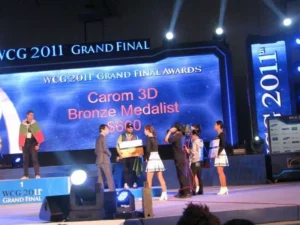
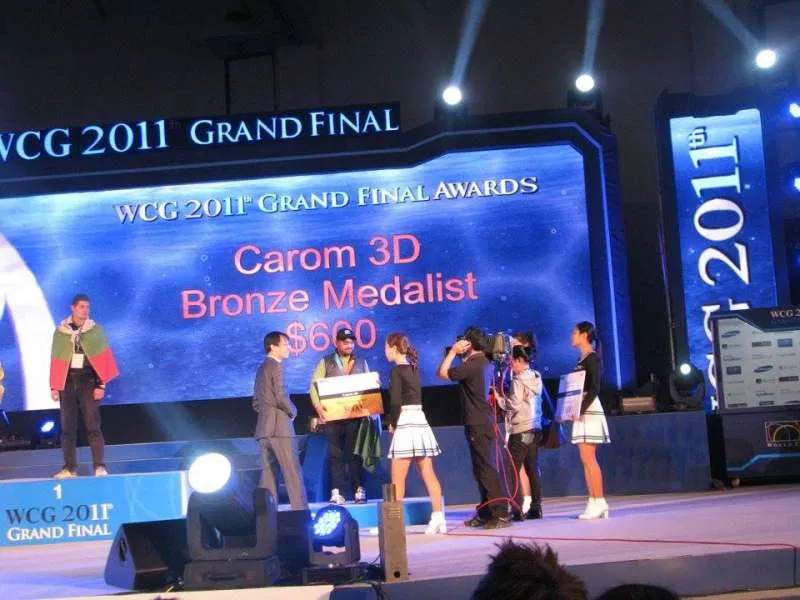
Fifteen years ago, an Indian esports competitor using the handle HI_ISTLER achieved a podium finish at the World Cyber Games in Busan, South Korea — a national first at esports’ biggest global event of the era. His name is Prince Johal, and the medal remains, to date, India’s only WCG podium finish.
Prince At the 2011 World Cyber Games World Championship Finals, Johal earned bronze in Carrom 3D, a billiards simulator created by Neoact. According to the official results as recorded on Wikipedia, gold went to Bulgaria’s Iliyan Ivanov Kiryakov, silver to Brazil’s Diego Adelino da Paz, and bronze to Prince Johal, ahead of Portugal’s fourth-place finisher.
The path there was not smooth. Johal first won India’s national qualifying finals to earn a place at the World Championship, where he was drawn into a group stage against three opponents, including the eventual silver and gold medalists. According to Sportskeeda’s article highlighting underrecognized Indian gamer accomplishments, he suffered defeats in all three group-stage contests. That left him fighting for bronze in a rematch against the same opponent who’d beaten him in the group stage — a Portuguese player competing as TwinS_KluB. This time Johal won the decider 3-0, according to the same account, to secure the medal.
An independently compiled archive of the 2011 tournament frames the result as evidence of the game’s reach beyond its core markets in Asia, noting Johal’s finish specifically in that context.
World Cyber Games ran as one of the major international esports championships through the 2000s and into the early 2010s, drawing national teams and qualifying tournaments across dozens of countries before the org’s format and prominence shifted in later years. A bronze at the 2011 finals placed Johal on a very short list of Indian competitors who had reached a WCG podium at all.
Read more People’s Choice stories on Studio CarryOnHarry. Reporting via Live News Vault.
Press Releases at Studio CarryOnHarry
Powered by SgAiSolution
Related Posts
Netflix UK Debuts Full ‘Twilight’ Franchise and ‘Dune: Part Two’ in Major Content Drop
Balle Balle Radio™ Entertainment Desk This week's Netflix UK refresh includes all five "Twilight" installments alongside Denis Villeneuve's "Dune: Part…
Ajay Devgn’s Crime Patrol Gamble: Star Power on a TV Budget
Balle Balle Radio™ Entertainment Desk A Bollywood A-lister fronting a long-running true-crime show has split opinion between those who see…
Bajpayee Transforms Into Gandhi in Sudhir Mishra’s Next
Bajpayee Transforms Into Gandhi in Sudhir Mishra's Next Studio CarryOnHarry Entertainment Desk | 6 September 2026 A Historic Casting Decision…
The Mismatch Problem: How Toxic Tried to Serve Too Many Masters at Once
Balle Balle Radio™ Entertainment Desk The most telling detail in this discussion isn't a plot complaint. It's a process confession.…
Dulquer’s I’m Game Loses Ground on Day 2 as Footfall Fails to Match Screens
Dulquer's I'm Game Loses Ground on Day 2 as Footfall Fails to Match Screens Studio CarryOnHarry Entertainment Desk | 5…
Mirzapur: The Movie Day 1 — Rs. 29.70 Crore Gross Beats Projections, But Weekend Hold Is the Real Verdict
Mirzapur: The Movie Day 1 — Rs. 29.70 Crore Gross Beats Projections, But Weekend Hold Is the Real VerdictMassMasala —…
Editor's Choice
Netflix UK Debuts Full ‘Twilight’ Franchise and ‘Dune: Part Two’ in Major Content Drop

Balle Balle Radio™ Entertainment Desk
This week’s Netflix UK refresh includes all five "Twilight" installments alongside Denis Villeneuve’s "Dune: Part Two," part of a 53-item slate comprising 36 films and 17 television series.
For the first time recently, Netflix UK now hosts the complete "Twilight" saga in one location: "Twilight" (2008), "New Moon" (2009), "Eclipse" (2010) and both parts of "Breaking Dawn" (2011, 2012). The franchise, adapted from Stephenie Meyer’s novels, made stars of Kristen Stewart, Taylor Lautner and Robert Pattinson, whose career since has spanned studio blockbusters and independent films, including a Time 100 mention in 2010 and a body of work that has grossed billions worldwide. These five installments shaped teen cinema of their generation, and their unified availability now allows UK viewers to experience the entire narrative arc on a single platform.
"Dune: Part Two," meanwhile, brings Villeneuve’s adaptation of Frank Herbert’s novel to the platform less than two years after its 2024 theatrical release. The film continues Paul Atreides’ story as he joins Chani and the Fremen against the forces that destroyed his family, with Timothée Chalamet and Zendaya starring. The film has already reached position 15 on Netflix UK’s movies rankings just days after arriving on the service, with further movement expected as the weekend approached.
The broader slate touches several genres and languages: French comedy "Call My Agent! The Movie" closes out that series’ run, alongside new arrivals including "Fauda" season five, "Physical 100: Italy" and Tyler Perry’s "Why Did I Get Married Again?" The latter title debuted at number eight on the platform’s movie chart in its first week, the announcement noted, with the sports documentary "Untold Mr. T: I Pity The Fool" close behind at number seven. Top of the chart was "The Whisper Man," followed by the documentary "Turning Point: Generation 9/11."
For Studio CarryOnHarry, the more interesting story here isn’t the blockbuster addition but the licensing pattern: pairing a two-year-old theatrical hit with a seventeen-year-old franchise suggests platforms are increasingly using nostalgia libraries to anchor subscriber attention around newer, splashier arrivals.
Read more People’s Choice stories on Studio CarryOnHarry. Reporting via Live News Vault.
Are you an author with a new release? We’re always looking for books to cover and authors to interview — tell us about yours here.
Press Releases at Studio CarryOnHarry
Powered by SgAiSolution
Related Posts
The Bronze Medal That Marked India’s Arrival in World Esports
Balle Balle Radio™ Entertainment Desk Fifteen years ago, an Indian esports competitor using the handle HI_ISTLER achieved a podium finish…
Ajay Devgn’s Crime Patrol Gamble: Star Power on a TV Budget
Balle Balle Radio™ Entertainment Desk A Bollywood A-lister fronting a long-running true-crime show has split opinion between those who see…
Bajpayee Transforms Into Gandhi in Sudhir Mishra’s Next
Bajpayee Transforms Into Gandhi in Sudhir Mishra's Next Studio CarryOnHarry Entertainment Desk | 6 September 2026 A Historic Casting Decision…
The Mismatch Problem: How Toxic Tried to Serve Too Many Masters at Once
Balle Balle Radio™ Entertainment Desk The most telling detail in this discussion isn't a plot complaint. It's a process confession.…
Dulquer’s I’m Game Loses Ground on Day 2 as Footfall Fails to Match Screens
Dulquer's I'm Game Loses Ground on Day 2 as Footfall Fails to Match Screens Studio CarryOnHarry Entertainment Desk | 5…
Mirzapur: The Movie Day 1 — Rs. 29.70 Crore Gross Beats Projections, But Weekend Hold Is the Real Verdict
Mirzapur: The Movie Day 1 — Rs. 29.70 Crore Gross Beats Projections, But Weekend Hold Is the Real VerdictMassMasala —…
-

 People's Choice4 days ago
Haivaan Isn’t Really an Akshay Kumar Film — And That’s the Problem
-

 People's Choice6 days ago
One Blockbuster, One Miracle, One Flop: What Toxic, Hanuman Anshakar and Mirzapur Reveal About India’s Box Office Logic
-

 People's Choice5 days ago
Drishyam 3: Can Ajay Devgn’s Franchise Survive Without Its Own Story?
-

 Books4 days ago
New Book from New Jersey Educator Applies Socratic Questioning to the Four Gospels
-

 Artists4 days ago
Song 1’s New EP “What The ….” Leans Into Five Tracks of Deliberate Disorder
-
 Art & Entertainment5 days ago
How a Career Box-Office Flop Became One of Prime Video’s Most-Watched Films
Pingback: Studio Carry On Harry Presents an Exclusive Interview with Film Director Subhrajit Mitra - INSCMagazine
Pingback: WCG Bronze Medallist 2011 from India Prince Johal Takes on Carry On Harry Talk Show - MSNBC24