TV & MOVIES
Box Office Blues: A Tale of Hits, Misses, and the Evolving Audience


Box Office Blues: A Tale of Hits, Misses, and the Evolving Audience
Studio Team CarryOnHarry, July 18, 2025
The Indian box office, a capricious arena, has recently presented a mixed bag of fortunes, highlighting the increasing importance of audience engagement and effective pre-release strategies. Examining the trajectories of several recent releases reveals critical insights into what works – and what doesn’t – in today’s cinematic landscape.
Rajkummar Rao, typically a reliable box office draw, finds himself in unfamiliar territory with ‘Maalik.’ While a day-five increase suggests some level of audience retention, the overall performance is undeniably underwhelming. The film’s struggle to recoup its substantial budget raises questions about its appeal compared to Rao’s previous hits. ‘Stree 2,’ ‘Vicky Vidya Ka Woh Wala Video,’ and ‘Bhool Chuk Maaf’ clearly benefited from stronger initial buzz and perhaps a more resonant storyline. ‘Maalik’ serves as a stark reminder that even established stars aren’t immune to box office disappointment if the film fails to connect with viewers on a deeper level. It underscores the crucial role of compelling narratives and effective marketing in driving sustained success. The film’s lackluster performance could potentially halt Rao’s winning streak, showcasing the volatility of the industry.
‘Housefull 5,’ on the other hand, presents a different kind of disappointment. While it managed to become the second-highest-grossing Bollywood film of 2025 (both domestically and worldwide) its inability to cross the coveted ₹200 crore mark in India and, more importantly, its failure to recover its massive ₹225 crore budget, paints a picture of financial loss. The film’s earnings, covering only 88.18% of the investment, highlight a significant challenge: the increasing pressure on Bollywood films to perform exceptionally well to justify exorbitant production costs. Even with a wide release and considerable marketing spend, ‘Housefull 5’ couldn’t translate its reach into profitability, raising concerns about the sustainability of big-budget ventures that don’t resonate universally.
The predicament of ‘Nikita Roy’ exemplifies the dangers of insufficient pre-release buzz and tough competition. Predictions of a dismal opening, with collections potentially staying below 70 lakh, paint a grim picture. The film’s struggles for screen space, compounded by competition from established films and a trailer that failed to ignite public interest, highlight the importance of a strong and well-executed marketing campaign. Even a talented cast can’t compensate for a lack of awareness and excitement. The decision to avoid conflict with another release, while strategically sound in theory, ultimately contributed to ‘Nikita Roy’ being overshadowed and under-promoted. This situation serves as a cautionary tale for filmmakers: a compelling story and a star cast are essential, but they must be supported by a proactive and engaging promotional strategy.
In stark contrast, ‘Saiyaara’ offers a beacon of hope. The film’s impressive advance ticket sales, driven by a captivating trailer and a popular soundtrack, demonstrate the power of effective marketing and a well-received product. The fact that it’s poised to potentially break records for a debutant-led film underscores the importance of originality and audience engagement. Despite minimal traditional promotional activities, the film’s strong content has resonated with viewers, generating significant pre-release excitement. Backed by a major studio, Yash Raj Films, ‘Saiyaara’ proves that a compelling narrative, combined with strategic marketing, can overcome the challenges of launching newcomers in a competitive market. It illustrates a pathway to success that prioritizes quality content and targeted audience engagement over excessive and costly promotional campaigns. The success of ‘Saiyaara’ serves as an encouraging sign for the industry, highlighting the potential for fresh talent and innovative storytelling to capture the audience’s imagination.
Ultimately, the varying fortunes of these films underscore the evolving dynamics of the Indian box office. Success hinges on a complex interplay of factors, including compelling narratives, effective marketing, strategic release dates, and, most importantly, the ability to connect with audiences on an emotional and intellectual level. The films that fail to resonate, regardless of star power or budget, serve as cautionary tales, while those that succeed offer valuable lessons in the art of captivating and engaging the viewing public.
Powered by SgAiSolution
Related Posts

Mirzapur Proves the Screen-to-Cinema Leap Can Work — But the Numbers Tell a More Complicated Story
Balle Balle Radio™ Entertainment Desk The web-to-film adaptation of Mirzapur has opened strongly at the box office, but its real…
Bajpayee Transforms Into Gandhi in Sudhir Mishra’s Next
Bajpayee Transforms Into Gandhi in Sudhir Mishra's Next Studio CarryOnHarry Entertainment Desk | 6 September 2026 A Historic Casting Decision…

Dulquer’s I’m Game Loses Ground on Day 2 as Footfall Fails to Match Screens
Dulquer's I'm Game Loses Ground on Day 2 as Footfall Fails to Match Screens Studio CarryOnHarry Entertainment Desk | 5…
Mirzapur: The Movie Day 1 — Rs. 29.70 Crore Gross Beats Projections, But Weekend Hold Is the Real Verdict
Mirzapur: The Movie Day 1 — Rs. 29.70 Crore Gross Beats Projections, But Weekend Hold Is the Real VerdictMassMasala —…
The OTT Gatekeepers Said No. Then ₹61 Crore Said Otherwise.
The OTT Gatekeepers Said No. Then ₹61 Crore Said Otherwise. Studio CarryOnHarry Entertainment Desk | 5 September 2026 From Boardroom…
How a ₹128 Crore Bet Built Bollywood’s Most Profitable Thriller Run
How a ₹128 Crore Bet Built Bollywood's Most Profitable Thriller Run Studio CarryOnHarry Entertainment Desk | 31 August 2026 A…

TV & MOVIES
Mirzapur Proves the Screen-to-Cinema Leap Can Work — But the Numbers Tell a More Complicated Story
Balle Balle Radio™ Entertainment Desk
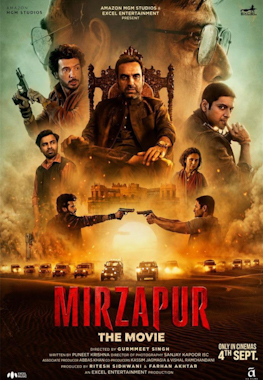
The web-to-film adaptation of Mirzapur has opened strongly at the box office, but its real test lies less in day-one numbers and more in whether a franchise built for episodic viewing can sustain itself as a theatrical event.
Adapting a hit web series into a theatrical film is one of Indian cinema’s more thankless exercises. Audiences already know the characters, already have a version of the story in their heads, and rarely asked for a cinema ticket to revisit something they streamed for free. Mirzapur, the Amazon Prime Video franchise turned feature film, walked into that exact trap — and, going by opening-weekend numbers, appears to have mostly avoided it.
The film reportedly opened to around 27 crore on its first day and crossed 62 crore within two days, figures that would have been difficult to predict for a series adaptation carrying an A certificate. That number matters because it undercuts a specific piece of industry snobbery: the assumption that a story rooted in small-town Uttar Pradesh, filled with regional dialect and rustic texture, will only draw audiences from smaller towns. Lagaan didn’t work that way two decades ago, and Mirzapur, on early evidence, isn’t working that way now. Urban multiplex audiences turning up for a story set in the badlands suggests the old formula — rural setting equals rural audience — deserves retirement.
A Franchise Doing the Heavy Lifting
Mirzapur’s advantage going in was never really about box office marketing. Three seasons and 29 episodes across 2018, 2020 and 2024 had already built something close to cultural shorthand — Guddu Pandit, Bablu, Munna Bhaiya, Kaleen Bhaiya, Beena. These aren’t just characters; for a loyal streaming audience, they’re personalities with established emotional stakes. That familiarity likely did more promotional work than any traditional campaign could have, and the film reportedly leaned into a lighter marketing push as a result, trusting the property itself to pull audiences in.
The casting continuity — Ravi Kishan reprising a role built around his character, Vikrant Massey’s arc carried forward by another actor — appears to have been handled carefully enough that newcomers to the franchise weren’t left disoriented. That’s a genuine achievement in adaptation work: translating a serialized universe into a single sitting without alienating either loyalists or first-timers.
Where the criticism holds more weight is on pacing. A story built for episodic release, with cliffhangers engineered every 40 minutes, doesn’t always compress cleanly into a two-and-a-half-hour theatrical runtime. The suggestion that the first half could have lost 20–25 minutes isn’t an unreasonable one — action-heavy, incident-dense storytelling that works in weekly installments can feel overstuffed when consumed in a single continuous block. That’s a structural tension, not necessarily a failure of execution, and it’s worth separating the two.
The Hanuman Factor
What complicates Mirzapur’s box office story isn’t its own performance — it’s timing. Hanuman Anshakar, still running strong and reportedly closing in on the 100 crore mark nearly a month after release, has continued pulling audiences even as Mirzapur opened. That’s an unusual pattern in Indian exhibition: a film gaining rather than losing steam in its third and fourth weeks, reportedly moving from roughly 40 lakh in one week to 10 crore, then 60 crore, then matching or exceeding that pace again. Whatever the exact figures settle at once verified, the trajectory itself is the story — a family-oriented, spiritually framed film sustaining momentum against a high-profile new release rather than fading in front of it.
The two films are pulling from genuinely different audience instincts. Hanuman Anshakar’s pull is rooted in family viewing and devotional resonance, an audience bringing parents, children and spouses to a shared screening experience. Mirzapur’s audience is drawn by gritty, violent, sexually frank storytelling built for adult streaming consumption. That they’re reportedly posting comparable ticket counts in the same window says less about either film’s individual quality and more about how fractured — and how resilient — Indian theatrical appetite currently is. It can support two entirely opposite viewing experiences simultaneously, provided each delivers what its audience actually came for.
Where Toxic Fits In
The more instructive comparison may actually be Toxic, the Kannada-language film starring Yash, which reportedly opened to a massive start before collapsing sharply in subsequent days. A huge opening number is often read as validation, but it primarily measures anticipation, not satisfaction. When a film with a big first day fails to hold, the story isn’t really about the opening — it’s about what happened between the ticket purchase and the walk out of the theatre. Word of mouth, not marketing spend, decides the second weekend. Mirzapur’s more gradual, franchise-driven climb — built on established trust rather than a single event-sized launch — may prove the more durable model, even if its peak numbers are less dramatic than a first-day spike.
Studio Perspective
The temptation is to read Mirzapur’s opening as a simple verdict: adaptation succeeded, series-to-film leap justified. That’s too tidy. What’s actually being tested here is whether streaming-built fandoms can be converted into one-time theatrical purchases without diluting what made the property valuable in the first place — its slow-burn, episodic tension. The film’s commercial opening suggests brand loyalty travels well across formats. Whether the story itself justified two and a half hours in a cinema, rather than a strong three-episode binge, is a separate and more honest question, and the pacing criticism suggests the answer isn’t a clean yes.
There’s also a quieter industry story sitting underneath the numbers: reported figures suggesting the film’s budget may have been inflated in public discourse relative to its actual scale, and unverified chatter around numerology influencing even the title change from an earlier working name to its current one. Neither claim is confirmed, and both should be treated as industry rumour rather than fact. But the mere existence of that chatter says something about how theatrical marketing works now — where perception of scale, and even superstition around naming, are treated as seriously as the film’s content itself.
The real test for Mirzapur isn’t this weekend. It’s whether Amazon and the filmmakers now treat the theatrical outing as a one-off victory lap for a franchise that’s run its course, or as proof that a fourth season — or a direct sequel building on the film’s cliffhanger ending — deserves greenlighting. A hit opening buys goodwill. It doesn’t yet answer whether the story has anywhere left to go.
— Studio CarryOnHarry Editorial Desk
Read more People’s Choice stories on Studio CarryOnHarry. Reporting via Live News Vault.
Powered by SgAiSolution
Related Posts
Bajpayee Transforms Into Gandhi in Sudhir Mishra’s Next
Bajpayee Transforms Into Gandhi in Sudhir Mishra's Next Studio CarryOnHarry Entertainment Desk | 6 September 2026 A Historic Casting Decision…
Dulquer’s I’m Game Loses Ground on Day 2 as Footfall Fails to Match Screens
Dulquer's I'm Game Loses Ground on Day 2 as Footfall Fails to Match Screens Studio CarryOnHarry Entertainment Desk | 5…
Mirzapur: The Movie Day 1 — Rs. 29.70 Crore Gross Beats Projections, But Weekend Hold Is the Real Verdict
Mirzapur: The Movie Day 1 — Rs. 29.70 Crore Gross Beats Projections, But Weekend Hold Is the Real VerdictMassMasala —…
The OTT Gatekeepers Said No. Then ₹61 Crore Said Otherwise.
The OTT Gatekeepers Said No. Then ₹61 Crore Said Otherwise. Studio CarryOnHarry Entertainment Desk | 5 September 2026 From Boardroom…
How a ₹128 Crore Bet Built Bollywood’s Most Profitable Thriller Run
How a ₹128 Crore Bet Built Bollywood's Most Profitable Thriller Run Studio CarryOnHarry Entertainment Desk | 31 August 2026 A…

Spider-Man: Brand New Day Dethrones Avatar 2 as 3rd Highest-Grossing Film Ever
Spider-Man: Brand New Day Dethrones Avatar 2 as 3rd Highest-Grossing Film Ever Studio CarryOnHarry Entertainment Desk | 31 August 2026…
Bajpayee Transforms Into Gandhi in Sudhir Mishra’s Next
Studio CarryOnHarry Entertainment Desk | 6 September 2026A Historic Casting Decision for Bollywood
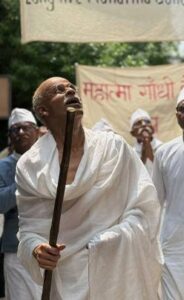
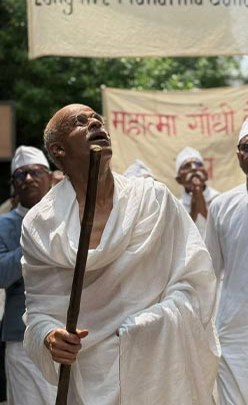
One of Hindi cinema’s most decorated actors, Manoj Bajpayee, is preparing to step into the shoes of the Father of the Nation. The acclaimed performer will portray Mahatma Gandhi on screen for the very first time in an upcoming directorial by veteran filmmaker Sudhir Mishra.
Lead instead with a specific observation about what the image shows — gesture, costume, expression — rather than restating that an image exists and people reacted. Ground it in a detail, not a summary.
The Story Behind the Film
What makes this project particularly compelling is its unique historical lens. Reframe around a question or tension rather than restating the fact: e.g., ‘Which 21 days? The production hasn’t said — and that silence is itself part of the intrigue around this project.’
Joining Bajpayee on screen is the celebrated Saurabh Shukla, who takes on a key role in the narrative. The pairing of two powerhouse performers promises an intense and layered cinematic experience.
Creative Team and Production Details
- Director: Sudhir Mishra — known for acclaimed works including Dharavi (1992), Hazaaron Khwaishein Aisi (2003), Chameli (2004), and Serious Men (2020)
- Producer: Anubhav Sinha and Narendra Hirawat
- Production Banner: Benaras Mediaworks
- Presented By: NH Studioz
The reunion of Mishra and Sinha — two stalwarts who have individually shaped the landscape of meaningful Indian cinema — adds significant creative weight to the venture. For the latest on Bollywood’s top stories, stay tuned to our dedicated coverage hub.
Bajpayee’s Most Daring Role Yet?
Manoj Bajpayee has consistently pushed boundaries throughout his career, from Satya to The Family Man. Yet portraying Mahatma Gandhi — arguably one of the most recognised and revered figures in world history — represents an entirely new frontier for the National Award-winning actor.
The responsibility of embodying Gandhi’s physicality, philosophy, and presence on screen is immense. Early reactions to the first-look image suggest Bajpayee has already made a powerful impression, even before a single frame of footage has been officially released.
Gandhi on Screen: A Rich Legacy
The role of Mahatma Gandhi has previously been portrayed by Ben Kingsley in Richard Attenborough’s landmark 1982 film Gandhi, and by Naseeruddin Shah in Kamal Haasan’s Hey Ram. Bajpayee’s interpretation promises to bring a fresh and distinctly Indian perspective to one of history’s most complex and beloved figures.
As entertainment industry coverage continues to track this project, anticipation is building rapidly across the film fraternity and among audiences nationwide.
What to Expect Next
An official title, release timeline, and further production details are yet to be announced. Given the calibre of talent involved both in front of and behind the camera, this film is shaping up to be one of the most significant Bollywood releases in recent memory.
– Entertainment Desk, Studio Carry On Harry
Background & Timeline
Manoj Bajpayee has been a cornerstone of Indian parallel cinema since his breakthrough in Satya (1998). Director Sudhir Mishra, meanwhile, has built a distinguished career spanning over three decades with films like Dharavi (1992), Hazaaron Khwaishein Aisi (2003), and Serious Men (2020). Producer Anubhav Sinha’s Benaras Mediaworks has backed several socially conscious films in recent years. This project marks the first time Bajpayee will portray Mahatma Gandhi, joining a select group of actors including Ben Kingsley and Naseeruddin Shah who have taken on the historic role.
Studio CarryOnHarry Perspective
At Studio Carry On Harry, we believe this casting is a watershed moment for Indian historical cinema. Manoj Bajpayee brings an unparalleled raw intensity to every role, and his portrayal of Mahatma Gandhi could redefine how Bollywood approaches biographical storytelling. Paired with Sudhir Mishra’s unflinching directorial vision and Anubhav Sinha’s commitment to meaningful narratives, this film has the potential to transcend entertainment and become genuine cultural documentation. We’ll be watching every development closely.
What’s Next?
Watch for the official title announcement and theatrical release date from the Benaras Mediaworks team. A full trailer reveal and further cast announcements are expected in the coming months. Given the historical subject matter and the creative powerhouse behind the camera, this film is likely to generate significant awards season conversation well ahead of its release.
Harry Johal’s Take — Studio CarryOnHarry
The 21-day framing is the most interesting editorial pressure point here, and the draft lets it slide past as atmosphere. Sudhir Mishra has spent thirty years making films about the India that official history edits out — so the real question isn’t whether this period is ‘untold,’ but why Mishra chose this particular window, and what that choice reveals about what he thinks the Gandhi mythology is still hiding. Until we know which 21 days, calling this a watershed moment is premature; the casting is bold, but the story is still a closed door.
Editor’s Verdict
Portraying Gandhi is not acting — it is accountability. Every gesture, every syllable, every frame will be measured against one of the most documented lives in human history, and audiences will not be forgiving of shortcuts. What makes this casting genuinely interesting is that Bajpayee brings no mythology to protect. Unlike stars who guard their image carefully, he has built a career on disappearing completely into characters — and that particular discipline may be exactly what this role demands. Sudhir Mishra’s decision to focus on an unexplored 21-day window is also shrewd; it sidesteps the shadow of Attenborough’s 1982 landmark rather than competing with it. The first-look reaction tells you something important: when a single image stops a scroll, the film has already done something right. Beyond the headlines, the real test will not be whether Bajpayee resembles Gandhi, but whether he makes audiences forget they are watching an actor at all.
Enjoyed this story? Follow Studio CarryOnHarry at carryonharry.com · Sources cross-checked via livenewsvault.com · 👍 Facebook · X · 📢 Share this story
—Powered by SgAiSolution
Related Posts
Dulquer’s I’m Game Loses Ground on Day 2 as Footfall Fails to Match Screens
Dulquer's I'm Game Loses Ground on Day 2 as Footfall Fails to Match Screens Studio CarryOnHarry Entertainment Desk | 5…
Mirzapur: The Movie Day 1 — Rs. 29.70 Crore Gross Beats Projections, But Weekend Hold Is the Real Verdict
Mirzapur: The Movie Day 1 — Rs. 29.70 Crore Gross Beats Projections, But Weekend Hold Is the Real VerdictMassMasala —…
The OTT Gatekeepers Said No. Then ₹61 Crore Said Otherwise.
The OTT Gatekeepers Said No. Then ₹61 Crore Said Otherwise. Studio CarryOnHarry Entertainment Desk | 5 September 2026 From Boardroom…
How a ₹128 Crore Bet Built Bollywood’s Most Profitable Thriller Run
How a ₹128 Crore Bet Built Bollywood's Most Profitable Thriller Run Studio CarryOnHarry Entertainment Desk | 31 August 2026 A…
Spider-Man: Brand New Day Dethrones Avatar 2 as 3rd Highest-Grossing Film Ever
Spider-Man: Brand New Day Dethrones Avatar 2 as 3rd Highest-Grossing Film Ever Studio CarryOnHarry Entertainment Desk | 31 August 2026…

Yash’s Big-Budget Spectacle Storms Screens With Record Numbers But Divides Critics
Yash's Big-Budget Spectacle Storms Screens With Record Numbers But Divides Critics Star power and spectacle collided at cinemas this opening…
-

 People's Choice5 days ago
Haivaan Isn’t Really an Akshay Kumar Film — And That’s the Problem
-

 People's Choice6 days ago
Drishyam 3: Can Ajay Devgn’s Franchise Survive Without Its Own Story?
-

 Books5 days ago
Craig Fadel’s ‘The Songless Bird’ Offers Children a Message of Self-Acceptance Through Musical Metaphor
-

 Artists5 days ago
Song 1’s New EP “What The ….” Leans Into Five Tracks of Deliberate Disorder
-

 Books5 days ago
New Book from New Jersey Educator Applies Socratic Questioning to the Four Gospels
-

 Editor's Choice4 days ago
Netflix UK Debuts Full ‘Twilight’ Franchise and ‘Dune: Part Two’ in Major Content Drop