Why Film Directors Love Making Book Adaptations:
Exploring the Intersection of Literature and Cinema
Why Film Directors Love Making Book Adaptations: Exploring the Intersection of Literature and Cinema
Before we dive deeper into the topic of why film directors love making book adaptations, we’d like to let our readers know that Studio Carry On Harry will be exploring this fascinating intersection of literature and cinema in this article. Through the lens of this topic, we’ll be examining why so many directors are drawn to adapting books for the big screen, and what makes certain adaptations successful while others fall short.
Whether you’re a fan of cinema or literature, there’s no denying the powerful impact that a good book adaptation can have. From the thrill of seeing your favorite characters brought to life on the big screen, to the excitement of experiencing a beloved story in a new way, there’s something truly magical about the process of adaptation.
So, whether you’re a die-hard fan of the book or simply a lover of cinema, we invite you to join us as we explore the world of book adaptations in Hollywood and beyond. Let’s dive in and discover what makes this unique art form so captivating for filmmakers and audiences alike.
There have been countless Hollywood films that were book adaptations over the years. Some of the most famous include “The Godfather” by Mario Puzo, “Gone with the Wind” by Margaret Mitchell, “Jurassic Park” by Michael Crichton, “The Shawshank Redemption” by Stephen King, “The Lord of the Rings” by J.R.R. Tolkien, and the Harry Potter series by J.K. Rowling. These films have been beloved by audiences around the world, and they demonstrate the appeal of adapting literature for the screen.
In the world of cinema, it is not uncommon for filmmakers to turn to the world of literature for inspiration. In fact, some of the greatest films of all time have been adaptations of books, from “The Godfather” to “Gone with the Wind.” But why do directors love making book adaptations? What is it about literature that appeals to filmmakers and why do these adaptations often become critical and commercial successes? In this article, we explore the intersection of literature and cinema and dive into the reasons why filmmakers are drawn to making book adaptations.
The Appeal of Adaptations: Bringing Beloved Stories to Life on the Big Screen
One of the main reasons why filmmakers love making book adaptations is that it allows them to bring beloved stories to life on the big screen. Many of the world’s most popular and enduring stories have been told through literature, and filmmakers are drawn to these stories because they have already proven to be successful in another medium. By adapting these stories to the big screen, filmmakers can introduce them to a whole new audience and potentially create a new generation of fans.
In addition, adaptations often come with built-in audiences. When a popular book is adapted into a film, it is likely that the book’s fans will be interested in seeing the story brought to life on the big screen. This built-in audience can help ensure the film’s success at the box office, which is a major consideration for filmmakers and studios.
The Creative Challenge of Adapting Literature for the Screen
Another reason why filmmakers are drawn to making book adaptations is the creative challenge that comes with adapting literature for the screen. Adapting a book is not a simple task – it requires filmmakers to make difficult decisions about what to include, what to leave out, and how to translate the written word into a visual medium.
Filmmakers must also navigate the expectations of the book’s fans. When a book is adapted into a film, there is always the risk of disappointing fans who have imagined the story and characters in a certain way. Filmmakers must find a way to balance their own vision for the story with the expectations of the book’s fans, which can be a delicate balancing act.
However, these challenges are also part of what makes book adaptations so appealing to filmmakers. Adapting a book requires creativity, skill, and a deep understanding of both the source material and the medium of cinema. It is a complex and rewarding process that can result in a truly great film.
The Richness and Complexity of Literary Works
One of the main reasons why filmmakers are drawn to making book adaptations is the richness and complexity of literary works. Literature has the ability to explore complex themes and ideas in a way that is often difficult to achieve through film alone. By adapting a book for the screen, filmmakers can bring these themes and ideas to a wider audience and explore them in new and different ways.
In addition, literature often features complex and nuanced characters that are difficult to create from scratch in a film. By adapting a book, filmmakers have a rich source of characters and storylines to draw from, which can result in more interesting and compelling films.
The Benefits of a Built-In Fanbase
As mentioned earlier, one of the benefits of making book adaptations is the built-in fanbase that comes with them. When a book is adapted into a film, it is likely that the book’s fans will be interested in seeing the story brought to life on the big screen. This built-in audience can help ensure the film’s success at the box office, which is a major consideration for filmmakers and studios.
However, the benefits of a built-in fanbase go beyond just box office success. When a book adaptation is successful, it can also help to introduce the book to a
whole new audience. Many people who may not have been aware of the book before may become interested in reading it after seeing the film adaptation. This can help to introduce people to new authors and new genres of literature, which is a great benefit to the literary world.
The Ability to Create a Visual World
When filmmakers adapt a book for the screen, they have the ability to create a visual world that brings the story to life in a way that is impossible to achieve through the written word alone. By using visual effects, set design, and cinematography, filmmakers can create a world that is both visually stunning and faithful to the source material.
For example, consider the Harry Potter film adaptations. The books are filled with descriptions of the magical world of Hogwarts, but it is only through the films that audiences were able to fully experience the world in all its visual glory. The films were able to bring to life the magical creatures, the Hogwarts castle, and the Quidditch matches in a way that allowed audiences to fully immerse themselves in the world of Harry Potter.
The Opportunity to Work with Great Actors
Another benefit of making book adaptations is the opportunity to work with great actors. Many actors are drawn to book adaptations because they are interested in portraying complex and interesting characters. By adapting a book, filmmakers have a rich source of characters to draw from, which can result in some truly great performances.
For example, consider the performance of Anthony Hopkins in “The Silence of the Lambs.” Hopkins’ portrayal of Dr. Hannibal Lecter is considered one of the greatest performances in cinema history. Hopkins was drawn to the role because he was interested in portraying a character that was both intelligent and manipulative, and he found that in the character of Lecter.
The Opportunity to Tell a Story in a Different Way
Finally, one of the reasons why filmmakers love making book adaptations is the opportunity to tell a story in a different way. When a book is adapted for the screen, filmmakers have the opportunity to interpret the story in their own way and put their own spin on it. This can result in a film that is both faithful to the source material and unique in its own right.
For example, consider the film adaptation of “The Lord of the Rings.” Director Peter Jackson was able to stay true to the source material while also putting his own spin on the story. The result was a series of films that were both faithful to the books and unique in their own right.
Conclusion
In conclusion, filmmakers love making book adaptations for a variety of reasons. From the appeal of bringing beloved stories to life on the big screen, to the creative challenge of adapting literature for the screen, to the richness and complexity of literary works, there are many reasons why filmmakers are drawn to making book adaptations. Whether it is the ability to create a visual world, work with great actors, or tell a story in a different way, making book adaptations offers filmmakers a unique and rewarding creative challenge that can result in some truly great films.
Vivek Sharma Announces Trio of Unique Films Under Filmzone Creation Banner
December 30, 2025
Director Vivek Sharma, known for “Bhoothnath,” is set to produce three films under his Filmzone Creation banner, each exploring unique subjects. Speaking at the press meet, Sharma described the projects as a series of family-friendly films infused with elements of paranormal activity, comedy, and dark humor, showcasing both new and established talent. Notably, Sharma himself will take on lead roles in two of these ventures.
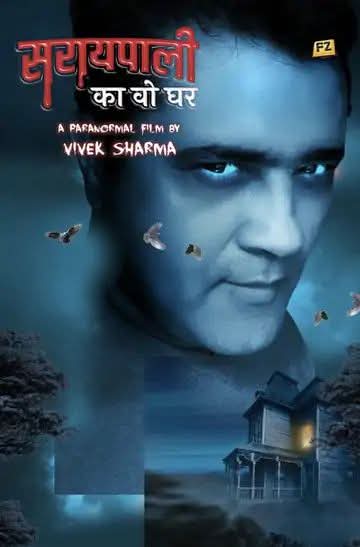
The first film, “Sarayapali Ka Woh Ghar,” delves into paranormal activities, drawing inspiration from real-life events. Sharma emphasized the film’s emotional and dramatic depth and said it is expected to go into production soon.
The second film, titled “Ka Kha Ga Gha Nanga,” offers a comedic take on the Hindi alphabet, portraying the lives of farming families and urban dwellers, reflecting the contrast between traditional hand pump usage and the modern reliance on sanitizers. The film will feature a cast of 15 children alongside prominent actors.
The third film, “Chullu Bhar Pani,” is a black humor comedy centered around a village grappling with a severe water shortage. The narrative follows the villagers’ naive yet humorous attempts to resolve their predicament. Sharma highlighted the intriguing nature of both the title and the storyline.
Sharma, addressing the media, expressed his commitment to providing a platform for emerging talent through Filmzone Creation, aiming to release two quality films annually. He also mentioned that the banner’s upcoming projects will feature a blend of newcomers and established stars.
Prior to this announcement, Vivek Sharma directed films such as “Bhoothnath” (released May 9, 2008), produced by B.R. Chopra’s production company and Ravi Chopra. The film starred Amitabh Bachchan, Shah Rukh Khan, and Juhi Chawla. The film is a family drama, fantasy, and horror mix that tells the heartwarming story of a friendship between a ghost and a child with humor.
‘Kal Kissne Dekha’ released on June 12, 2009, featured Rishi Kapoor, Jackie Bhagnani, and Vaishali Desai in lead roles. Produced by Vashu Bhagnani, this romantic science-fiction film revolves around a boy who can glimpse into the future.
‘A Game Called Relationship,’ released on February 14, 2020, was produced and starred Vivek Sharma. The film explores modern relationships, focusing on the dynamics of live-in partnerships and is intended to be a clean, family-friendly film.
In a remarkable display of cinematic success, ‘Dhurandhar,’ starring Ranveer Singh and Akshaye Khanna, continues its reign at the box office, setting new benchmarks. Veteran actor Rakesh Bedi, who portrays politician Jameel Jamali in the Aditya Dhar-directed spy-action thriller, shared his insights on the film’s overwhelming reception. He recalled a prediction he made prior to the film’s release, stating, “‘Dhurandhar’ is not going to raise the bar, it is going to break the bar.” The film’s performance seems to validate Bedi’s bold statement.
Bedi also recounted an enthusiastic fan reaction on Instagram, illustrating the audience’s deep engagement with ‘Dhurandhar,’ where a fan expressed impatience for the sequel’s release.
In a video shared on Instagram, Bedi expressed his excitement, stating, “Friends, ‘Dhurandhar’ is showing no signs of stopping; it continues to run and run. Before the film’s release, I made a statement that ‘Dhurandhar’ is not going to raise the bar, it is going to break the bar, because people are going to see this film repeatedly, continuously, and that is exactly what is happening.”
He further added, “People are showering so much love, it’s like a tsunami. I would say this film is like my friend’s restaurant in Delhi, Juggernaut.”
Bedi expressed his gratitude for the widespread acclaim the film has received. He highlighted a particular fan’s reaction, recounting, “One lady told me that after watching the film, she was angry about why it ended. And after watching the film, she felt like she should go to sleep and wake up directly on March 19, when its next part will be released. Isn’t that amazing?”
He extended his appreciation to the director and the production team, noting, “This film has become an international rage, which I believe has never happened in Indian cinema history. Such rage, such love, such a big tsunami. I thank JioStudio, the entire team of ‘Dhurandhar,’ and especially the director Aditya Dhar. Hats off to you, Aditya. Love you, brother.”
As per Sacnilk, ‘Dhurandhar’ has amassed ₹517 crore net in its first 16 days. The film further garnered ₹38.5 crore net on a recent Sunday, elevating its domestic total to ₹555.72 crore. ‘Dhurandhar’ has surpassed the lifetime collections of Sunny Deol’s ‘Gadar 2’ (₹525 crore net), Shah Rukh Khan’s ‘Pathaan’ (₹543 crore), and Ranbir Kapoor’s ‘Animal’ (₹553 crore).
According to Comscore, ‘Dhurandhar’ ranked among the top five global releases in its second weekend. With an overseas gross of $18 million, the film has exceeded ₹750 crore worldwide as of Friday and is projected to join the ₹800-crore club imminently.