Connect with us

People's Choice

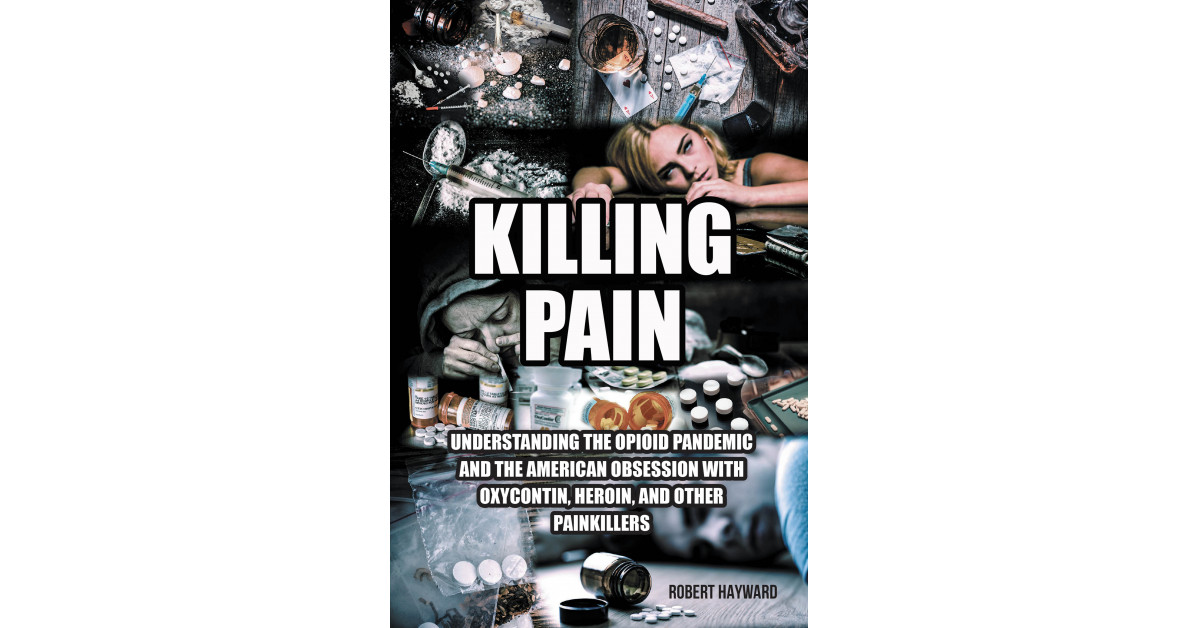
Author Robert Hayward’s new book, ‘Killing Pain’ explains the origins of the opioid pandemic and his harrowing journey battling addiction and what it took to get clean

Harry Johal

Published

on

Author Robert Hayward’s new book, ‘Killing Pain’ explains the origins of the opioid pandemic and his harrowing journey battling addiction and what it took to get clean


Recent release “Killing Pain: Understanding the Opioid Pandemic and the American Obsession with Oxycontin, Heroin, and Other Painkillers” from Covenant Books author Robert Hayward shares his personal experiences with addiction. From how it began to finally getting clean, Hayward discusses each step along his journey and how he managed to get to the other side.

Press Release


Sep 30, 2022

Robert Hayward, a recovering opioid addict and licensed drug and alcohol counselor facilitating the Wellbriety Program on the Spokane Indian Reservation, has completed his new book, “Killing Pain: Understanding the Opioid Pandemic and the American Obsession with Oxycontin, Heroin, and Other Painkillers”: a potent and true story of how addiction can begin and its devastating impact on people’s lives.

“I was clean and sober for six wonderful years after ending my obsession with alcohol,” writes Hayward. “My life was on a trajectory that was nothing but good. Then I gave into pain, something everyone has at one time or another at differing degrees, some mild, some acute. Being an addict, I knew all the warning signs and didn’t go into it blind. My ego had returned slowly after becoming very humble and appreciative during those six years. It was my ego that got me in trouble before, and it came back to haunt me. I was always my biggest superhero and my worst enemy. For no good reasons, it was just me.”

Hayward continues, “I will tell you how it happened to me the second time around. You will learn how frustrating and lonely and horrifying it is to become overwhelmed with addiction. This is for everyone who is an addict or alcoholic, everyone who has been affected by an alcoholic or addict, or anyone who wants to truly understand how a person can become addicted and trade everything they are in for the pursuit of a drug that will eventually kill them. And the best part is the solution. I found the solution, and you will too. But to get there, I had to go to hell first.”

Published by Covenant Books of Murrells Inlet, South Carolina, Robert Hayward’s new book holds nothing back in its brutal honesty of the toll addiction has on others. Readers will find how a seemingly perfect life can become quickly transformed and what it truly takes to recover.

Readers can purchase “Killing Pain: Understanding the Opioid Pandemic and the American Obsession with Oxycontin, Heroin, and Other Painkillers” at bookstores everywhere, or online at the Apple iTunes Store, Amazon or Barnes & Noble.

Covenant Books is an international Christian-owned and -operated publishing house based in Murrells Inlet, South Carolina. Covenant Books specializes in all genres of work that appeal to the Christian market. For additional information or media inquiries, contact Covenant Books at 843-507-8373.   

Source: Covenant Books



Source link

Continue Reading
Click to comment

Leave a Reply

Your email address will not be published. Required fields are marked *

Editor's Choice

Bollywood Under the Influence: How Paid Media Distorts Reality

H Johal

Published

on

By

Balle Balle Radio Entertainment Desk


December 31, 2025


Bollywood Under the Influence: How Paid Media Distorts Reality


## Bollywood’s Battle for Authenticity: Unmasking Paid Media’s Influence


**Mumbai, India** – The dazzling world of Bollywood is facing a reckoning as concerns mount over the increasing reliance on paid media and fabricated publicity. Veteran journalists and industry insiders are sounding the alarm, warning that these practices are eroding the very foundation of authenticity upon which the Indian film industry was built. The shift, they say, is creating a distorted reality for both the stars and the audiences who adore them.


The core issue, according to a recent panel discussion among industry experts, centers on the curated image. Celebrities and studios are increasingly investing in paid channels to shape their public perception. This involves filling press events with paid attendees and strategically cultivated fan clubs, manufacturing an atmosphere of overwhelming adoration, as opposed to genuine engagement with critical media. One panelist bluntly stated this trend replaces authentic dialogue: “You want your applause, so you gather people like that.”


This calculated approach, the panel argued, directly undermines the role of traditional journalism. Critical analysis is being sidelined in favor of public relations-driven narratives. Audiences are left with a skewed understanding of films, talent, and overall quality. The rise of paid reviews, both positive and negative, further muddies the waters. This makes it exceedingly difficult for the public to distinguish between genuine opinions and strategically manufactured hype. A panelist revealed the open secret: “Positive reviews are paid for, negative reviews are paid for,” highlighting the pervasiveness of the issue.


Panelists pointed to examples such as Shah Rukh Khan’s pioneering use of lavish hotel halls reserved for fan clubs on his birthday. They argue that while such displays generate immediate validation, prioritizing them over genuine skill development ultimately harms the industry. One panelist warned, “You are killing yourselves with your own hands,” underscoring the long-term consequences of prioritizing image over substance.


The consensus among experts is clear: the over-reliance on paid media poses a significant threat to the long-term viability of Bollywood. By prioritizing image over artistic integrity and genuine storytelling, the industry risks losing touch with its audience. The challenge now is whether Bollywood can reclaim its authenticity and reconnect with the core values that once defined it, or if it will continue down a path of manufactured hype and distorted realities.

Continue Reading

Editor's Choice

Inside Bollywood’s Silence: The Real Reason Dhurandhar Isn’t Being Celebrated

H Johal

Published

on

By

Inside Bollywood’s Silence: The Real Reason Dhurandhar Isn’t Being Celebrated


In a season where Bollywood films are loudly pushed, praised, and plastered across every digital corner, the curious silence surrounding Dhurandhar has raised more questions than answers. Social media has been buzzing with talk of nepotism, PR politics, and manipulated corporate bookings. But industry insiders tell a very different story—one that has less to do with individuals, and everything to do with genre power, studio territory, and the fragile ego structure of Bollywood’s biggest players.


At the heart of the storm lies a simple fact: Dhurandhar is a spy thriller. Not just any thriller—the genre Bollywood unofficially considers the exclusive territory of Yash Raj Films. For over a decade, YRF has aggressively built its “Spy Universe,” treating it like a cinematic fortress. The studio’s identity, revenue expectations, and long-term franchise planning are deeply tied to the success of this genre. So when War 2—their highly anticipated blockbuster—released earlier this year and struggled at the box office, it didn’t just bruise egos; it shook the foundation of the Spy Universe itself.


Against this backdrop, the arrival of Dhurandhar became a complication no one at YRF wanted. Insiders insist the silence around it isn’t about actor rivalries or PR games. It’s far more strategic. Publicly celebrating another studio’s spy thriller—especially one gaining genuine praise—would inevitably weaken the narrative YRF is trying to rebuild with its upcoming film Alpha. Acknowledging Dhurandhar would mean accepting a new, strong competitor in the very space YRF claims as its own.


There’s also the added complexity of personalities. Industry veterans quietly acknowledge the friction between “Gangu” and certain YRF loyalists. Some believe that any hype around Dhurandhar will reflect indirectly on Ranveer Singh, an actor who has been caught in the crosshairs of shifting alliances and subtle jabs from prominent names. Even recent comments by Filmfare’s Jitesh Pillai, insiders say, were not random—they were part of the larger mood within the establishment.


What is particularly telling is that this silence cannot be explained by corporate bookings or inflated footfall numbers. Brahmāstra pioneered and benefitted from such tactics, yet it received full-throated celebration from every camp. The absence of similar support for Dhurandhar points clearly to the genre politics at play.


Behind-the-scenes tea also hints at larger ripples: whispers of Deepika Padukone stepping away from an Ayan Mukerji–Ranbir Kapoor project have surfaced, possibly tied to the tense undercurrents created by this power struggle. Whether these developments are temporary or signal a deeper fissure will become clearer in the coming months.


For now, what remains undeniable is the industry’s discomfort. Dhurandhar is being quietly acknowledged as a good film—good enough to challenge the supremacy of the Spy Universe itself. And in a world where brand territories matter more than merit, silence has become a weapon.


As Bollywood inches toward the release of Alpha, expect the temperature to rise, alliances to shift, and narratives to be aggressively shaped. Because in this battle, it isn’t actors fighting for acclaim—it’s studios fighting for genre dominance.


Continue Reading

Trending