
Interviews
Will Noon Artist in Brooklyn who sings/raps about struggle, heart break and motivation.


Studio Carry On Harry : Talks with Will Noon is an Artist from Brooklyn who sings/raps about struggle, heart break and motivation , but in such a sophisticated way that you probably missed some of the bars until you see the lyrics ! That’s real rap !
Studio objective to bring story of Music Artists Will Noon was to inspire the readers to never give up on dreams. We hope you will learn something meaningful out of this Brooklyn based music artist.
Interview with Will Noon Artist in Brooklyn
Tell us about yourself ?
Hey world Will Noon here. Not your everyday artist ! From the streets of Brooklyn, I, Will Noon, am the future of the industry. Being an elite level artist, elite artist manager, photographer, videographer and clothing designer, there are honestly no limits to what I’m willing to learn to help create opportunities for the future . I want to be able to help put people in a position to be productive and get money as opposed to being in streets or being in other bad situations. I know what it’s like to struggle and I would like to see a change in my community !
How long you been in performing arts ?
I began writing poetry from 2007-2008 , which quickly transitioned into writing raps and love songs in the early parts of 2009. I began managing my first artist as of 2017. I began Photography/Video back in 2013, and recently learned from the founders of @Turkeynecknyc and @700weirdos how to design clothing and started my line @Pickasideklothing247 .
What was most attractive part for you to be in this industry ?
Poetry and music were my only releases in terms of venting . Although I know a lot of people, I’m very particular about venting to people so I would rather find creative ways to say it on songs without specifying what I’m referring to.
Share some experiences ( good or bad ) any that made you grow in life or profession ?
Originally dropping Highs and Lows album in 2019, I was close to giving up music after receiving little to no traction on his project so a year later for Misery Lives Kompany , I came back with a new sound, quality, and some notable features such as Netflix Star Jaden Jordan from the show Grand Army, and now is quickly gathering streams and slowly but surely rising to stardom.
Who inspired you ? How do you work on creating your own signature style ?
My inspirations growing up were Blackstreet, T-Pain, Drake, Lil Wayne, like I respected the artists who took time into being lyrical and simultaneously making music that genuinely sounded good. So when it came to making my own music, I was always adamant about making it sound good but always maintaining lyrics with substance and meaning.
What do you want to convey through your music?
I would love to have people relate and look at my journey as proof that pain and struggle is temporary and that the sky isn’t the limit, there is none.
Story behind making of your new track / Album? ( idea of making , some interesting inspirational facts to share)
Misery Loves Kompany, is an album that was fueled by a really bad break up in which I decided to paint the picture of all the things she did and explain to her how her timing couldnt have been worse for her. The name is also the reason I have 12 features on my 15 track album . I wanted to share my story, pain and platform with friends who also could relate to some of the situations I endured as an artist.
Any interesting trivia about making of song ?
The names explain the songs and Me, and the outro “Wild Dumb” has references to all the other tracks in different lines. Trust Will Noon is probably the most interesting artist ever.
People who you would like to thank ?
I would love to thank my producer/engineer @Jyjwlz, this man was there with me for some sessions from 2pm to 8am, no rest in between straight working .
People who you would like to work with and people you idolize to be like professionally ?
I would honestly love to make tracks with some of the lovely female R&B artists, like H.E.R. , Sza, Jhene Aiko, Summer Walker and if there’s a rapper I’d like to work with it would be J Cole or Drake.
Where do you see your music 3 years from now ?
3 years from now I see my music being played in NBA Arenas, radios in every city, and I expect atleast one music award before the next 3 years. I plan to obtain lots of accolades , in due time .
How would you like to stretch your boundaries of genre in future projects ?
In the future I definitely plan to release a lot more styles of music, so that I can’t be placed in a single category sonically. I would like to be recognized as the most creative artist of all time!
Message for Fans and listeners
I would love to say again the sky isn’t the limit, your mentality is. Whatever you say you can do, you really can do, don’t let that go over your head !
Website Link
https://linktr.ee/WillNoonMusik
Facebook Handle
https://www.facebook.com/willnoonmusik/
Twitter Handle
https://twitter.com/willnoonmusik
Instagram Handle
https://www.instagram.com/willnoonmusik
Spotify Handle
https://www.spotify.com/willnoon
Powered by SgAiSolution
Related Posts

Long Beach Actor Ray Buffer Plays Villain in Sci-Fi Western Short at New Local Film Festival
Long Beach character actor Ray Buffer takes on a villain role in "The Lord of All Future Space and Time,"…

Tagore Almeida discusses the deeply personal journey behind SALIGIA
SALIGIA: Tagore Almeida on the Seven Deadly Sins, the Virtues Within Us, and the War We Fight Inside In conversation…

Netflix Groups Book Adaptations Under New ‘Watch Your Favorite Books’ Collection
Balle Balle Radio Entertainment Desk Netflix has organized its book-to-screen adaptations into a new curated genre called Watch Your Favorite…

New Single ‘New Beginning’ Marks Second Release From AI-Assisted Virtual Artist
Lunayah, a virtual music artist described as blending AI-assisted production with human creative direction, has released a new single called…

New Zealand’s David Pomeroy Releases 300th Album in Under Two Years
Studio CarryOnHarry Desk New Zealand recording artist David Pomeroy has released his 300th album, titled "Album 300," according to a…

Clean, Plant‑Iron Meals for Energy, Recovery, and Everyday Vitality
Meal: Chickpeas + Red Peppers Why It Works: Chickpeas provide plant‑based iron, protein, and fibre. Red peppers add vitamin C,…


Interviews
Long Beach Actor Ray Buffer Plays Villain in Sci-Fi Western Short at New Local Film Festival
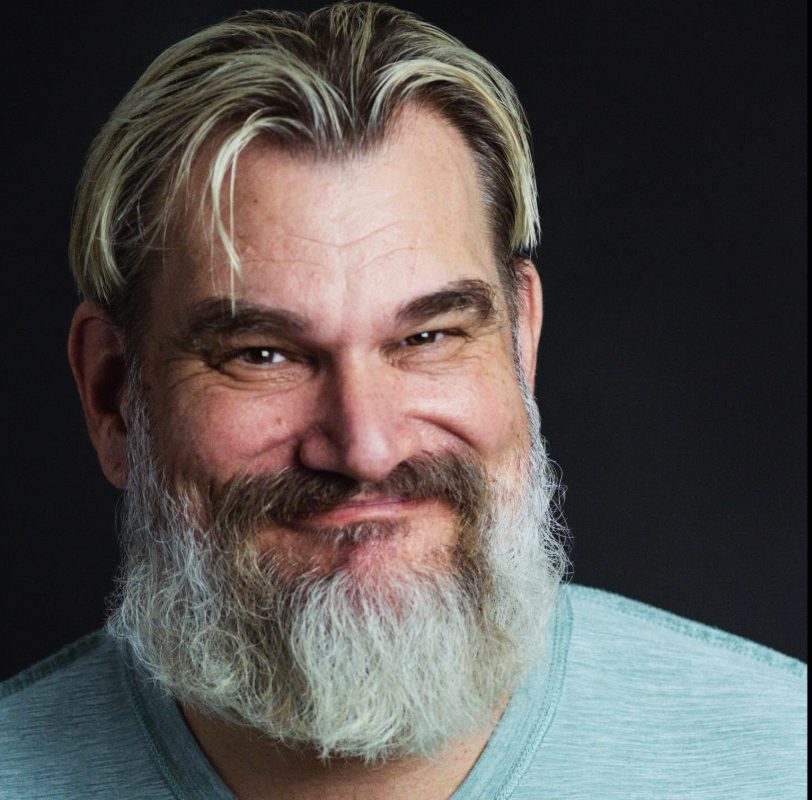
Long Beach character actor Ray Buffer takes on a villain role in "The Lord of All Future Space and Time," a sci-fi western short screening as part of the inaugural Long Beach Film Festival, according to the announcement.
The festival marks the first edition of a new event on the city’s cultural calendar, running August 28 and 29 at the historic Art Theatre in Long Beach’s Retro Row district, according to festival promotion. The short screens Saturday, August 29, at noon, according to the announcement and other festival listings.
Buffer is a Long Beach-based character actor whose work spans decades, with a resume that includes western villains, mobsters and more nuanced parts in historical docudramas, according to background material on his career. He’s described as known for a commanding presence and a deep voice, traits that line up with the villain role he plays in this short. His social media has also referenced involvement in a separate sci-fi animated short tied to the festival’s opening, though it’s not clear from available material whether that refers to the same project or a different one screening the same weekend.
No director, cast list beyond Buffer, or plot synopsis for "The Lord of All Future Space and Time" was included in the announcement. Ticket and program details for the full festival lineup were not specified in the material provided.
Powered by SgAiSolution
Related Posts
Tagore Almeida discusses the deeply personal journey behind SALIGIA
SALIGIA: Tagore Almeida on the Seven Deadly Sins, the Virtues Within Us, and the War We Fight Inside In conversation…
Netflix Groups Book Adaptations Under New ‘Watch Your Favorite Books’ Collection
Balle Balle Radio Entertainment Desk Netflix has organized its book-to-screen adaptations into a new curated genre called Watch Your Favorite…
Clean, Plant‑Iron Meals for Energy, Recovery, and Everyday Vitality
Meal: Chickpeas + Red Peppers Why It Works: Chickpeas provide plant‑based iron, protein, and fibre. Red peppers add vitamin C,…

Featured Set — The Knitted Pod Trio
Three forms, one language. Each pod — Cylinder, Gathered, and Rib‑Top — is hand‑knitted in Coventry with pure yarn and…

Knitted in Coventry City Studio, United Kingdom
In my Coventry City studio, each piece is hand‑knitted with a sculptural, tactile language that feels both familiar and unexpected.…

How Self-Interviews Boost Book Sales and Author Brand
How Self-Interviews Boost Book Sales and Author Brand Most authors struggle to get their books noticed in today's crowded…

SALIGIA: Tagore Almeida on the Seven Deadly Sins, the Virtues Within Us, and the War We Fight Inside
In conversation with Studio CarryOnHarry, author Tagore Almeida discusses the deeply personal journey behind SALIGIA, a mythological fantasy that turns an ancient framework of vice into an exploration of courage, compassion, humility, integrity, forgiveness, reverence and love.
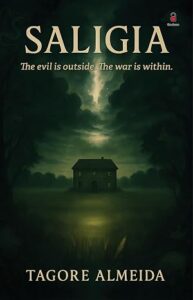 For centuries, the seven deadly sins have provided a vocabulary for examining human weakness. Pride, envy, anger, greed, lust, excess and apathy have appeared across religious teaching, philosophy and culture in different forms.
But what happens when we stop asking only what is wrong with us—and begin asking what already exists within us to confront those weaknesses?
That question sits at the heart of SALIGIA.
Drawing upon an ancient Latin mnemonic traditionally associated with the seven deadly sins, author and filmmaker Tagore Almeida turns the familiar structure on its head. Instead of building his story solely around human failings, he constructs a symbolic world around seven countervailing virtues: courage, compassion, humility, integrity, forgiveness, reverence and love.
For Almeida, the idea is also deeply personal. Born Catholic in Goa before life took him through Britain, the Middle East and Asia, his encounters with different cultures, beliefs and people gradually led him to question whether the behaviours traditionally described as “sins” belong to any one religion at all—or simply to humanity.
In this conversation with Studio CarryOnHarry, Almeida talks about the origins of SALIGIA, why a house became central to its mythology, how the external and internal battles of the story intersect, and why he ultimately came to believe that virtue may be less about becoming someone new than remembering something already within us.
Studio CarryOnHarry: SALIGIA takes its title from a Latin mnemonic traditionally associated with the seven deadly sins, yet your novel uses that framework to explore virtue. What drew you personally to this piece of theological history?
Tagore Almeida: What fascinated me about SALIGIA was never really the religious label attached to it. It was the humanity hiding underneath.
Harry, I was born Catholic in Goa, so the idea of the seven deadly sins was part of the landscape I grew up with. Over time, I became disillusioned with certain aspects of organised religion, but Catholicism remained part of my cultural and emotional foundation. So SALIGIA was familiar territory.
Then life took me elsewhere—Britain, the Middle East, Asia—and I found myself genuinely connecting with people of many different faiths, and with people of no faith at all.
I became curious. Were these so-called “deadly sins” uniquely Christian ideas, or were they simply human behaviours that religions had given different names to?
The more I looked, the more I realised that pride, envy, anger, greed, lust, excess and apathy appear in one form or another almost everywhere—sometimes through religion, sometimes through philosophy, and sometimes simply through culture and family. Apparently, humanity has been remarkably consistent in its weaknesses.
But eventually a more interesting question occurred to me. Instead of continually asking, “What is wrong with us?” I began wondering, “What already exists within us that can confront what is wrong?”
That changed the book completely.
I have always been fascinated by the invisible parts of human beings—compassion, courage, kindness. Whether I am writing fiction, making a film, recording a podcast or attempting poetry, I seem to arrive, rather annoyingly, at the same question:
Who are we when nobody is watching?
SALIGIA gave me an ancient framework within which to explore that. The sins gave me the architecture. The virtues gave me a reason to walk inside.
Studio CarryOnHarry: That architecture becomes quite literal in the book: an ancestral dwelling with rooms representing courage, compassion, humility, integrity, forgiveness, reverence and love. Why did a house become the setting for this inversion?
Tagore Almeida: A house felt natural because a house is never just architecture. It holds memory. It holds the things we proudly display in the sitting room and the things we quietly push into cupboards and hope nobody ever opens.
Human beings are rather like that. We all have rooms we happily invite people into, and other rooms we avoid ourselves.
When I began shaping SALIGIA, I also made a conscious decision not to fill the story with identifiable human characters. The moment you give someone a face, name, nationality or religion, readers naturally begin placing them into categories.
I wanted to remove those distractions as much as possible. I wanted the reader to encounter the ideas before encountering identity. So the house became the character.
Once that happened, the inversion became quite natural. Instead of seven compartments representing human failure, I imagined seven spaces representing what might stand against those failures: courage, compassion, humility, integrity, forgiveness, reverence and love.
The house also allowed me to explore virtue without turning the book into a seventy-five-page sermon. Nobody really wants that. I certainly wouldn’t.
I wanted readers to move through something rather than simply be told something—to open doors, enter rooms and discover what has been forgotten, neglected, protected or perhaps left waiting quietly in the dark.
In many ways, the house became a metaphor for the self.
We spend an extraordinary amount of our lives searching outside ourselves for answers—in success, possessions, religion, status, technology, relationships, recognition and approval.
We keep renovating the outside of the house.
SALIGIA quietly asks a different question: What if some of the rooms we have spent our whole lives searching for were already inside us?
Perhaps courage, compassion, humility and love are not things we need to acquire. Perhaps they are rooms we simply need to reopen.
Studio CarryOnHarry: That leads to one of the book’s central ideas—that these virtues may already exist within us. Why was that important to you?
Tagore Almeida: Because I am simply not convinced that human beings arrive as empty vessels waiting to be filled with goodness. Harry, I think we already arrive with quite a lot of it.
Look at children. Before the world starts handing them labels, they share, care and comfort one another. They are curious about animals, fascinated by nature and capable of affection without first asking what religion, race, nationality or social class somebody belongs to.
That, to me, is humanity in a fairly pure form. Then life begins adding layers.
Religion, race, politics, family, community, fear, ambition, prejudice, success—all of these begin shaping us, sometimes obviously and sometimes so quietly that we barely notice.
Watch a child comfort another child who is crying. There is no philosophy involved. No scripture. No management seminar on empathy. Something instinctive simply responds.
Perhaps life then complicates us. We accumulate ambition, fear, disappointment, comparison, possessions, prejudice, success and, if we are especially fortunate, an impressive job title to put on LinkedIn.
Somewhere along the way, we become very sophisticated at forgetting very simple things.
SALIGIA was never intended to say, “Here are seven virtues you need to acquire.” That sounded suspiciously like homework.
Instead, the book asks something gentler, but perhaps more uncomfortable:
What if you already possess them?
And if courage, compassion, humility, integrity, forgiveness, reverence and love are already somewhere within us, the real question is no longer how we acquire them.
The question becomes why, sometimes, we choose not to use them.
Studio CarryOnHarry: The subtitle draws a distinction between an external evil and an internal war. How do those two journeys intersect for Salem and Medea?
Tagore Almeida: The external journey gives the story movement. The internal journey gives it meaning.
Think of something ordinary. You hear that someone you know has spoken badly about you behind your back. That moment happens outside you. The person may move on with their day, forget about it entirely and go on to lunch.
But the hurt stays with you.
You replay it. You question the relationship. You feel anger, disappointment, perhaps even the temptation to retaliate.
The act happened outside. The battle began within.
That is very much the tension at the heart of SALIGIA.
Salem and Medea move through a world where danger appears to exist around them, so naturally they respond to what they can see. That is how most of us live. We identify the problem as the difficult person, unfair circumstance, hostile environment, institution, stranger or enemy.
Sometimes we are absolutely right. There is real cruelty, injustice and darkness in the world.
But what happens outside us also has a way of revealing what exists inside us.
Fear reveals courage. Cruelty tests compassion. Power tests humility. Betrayal tests forgiveness. Temptation tests integrity.
Once you begin looking at life that way, the outward journey and inward journey start reflecting one another.
That is really where the subtitle came from:
The evil is outside. The war is within.
We cannot control every act of cruelty, betrayal, injustice or temptation that enters our lives. But we do have some responsibility for what those experiences turn us into.
For me, that is a far more interesting battle than simply defeating a villain.
Studio CarryOnHarry: SALIGIA brings mythology, spirituality, philosophy and fantasy together. How did you prevent those elements from competing with one another?
Tagore Almeida: Very slowly.
SALIGIA first began forming in my mind sometime in the early 2010s, so it lived with me for many years before becoming a finished book. Perhaps that helped.
I never wanted to force it into existence simply because writers are apparently expected to finish things on schedule. Life, rather inconsiderately, kept happening.
I made films, went to Cannes, changed countries, built a career, raised a family, wrote other things, recorded conversations and experimented with music—and somewhere in the background, SALIGIA kept waiting.
Moving between different creative forms taught me quite a lot about how to write it.
Film teaches you that sometimes an image should do the talking. Music teaches you that silence is also part of the composition. Podcasting teaches you that people often become most interesting when you stop trying to make them sound interesting.
And writing, I discovered, requires the discipline to know when to explain and when simply to leave the door open.
Whenever the philosophy became too loud, I returned to the story. Whenever the fantasy began feeling merely decorative, I asked myself what that scene was actually saying about being human. And whenever the spiritual dimension sounded too certain, I deliberately returned to questions.
I am far more comfortable with spirituality that invites reflection than spirituality that claims to have completed the examination and obtained all the answers.
I did not want mythology to become a costume for philosophy, and I did not want philosophy to interrupt the adventure.
Ideally, one had to quietly carry the other.
The mythology builds the world. The story takes you through it. And the questions, hopefully, are what remain with you after the final page.
Studio CarryOnHarry: Spending years writing about seven vices and their opposing virtues must inevitably turn some of that examination back on the writer. Did SALIGIA change you?
Tagore Almeida: Absolutely.
Rather inconveniently, the reflection revealed how wonderfully unfinished I still am.
The danger of writing about virtue is that, at some point, the manuscript starts interviewing the author.
You write about humility, and suddenly your own ego clears its throat. You write about forgiveness, and a few names from the past appear uninvited. You write about compassion, and you have to ask whether your compassion really extends to everyone—or only to people who behave in ways you approve of.
That was probably the most personal part of writing SALIGIA. I began with ideas about vice and virtue, but eventually those ideas became mirrors.
Courage changed for me quite significantly.
We often imagine courage as something grand and cinematic—standing against armies, confronting monsters, making enormous sacrifices.
But I have come to think that some of the bravest things we do are much quieter.
Sometimes courage is admitting you were wrong. Sometimes it is apologising first. Sometimes it is asking for help. Sometimes it is refusing to become bitter.
And sometimes it is continuing to be kind when life has given you perfectly reasonable evidence that kindness may not always offer the best return on investment. That last one is particularly challenging.
But I should make one thing very clear: SALIGIA did not leave me believing that I had somehow mastered courage, humility, compassion, forgiveness or any of the virtues in the book.
Quite the opposite.
It made me realise that virtue is not something we achieve, frame and hang on the wall.
It is something we choose. Again and again.
Some days we choose rather well. Other days, spectacularly badly.
Perhaps that is part of being human. We are all works in progress, occasionally pretending to be finished products.
And tomorrow gives us another chance to do a little better.
Studio CarryOnHarry: When readers reach the final page, what do you hope they carry away from SALIGIA?
Tagore Almeida: I hope it feels quiet.
Not triumphant. Not like someone has just handed the reader seven rules for becoming a better human being.
I would much rather they close the final page, sit for a moment, and recognise something familiar inside themselves.
Maybe they remember a time when they were courageous without ever calling it courage.
Perhaps they forgave someone when anger would have been easier. Perhaps they helped a stranger and never told anyone. Perhaps they remained kind after life had given them every reason not to be.
That kind of recognition matters to me because we live in a world constantly telling us that we are incomplete.
We need more success. More money. More followers. More knowledge. More possessions. More certainty.
Apparently, somewhere out there is the final missing piece that will make us whole.
SALIGIA quietly suggests something almost unfashionable:
What if something valuable is already there?
What if, beneath the ambition, disappointment, fear, labels, noise and everything else life has placed around us, there is still a decent human being trying to remember the way home?
I do not want a reader to finish SALIGIA thinking, “Now I understand virtue.”
I would much rather they think:
“I remember that part of myself.”
Perhaps even:
“I still have that within me.”
If one reader reaches that moment, then the book has done what I hoped it would do.
Not teach them how to become good.
Simply remind them that some goodness was there all along.
Closing Note
There is an interesting contradiction at the centre of SALIGIA. Its vocabulary begins with sin, but its destination is not condemnation. It is remembrance.
Across this conversation, Tagore Almeida repeatedly returns to the idea that the most important human qualities may not be trophies to be earned or lessons to be imposed from outside. Courage can appear in an apology. Compassion can exist without doctrine. Forgiveness can happen without an audience. Integrity can be tested in moments nobody else will ever see.
Perhaps that is why the image of the house is so effective.
We spend much of our lives, as Almeida puts it, “renovating the outside”—pursuing achievement, recognition, certainty and approval. SALIGIA turns the reader towards the rooms within.
And its question is ultimately simpler than its mythology:
What if becoming better is sometimes less about finding something new—and more about remembering what we already carry?
— Studio CarryOnHarry
Powered by SgAiSolution
Related Posts
Long Beach Actor Ray Buffer Plays Villain in Sci-Fi Western Short at New Local Film Festival
Long Beach character actor Ray Buffer takes on a villain role in "The Lord of All Future Space and Time,"…
Netflix Groups Book Adaptations Under New ‘Watch Your Favorite Books’ Collection
Balle Balle Radio Entertainment Desk Netflix has organized its book-to-screen adaptations into a new curated genre called Watch Your Favorite…
Clean, Plant‑Iron Meals for Energy, Recovery, and Everyday Vitality
Meal: Chickpeas + Red Peppers Why It Works: Chickpeas provide plant‑based iron, protein, and fibre. Red peppers add vitamin C,…
Featured Set — The Knitted Pod Trio
Three forms, one language. Each pod — Cylinder, Gathered, and Rib‑Top — is hand‑knitted in Coventry with pure yarn and…
Knitted in Coventry City Studio, United Kingdom
In my Coventry City studio, each piece is hand‑knitted with a sculptural, tactile language that feels both familiar and unexpected.…
How Self-Interviews Boost Book Sales and Author Brand
How Self-Interviews Boost Book Sales and Author Brand Most authors struggle to get their books noticed in today's crowded…
-

 People's Choice5 days ago
Haivaan Isn’t Really an Akshay Kumar Film — And That’s the Problem
-

 People's Choice5 days ago
Drishyam 3: Can Ajay Devgn’s Franchise Survive Without Its Own Story?
-
 Art & Entertainment6 days ago
How a Career Box-Office Flop Became One of Prime Video’s Most-Watched Films
-

 Books5 days ago
Craig Fadel’s ‘The Songless Bird’ Offers Children a Message of Self-Acceptance Through Musical Metaphor
-

 Artists5 days ago
Song 1’s New EP “What The ….” Leans Into Five Tracks of Deliberate Disorder
-

 Books5 days ago
New Book from New Jersey Educator Applies Socratic Questioning to the Four Gospels
Pingback: Washington DC Music Artist Saint Brown Interview | New Album Therapy Session - Artists | Authors | New Books Music Releases | Personalities | Talkshow